
Manufacturing of Flanges: Material Selection and Cost Reduction Strategies for Custom Exhaust Systems
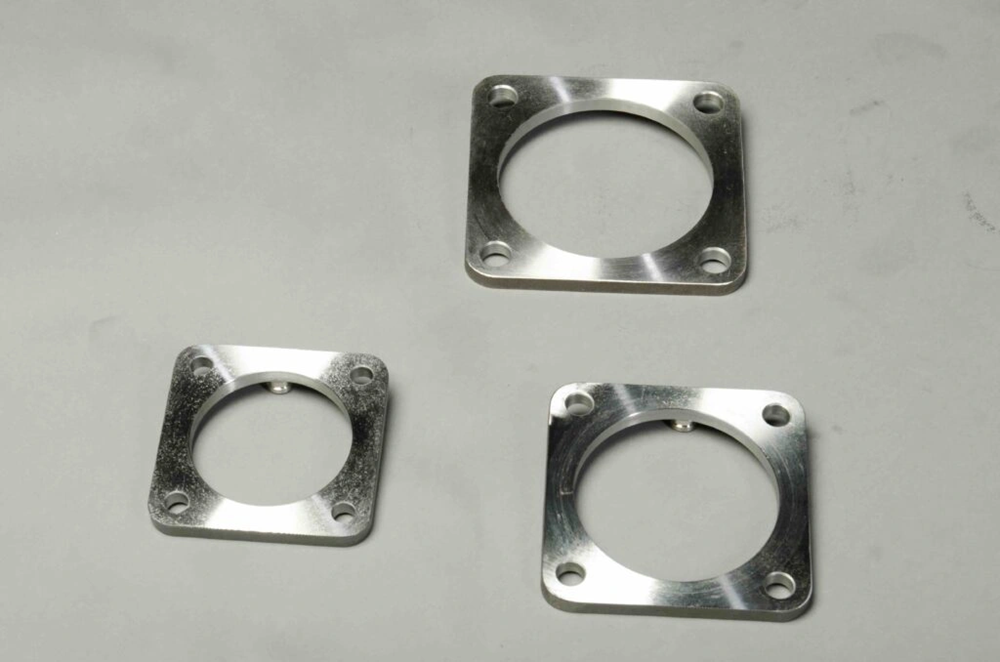
The manufacturing of flanges involves three main techniques: forging, casting, and cutting from rolled plate material. Each method presents distinct advantages in cost, strength, and production efficiency. Forged flanges offer superior wear resistance but come with higher production costs. Cast flanges reduce expenses and material waste. Material selection further impacts both performance and budget. The most commonly used materials include stainless steel, alloy steel, and carbon steel. Stainless steel flanges provide excellent corrosion resistance. Alloy steel handles high-pressure and high-temperature applications, and carbon steel offers budget-friendly options for standard systems. This piece explores how flanges are made, compares flange production methods, and presents strategies for optimizing custom exhaust flange manufacturing while maintaining quality standards.
Manufacturing Process of Flanges for Custom Exhaust Applications
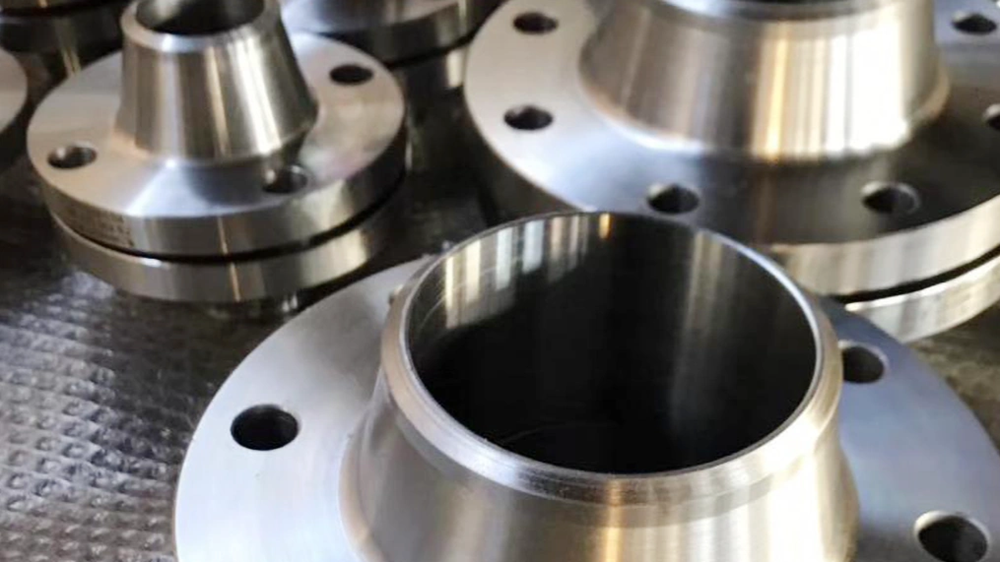
Custom exhaust applications just need different flange production methods based on volume requirements, geometric complexity, and performance specifications. Four distinct processes dominate flange production, and each offers specific advantages for exhaust system designers and purchasing managers.
Forged Flange Production Method
Hot forging shapes metal billets under heat and force. This creates dense, uniform grain structure that delivers 30% higher tensile strength compared to cast alternatives. Automated die forging achieves cycle times around 13 seconds. Crank press forging reduces this to 11.5 seconds. The forging process eliminates internal defects such as porosity and ensures reliable performance in high-pressure systems up to Class 2500. It handles extreme temperatures ranging from -196°C to +538°C. This method proves critical for exhaust connections that require superior fatigue and impact resistance, especially when you have oil and gas pipeline applications.
Plate Cutting and CNC Machining Technique
Flat metal plates provide the starting point for this cost-efficient manufacturing process. Manufacturers cut profiles to shape using torch, laser, or water jet technology. They then apply CNC operations to achieve precise dimensions. Plate flanges achieve tight tolerances such as ±0.005 inch for aluminum components and must comply with ANSI/ASME B16.5 dimensional tables. This ensures proper bolt alignment and gasket seating. CNC turning forms cylindrical shapes, while milling and drilling operations create flat surfaces and bolt holes for secure connections. This technique suits moderate-pressure exhaust systems and standard sizes where quick turnaround matters.
Investment Cast Manufacturing Process
Investment casting combines design flexibility with precision for high-temperature exhaust manifolds. The process creates wax patterns and builds ceramic shells through repeated dipping. Molten metal pours in after wax burnout. One aircraft exhaust component manufacturer achieved 92% cost savings by converting from billet machining to investment casting and recovered tooling charges in the first order. The method accommodates stainless steel and ductile iron while enabling complex port configurations and integrated flanges. Near-net shape production reduces subsequent machining requirements and material waste.
Powder Metallurgy (PM) & MIM Flanges for Complex, High-Volume Applications
Metal injection molding blends fine metal powders with polymer binders. The mixture gets injection molded into complex geometries. Parts undergo debinding and sintering at 2350-2500°F, shrinking 16-18% while achieving 95-99% theoretical density. MIM produces thin walls as low as 1mm with intricate features including undercuts and internal voids. Traditional powder metallurgy compacts coarser powders to 85-92% density and offers lower material costs but geometric limitations. MIM excels for high-volume exhaust flanges that require tight tolerances and three-dimensional design freedom without secondary machining operations.
This near-net-shape capability makes powder metallurgy the ideal choice for high-volume automotive flanges, reducing scrap material by up to 90%.
💡 Engineering Case Study: If your flange design involves multi-level steps, intricate sensor bosses, or strict sealing faces, check out our in-depth analysis on Solving Complex Exhaust Flange Designs Using Powder Metallurgy Process to see how custom tooling eliminates costly secondary CNC machining.
Material Selection Criteria for Custom Exhaust Flanges
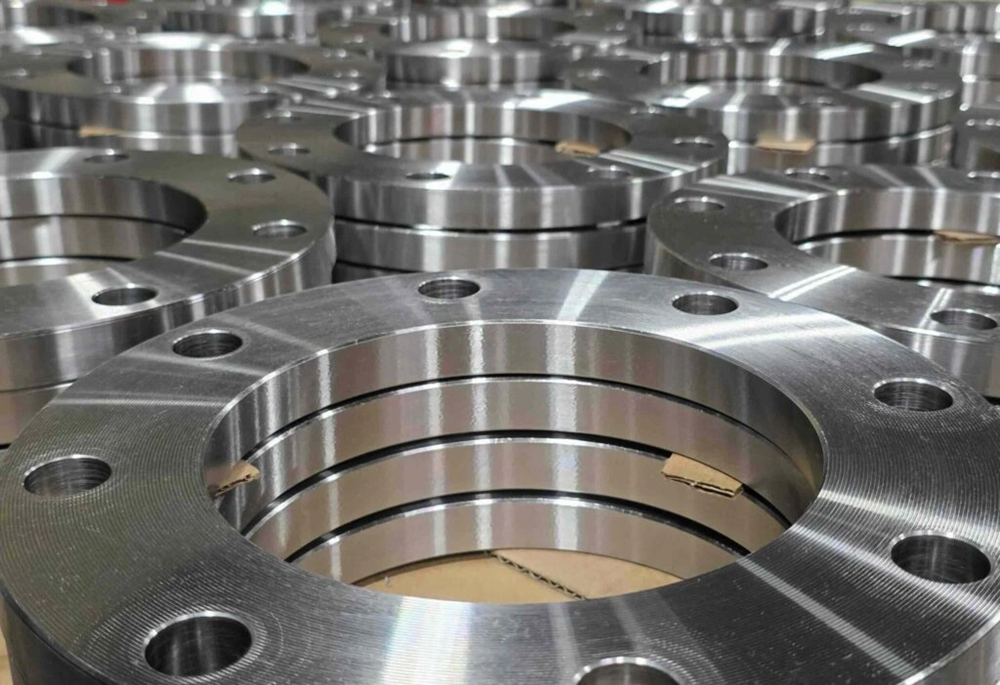
Flange material determines seal integrity and thermal endurance in custom exhaust applications. Selection criteria balance operating temperature, corrosion exposure and budget constraints.
Carbon Steel for Standard & Budget-Sensitive Exhaust Systems
ASTM A105 remains the default specification for forged carbon flanges in moderate-temperature exhaust systems. The grade is rated for service up to 800°F (427°C). It delivers mechanical strength and weldability at the lowest material cost. Carbon steel requires external coatings or corrosion allowance since unprotected surfaces deteriorate in wet, acidic or chloride-bearing environments. ASTM A350 LF2 provides mandatory Charpy V-notch impact testing to handle low-temperature applications below -20°F (-29°C) and prevent brittle failure. Carbon steel suits utility lines, steam systems and non-corrosive duties where inspection access permits periodic maintenance.
Stainless Steel Grade Selection (304 vs 316L vs 17-4PH)
Grade 304 serves general-purpose exhaust headers in normally-aspirated engines and offers corrosion resistance at moderate cost. Grade 316L adds 2-3% molybdenum for superior chloride resistance in marine exhausts and diesel particulate systems. Aircraft-grade 321 stainless incorporates titanium stabilization to prevent carbide precipitation at elevated temperatures. This makes it the preferred choice for turbocharger applications and high-temperature exhaust manifolds.
17-4PH precipitation-hardening steel delivers yield strength exceeding 850 MPa, about four times higher than austenitic grades. This strength advantage enables thinner cross-sections and improved fatigue resistance. But 17-4PH exhibits magnetic properties and reduced corrosion resistance compared to 316L. It is especially susceptible to chloride stress corrosion cracking.
High-Temperature Alloy Steels for Extreme Thermal Conditions
Carpenter Technology A-286 handles service temperatures from 1,000°F to 1,300°F (537°C to 700°C). High-horsepower direct-injection engines specify it often. Carpenter Technology 80A provides excellent creep strength and oxidation resistance for temperatures reaching 1,400°F to 1,500°F (760°C to 820°C).
Material Cost Comparison and Performance Trade-offs
Carbon steel offers the lowest first cost but demands corrosion protection systems. Stainless steel 316L commands premium pricing yet eliminates external coating requirements. High-nickel alloys present substantially higher material costs and difficult machining characteristics. Extreme conditions that exceed stainless steel capabilities are the only justification.
Cost Reduction Strategies in Flange Production (DFM Principles)
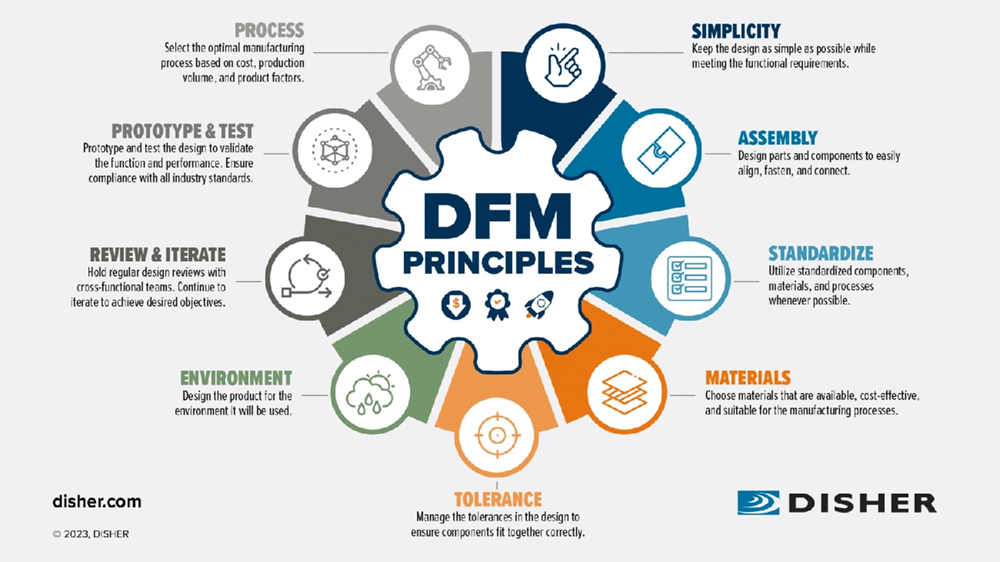
Design for manufacturing principles directly affect production economics in custom exhaust flange manufacturing. Strategic decisions in material procurement, process selection and finishing operations determine final component costs.
Raw Material Sourcing and Near-Net Shape Efficiency (Reducing Scrap)
Procurement from regional suppliers reduces freight costs and lead times. Near-net shape techniques minimize machining allowances. Material waste drops from 40% in billet stock to under 10% in precision forgings or MIM components. Optimized blank sizes eliminate unnecessary mass that converts to scrap during secondary operations.
Manufacturing Process Selection: PM/MIM vs Machining for Cost Savings
Powder metallurgy flanges eliminate chip-generating operations when quantities exceed 5,000 units per year. Traditional machining suits prototypes and low-volume orders where tooling investment cannot be justified. Break-even analysis comparing setup costs against per-unit savings determines the economical crossover point.
By switching from solid bar-stock CNC machining to MIM or sintered metal powder, manufacturers can achieve up to 30%–40% direct unit cost savings on complex exhaust components.
🛠️ Looking to optimize your flange for mass production? Submit your 3D CAD models (.STEP / .DWG) to our engineering team for a free DFM feasibility review. We evaluate material utilization and provide instant cost-saving quotations within 24 hours.
Standardization vs Custom Geometry Considerations
Standard bolt patterns and flange diameters utilize existing tooling inventories. Custom profiles require dedicated dies or molds and add non-recurring engineering expenses. Modular design approaches combine standard bases with application-specific modifications.
Order Volume Optimization and Tooling Amortization
Larger production runs distribute fixed tooling costs over more units. Minimum order quantities of 500-1,000 pieces often trigger volume pricing tiers.
Surface Finishing and Anti-Corrosion Coating Alternatives
Passivation treatments cost less than electroplating while providing adequate protection for mild environments. Black oxide finishes offer economical esthetics for carbon steel components.
Quality Control and Performance Standards for Exhaust Flanges
Confirmed performance in custom exhaust flange production requires precise dimensional control, pressure-temperature compatibility, and adherence to automotive quality systems.
Dimensional Accuracy and Tolerance Requirements (±0.01mm)
A tolerance of ±0.01mm equals 10 microns, 5 times tighter than ISO 2768 fine standard specifications. Machined flat sealing surfaces achieve ±0.01-0.02mm tolerances depending on feature size and inspection method. CNC turn-mill machining holds accuracy within ±0.005mm by completing all operations in a single setup and eliminates second-setup position errors. This level of precision prevents bolt hole misalignment and will give proper gasket compression.
Pressure, Temperature Rating, and Leakage Prevention
ASME B16.5 defines 7 pressure classes: 150, 300, 400, 600, 900, 1500, and 2500. A Class 600 flange manufactured from Group 2.2 materials carries a rating of 890 psig at 650°F (343°C). Pressure capacity decreases as operating temperature increases. Engineers must consult material-specific pressure-temperature tables.
Industry Standards Compliance (ASME, SAE, IATF 16949)
IATF 16949 certification is mandatory for Tier 1 automotive suppliers, with over 65,000 certified organizations worldwide. The standard requires APQP, PPAP, FMEA, MSA, and SPC integration into quality management systems.
Testing Protocols: CMM Inspection, Density Analysis, and Thermal Shock Tests
Coordinate measuring machines operate in temperature-controlled environments set to 20°C standard. Thermal shock testing confirms component durability across -70°C to 190°C temperature ranges.
Conclusion & Engineering Recommendations
Successful flange manufacturing for custom exhaust systems balances production method selection with material specification and cost optimization strategies. Forged, cast, plate-cut, and powder metallurgy processes each serve distinct volume and performance requirements. Material choices range from economical carbon steel to high-temperature alloys, then affecting both durability and budget. Design for manufacturing principles reduce waste and tooling expenses. Quality standards such as ASME B16.5 and IATF 16949 ensure precision and reliable performance in demanding automotive applications.
Titanium and Inconel are viable alternatives to steel for exhaust systems. Titanium offers an excellent strength-to-weight ratio and is used in high-end aftermarket exhausts, while Inconel is a nickel-chromium-based superalloy designed for extreme high-temperature applications such as race cars and mid-engine vehicles that generate significant heat.
Stainless steel provides superior corrosion resistance compared to carbon steel, eliminating the need for external protective coatings. While carbon steel offers the lowest initial cost, it requires corrosion protection systems and periodic maintenance, especially in wet, acidic, or chloride-bearing environments. Stainless steel grades like 304, 316L, and 321 deliver long-term durability with minimal upkeep.
Forged flanges deliver 30% higher tensile strength and superior wear resistance due to their dense, uniform grain structure created through heat and force. However, they come with higher production costs. Cast flanges reduce manufacturing expenses and material waste while still providing adequate performance for many applications, making them a cost-effective alternative for moderate-pressure systems.
Powder metallurgy and Metal Injection Molding (MIM) eliminate chip-generating operations and become cost-effective for quantities exceeding 5,000 units annually. These processes achieve near-net shape production with 95-99% theoretical density and enable complex geometries without secondary machining. Traditional machining remains suitable for prototypes and low-volume orders where tooling investment cannot be justified.
Automotive exhaust flanges must comply with ASME B16.5 for pressure ratings and dimensional specifications, and IATF 16949 certification is mandatory for Tier 1 automotive suppliers. Quality control includes dimensional accuracy within ±0.01mm tolerances, pressure-temperature compatibility verification, and testing protocols such as CMM inspection, density analysis, and thermal shock tests across temperature ranges from -70°C to 190°C.