
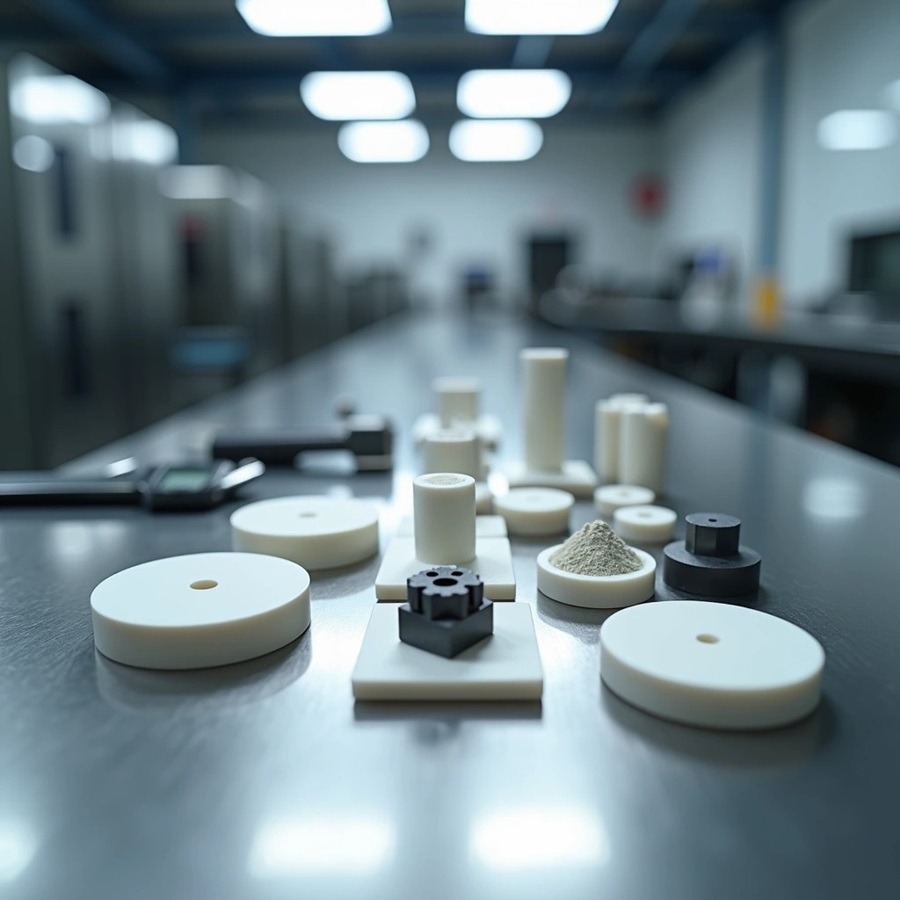
Advanced ceramic manufacturing has become vital in aerospace, electronics and medicine. Materials in these fields must withstand extreme conditions. These engineering ceramics offer exceptional properties. Silicon carbide’s hardness reaches 20-25 GPa and alumina’s 12-18 GPa. They serve as superior alternatives to metals in harsh environments. The ceramic manufacturing process combines ancient principles with modern precision. It involves powder blending and forming techniques with controlled sintering. Custom ceramic component fabrication is just as vital. It employs ceramic CNC machining with diamond tooling to achieve tolerances as tight as ±0.001mm. This detailed guide explores advanced technical ceramics selection and ceramic forming processes that range from dry pressing to 3D printing. It also covers precision machining techniques and critical design considerations to produce components successfully.
Advanced Technical Ceramics: Types, Properties, and Material Selection
Alumina (Al2O3) Oxide Ceramics – Cost-Effective & Wear-Resistant
Alumina serves as the industry standard for electrical insulation due to strong dielectric strength and great mechanical durability. High-purity grades reach hardness values exceeding 1500 HV, which makes them perfect for wear-resistant applications. Operating temperatures extend to 1650°C in air and 2000°C under vacuum. Thermal conductivity remains lower than silicon carbide and aluminum nitride. The material resists oxidizing environments and acids well, with a density of 3.6-3.95 g/cm³. Alumina’s brittleness and hard-to-machine nature need diamond grinding for final dimensions.
Zirconia (ZrO2) and Stabilized Variants – Exceptional Toughness & Fracture Resistance
Zirconia shows fracture toughness values from 8-17 MPa m1/2 and beats other ceramics by a lot through transformation toughening mechanisms. Yttria-stabilized variants show toughness of about 8.0 MPa m1/2, while ultra-tough zirconia composites achieve 17 MPa m1/2. Zirconia-Toughened-Alumina (ZTA) composites mix alumina’s hardness with better fracture toughness. Larger zirconia content increases toughness through stress-induced tetragonal-to-monoclinic transformation. These materials operate at temperatures that reach 1500°C and above.
Silicon Carbide (SiC) for High-Temperature & Harsh Chemical Applications
Silicon carbide keeps its strength at temperatures up to 1400°C, which makes it good for semiconductor processing and power electronics. The material shows very high thermal conductivity and electrical semiconductivity and lets it work beyond 600°C where silicon devices fail. High breakdown electric field strength allows smaller and more efficient power devices. Chemical stability gives better corrosion resistance through protective silicon dioxide layer formation at elevated temperatures.
Silicon Nitride (Si3N4) Engineering Ceramics – High Thermal Shock Resistance
Silicon nitride shows great thermal shock resistance and withstands 600°C thermal shocks without strength degradation below 30% of room temperature values. Flexural strength hits 900-1000 MPa, while fracture toughness ranges from 5.5-6.5 MPa m1/2. The coefficient of thermal expansion goes from 1.25×10⁻⁶/°C at 100°C to 3.75×10⁻⁶/°C at 1000°C. Maximum operating temperatures reach 1400°C in hot-pressed variants, with applications from turbine components to high-speed bearings.
Aluminum Nitride (AlN) and Boron Carbide (B4C)
Aluminum nitride gives thermal conductivity of 170-230 W/mK, over five times that of alumina, while keeping great electrical insulation. The coefficient of thermal expansion matches silicon wafer material closely, which makes it perfect for semiconductor applications. Surface aluminum oxide formation occurs around 700°C in oxidizing atmospheres and protects bulk material up to 1350°C in inert conditions.
Technical Ceramic Material Selection Matrix (Comparison Guide)
Technical Ceramic Material Selection Matrix (Comparison Guide)
-
Alumina (Al2O3): Excellent electrical insulation & wear resistance | Max Temp: 1500°C – 1650°C | Thermal Conductivity: 20–30 W/m·K | Relative Cost: Low – Moderate
-
Zirconia (ZrO2): Ultra-high fracture toughness & mechanical strength | Max Temp: 1000°C | Thermal Conductivity: 2–3 W/m·K | Relative Cost: Moderate – High
-
Silicon Carbide (SiC): Extreme hardness & superior chemical resistance | Max Temp: 1400°C – 1600°C | Thermal Conductivity: 120–170 W/m·K | Relative Cost: High
-
Silicon Nitride (Si3N4): High thermal shock resistance & mechanical durability | Max Temp: 1200°C – 1400°C | Thermal Conductivity: 30 W/m·K | Relative Cost: High
-
Aluminum Nitride (AlN): Exceptionally high thermal conductivity & dielectric strength | Max Temp: 1000°C (Inert atmosphere) | Thermal Conductivity: 170–230 W/m·K | Relative Cost: High
Ceramic Manufacturing Process Steps & Forming Methods
Advanced ceramic component production requires precise control over raw materials, forming, and thermal processing to achieve optimal mechanical, thermal, and electrical properties. Unlike traditional metals, ceramics cannot be easily melted and cast, requiring specialized powder metallurgy techniques.
-
Raw Material Preparation & Powder Processing: High-purity ceramic powders (such as Al2O3, ZrO2, SiC, or Si3N4) are refined, milled, and mixed with temporary organic binders to create homogeneous spray-dried granules with ideal flowability.
-
Dry Pressing and Isostatic Pressing (CIP/HIP): Uniaxial dry pressing is utilized for simple geometries at high production speeds, while Cold Isostatic Pressing (CIP) and Hot Isostatic Pressing (HIP) apply uniform hydraulic pressure from all directions to achieve consistent density in complex shapes.
-
Slip Casting for Complex Hollow Geometries: Liquid ceramic slurry is poured into absorbent plaster molds, making it ideal for large, thin-walled, or intricately shaped hollow components.
-
Ceramic Injection Molding (CIM) for High-Volume Complex Parts: Thermoplastic binders are mixed with ceramic powder to allow high-precision injection molding of intricate 3D geometries with tight tolerances, ideal for mass production.
-
Extrusion & Additive Manufacturing (3D Printing): Extrusion produces long cross-sectional profiles such as rods, tubes, and honeycombs. Additive manufacturing enables rapid prototyping and highly complex micro-structures without custom tooling costs.
-
Sintering & Densification: Green compacts are fired in high-temperature furnaces (up to 2000°C depending on material) under controlled atmospheres or vacuums. The firing parameters dictate final grain size, shrinkage, and structural densification.
Custom Ceramic Component Fabrication & Precision Machining
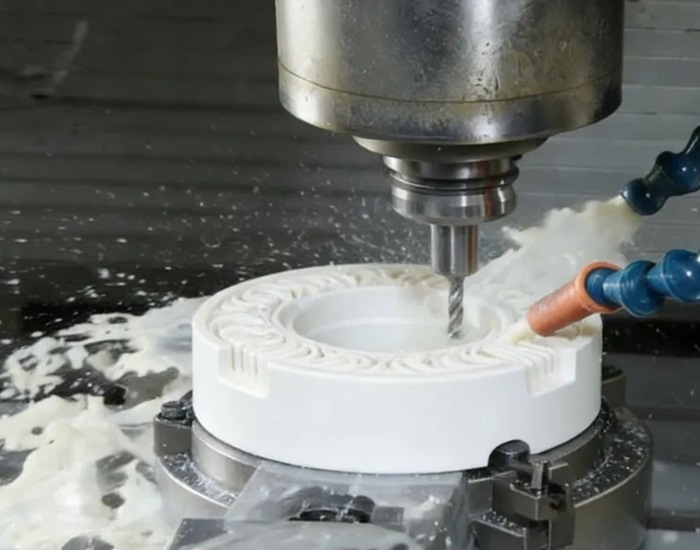
Fabrication of custom ceramic components just needs specialized approaches at different production stages. The extreme hardness and brittleness inherent to advanced ceramics require specific machining technologies and extensive processing expertise.
Green Body Machining vs. Post-Sintering Machining
Green body machining occurs on unfired ceramic parts and offers easier material removal before densification. Post-sintering machining addresses components that are dense and requires specialized equipment due to increased hardness. Manufacturers support both prototype development and volume production in engineering ceramics and glass ceramics.
Precision CNC Machining with Diamond Tooling
Diamond tooling becomes a must when you machine sintered ceramics due to their exceptional hardness values. CNC operations handle simple geometries through complex multi-axis components and accommodate materials like alumina, zirconia, aluminum nitride, and silicon carbide. The brittleness factor introduces fracture risks during material removal. This makes controlled cutting parameters and proper fixturing strategies essential.
Grinding, Lapping, and Polishing for Tight Tolerances (±0.001mm)
Dimensional precision requires progressive abrasive processes. Specialized grinding operations remove bulk material, while lapping refines surface flatness and parallelism. Polishing operations deliver final surface finishes and maintain dimensional control within micron-level specifications.
Macor represents a distinct category within machinable ceramics. This glass-ceramic contains fluorophlogopite mica crystals embedded in a borosilicate glass matrix. The structure provides metal-like machinability that is seldom found in ceramic materials. The composition gives excellent electrical insulation, low thermal conductivity, and thermal stability reaching 1000°C under no-load conditions while maintaining tight tolerances.
Post-Processing: Glazing, Metallization, and Surface Finishing
Surface modifications improve ceramic component functionality. Glazing provides hermetic sealing and better chemical resistance. Metallization makes brazing, soldering, and electrical connectivity possible through deposited conductive layers. Material selection depends on application requirements, performance specifications, and design constraints.
Applications, Design Guidelines, and Procurement Considerations
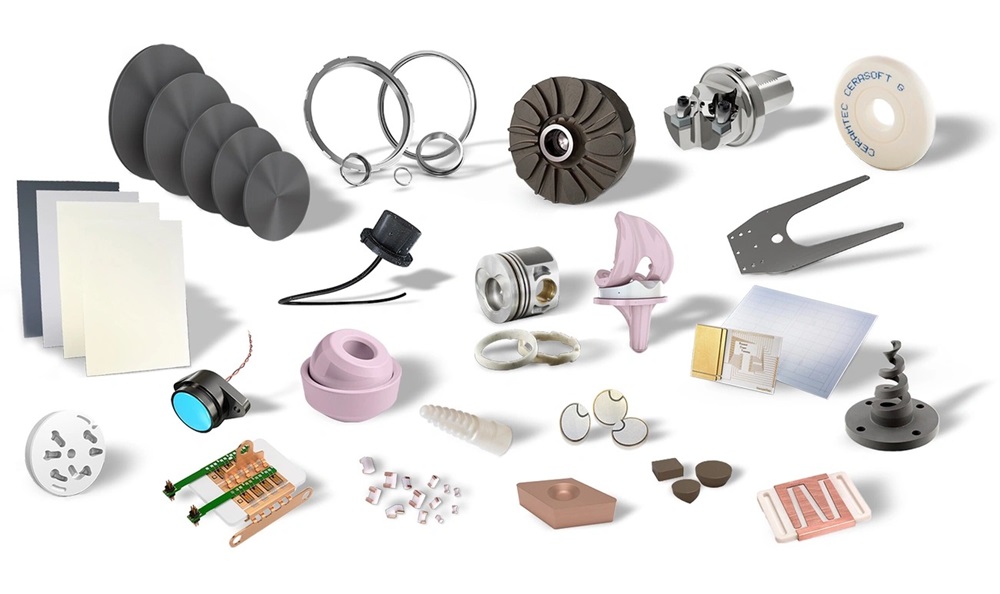
Key Industrial Applications: Semiconductor, Medical, Aerospace & Automotive
Technical ceramics serve critical roles in multiple industries. Medical applications have bone implants, dental restoration, joint replacements and prosthetic devices. Automotive manufacturers use ceramic filters, catalytic converters, airbag sensors, piston rings, oxygen sensors and pressure transducers. Aerospace implementations span thermal barriers, fuel cells, space shuttle tiles and high-temperature glass windows.
DFM (Design for Manufacturability) Guidelines for Ceramic Parts
Ceramic-friendly designs favor simpler, symmetrical shapes with relaxed tolerances. Converting metallic parts to ceramics often requires shape simplification and tolerance adjustment. Specification discipline becomes necessary as tighter tolerances increase costs significantly. Uniform wall thickness throughout components reduces density gradients and stress concentrations. Round geometries are more economical than oval, square or rectangular configurations due to lower tooling fabrication costs. Gradual wall thickness transitions prevent stress risers when uniform sections cannot be achieved. Chamfered edges and corners minimize chipping risks from handling damage.
Common Manufacturing Defects: How to Avoid Shrinkage, Cracking, and Deformation
Smaller components with polished surfaces show superior strength due to reduced defect sensitivity. Sharp edges and thin sections increase fragility and chipping susceptibility. Design assemblies should limit residual stress from manufacturing and operational use. Ceramics perform best under compressive loading rather than tensile or shear stresses.
Quality Assurance, Tolerances, and Testing Standards
Standard tolerances of ±0.05mm for straight dimensions and ±0.02mm for outer/inner diameters work for most critical applications. Post-sinter machining achieves surface roughness of Ra ≤0.8µm. Fine polishing reaches Ra ≤0.3µm for sealing faces. Testing protocols follow ASTM C1161-02 for flexural strength, ASTM C1421-10 for fracture toughness and ISO 15732:2003 for monolithic ceramics.
Lead Times, Tooling Cost Factors, and RFQ Checklist
Lead times range from 1 week to over 20 weeks depending on complexity and queue position. Prototype samples take 2-3 weeks, while batch production spans 4-6 weeks. New tooling development adds 2-3 months before part production begins. RFQ submissions should have 2D drawings, CAD files, material grade specifications, blank assumptions, quantity requirements, functional surface callouts and inspection evidence needs.
Conclusion & Getting Started with Custom Ceramic Manufacturing
Advanced ceramic manufacturing combines material science precision with specialized fabrication techniques. The result? Components that outperform traditional materials in extreme environments. Material selection affects component success. Alumina offers an affordable option while silicon carbide delivers superior thermal performance. Design considerations such as uniform wall thickness and chamfered edges prevent common defects. Precision machining with diamond tooling achieves tolerances within microns. Technical ceramics keep expanding in semiconductor and aerospace industries. They welcome innovation where conventional materials cannot meet demanding performance requirements.
Advanced ceramics offer exceptional hardness (silicon carbide reaches 20-25 GPa), superior temperature resistance (alumina operates up to 1650°C in air), excellent chemical stability, and outstanding wear resistance. Their ability to maintain strength at high temperatures and resist corrosion makes them ideal replacements for metals in harsh conditions found in aerospace, semiconductor, and chemical processing applications.
Silicon carbide (SiC) is the preferred choice for high-temperature and harsh chemical environments, maintaining strength up to 1400°C with extremely high thermal conductivity. For applications requiring thermal shock resistance, silicon nitride (Si3N4) withstands 600°C thermal shocks without significant strength degradation and operates at temperatures reaching 1400°C in hot-pressed variants.
Precision grinding, lapping, and polishing techniques can achieve tolerances as tight as ±0.001mm (±1 micron). Standard tolerances for most critical applications are ±0.05mm for straight dimensions and ±0.02mm for outer/inner diameters. Post-sinter machining with diamond tooling can produce surface finishes of Ra ≤0.8µm, with fine polishing reaching Ra ≤0.3µm for sealing surfaces.
Lead times vary based on complexity and production requirements. Prototype samples typically require 2-3 weeks, while batch production spans 4-6 weeks. New tooling development adds 2-3 months before part production begins. Overall, lead times can range from 1 week for simple parts to over 20 weeks for complex components, depending on queue position and specifications.
Avoid sharp edges and thin sections as they increase fragility and chipping susceptibility. Non-uniform wall thickness creates density gradients and stress concentrations that can lead to cracking. Overly tight tolerances significantly increase costs, so specify only what’s functionally necessary. Design for compressive loading rather than tensile or shear stresses, and incorporate chamfered edges to minimize handling damage.