
Custom Powder Metallurgy Crankshaft Pulleys & Harmonic Dampers
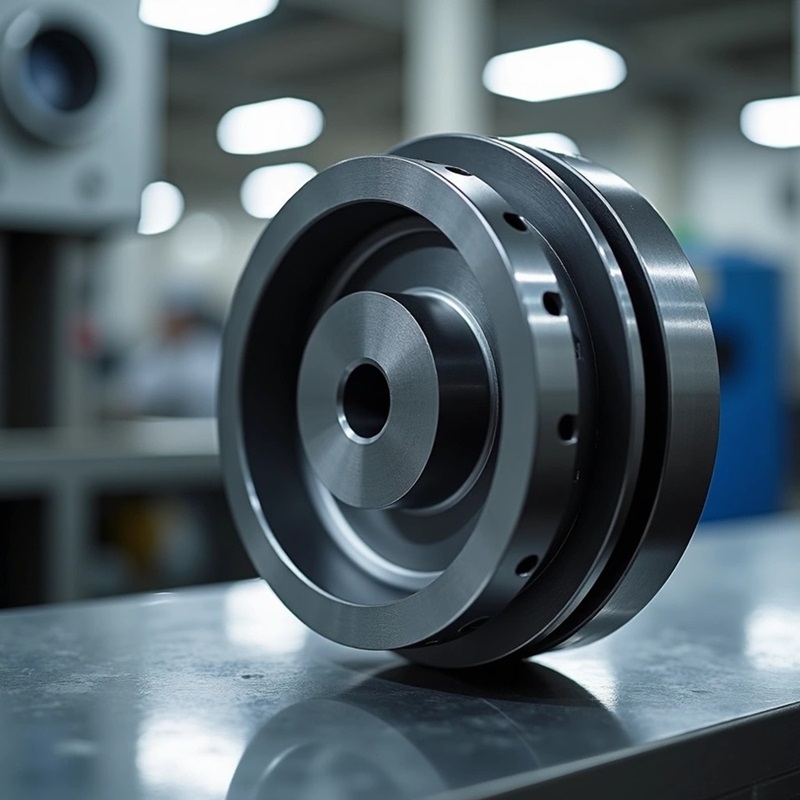
With over 20 years of deep expertise in powder metallurgy and metal injection molding, JHMIM operates a state-of-the-art 18,000+ square meter manufacturing facility in China. The facility employs 150+ skilled technicians and uses advanced high-tonnage sintering and pressing equipment to deliver high-density, zero-defect crankshaft pulley components globally. This vertically integrated approach streamlines supply chains and solves tight-tolerance manufacturing challenges under one roof.
High-Volume Production Powered by 1,000-Ton Advanced Hydraulic Presses
Production infrastructure spans compacting press capacities from 5-ton micro-presses to do precision laboratory work up to 1,000-ton heavy-duty machinery for large-scale industrial crankshaft damper pulley applications. Advanced compaction equipment ranges from 25T to 1000T and enables manufacturers to produce everything from prototype harmonic balancer crankshaft pulley designs to full-scale OEM production runs. Hydraulic systems deliver full programmed force at any point in the ram’s stroke. This is different from mechanical systems that peak force delivery at stroke bottom. Operators achieve fine adjustments to pressure, dwell time and ram speed throughout each cycle. Density uniformity remains consistent across tens of thousands of production units.
Strict Adherence to Automotive Quality Standards and IATF 16949 Frameworks
Manufacturing processes operate under strict control of IATF 16949:2016 standards, which replaced ISO/TS 16949 as the automotive industry’s most commonly used international standard for quality management. The facility maintains TS16949 ISO-9001:2000 quality management system certification and ensures components meet the highest quality requirements for what a crankshaft pulley does in modern engine systems.
End-to-End Solutions: From Precision Tooling Design to High-Temperature Sintering
Green compacts move through mesh belt furnaces for sintering in a hydrogen atmosphere, which boosts mechanical properties by a lot. Pure hydrogen gas creates stronger bonds between particles without reaching full melting temperatures. The process removes carbon residuals and promotes better metal fusion.
Technical Specifications & Material Matrix (MPIF Standards)
| Engineering Property | Sintered Iron (MPIF FC-0208) | Prealloyed Steel (MPIF FL-4405) |
| Sintered Density | 6.8 – 7.2 g/ cm³ | 7.2 – 7.5 g/cm³ |
| Tensile Strength (UTS) | 340 – 380MPa | Up to $900 – 1200 MPa (Post-HT) |
| Typical Hardness | 55 HRB (As-Sintered) | Up to 32-37 HRC (Sinter-Hardened) |
| Primary Engine Application | Standard Automotive Pulley Hubs | High-Torque, Turbocharged Damper Systems |
The Metal Powder Industries Federation publishes MPIF Standard 35, which establishes a systematic coding framework for powder metallurgy structural components. This designation system communicates both chemical composition and minimum strength requirements through alphanumeric identifiers. The prefix letters denote major alloying elements. Numeric digits indicate constituent percentages and combined carbon content, while the suffix number represents minimum ultimate tensile strength in thousands of psi.
Material Grade Reference Matrix: Sintered Iron (FC-0208) and Prealloyed Steel (FL-4405)
FC-0208 identifies an iron-copper crankshaft pulley material containing 2% copper and 0.8% combined carbon. This copper steel grade contains 1.5-3.9% Cu and 0.6-0.9% C with iron balance. Common sintered parts manufactured from FC-0208 include oil pump rotors and water pump pulleys. FL-4405 represents a prealloyed steel system utilizing 0.85% molybdenum base powder with optimized hardenability characteristics. This grade offers superior consistency during heat treatment compared to elemental copper blends.
Reaching High-Performance Density Profiles from 6.8 to 7.3 g/cm³
Optimal compressibility enables high green densities between 6.8-7.2 g/cm³ at moderate compaction pressures of 400-700 MPa. Standard pressing methods reach 7.1-7.2 g/cm³. Advanced warm compaction techniques increase green density to 7.3-7.5 g/cm³. The density increase realized with warm compaction ranges from 0.05 g/cm³ at 415 MPa to greater than 0.1 g/cm³ at 825 MPa. High-density harmonic balancer crankshaft pulley applications specify densities between 7.2 to 7.5 g/cm³ where dynamic properties approach wrought material equivalents.
Hardness and Tensile Strength Metrics Tailored for High-Torque Engine Environments
FC-0208 delivers tensile strength ranging from 340-380 MPa with hardness values around 73 HRB at standard sintered density. Post-heat treatment conditions can raise tensile strength up to 900-1200 MPa for custom high-density matrices. Then, applications with shock loads or high fatigue cycles require these elevated density levels to ensure what the crankshaft pulley does continues to work under continuous torsional stress.
Advanced Engineering Features of JHMIM Sintered Pulleys
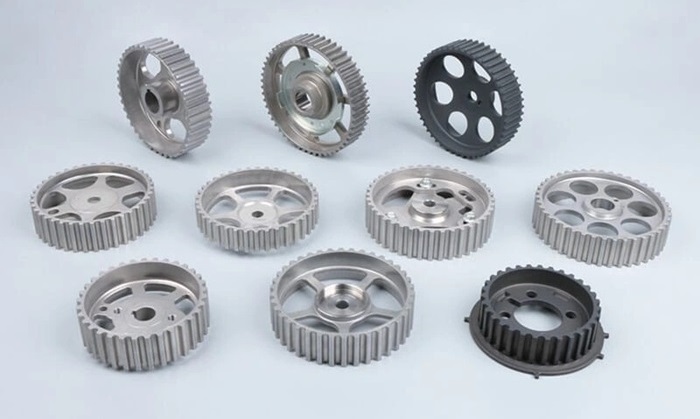
Powder metallurgy compaction creates near-net shapes that need minimal secondary operations. Sintered pulleys achieve dimensional tolerances within ±0.01 mm after sintering. This removes expensive machining steps that cast or forged components require. Precision tooth profiles form during compaction, so secondary machining becomes unnecessary. This capability reduces production time by a lot while maintaining exceptional accuracy throughout high-volume runs.
Net-Shape Precision: Eliminating Expensive Secondary Balancing and Machining
The compaction process forms complete tooth geometry, keyways and mounting features in a single pressing cycle. Design freedom helps create unique net-shape features including lightening holes and drive keys. Sizing operations after sintering correct dimensional variations. Crankshaft damper pulleys maintain ±0.01 mm tolerances required for engine component integration.
Dynamic Balance Accuracy: Perfect Mass Distribution for Reduced Engine Vibration
Dynamic balancing proves critical in high rpm applications above 1000 rpm. Unbalanced centrifugal forces cause pulleys to vibrate and transfer destructive oscillations to support bearings and machine components. Two-plane balancing lines up the pulley’s center of mass with its rotation axis. Static balancing is enough for speeds below 6500 ft/min, but dynamic balancing is needed beyond this threshold.
Elongation and High Fatigue Strength to Resist Continuous Torsional Stress
Ferrous powder metallurgy materials show elongation below 2% due to porosity. FC-0208-50 demonstrates a fatigue limit of around 160 MPa after sintering, while FL-4405-40 delivers roughly 190 MPa. Torsional fatigue resistance increases when appropriate pre-torsion strain and residual compressive stresses are introduced to the surface.
Multi-Level Geometry and Integrated Keyway Compaction Capabilities
Multi-level components can be compacted separately and sinter-bonded during furnace cycles to form single, monolithic assemblies. JHMIM has over 20 years of deep expertise in powder metallurgy and metal injection molding. The company operates a state-of-the-art 18,000+ square meter manufacturing facility in China, backed by 150+ skilled technicians and advanced high-tonnage sintering and pressing equipment. This delivers high-density, zero-defect complex metal components globally.
Secondary Operations and Value-Added Surface Treatments
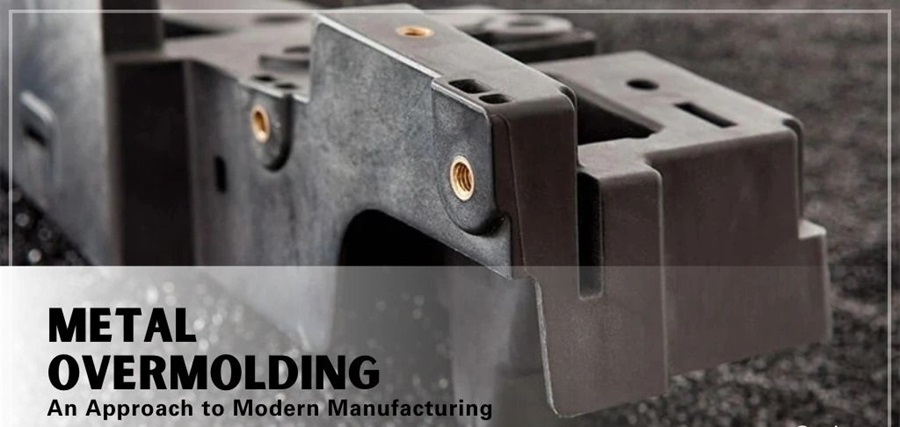
Secondary operations transform sintered crankshaft pulley components into complete functional assemblies ready to handle demanding engine environments. These value-added treatments boost wear resistance and corrosion protection while improving vibration damping characteristics.
Precision Elastomeric Overmolding for Integrated Harmonic Dampers
Elastomeric overmolding bonds a softer rubber layer to the sintered metal substrate and creates integrated harmonic balancer crankshaft pulley assemblies. The process needs precise temperature control and material compatibility to achieve chemical adhesion between dissimilar materials. Overmolded elastomeric dampers absorb torsional vibrations and reduce noise transmission throughout the powertrain system.
Sinter-Hardening and Induction Heat Treatments to Maximize Groove Wear Resistance
Sinter-hardened components achieve through-hardening during accelerated cooling in the sintering furnace. Parts reach an apparent hardness of HRC 25 with particle hardness of HRC 55 at 6.8 g/cm³ density. Induction hardening hardens critical wear zones while maintaining soft, machinable regions elsewhere. The hardened areas deliver apparent hardness of RC 35 and particle hardness of RC 58.
Anti-Corrosion Surface Coatings: E-Coating, Plating, and Black Oxide Options
Electrocoating immerses parts in a bath containing 80-90% deionized water and 10-20% paint solids and achieves application efficiency above 95%. The process needs minimum bake time of 20 minutes at 375°F. Black oxide creates a uniform 0.000030 inch protective layer without affecting dimensional tolerances.
Strict Quality Control and Component Testing Metrics
Quality assurance protocols verify dimensional accuracy, structural integrity and performance characteristics at multiple production stages. Each crankshaft pulley undergoes rigorous inspection before shipment to ensure compliance with OEM specifications.
Automated Vision Inspection Systems and 3D Coordinate Measuring Machines (CMM)
CMMs deliver measurements in the micrometer range and guarantee parts meet tight tolerances. The volume inspected per day can reach up to 86,000 samples with an inspection time of 1 second per sample. Automated vision systems detect surface defects like indents, discolorations and scratches. CMMs measure lengths, diameters and geometric relationships with exceptional precision.
Microstructural Analysis, Metallurgical Evaluation, and Crack Detection
Microstructural examination reveals phases present, grain size and porosity. Continue coarse and fine polishing until all pores open to view. The area fraction of porosity should represent the density of the part. Mechanical proof testing accomplishes crack detection along with metallography and filtered particle or magnetic particle inspection. Magneto-inductive test instruments determine quality immediately by placing parts in an encircling coil.
Radial Runout and Torsional Fatigue Testing for Lifetime Durability
Laser sensors achieve very precise resolution of 0.002-0.004 mm for runout measurement. Response speed of 0.5 ms quickly identifies problems and reduces overall inspection time. Torsional fatigue testing capabilities range from 40-700 Nm dynamic torque.
Request a Technical Quote and DFM Review for Your Automotive Project
Proper CAD file preparation accelerates engineering review and eliminates manufacturing assumptions. It also reduces revisions that get pricey during production. A clean STEP file with defined material and tolerances speeds up engineering review, CAM programming, and production from first contact. Incomplete models or outdated drawings cause delays and extra revisions. A prepared technical package lets manufacturers assess manufacturability from the start and estimate machining time with greater accuracy.
A crankshaft pulley transfers rotational power from the crankshaft to drive engine accessories like the alternator, water pump, and air conditioning compressor through belt systems. It also helps maintain proper timing and can incorporate harmonic damping features to reduce torsional vibrations that occur during combustion cycles.
A harmonic damper uses a mass element combined with an energy-dissipating component (typically rubber, elastomer, or fluid) to counteract torsional crankshaft motions. The mass works in concert with the damping element to absorb harmonic vibrations caused by the repetitive twisting and rebounding of the crankshaft during combustion, protecting engine durability and performance.
Powder metallurgy creates near-net-shape components with dimensional tolerances within ±0.01 mm directly after sintering, eliminating expensive secondary machining operations. The process allows for integrated features like keyways and tooth profiles to be formed in a single pressing cycle, while achieving high-density profiles (6.8-7.3 g/cm³) that deliver excellent strength and fatigue resistance for demanding engine applications.
Automotive crankshaft pulleys are manufactured under IATF 16949:2016 quality management standards, which represent the industry’s most widely used international framework for automotive component quality. Manufacturing facilities maintain strict process controls and utilize automated inspection systems, coordinate measuring machines (CMM), and metallurgical testing to ensure components meet OEM specifications.
Common surface treatments include sinter-hardening and induction heat treatment for enhanced wear resistance in critical zones, elastomeric overmolding for integrated vibration damping, and anti-corrosion coatings such as electrocoating (e-coating), plating, and black oxide finishes. These treatments improve durability, corrosion protection, and functional performance in demanding engine environments.
Submit Your Engine Stress Requirements and 3D CAD Files (STEP/IGS) for a Free Material and Pressing Feasibility Study
The STEP file format (saved as .step or .stp) is the universal standard that every major manufacturing software reads correctly without translation errors. Manufacturers recommend submitting a paired package with one 3D STEP file and one 2D PDF drawing. Engineers require exact material specifications including alloy and heat treatment condition along with the solid 3D model. They also need annual production volume estimates, critical tolerances, functional requirements such as strength, and project priorities. Sharing CAD files and requirements at the concept stage gives designers a chance to request DFM feedback before finalizing design and iterate with supplier input.
JHMIM operates a state-of-the-art 18,000+ square meter manufacturing facility in China with over 20 years of deep expertise in powder metallurgy and metal injection molding. The company delivers high-density, zero-defect crankshaft pulley and harmonic balancer crankshaft pulley components globally. JHMIM is backed by 150+ skilled technicians and advanced high-tonnage sintering and pressing equipment that solve tight-tolerance manufacturing challenges under one roof.