

Tungsten Alloy Metal Injection Molding (MIM) combines the material versatility of plastic injection molding with the high strength and density of tungsten alloys. This manufacturing process produces complex, high-precision parts. It begins by mixing fine tungsten alloy powders with a binder. This creates a feedstock. Manufacturers then inject this feedstock into a mold. After injection, they remove the binder and sinter the part. This achieves the final dense metal component.
Key Takeaways
- Tungsten Alloy MIM makes strong, complex metal parts. It uses fine tungsten powder and a binder.
- Tungsten alloys are very dense and strong. They block radiation well and resist wear.
- MIM combines plastic molding ideas with metal strength. It makes small, detailed metal parts.
- The MIM process has steps like mixing powder, molding, removing binder, and heating. This makes the final part strong.
- Tungsten Alloy MIM creates complex shapes easily. It keeps the material’s good qualities and saves money on many parts.
- MIM parts have a smooth finish. They are used in medical, aerospace, and electronic devices.
- MIM wastes less material than machining. It makes denser, stronger parts than regular powder methods.
Understanding Tungsten Alloy Metal Injection Molding (MIM) Fundamentals
What Are Tungsten Alloys?
Tungsten alloys are materials primarily composed of tungsten, a metal known for its exceptional properties. Manufacturers combine tungsten with other elements to enhance specific characteristics like ductility, machinability, or strength. These alloys maintain many of tungsten’s inherent advantages while offering improved workability.
Common tungsten alloys used in Metal Injection Molding (MIM) include Tungsten Heavy Alloys (WHAs). These alloys typically contain 90–98% tungsten combined with nickel, iron, copper, or cobalt. WHAs offer a tailored balance of strength, ductility, and density, making them suitable for military, medical, and industrial applications. Other types of tungsten alloys also find use in MIM processes.
| MIM Tungsten Alloys | Tungsten(W) | Iron(Fe) | Nickel(Ni) | Copper(Cu) | Cobalt(Co) |
|---|---|---|---|---|---|
| W-2Fe-3Ni | 93.9-95.1% | 1.9-2.5% | 3.0-3.6% | – | – |
| W-2Fe-7Ni | 89.5-92.5% | 1.0-2.5% | 5.5-7.5% | – | – |
| W-6Ni-2Cu | 90.0-92.5% | – | 4.5-6.0% | 1.0-3.0% | – |
| W-7Ni-8Co | 85.0-89.0% | – | 5.0-7.0% | – | 5.0-8.0% |
| W-10Cu | 90.0-92.0% | – | – | 8.0-10.0% | – |
| W-15Fe | 85.0-90.0% | 10.0-15.0% | – | – | – |
Tungsten alloys possess several specific material properties that make them highly suitable for various demanding applications:
- High Density: Tungsten alloys are ideal for applications requiring significant weight in a small volume, such as counterweights and radiation shields.
- Radiation Absorption: Their high atomic number makes them effective at shielding against radiation, suitable for medical and nuclear industries.
- Thermal Stability: Tungsten alloys maintain strength and stability at high temperatures, making them suitable for aerospace and high-temperature industrial applications.
- Good Wear Resistance: They provide excellent wear resistance, beneficial for parts subjected to friction and wear, such as cutting tools.
- Vibration Damping: Tungsten alloys have good vibration damping capabilities, useful for reducing vibrations in sensitive equipment.
What Is Metal Injection Molding (MIM)?
Metal Injection Molding (MIM) is a sophisticated manufacturing process. It combines the design flexibility of plastic injection molding with the strength and integrity of metal. MIM produces small, complex metal parts with high precision. The process begins with fine metal powders mixed with a binder system. This creates a feedstock.
MIM operates similarly to micro injection molded plastics. It utilizes metal powders mixed with polymers to create parts. The tooling and equipment are nearly identical, offering synergy for engineers familiar with plastics. However, MIM distinguishes itself with additional unique steps. These include feedstock compounding, debinding, and sintering. These steps are crucial for creating stable and scalable production processes.
The fundamental principles of the metal injection molding process involve several key stages:
- Formulating MIM feedstock: This involves combining fine metal powders with binders like waxes and polymers.
- Granulation: Once cooled, the feedstock is granulated into pellets for injection molding.
- Injection Molding: The granulated feedstock is then injected into a mold, similar to plastic injection molding.
- Debinding: After molding, the parts undergo catalytic or solvent debinding to remove the binders.
- Sintering: The molded parts are placed in a high-temperature furnace. They are heated near their melting point to remove remaining binder and bond metal particles.
- Secondary Processing: Additional processing steps may be performed as needed.
Why Combine Tungsten Alloys with MIM?
Combining tungsten alloys with Metal Injection Molding (MIM) offers significant advantages. This synergy leverages the unique properties of tungsten while benefiting from MIM’s manufacturing capabilities. The process allows for the creation of intricate and complex shapes with high precision. It achieves tolerances as tight as ±0.1% due to the fine powder and binder mixture.
MIM optimizes the use of tungsten, a material known for its high density and cost. It enables the manufacture of high-performance, complex parts. This method provides unique freedom to create intricate designs. These include thin walls, fine details, and complex internal features. It also allows for combining multiple components into one part, eliminating assembly.
The process offers exceptional geometric freedom. It allows for small and intricate features like threads, undercuts, and thin walls. It also supports part consolidation. This avoids expensive post-machining. Tungsten Alloy Metal Injection Molding is particularly cost-effective for high-volume production of small to medium-sized parts. It minimizes material waste and reduces overall production costs. The process also ensures consistent quality through high repeatability and a controlled manufacturing environment.
The Step-by-Step Tungsten Alloy Metal Injection Molding (MIM) Process
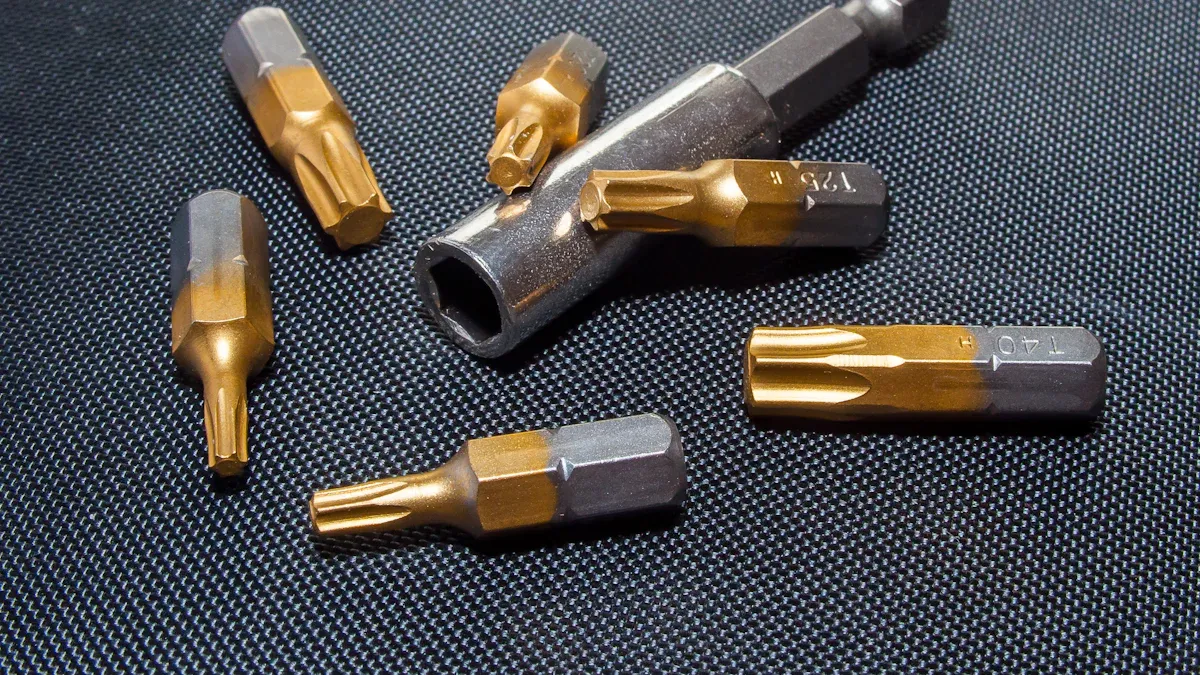
Tungsten Alloy Metal Injection Molding (MIM) transforms fine metal powders into complex, high-performance components through a series of precise steps. Each stage plays a crucial role in achieving the final product’s desired properties and dimensions. This process begins with preparing a specialized material mixture and concludes with a dense, finished part.
Feedstock Preparation in Tungsten Alloy MIM
Feedstock preparation marks the initial critical step in the Tungsten Alloy Metal Injection Molding process. This stage involves combining specific metal powders with a binder system. The metal powders can consist of pure molybdenum, tungsten, tungsten heavy metal, or their alloys. Manufacturers carefully select these powders for their desired material properties.
The binder system typically includes plastic or paraffin wax. This binder acts as a temporary carrier, allowing the metal powder to flow during injection molding. Very fine spherical metal powder is mixed thoroughly with this binder system. The final feedstock is approximately 40% binder and 60% metal by volume. Metal powder size usually ranges from 10 to 25 microns. This precise composition ensures proper flow characteristics and green strength for subsequent processing.
Injection Molding of Tungsten Alloy Parts
After feedstock preparation, the injection molding phase begins. Here, the granulated feedstock is injected into a mold cavity under controlled conditions. This step is similar to plastic injection molding, but it uses a metal-binder mixture. Several critical parameters ensure successful part formation. Temperature affects feedstock viscosity and flow, which is critical for complete mold filling. Pressure drives the material into the mold cavity, ensuring part density and detail. Injection speed determines how quickly the mold fills, influencing surface finish and preventing defects. Hold time maintains pressure as the part cools, preventing shrinkage and voids.
| Variable | Physical Impact | Importance |
|---|---|---|
| Temperature | Affects feedstock viscosity and flow | Critical for complete mold filling |
| Pressure | Drives material into mold cavity | Ensures part density and detail |
| Injection Speed | Determines how quickly mold fills | Influences surface finish and defects |
| Hold Time | Maintains pressure as part cools | Prevents shrinkage and voids |
Design rules also guide the creation of successful tungsten alloy parts. Uniform walls ensure consistent flow and cooling, preventing sink marks and warpage. Draft angles ease part ejection from the mold, avoiding scratches or breakage. Corner radii reduce stress concentration, preventing cracks and weak points. Ultrafine powder fabrication technology is important for achieving high sintered density and homogeneous microstructures. High flowability of tungsten powder is crucial for Tungsten Heavy Alloys (WHAs) in MIM. Proper powder deagglomeration and binder systems are necessary for successful development of tungsten-based MIM parts.
| Design Rule | Reason | Common Defect Avoided |
|---|---|---|
| Uniform Walls | Ensures consistent flow & cooling | Sink marks, warpage |
| Draft Angles | Eases part ejection from mold | Scratches, breakage |
| Corner Radii | Reduces stress concentration | Cracks, weak points |
Debinding in Tungsten Alloy MIM
Debinding is the next essential stage in the MIM process. This step removes the binder from the molded “green” part, leaving behind a fragile, porous metal structure. Manufacturers employ different methods for debinding.
Solvent debinding involves dissolving the lower molecular weight binder component into a fluid. This process selectively removes part of the binder, creating interconnected pores within the component. These pores allow for the escape of the remaining binder during subsequent thermal treatment.
Thermal debinding is a conventional heat treatment. It occurs in a gas atmosphere to remove higher molecular weight components of the binder systems. This method often follows solvent debinding or can be used independently for certain binder systems. Thermal debinding can also be combined with sintering in a single step, departing from older three-step MIM processes. This combined approach streamlines production and improves efficiency.
Sintering for Final Tungsten Alloy Components
Sintering represents the final critical stage in the Tungsten Alloy Metal Injection Molding process. This step transforms the fragile, porous “brown” part, which remains after debinding, into a dense, strong, and fully functional metal component. Manufacturers place the debound parts into a high-temperature furnace. They heat the parts to temperatures just below the material’s melting point. During this process, the metal particles bond together, reducing porosity and causing the part to shrink to its final dimensions.
The sintering atmosphere is crucial for achieving the desired material properties. Controlled environments, such as hydrogen or vacuum, prevent oxidation and facilitate the densification process. This precise control ensures the final component possesses high density, excellent mechanical strength, and accurate dimensional tolerances.
Achieving these properties requires precise control over sintering parameters. Optimal conditions vary depending on the specific tungsten alloy. The following table outlines typical optimal sintering temperatures and times for Tungsten Heavy Alloys (WHA):
| Tungsten Alloy Type | Optimal Sintering Temperature | Sintering Time | Key Outcomes/Considerations |
|---|---|---|---|
| Tungsten Heavy Alloy (WHA) | 1525 °C | 30 min | Achieves desired structure character, good mechanical properties (UTS > 1000 MPa, plasticity > 20%). Sintering below 1525 °C leads to insufficient homogenization, voids, and gaps. Higher temperatures (e.g., 1550 °C) can cause gravity sedimentation and slightly lower UTS due to restoration phenomena. |
| Tungsten Heavy Alloy (WHA) | 1500 °C | Extended time | An alternative to 1525 °C to mitigate gravity sedimentation issues at higher temperatures. |
For example, sintering Tungsten Heavy Alloys at 1525 °C for 30 minutes yields excellent mechanical properties, including high ultimate tensile strength and good plasticity. Sintering at lower temperatures, such as below 1525 °C, results in incomplete homogenization, leaving voids and gaps within the material. Conversely, excessively high temperatures, like 1550 °C, can lead to gravity sedimentation and a slight reduction in ultimate tensile strength due to material restoration phenomena. An alternative approach involves sintering at 1500 °C for an extended period. This method helps mitigate the gravity sedimentation issues sometimes observed at higher temperatures.
Another example involves Tungsten Carbide (WC) tools. These tools also undergo a precise sintering process to achieve their characteristic hardness and wear resistance.
| Tungsten Alloy Type | Optimal Sintering Temperature | Sintering Time | Key Outcomes/Considerations |
|---|---|---|---|
| Tungsten Carbide (WC) Tools | 1350°C to 1500°C | Not specified | Performed in a controlled atmosphere; crucial for microstructure formation, mechanical properties, and phase stability. |
Sintering Tungsten Carbide tools typically occurs between 1350°C and 1500°C in a controlled atmosphere. This temperature range is vital for forming the correct microstructure, ensuring the desired mechanical properties, and maintaining phase stability. The sintering process ultimately dictates the final density, strength, and dimensional accuracy of the tungsten alloy components. It is a critical step that ensures the parts meet the stringent performance requirements of their intended applications.
Key Advantages of Tungsten Alloy Metal Injection Molding (MIM)
Achieving Complex Geometries and High Precision
Tungsten Alloy Metal Injection Molding excels at producing parts with highly complex geometries and exceptional precision. This process allows manufacturers to create intricate shapes, delicate features, and high-density components with tight tolerances. It is ideal for applications demanding intricate designs and fine details where precision is paramount. For example, MIM produces tiny balance weights in watches. These parts require extreme accuracy and small dimensions. The fine metal powders and binder system enable the material to flow into complex mold cavities, filling even the smallest details. This capability eliminates the need for extensive post-machining operations, which saves time and reduces costs. MIM also allows for the creation of internal features and undercuts that would be impossible or very expensive with traditional machining methods. This geometric freedom opens up new design possibilities for engineers.
Superior Material Properties Retention
MIM ensures the final components retain the superior material properties inherent to tungsten alloys. The controlled sintering process densifies the parts without compromising the alloy’s unique characteristics. This includes high density, excellent strength, and remarkable wear resistance. It also preserves the material’s radiation absorption capabilities. Unlike some other manufacturing methods, MIM maintains the integrity of the alloy’s microstructure. This results in parts that perform reliably in demanding environments. The precise control over temperature and atmosphere during sintering prevents degradation of the material. This ensures the components meet stringent performance requirements for critical applications in aerospace, medical, and defense industries. Engineers can trust that the final MIM part will exhibit the expected mechanical and physical properties of the chosen tungsten alloy.
Cost-Effectiveness for High-Volume Production
Tungsten Alloy Metal Injection Molding offers significant cost-effectiveness, especially for high-volume production runs. The process creates near-net-shape parts, which drastically reduces material waste. This is particularly beneficial for expensive materials like tungsten alloys, where minimizing scrap is crucial. MIM also allows for part consolidation. Manufacturers can combine multiple smaller components into a single, complex part. This eliminates assembly steps, reduces inventory, and lowers overall labor costs. While tooling costs can be higher initially compared to some other methods, high production volumes quickly amortize these expenses. This makes MIM an economical choice for mass-produced, intricate tungsten alloy components, providing a lower cost per part as production scales.
Excellent Surface Finish and Quality
Tungsten Alloy Metal Injection Molding consistently produces parts with an excellent surface finish. This capability significantly enhances both the aesthetic appeal and functional performance of components. The process achieves this superior quality through several inherent characteristics. Fine metal powders, a fundamental component of the MIM feedstock, contribute significantly to the smooth surface texture. These tiny particles pack together densely, minimizing irregularities.
Furthermore, the highly polished surfaces of the mold cavities directly transfer their smoothness to the injected “green” parts. This replication ensures that the initial molded component already possesses a high-quality finish. The subsequent debinding and sintering steps are carefully controlled. These stages preserve the surface integrity established during molding. The final sintered part often requires minimal or no secondary finishing operations.
This advantage sets MIM apart from many traditional manufacturing methods. Machining, for instance, frequently leaves tool marks or requires extensive post-processing like grinding or polishing to achieve a comparable surface quality. Investment casting can also produce good surfaces, but MIM generally offers finer detail and smoother finishes for smaller, intricate parts. The inherent smoothness of MIM parts reduces friction in moving assemblies. It also improves wear resistance and enhances corrosion resistance by eliminating microscopic surface imperfections where corrosion could initiate.
Industries demanding both precision and visual appeal greatly benefit from this aspect of MIM. Medical device manufacturers, for example, require components with sterile, smooth surfaces for patient safety and device efficacy. Consumer electronics often feature small, intricate metal parts where a flawless finish contributes to the product’s premium feel. The consistent quality of the surface finish across large production runs further underscores the reliability and efficiency of the MIM process. This ensures every component meets stringent quality standards directly out of the furnace.
Diverse Applications of Tungsten Alloy Metal Injection Molding (MIM)
Tungsten Alloy Metal Injection Molding provides solutions across numerous demanding sectors. This process leverages the unique properties of tungsten alloys with the precision of MIM, creating high-performance components for critical applications.
Medical and Healthcare Devices
The medical and healthcare industries extensively utilize tungsten alloy MIM for various devices. Manufacturers produce small, intricate components requiring high density and precision. These parts often include radiation shielding for imaging equipment, surgical instruments, and specialized implants. The ability to create complex geometries with tight tolerances ensures optimal performance and patient safety. MIM’s clean process also supports the stringent material requirements for medical applications, where biocompatibility and reliability are paramount.
Aerospace and Defense Components
Aerospace and defense sectors rely heavily on tungsten alloy MIM for its exceptional material properties. MIM Tungsten Heavy Alloy (WHA) components are manufactured for aerospace applications, providing crucial weight and balance solutions. Additionally, MIM Tungsten Carbide (WC) components find use in both aerospace and defense applications, offering superior hardness and wear resistance. The MIM process produces parts with densities between 95% and 99% of theoretical values. This high density ensures strong and reliable components, which is crucial for demanding environments in defense systems. Tungsten alloy Metal Injection Molding is a highly versatile manufacturing process. It combines the benefits of tungsten alloys with the flexibility of injection molding. This process enables the production of intricate and complex components with exceptional density, strength, and performance characteristics. Specific alloys like Tungsten-Nickel-Iron (W-Ni-Fe) are highlighted for their high density, exceptional strength, and impressive corrosion resistance, making them ideal for aerospace components, radiation shielding, and various defense applications.
Industrial and Automotive Applications
Industrial and automotive sectors also benefit significantly from tungsten alloy MIM. The process creates durable and high-performance parts for various machinery and vehicles. Manufacturers produce cutting tools and molds using this method. Other industrial components include boring bars, grinding quills, and tool extensions. These parts require excellent wear resistance and high-temperature stability. MIM also supports die casting applications, extrusion applications, and other high-temperature tooling applications. In the automotive industry, tungsten alloy MIM components can serve as counterweights, vibration dampers, or specialized engine parts, where their density and strength contribute to enhanced performance and longevity.
Consumer Electronics and Other Uses
Consumer electronics extensively use tungsten alloy MIM. This process creates small, intricate parts. These components often require high density and wear resistance. For example, manufacturers use tungsten alloy MIM parts in smartphones and wearables. They provide precise counterweights for vibration motors. They also offer robust components for camera stabilization systems. The high density of tungsten heavy alloys provides effective shielding for sensitive electronic circuits. This protects them from electromagnetic interference. It also offers mechanical strength for specialized internal parts. The process allows for miniaturization. It enables the integration of complex features into compact devices. This meets the demand for smaller, more powerful gadgets.
Beyond consumer electronics, tungsten alloy MIM finds applications in various other sectors. Sporting goods benefit from its properties. For instance, golf club weights use tungsten alloy inserts. These inserts optimize balance and performance. The high density allows designers to place weight precisely. This enhances the center of gravity.
Luxury goods also incorporate MIM tungsten alloy components. High-end watches feature intricate internal mechanisms. These mechanisms require durable and precisely manufactured parts. The process delivers the fine detail and superior finish needed for such products. Jewelry components also use MIM for complex designs.
Furthermore, specialized industrial tools and fixtures utilize tungsten alloy MIM. These tools demand extreme hardness and wear resistance. They perform in harsh environments. Examples include small nozzles, guides, and precision tooling inserts. The ability to produce complex shapes without extensive machining makes MIM an efficient choice for these applications.
The process also serves in scientific instrumentation. Here, precision and material stability are paramount. Components for laboratory equipment and analytical devices often require the unique properties of tungsten alloys. MIM delivers these parts with the necessary accuracy. This versatility highlights the broad utility of Tungsten Alloy Metal Injection Molding. It serves industries requiring high-performance materials and complex geometries. It offers a cost-effective solution for producing intricate components in high volumes. This ensures consistent quality and performance across diverse applications.
Comparing Tungsten Alloy Metal Injection Molding (MIM) with Other Methods
Manufacturers often evaluate various production techniques to select the most suitable method for their specific needs. Tungsten Alloy Metal Injection Molding (MIM) offers distinct advantages over traditional manufacturing processes. Understanding these differences helps in making informed decisions for part production.
MIM vs. Traditional Machining
Traditional machining involves removing material from a larger block to create a part. This subtractive method inherently generates significant material waste. In contrast, Metal Injection Molding (MIM) processes produce virtually no material waste during production. This leads to substantial cost savings, especially for expensive materials like tungsten alloys. MIM can achieve up to 98% material conversion efficiency.
| Feature | MIM Advantages | Machining |
|---|---|---|
| Material Waste | No material waste | Significant material waste |
MIM also offers significant cost savings as production volume increases. It becomes economically viable around 5,000 units and achieves best pricing above 20,000 annual units. MIM substantially reduces labor needs due to its highly automated nature compared to traditional metalworking. Furthermore, MIM parts require minimal secondary machining, leading to up to 90% savings on finishing costs. MIM can process complex and high-melting-point metals like tungsten alloy, which are challenging for other methods. Machining struggles to match MIM’s rate or detail for small, intricately detailed parts, especially those under 40 grams.
MIM vs. Powder Metallurgy (PM)
Conventional Powder Metallurgy (PM) also uses metal powders, but its process differs significantly from MIM. MIM achieves much higher part densities and superior mechanical properties.
| Feature | Metal Injection Molding (MIM) | Conventional Powder Metallurgy (PM) |
|---|---|---|
| Density | 95-99% theoretical density | 85-92% maximum theoretical density |
| Tensile Strength | Higher | Lower |
| Hardness | Higher | Lower |
| Fatigue Strength | Higher | Lower |
| Ductility | Better (higher elongation) | Lower |
MIM’s higher density translates to improved tensile strength, hardness, and fatigue strength. It also offers better ductility. For instance, W-Cu MIM can achieve 10% higher thermal conductivity than PM. Copper MIM can reach over 80% of pure copper’s electrical conductivity. These enhanced properties make MIM suitable for more demanding applications.
MIM vs. Investment Casting
Investment casting is another method for producing complex metal parts. It involves creating a wax pattern, coating it with ceramic, and then melting out the wax before pouring molten metal. While investment casting excels at producing larger, complex components, MIM offers superior precision and surface finish for smaller, intricate parts. MIM’s ability to create very fine details and thin walls often surpasses investment casting. This makes MIM ideal for components requiring extremely tight tolerances and excellent aesthetic quality without extensive post-processing.
Tungsten Alloy Metal Injection Molding (MIM) stands as a cutting-edge manufacturing solution. It delivers complex, high-performance components. This process leverages the unique properties of tungsten alloys. These properties include:
- High density
- Superior strength
- Exceptional wear resistance
This process is invaluable for industries. These industries demand precision, material integrity, and intricate designs.
FAQ
What is Tungsten Alloy Metal Injection Molding (MIM)?
Tungsten Alloy MIM combines fine tungsten alloy powders with a binder. Manufacturers inject this mixture into a mold. They then remove the binder and sinter the part. This process creates complex, high-precision metal components.
What are the main advantages of Tungsten Alloy MIM?
Tungsten Alloy MIM offers several benefits. It produces complex geometries and achieves high precision. The process retains superior material properties. It is also cost-effective for high-volume production. Additionally, it delivers excellent surface finish and quality.
What types of parts can Tungsten Alloy MIM produce?
Tungsten Alloy MIM produces small, intricate parts. These include medical devices, aerospace components, and industrial tools. It also creates consumer electronics parts and defense components. The process excels at complex shapes and fine details.
How does Tungsten Alloy MIM compare to traditional machining?
Tungsten Alloy MIM generates minimal material waste. Traditional machining removes material, creating significant scrap. MIM also produces complex shapes without extensive post-machining. This saves time and reduces costs.
Is Tungsten Alloy MIM cost-effective for manufacturing?
Yes, Tungsten Alloy MIM is cost-effective for high-volume production. It creates near-net-shape parts, reducing material waste. The process also allows for part consolidation. This minimizes assembly steps and lowers overall labor costs.
What industries commonly use Tungsten Alloy MIM?
Many industries use Tungsten Alloy MIM. These include medical, aerospace, and defense. Industrial and automotive sectors also benefit. Consumer electronics and sporting goods industries utilize this process for specialized components.
What material properties do tungsten alloys offer in MIM?
Tungsten alloys offer high density and superior strength. They provide excellent wear resistance and thermal stability. These alloys also possess good radiation absorption capabilities. This makes them suitable for demanding applications.