
Why Hot Isostatic Pressing (HIP) is Critical for High-Reliability MIM Components
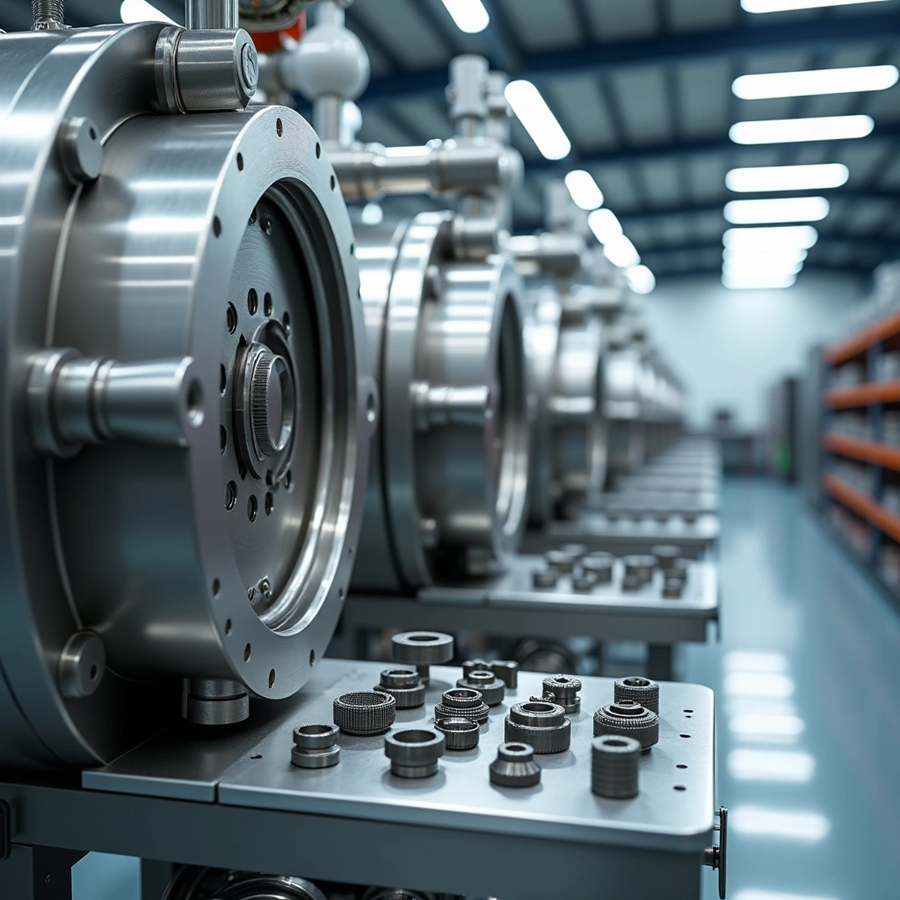
HIP hot isostatic pressing transforms standard Metal Injection Molding components into high-reliability parts by eliminating internal porosity that compromises structural integrity. Hot isostatic pressing increases density from approximately 95% to 99.9% and enhances fatigue strength and ductility by a lot for mission-critical applications. The HIP process delivers measurable improvements: ultimate tensile strength increases by 4%, ductility rises by 10%, and impact resistance improves almost 40%. This piece is about how the HIP post-processing MIM technique works, its three-stage densification mechanism, and why eliminating porosity in MIM is non-negotiable for aerospace, medical, and high-pressure industrial applications where component failure is not an option.
Understanding the Reliability Gap in Standard MIM Components
Standard sintering in Metal Injection Molding achieves a practical ceiling that limits component reliability. Sintered MIM parts reach 95-98% of theoretical density, leaving 2-5% residual porosity distributed throughout the microstructure. This density gap represents a structural vulnerability that determines whether a component performs under operational stress or fails.
The 95–98% Density Limitation in Standard Sintered MIM Parts
The sintering process heats metal powder to 96-99% of its melting point and enables atomic diffusion and particle bonding. Complete pore elimination remains elusive through sintering alone. Stainless steel 316L possesses a theoretical density of 8.0 g/cm³, but sintered parts achieve only 7.81 g/cm³, representing 97.6% of full density. This persistent gap stems from the solid-state diffusion mechanism’s failure to collapse all voids before grain growth limits further densification.
The density-strength relationship follows a steep degradation curve. Each 1% reduction in density decreases tensile strength by 3-5%. Parts at 95% density achieve 80% of wrought strength, while parts at 97% density reach 90% of wrought material performance:
- 95% density: 450-480 MPa tensile strength (80-85% of wrought 316L)
- 97% density: 490-520 MPa tensile strength (90-93% of wrought 316L)
- 98% density: 520-550 MPa tensile strength (93-96% of wrought 316L)
- 99%+ density (Post-HIP): 560-600 MPa tensile strength (96-99% of wrought 316L)
Micro-Porosity: How Residual Voids Compromise Dynamic Fatigue Strength
Residual porosity operates as a network of stress concentrators throughout the material matrix. Each pore functions as a potential crack initiation site under cyclic loading. The mechanical effect extends beyond static strength reduction. Each 1% porosity reduces fatigue limit by 8-12%, and fatigue life at fixed stress levels can drop 50-70% compared to dense material.
Porosity classification reveals two distinct threat mechanisms. Intra-granular pores remain trapped inside individual grains, while inter-granular pores locate at grain boundaries. Inter-granular porosity presents greater danger because these pores can link together and form connected networks that reduce ductility and toughness. A density above 97% becomes necessary to minimize this interconnected porosity risk.
Pore geometry and spatial distribution compound the problem. A single residual micro-pore measuring 20 μm in diameter can act as a stress concentration site that reduces fatigue life, while clusters of smaller 2–5 μm pores in close proximity compromise dynamic toughness under cyclic loading.. This demonstrates that pore density and clustering patterns matter as much as individual pore size. The comparison between MIM and wrought material reveals stark differences in dynamic performance. MIM stainless steel 17-4 PH exhibits only 15% of wrought material fracture energy in V-notched impact testing. This illustrates how residual porosity alters failure mechanisms.
Why Mission-Critical Applications Demand Near-100% Theoretical Density
Applications with cyclic stresses, impact loads, or corrosion exposure cannot tolerate the performance penalty of standard MIM density. The remaining 2-5% porosity compromises dynamic properties, especially impact and fatigue strength. Hot isostatic pressing addresses this gap by eliminating residual voids and pushes density from the 96-98% post-sintering range to nearly 100% theoretical density. High reliability mim components where failure consequences extend beyond component replacement require the density difference between standard sintering and hip post processing mim to achieve wrought-equivalent performance in complex geometries.
What Is Hot Isostatic Pressing (HIP) and How It Works for MIM
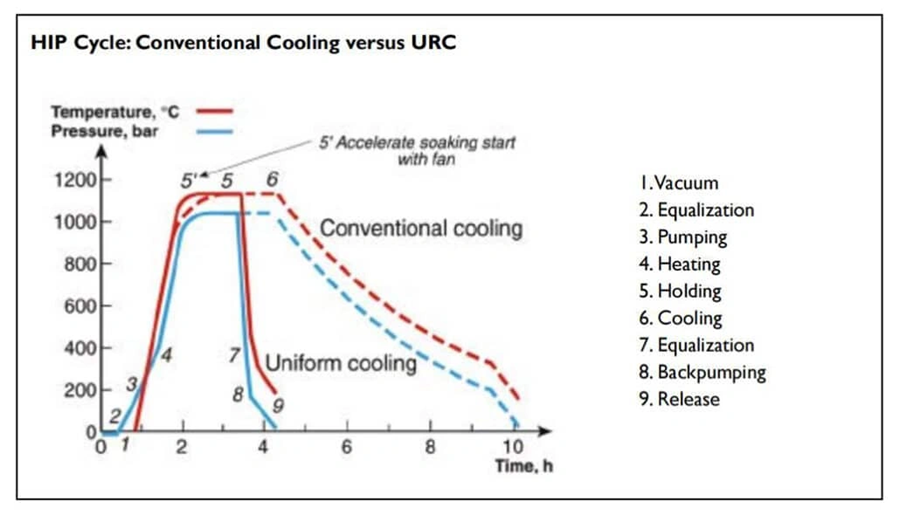
Hot isostatic pressing applies extreme pressure and temperature at the same time within an inert atmosphere to collapse internal voids in sintered components. This post-processing technique uses pressurized argon gas acting uniformly from all directions to remove micro-porosity that survives conventional sintering.
The HIP Process: Simultaneous High Temperature, Iso-Pressure & Argon Gas
The hip process subjects components to pressures reaching 50-200 MPa (around 7,350-30,000 PSI) while heating to temperatures between 900°C and 2,000°C depending on the alloy system. Argon is the preferred pressurizing medium due to its large atomic size and chemical inertness. The process follows a controlled sequence: components load into a pressure vessel equipped with an internal furnace, air evacuates from the chamber, argon fills the void, then pressure and temperature ramp together. Gas pressure’s isotropy provides a key benefit. Pressure acts uniformly in all directions rather than uniaxially and causes voids to collapse without directional bias.
MIM components see HIP temperatures run 100-200°C below sintering temperature to prevent undesirable grain growth. Stainless steel parts process at around 1,200°C, titanium alloys at 900°C, and aluminum alloys near 500°C. Cycle times span 4-10 hours door-to-door for MIM applications, though total duration varies with material type, part geometry and load size. The heating phase occurs under steadily increasing pressure until reaching target conditions, where temperature and pressure hold constant for 1-4 hours. Controlled cooling and depressurization complete the cycle after the soak period.
The Closed Porosity Threshold: Why ≥92–94% Density is Critical for Capsule-Free HIP
Capsule-free HIP works only when porosity remains isolated from the external surface. Open porosity connected to the atmosphere allows argon gas to infiltrate the pore network during pressurization. Internal pressure equals external pressure in this case and eliminates the differential force needed for pore collapse. The result: zero densification despite the expensive HIP cycle.
The transition from open to closed porosity occurs at a material-dependent critical density. This threshold ranges from 92% to 94% of theoretical density for most MIM alloys. Interconnected pore channels persist throughout the microstructure below this range. Pores isolate as discrete voids encapsulated within the solid material above this density. MIM parts sinter to 95-98% density, well above the minimum required for successful capsule-free processing. This natural compatibility makes removing porosity in mim through HIP both technically feasible and economically attractive compared to powder metallurgy routes requiring protective cans.
Modern HIP Advancements: Integrated Heat Treatment and High-Pressure Quenching
Recent developments in hip for mim parts technology focus on combining densification with thermal processing in a single cycle. Uniform Rapid Cooling (URC) systems circulate temperature-controlled gas through integrated heat exchangers and achieve cooling rates up to 500°C per minute. Uniform Rapid Quenching (URQ) pushes cooling rates beyond 3,000°C per minute under maintained pressure. These capabilities enable complete heat treatment cycles inside the HIP vessel and consolidate what previously required separate furnace operations into one integrated process known as High Pressure Heat Treatment(HPHT). Steered Cooling technology adds dynamic control and adjusts cooling rates during the cycle to optimize microstructure development and precipitation behavior.
Eliminating Porosity in MIM: The Three-Stage Densification Mechanism
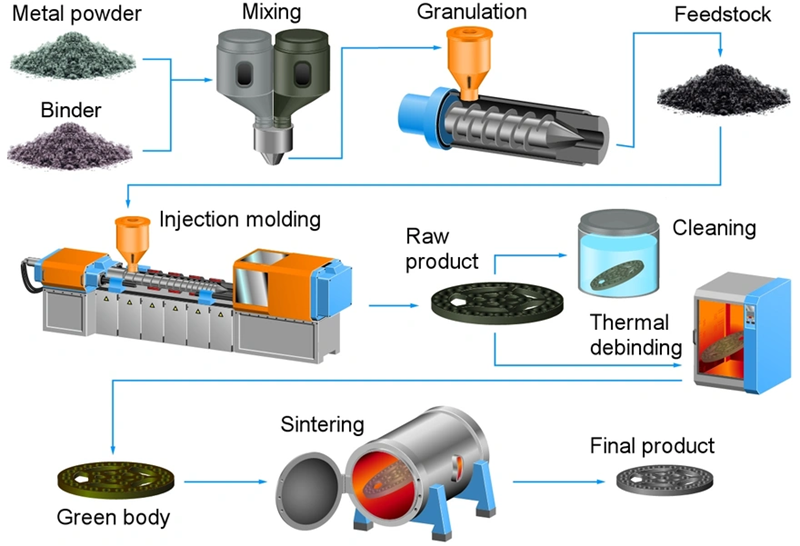
Densification during hip hot isostatic pressing proceeds through three sequential yet overlapping mechanisms that transform residual porosity into material that is dense. Each stage addresses voids that get smaller through distinct physical processes.
Stage 1: Yielding and Plastic Collapse of Internal Voids
Plastic deformation dominates as the main densification mechanism at this stage. Material yield strength drops at elevated temperatures, falling to 10-20 MPa for typical alloys. Applied pressures of 100-150 MPa vastly exceed this reduced yield threshold and force immediate plastic flow into pore spaces. The external pressure surpasses the material’s yield strength at HIP temperature. Voids collapse through plastic deformation.
This initial phase eliminates approximately 50% of residual porosity within the first 0-30 minutes of the cycle and does so faster. The mechanism functions well only when starting density exceeds 92%. This is why the closed porosity threshold determines capsule-free HIP feasibility. Random powder particle translation and rotation increase particle coordination numbers. Gaps reduce and relative density increases faster.
Stage 2: Power-Law Creep Densification for Smaller Pores
Creep mechanisms take over for closing smaller, more resistant pores following plastic collapse. Time-dependent material flow becomes the dominant driver, with power-law creep contributing approximately 40% of total densification. Fine-grained MIM structures densify faster than coarse-grained cast materials due to increased grain boundary mobility.
This stage extends 30 minutes to 3 hours depending on material and part geometry. Complete HIP cycles require 3-4 hours rather than brief exposure. Creep and diffusion work together to not just close pores but eliminate them, creating defect-free material.
Stage 3: Diffusion Bonding for Metallurgical Continuity
Atomic diffusion bonds across collapsed pore surfaces during the final 1-2 hours. Diffusion bonding occurs at the atomic level, with atoms migrating to eliminate the interface and create metallurgical continuity indistinguishable from wrought material. This stage removes former pore boundaries as potential weak points and ensures defects are removed rather than just compressed.
Capsule-Free HIP: Cost & Precision Advantages for Injection Molded Parts
MIM parts achieve a decisive economic advantage by eliminating encapsulation requirements. Castings at 85-95% density with open porosity require metal capsules, while powder compacts at 70-90% density need glass encapsulation, adding 4-6 hours of processing time. MIM parts exceeding 95% density possess closed porosity instead. Their own surface functions as a gas-tight barrier. This capsule-free capability positions eliminating porosity in mim through direct load-HIP-unload cycles as the preferred route for high-volume, high-performance applications. Modern MIM facilities leverage these automated capsule-free HIP lines to deliver scalable, cost-effective components to global Tier-1 suppliers
Quantified Performance Improvements: Why HIP Is Non-Negotiable
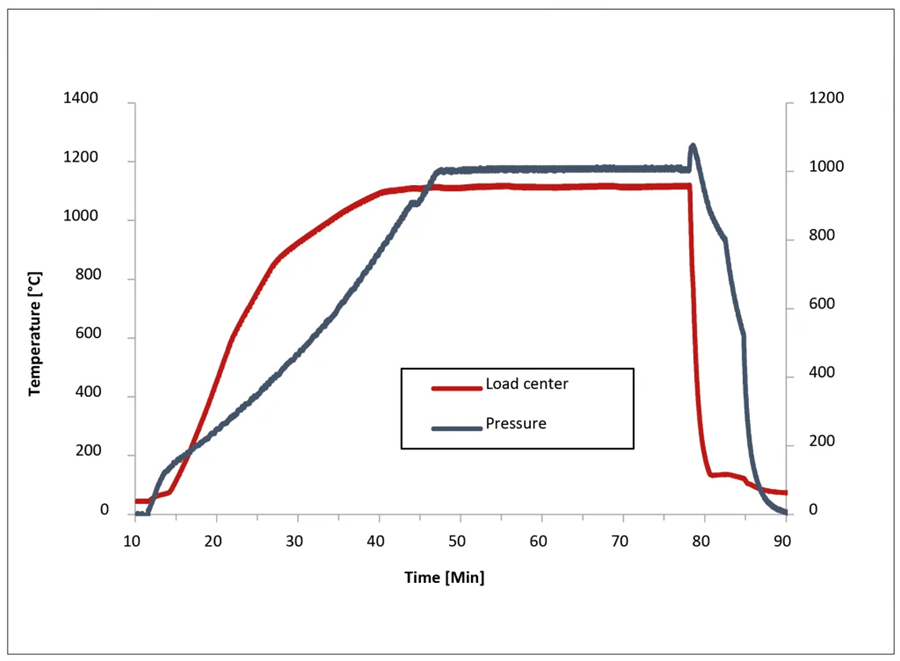
Performance data from HIP-treated MIM components demonstrates why this post-processing step separates adequate parts from mission-critical ones. The improvements span mechanical properties, surface quality and dimensional consistency. Dynamic properties show the most dramatic gains.
MIM Fatigue Strength Boost: 2x to 3x Life Improvement
Fatigue performance responds to porosity elimination in dramatic fashion. High cycle fatigue life improves 2-4 times compared to as-sintered material. Fatigue limits increase 12-18%. Ground data for 17-4 PH stainless steel reveals the magnitude: as-sintered parts achieve 200 MPa fatigue strength and fail 50% below requirements. HIP-treated parts reach 450 MPa, delivering a 2.25x improvement. This translates to a 3x higher allowable design stress when you account for scatter reduction. The fatigue slope decreases after HIP treatment, showing more predictable and less variable performance in production lots of all types. Fatigue life at fixed stress levels extends 100-300% beyond baseline.
Ductility and Dynamic Resistance Gains
Ductility improvements reach 30-40% post-HIP. Elongation increases from 6-7% to 8-10% for precipitation-hardened stainless steels. Resistance to dynamic loading shows the most substantial gains and improves by almost 40%. This dramatic boost occurs because dynamic properties remain sensitive to microstructural defects. Fracture surfaces of HIP-treated samples show large numbers of dimples with no residual pores, showing ductile fracture modes rather than brittle failure.
Surface Polishability: Achieving Defect-Free Mirror Finish for Medical & Optical Grade
Subsurface porosity presents a persistent challenge during polishing operations. Material removal exposes new surfaces without pause, and any pore located just beneath the surface becomes visible. The result is uneven finish. These exposed pores trap polish media, solvents and contaminants. Both appearance and cleanliness suffer. HIP eliminates this unpredictability and enables medical implant manufacturers to achieve the <0.05 μm Ra surface finish required for biocompatibility on a routine basis. Zero subsurface porosity prevents bacterial harboring in medical applications.
Dimensional Stability and Internal Flaw Elimination
HIP reduces dimensional variability between components by densifying all parts to near-similar final density. Batch-sintered parts reach 96-98% density with spatial variations. Subsequent HIP brings all components to near 100% density and tightens dimensional tolerances.Leading MIM manufacturers integrate strict dimensional quality control and high-pressure sintering protocols to ensure these full-density components achieve near-zero defect rates across global medical and aerospace supply chains.
High-Reliability Applications & ROI Considerations
Industries that just need absolute reliability drive commercial adoption of hip hot isostatic pressing for complex geometries that machining cannot produce economically.
Aerospace Components: Fatigue-Critical & Load-Bearing Brackets
Aerospace certification mandates 99.9% density for fatigue-critical components. Turbine blades, structural brackets and landing gear components processed through hot isostatic pressing achieve wrought-equivalent properties while maintaining net-shape complexity. Applications where single failure proves catastrophic require the performance ceiling that only hip for mim parts delivers.
Medical & Dental Implants: Zero Porosity for Biocompatibility and Corrosion Resistance
Subsurface porosity harbors bacteria in medical applications and creates infection risks during surgical procedures. Cobalt chrome and titanium implants must withstand corrosive body fluids while enduring cyclic stresses equivalent to 100 tons per square inch during normal joint movement. Corrosion products release metal ions. These ions trigger inflammatory responses and peri-implantitis. Eliminating porosity in mim through HIP becomes mandatory rather than optional for implantable devices.
High-Pressure Automotive & Industrial Valves
Systems operating above 200 bar pressure cannot tolerate porosity-induced leakage where failure creates safety hazards. High reliability mim components in automotive turbochargers and industrial hydraulic valves require zero-defect microstructures.
Commercial ROI Evaluation: Balancing Added HIP Costs against Failure Risks
Frame hip post processing mim as risk mitigation rather than added expense. The technology reduces scrap rates and lowers inspection costs while minimizing warranty liability for critical applications. The incremental HIP investment disappears against potential liability exposure when component failure triggers catastrophic results.
Conclusion
Hot isostatic pressing revolutionizes Metal Injection Molding from an economical manufacturing method into a producer of mission-critical components. The three-stage densification mechanism eliminates residual porosity that standard sintering doesn’t deal very well with and challenges density from 95-98% to 99.9% theoretical. Fatigue life doubles or triples, impact resistance improves 40%, and ductility gains reach 30-40%. Aerospace and medical implant applications just need these performance levels where component failure carries catastrophic risks. The technology delivers wrought-equivalent mechanical properties in complex geometries that machining cannot produce economically. HIP represents not an added expense but insurance against failure risks that substantially exceed processing costs for high-reliability applications.
Hot isostatic pressing applies uniform pressure from all directions, resulting in improved isotropy of both microstructure and mechanical properties. This uniform pressure application ensures shrinkage occurs equally in all directions, eliminating directional weaknesses that can occur with other pressing methods and creating components with consistent properties throughout.
Hot isostatic pressing is commonly used to seal internal porosity in titanium alloy parts, particularly those produced through additive manufacturing methods like electron-beam melting. While HIP effectively closes internal voids and defects in Ti-6Al-4V parts, standard treatment parameters can lead to microstructure coarsening, which may reduce strength if not properly controlled.
Medical and dental implants require zero porosity to prevent bacterial harboring and ensure biocompatibility. Subsurface pores can trap bacteria, creating infection risks during surgical procedures. Additionally, implants must withstand corrosive body fluids and extreme cyclic stresses while preventing metal ion release that could trigger inflammatory responses, making HIP treatment mandatory for implantable devices.
HIP treatment dramatically enhances fatigue properties, with high cycle fatigue life improving 2-4 times compared to as-sintered material. Fatigue limits increase by 12-18%, and for materials like 17-4 PH stainless steel, fatigue strength can jump from 200 MPa to 450 MPa—a 2.25x improvement that translates to 3x higher allowable design stress.
Capsule-free HIP requires components to have closed porosity, which typically occurs at 92-94% of theoretical density or higher. Below this threshold, interconnected pore channels allow pressurizing gas to infiltrate, preventing densification. MIM parts naturally sinter to 95-98% density, making them ideal candidates for cost-effective capsule-free HIP processing.