
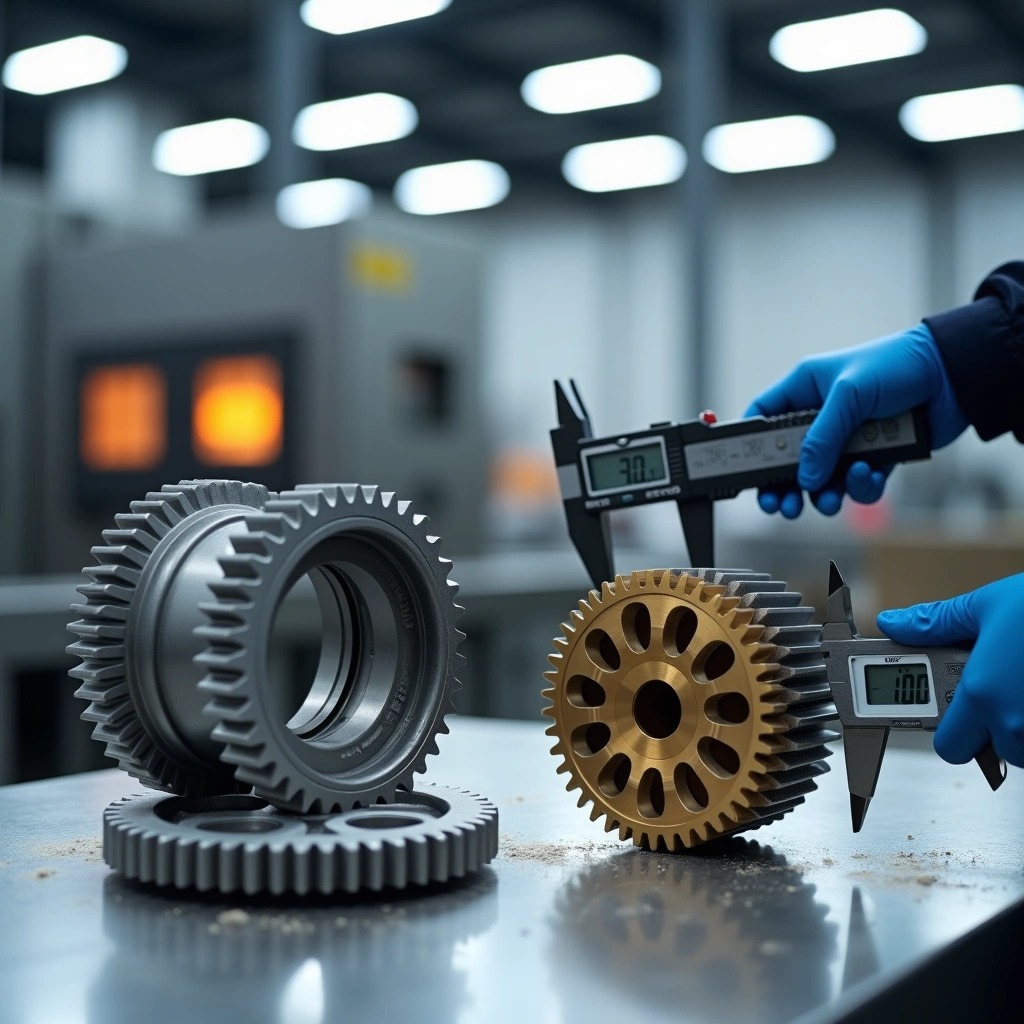
Modern internal combustion engines operate across a wide range of speeds and loads. They need precise valve timing adjustments to optimize performance. A camshaft phaser enables continuous adjustment of valve timing according to changing driving conditions. This reduces pumping losses during light load and improves combustion efficiency. The optimization also reduces unburned hydrocarbons and nitrogen oxides in exhaust emissions. Powder metallurgy offers a budget-friendly manufacturing approach to produce these precision components at scale.
This piece gets into sintered camshaft phaser manufacturing processes. The focus is on material properties, quality standards and custom OEM solutions. Topics include powder compaction, controlled atmosphere sintering, IATF 16949 certification requirements and application-specific design variations for intake and exhaust systems.
Powder Metallurgy Manufacturing Process for Camshaft Phasers
Metal Powder Compaction & High-Precision Tooling Stages
The powder metallurgy process for variable valve timing components begins with high-performance iron-copper and nickel-steel alloys conforming to MPIF Standard 35 (e.g., FC-0208, FN-0205, or FLN2-4405), tailored specifically for high-torque VVT environments. Automated presses apply pressures ranging between 400-800 MPa during compaction. This multi-level pressure approach creates varying density zones within a single component. Engineers can optimize strength in high-stress areas while maintaining lighter weight elsewhere. Custom tooling sets have die cavities, upper and lower punches, and core rods designed for each camshaft phaser geometry.
Compaction forms a “green compact” that maintains the part’s shape but lacks final strength. Production rates between 1,000 and 3,000 parts per hour make this method suitable for high-volume automotive applications. The process achieves 97% material utilization and bypasses expensive machining steps like gear hobbing and broaching. Final density requirements determine exact compaction pressure, with harder materials requiring forces at the upper end of the range.
Controlled Atmosphere Sintering Process for VVT Components
Green parts enter sintering furnaces operating at temperatures between 1,100-1,300°C. The sintering temperature remains below the metal’s melting point. The pressed component maintains its shape during thermal processing. Hydrogen and nitrogen gasses create a protective atmosphere within electric furnaces. Nitrogen acts as a cover gas while hydrogen functions as an oxide reducer. This prevents oxidation of powder metal VVT components throughout the cycle.
Atoms diffuse across particle boundaries during sintering and fuse them into one solid piece. This metallurgical bonding grants structural integrity absent in the green compact stage. Alloying elements like carbon, copper, and nickel diffuse into the base metal matrix and boost hardness and wear resistance. Controlled atmosphere sintering maintains precision accuracy up to ±0.01mm through regulated temperature profiles and cooling rates.
Heat Treatment, Deburring, and Secondary Finishing Operations
Sintered camshaft phaser components undergo secondary processes to achieve final specifications. Deburring removes burrs inherent to compaction through tumbling, shot blasting, or brushing methods. Heat treatments modify material properties. Quenching, case hardening, and carbonitriding increase component hardness and strength. Sizing operations improve dimensional precision and reach tolerances up to IT 5 levels while densifying the part by 4 to 10 percent.
Additional finishing has machining for features not achievable during compaction, steam treatment for surface properties, and ultrasonic cleaning. These operations allow manufacturers to tailor component characteristics for specific intake camshaft phaser and exhaust system applications without compromising the cost advantages of powder metallurgy manufacturing.
Material Properties and Design Specifications
Strength, Density, and Wear Resistance Requirements
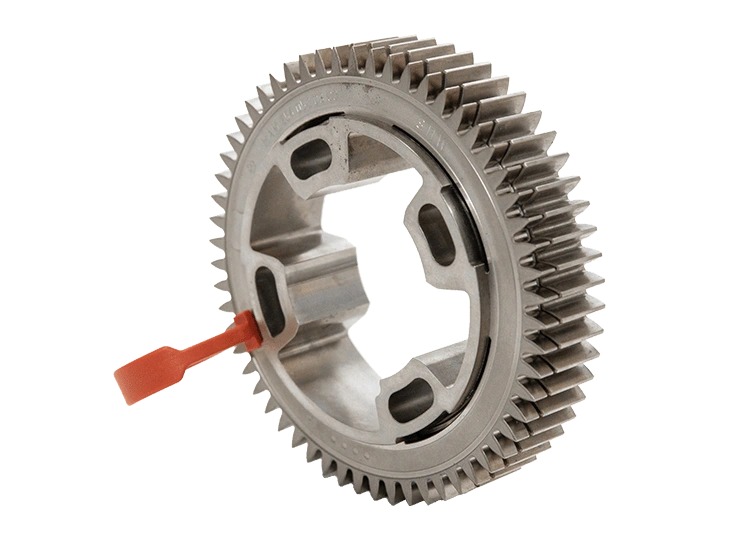
Sintered camshaft phaser components just need specific mechanical properties to withstand engine operating conditions. The density achieved during compaction and sintering influences tensile strength and fatigue resistance directly. Parts with higher density exhibit superior wear characteristics under continuous rotation and oil pressure fluctuations. Material selection balances these properties with machinability for secondary operations.
Contact surfaces between rotor and stator assemblies face critical wear resistance demands. The sintering process allows for controlled carbon diffusion and creates surface hardness without compromising core toughness. This gradient structure provides durability against abrasive wear from engine oil contaminants and maintains structural integrity during thermal cycling.
High-Precision Dimensional Accuracy (IT6-IT7 Tolerances)
Variable camshaft timing phaser performance depends on tight dimensional control. Powder metallurgy camshaft phaser manufacturing achieves IT6-IT7 tolerance grades through controlled sintering atmospheres and post-sinter sizing. These precision levels ensure proper fit between mating components and maintain required clearances for hydraulic oil flow.
Dimensional stability across production runs remains consistent due to automated compaction tooling and temperature-controlled furnace zones. Tight tolerances eliminate secondary machining for many features and reduce production costs while maintaining quality standards.
Complex Oil Flow Channel Integration & Weight Reduction
Sintered metal processing makes internal oil passages formed during compaction directly. These channels route pressurized oil to actuate phaser movement without drilling or casting. Complex geometries that would need multiple machining operations emerge as single-piece components. Weight reduction occurs through selective density distribution and places material only where structural demands exist.
Cost Efficiency: Powder Metallurgy vs. CNC Machined Components
Manufacturing economics favor powder metallurgy for high-volume automotive powder metallurgy parts production. Material waste drops substantially compared to subtractive machining processes. Custom camshaft phaser manufacturing through sintering eliminates multiple operations like gear cutting and drilling. Tooling investments spread across production volumes and make OEM camshaft phaser supplier contracts economically viable for extended runs.
Quality Standards and Automotive Testing Protocols
IATF 16949 Quality Management Certification
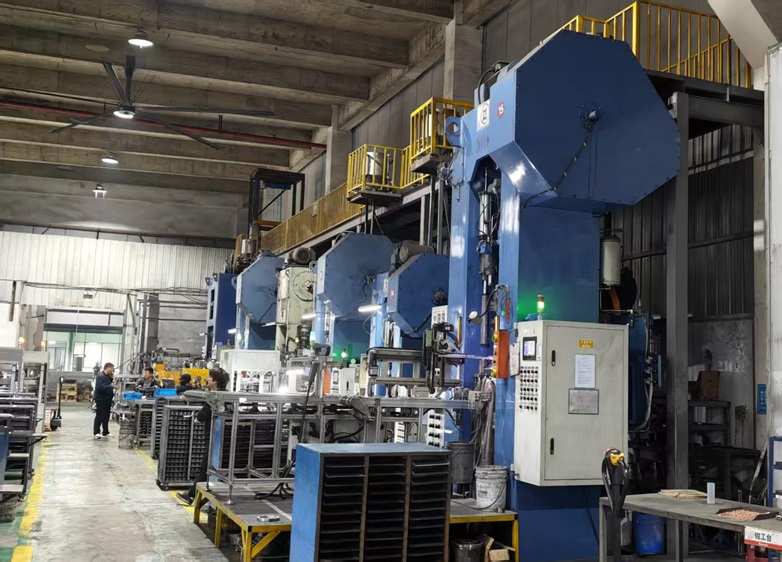
Qualified manufacturing partners maintain IATF 16949 certification to make sure powder metal VVT components meet automotive grade standards consistently. This certification goes beyond ISO 9001 standards and includes automotive-specific controls for process validation and production part approval processes. The framework covers design through final delivery. It establishes rigorous quality management systems that match global automotive requirements. Mass production of variable camshaft timing phaser components requires high-capacity pressing equipment combined with these certification frameworks.
Performance and Dynamic Leakage Testing for VVT Phasers
Component functionality testing measures critical parameters outside the combustion engine environment. Test rigs monitor oil pressures, phase angles, oil volumetric flows and torque to verify intake camshaft phaser specifications. These measurements determine internal leakage between chambers and external oil leakage characteristics. High-pressure pulsation tests apply dynamic sinusoidal loading using oil pressure from ambient up to 50 bar. Load cycles range from 10 million to 100 million cycles depending on application requirements. Precision Coriolis flow sensors maintain tight tolerances during testing.
Fatigue Resistance and Torsional Durability Testing
Accelerated durability testing uses compressed time protocols and load amplification to replicate years of operation within shortened timeframes. Surface fatigue develops when gears experience repeated contact stress. This creates microcracks that grow into larger failures. Rotating bending fatigue tests check sintered camshaft phaser durability against forces from belt or chain drives. Components are loaded up to 10 million cycles or failure. These validation methods make sure OEM camshaft phaser supplier products withstand cyclical loading conditions throughout their service life.
Custom OEM Solutions for Automotive VVT Applications
Precision Sintered Rotors, Stators, and Sprocket Variations
Powder metallurgy produces three core VVT components with different functions. Rotors control valve timing adjustment through hydraulic actuation. Stators house the rotor assembly and maintain alignment under operational loads. Sprockets transfer rotational energy from the timing chain to the VVT system. Each component requires different powder compositions and compaction parameters that meet specific performance criteria. Sprocket teeth withstand continuous contact forces. Rotor vanes need smooth surfaces to seal hydraulically.
Intake & Exhaust Camshaft Phaser Design Variations
Intake and exhaust phasers operate with opposite directional characteristics. The intake phaser advances the intake cam from its resting position. The exhaust phaser retards its cam from the resting position. Different part numbers reflect these functional differences and are non-interchangeable between applications. Phasers installed on just the exhaust cam or on both intake and exhaust cams provide engineers flexibility to optimize fuel economy and power.
Application-Specific DFM Engineering & Volume Production
Design for manufacturability optimizes product designs for economical, high-volume production. This approach reduces production time and cost. Components meet quality standards without compromising functionality. Material selection and assembly complexity reduction contribute to lower production costs.
At JHMIM, our engineering team offers rapid DFM evaluations and custom tooling design for high-volume automotive VVT component orders.
Compatibility with VVT Solenoid Valves and Oil Control Systems
The VVT system uses oil pressure supplied by the VVT solenoid to activate the cam phaser. The powertrain control module processes inputs from engine sensors and commands the VVT solenoid to advance or retard timing. Oil control valves function as spool valves that direct pressurized oil through camshaft bearing journals into phaser ports.
Conclusion
Sintered metal manufacturing delivers precision and economical solutions for camshaft phaser production. The powder metallurgy approach achieves tight IT6-IT7 tolerances and maintains 97% material utilization, outperforming traditional machining methods by a lot. IATF 16949 certification ensures consistent quality across high-volume production runs. Custom OEM solutions address specific intake and exhaust applications through design flexibility and application-specific engineering. This manufacturing technology continues advancing automotive VVT system performance and reduces production costs for global suppliers.
Powder metallurgy achieves 97% material utilization, eliminating expensive machining steps like gear hobbing and broaching. The process produces near-net-shape components with integrated features such as oil flow channels and complex geometries in a single operation, reducing both material waste and secondary processing requirements. Production rates of 1,000 to 3,000 parts per hour make it economically viable for high-volume automotive applications.
Sintered camshaft phasers achieve IT6-IT7 tolerance grades through controlled sintering atmospheres and post-sinter sizing operations. These precision levels ensure proper fit between mating components and maintain required clearances for hydraulic oil flow. Controlled atmosphere sintering maintains dimensional accuracy up to ±0.01mm through regulated temperature profiles and cooling rates.
Intake and exhaust phasers operate with opposite directional characteristics. The intake phaser advances the intake cam from its resting position, while the exhaust phaser retards its cam from the resting position. These functional distinctions result in different part numbers, making them non-interchangeable between applications. Phasers can be installed on just the exhaust cam or on both intake and exhaust cams depending on performance requirements.
Manufacturing partners must maintain IATF 16949 certification to ensure powder metal VVT components meet automotive grade standards consistently. This certification extends beyond ISO 9001 standards, incorporating automotive-specific controls for process validation and production part approval processes. The framework covers design through final delivery, establishing rigorous quality management systems aligned with global automotive requirements.
Components undergo performance testing that measures oil pressures, phase angles, oil volumetric flows, and torque to verify specifications. High-pressure pulsation tests apply dynamic sinusoidal loading using oil pressure up to 50 bar, with load cycles ranging from 10 million to 100 million cycles. Rotating bending fatigue tests check durability against forces from belt or chain drives, ensuring components withstand cyclical loading conditions throughout their service life.