
Advanced Electrochemical Testing for Powder Metallurgy & MIM Part
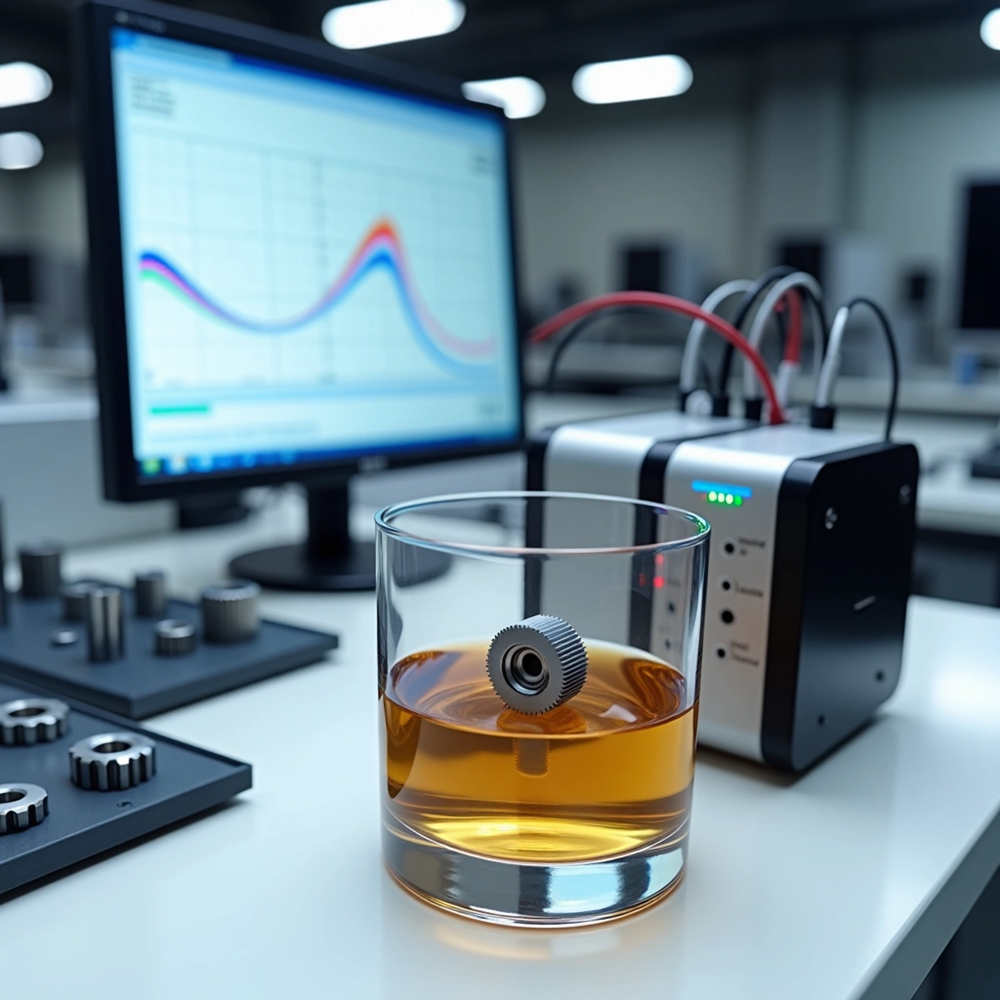
Electrochemical testing provides fast and quantitative analysis of how metals corrode and degrade in aggressive environments. This data cannot be achieved through physical or chemical methods alone. The electrochemical testing techniques measure electrical and chemical behavior to assess corrosion resistance, coating integrity, and oxidation kinetics in materials exposed to harsh conditions. Standard electrochemical corrosion testing protocols face unique challenges for powder metallurgy (PM) and metal injection molding (MIM) components. Sintered parts contain inherent porosity that distorts surface area calculations and creates micro-electrochemical cells within pores. Specialized preparation and analysis approaches are required. In this piece, we get into how electrochemical testing methods and electrochemical analysis adapt to sintered structures. We explore core electrochemical testing equipment protocols and demonstrate how manufacturers use electrochemical data to optimize component quality and corrosion performance.
The Metallurgy Challenge: How Sintered Porosity Distorts Standard Electrochemical Data
Sintered components present measurement challenges that conventional electrochemical testing methods don’t deal very well with. The interconnected porosity inherent to powder metallurgy and MIM processes changes how corrosion attacks the material and how test instruments interpret the resulting electrochemical signals.
Apparent vs. True Surface Area: Managing Current Density Calculations in Porous Matrices
Pore walls contribute additional surface area beyond the geometric dimensions of a test specimen. This creates discrepancies in corrosion rate calculations. The apparent surface area increases when pore surface area adds to it, and the overall area exposed to corrosive media expands. Calculated corrosion rates appear lower than reality because the standard equation divides weight loss by recorded surface area. Sintered materials exhibit corrosion rates two or more orders of magnitude worse than wrought counterparts when we measure actual performance. The corrosion rate equation Corrosion rate=(K×W)/(A×D×T) relies on accurate surface area (A) input. Determining true exposed area in porous structures remains difficult without advanced characterization methods.
Crevice Corrosion Within Pores: Analyzing Micro-Electrochemical Cells in Sintered Components
Pores function as discrete electrochemical cells where stagnant electrolyte starts localized attack. Research on sintered Type 316L stainless steel reveals at least one pit site per 1×1 mm area, much higher than wrought material. The passive region disappears on polarization curves when electrode areas reach 1×1 mm or larger in sintered specimens tested in 0.1 M NaCl. Micropitting represents the original stage of crevice corrosion and occurs within the passive potential range.
Pre-Impregnation and Surface Preparation Protocols to Achieve Flawless Potentiostatic Curves
Vacuum impregnation seals leak paths created by macro- and micro-porosity before electrochemical analysis. The process involves placing components in pressure vessels and evacuating air from pores. Anaerobic thermosetting sealants are then inserted, excess material drained, and residues washed. This preparation eliminates false current spikes and stabilizes potentiostatic measurements that would otherwise reflect electrolyte penetration rather than true material behavior.
Core Electrochemical Testing Techniques Applied to PM & MIM Alloys
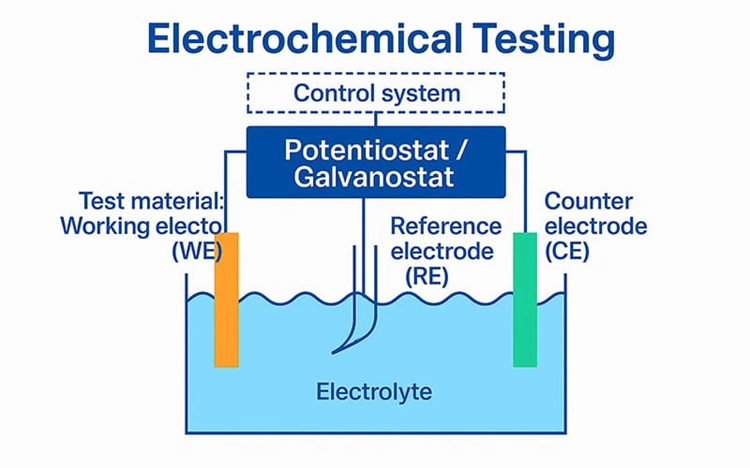
Three electrochemical testing methods dominate quality assessment for sintered alloys. Each reveals distinct aspects of corrosion behavior and material integrity.
Potentiodynamic Polarization (PDP): Rapid Screening for Sintered Corrosion Rates
The metal specimen connects to a three-electrode system immersed in corrosive solution while potential sweeps from cathodic to anodic direction. Polarization curves that result calculate corrosion potential (Ecorr), corrosion current density (icorr), passivation stability and pitting breakdown thresholds. Scan rates near 1 mV/s yield reproducible current densities with minimal curve distortion. Sintered specimens display pseudo-passive behavior after extended immersion as corrosion product films develop. The icorr value relates to corrosion rate through ASTM G102-89 calculations. Samples sintered at higher temperatures demonstrate lower icorr values due to reduced porosity. One study found sintered CoCrMo at 1300°C expressed icorr of 0.775 μA/cm². Material sintered at 1200°C reached 14.08 μA/cm².
Electrochemical Impedance Spectroscopy (EIS): Mapping Oxide Film Passivation and Coating Degradation
This non-destructive electrochemical analysis technique measures AC impedance across frequency ranges from 0.1 Hz to 100 kHz. Capacitance values relate inversely to oxide film thickness, while resistance (RP) increases proportionally with film thickness. Nyquist plots reveal capacitive behavior through depressed semicircles that reflect charge transfer resistance at metal-oxide-solution interfaces. Titanium alloys tested in 0.9% NaCl at 37°C produced oxide film resistivity values between 2.4×10⁶ to 1.8×10⁷ MΩ·cm. EIS detects coating defects and water uptake before visible damage occurs. Impedance above 10⁹ Ω·cm² indicates excellent corrosion protection.
Open Circuit Potential (OCP) Stability in Harsh Chemical and Marine Media
OCP monitoring tracks potential progress without applied current and reveals passive film formation and breakdown tendencies. Steel samples in seaport conditions showed OCP increases during original months as protective corrosion layers formed. Polarization resistance reached 16,220 Ω·cm² for alloyed steel after 252 days in marine environments.
Industrial Standards Framework: ASTM Electrochemical Protocols for Sintered Stainless Steel
Standardized testing protocols establish reproducible standards to evaluate sintered stainless steel performance in manufacturing facilities and research laboratories of all types.
ASTM G59 & G61 Integration: Calculating Pitting and Cyclic Polarization of MIM 316L and 17-4PH
ASTM G59 establishes potentiodynamic polarization resistance measurements. ASTM G61 defines cyclic potentiodynamic polarization procedures for iron-, nickel-, and cobalt-based alloys in chloride environments. Testing protocols for 316L employ 1N H2SO4 solutions with scan rates of 0.1667 mV/s. The sweep ranges from -20 mV relative to open circuit potential up to 1.2 V versus Ag/AgCl reference electrodes. Breakdown potential (Eb) and protection potential (Ep) calculate pitting susceptibility. Minimal hysteresis (Eb – Ep) suggests superior resistance. Heat-treated 17-4PH exhibits improved corrosion resistance compared to as-sintered conditions.
ASTM G150 Compliance: Determining Critical Pitting Temperature (CPT) for High-Load Valve Gears
ASTM G150 measures critical pitting temperature through electrochemical methods. Specimens are exposed to 1M NaCl solution at constant potential of +700 mV versus saturated calomel electrode. Temperature ramps at 1°C/min until current density exceeds 100 µA/cm². This defines the CPT value. This method provides rapid ranking of austenitic stainless steels for applications in oil, gas and marine industries.
Evaluating Galvanic Coupling Risks (ASTM G71) in Assembled Multimaterial Powertrain Systems
ASTM G71 outlines procedures to couple dissimilar metal specimens in electrochemical cells. The test measures galvanic current, corrosion potential and anode mass loss. Zero resistance ammeter testing calculates actual galvanic current flowing between coupled metals without potential perturbation.
How JHMIM Leverages Electrochemical Data to Optimize Sintering Quality
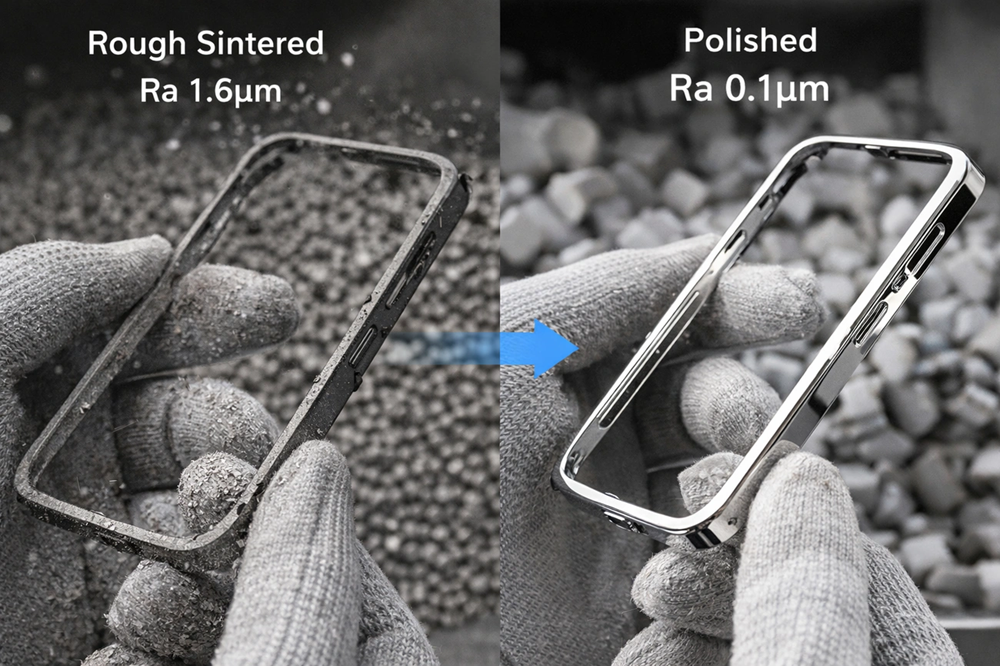
Advanced manufacturers connect electrochemical testing data to production parameters and drive measurable improvements in component durability and performance.
Correlating Potentiostatic Passivation Behavior with Vacuum Sintering Atmosphere Purity
The gaseous atmosphere during sintering influences final mechanical and corrosion properties of steel components. Vacuum environments prevent oxidation during sintering and keep powder surfaces clean enough to bond. JHMIM operates a state-of-the-art 18,000+ square meter manufacturing facility in China with over 20 years of deep expertise in powder metallurgy and metal injection molding (MIM). We deliver high-density, zero-defect complex metal components globally. Our facility is supported by 150+ skilled technicians and advanced high-tonnage sintering and pressing equipment.
Improving Post-Sintering Passivation and Nitriding Workflows via Corrosion Current (I corr) Analysis
Icorr and Ecorr serve as key parameters for corrosion assessment. Nitriding treatments exhibit lower Icorr compared to carburizing or boriding and show superior corrosion resistance improvement. Specimens treated via plasma nitriding demonstrate reduced corrosion current densities. Optimized conditions achieve Icorr values as low as 5.895 × 10⁻⁷ A/cm².
Comparative Analysis: Traditional Salt Spray Testing vs. Ultra-Precise Electrochemical Acceleration
Electrochemical methods measure corrosion behavior and assess corrosion potential and current density without relying on empirical exposure correlations inherent in salt spray testing. Potentiostat testing completes in 2-3 hours versus 500+ hours for salt spray exposure. Accelerated cyclic electrochemical techniques provide promising alternatives for rapid corrosion resistance evaluation.
Partner with an IATF 16949 Certified Manufacturer for Rigorous Metallurgy Validation
Certification standards define manufacturing excellence for precision-critical applications. IATF 16949:2016 represents one of the automotive industry’s most demanding quality management certifications. It replaces ISO/TS 16949 with stronger customer orientation and defect prevention emphasis. Companies undergo third-party audits to demonstrate continual improvement, variation reduction, and supply chain waste minimization.
Detailed In-House Metallurgical Labs and Electrochemical Characterization Infrastructure
Certified manufacturers maintain testing capabilities that span dimensional verification and corrosion analysis. Coordinate measuring machines (CMMs), optical comparators, surface roughness testers, and contour measuring instruments enable accurate measurement of complex geometries. Electrochemical characterization facilities include EG&G PARC 273 potentiodynamic analytical systems, Schlumberger 1255 high frequency response analyzers, electrochemical impedance analyzers, and salt spray corrosion testing chambers. These installations support failure analysis, materials assessment, and corrosion control studies in manufacturing sectors of all types.
JHMIM operates an 18,000+ square meter manufacturing facility in China with over 20 years of deep expertise in powder metallurgy and metal injection molding (MIM). We have 150+ skilled technicians and high-tonnage sintering and pressing equipment that deliver high-density, zero-defect complex metal components around the world. We streamline your supply chain and solve tight-tolerance manufacturing challenges under one roof.
Conclusion
Electrochemical testing methods overcome porosity-related measurement challenges in sintered components through specialized preparation protocols and adapted analysis techniques. Manufacturers who integrate potentiodynamic polarization, impedance spectroscopy and standardized ASTM protocols learn about quantitative data that traditional salt spray exposure alone cannot provide. These electrochemical characterization approaches enable optimization of sintering parameters, post-processing treatments and material selection decisions. Rigorous validation infrastructure combined with certified quality systems will give powder metallurgy and MIM components the corrosion performance that automotive and industrial applications just need.
Metal injection molding (MIM) injects a metal-binder mixture into molds to create complex, intricate geometries with tight tolerances and uniform density in all directions. Traditional powder metallurgy (PM) sintering compacts metal powders directly into simpler forms, but friction between powder and tooling can result in non-uniform final components with varying density.
Sintered parts contain inherent porosity that creates additional surface area beyond geometric dimensions, distorting standard corrosion rate calculations. The interconnected pores function as micro-electrochemical cells where localized corrosion initiates, and they can cause calculated corrosion rates to appear artificially lower than actual performance by two or more orders of magnitude compared to wrought materials.
Potentiodynamic polarization sweeps electrical potential across a specimen immersed in corrosive solution, generating curves that quantify corrosion potential, corrosion current density, passivation stability, and pitting breakdown thresholds. The test completes in 2-3 hours and directly correlates corrosion current to corrosion rate, with lower values indicating better resistance—for example, material sintered at higher temperatures shows significantly reduced corrosion current due to decreased porosity.
Vacuum impregnation seals both macro- and micro-porosity by evacuating air from pores under pressure and filling them with anaerobic thermosetting sealants. This preparation eliminates false current spikes and stabilizes potentiostatic measurements that would otherwise reflect electrolyte penetration into pores rather than true material corrosion behavior, enabling accurate electrochemical characterization.
Electrochemical methods provide quantitative measurements of corrosion potential and current density in 2-3 hours, while salt spray testing requires 500+ hours of empirical exposure. Electrochemical techniques fundamentally measure corrosion behavior without relying on correlation factors, offering faster, more precise data that manufacturers can directly link to production parameters and material optimization decisions.
Submit Your Component Specifications and Application Media Requirements for an Expert Corrosion Risks Review
Corrosion assessment methodologies measure susceptibility and consequence before deployment. Risk-based assessment tools assess environmental severity, operational hazards, design vulnerabilities, and maintenance protocols to compute life-cycle cost projections. These analyzes identify mitigation strategies that reduce corrosion-related failures in construction, oil and gas, automotive, aerospace, and marine applications.