
Selecting the optimal manufacturing process is crucial for project success. This guide helps navigate the choices between 3D Printing, Machining, and Metal Injection Molding (MIM). It focuses on key factors: part complexity, production volume, material properties, cost, and lead time. Approximately 70% of manufacturing costs are determined during the design phase. The difference between an optimized and an over-engineered design can lead to a significant cost difference, for example, a $50 part versus a $500 part for identical functionality. Making informed decisions at this stage directly impacts both product quality and overall project economics.
Key Takeaways
- Choose 3D printing for quick prototypes and complex designs. It works best for small batches and saves material.
- Select machining for parts needing high accuracy and smooth surfaces. It handles many materials and works well for medium to high production.
- Use Metal Injection Molding (MIM) for small, complex metal parts. It is cost-effective for very large production numbers.
- Consider part complexity, how many parts you need, and material choice. These factors help pick the right manufacturing method.
- 3D printing has low starting costs but higher cost per part for many items. MIM has high starting costs but low cost per part for many items.
- Machining offers many material choices. 3D printing and MIM have specific material options.
- Combine different methods for best results. For example, use 3D printing for early designs and machining for final production.
Understanding the Fundamentals of Each Manufacturing Process
3D Printing (Additive Manufacturing)
Principles of Additive Manufacturing
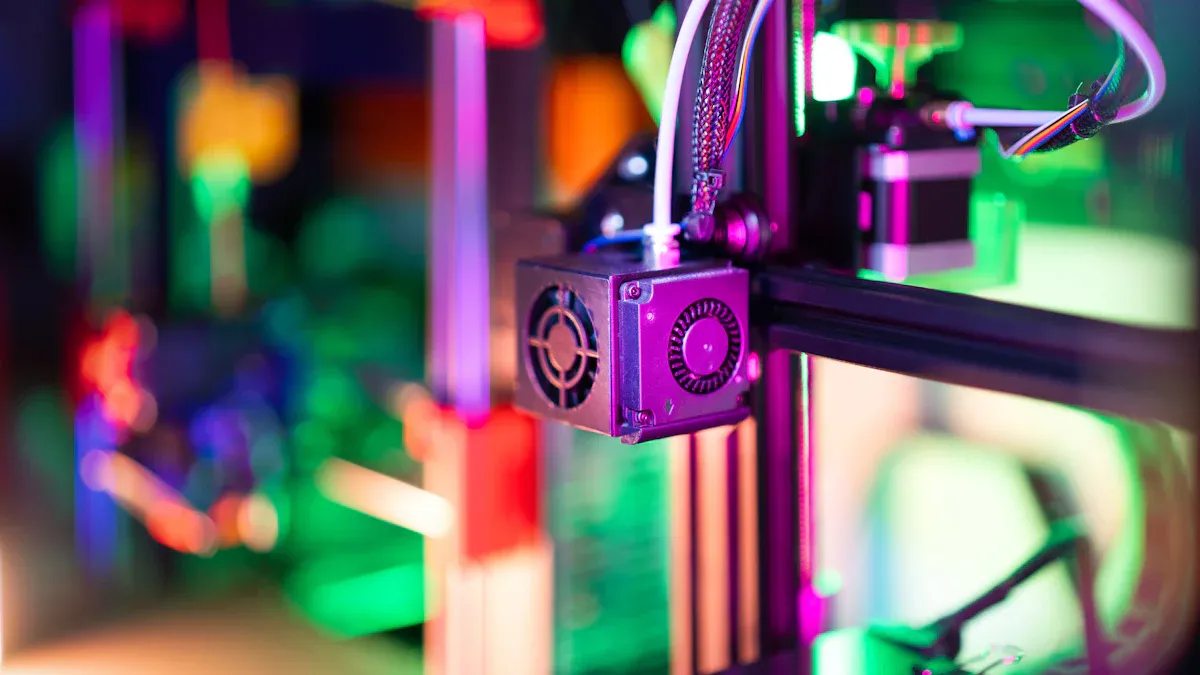
3D printing, also known as additive manufacturing, builds three-dimensional physical objects layer by layer from a digital model. This process starts with a digital model, typically a CAD (Computer-Aided Design) file. Slicing software then divides the CAD model into thousands of horizontal layers. The 3D printer prints each layer successively, using various materials like plastic, metal, or resin, to create the final product. Different methods exist, such as material extrusion, where a nozzle dispenses material like in Fused Filament Fabrication (FFF). Vat polymerization uses targeted light sources to cure photopolymer resins, seen in processes like Stereolithography (SLA) and Digital Light Processing (DLP), known for precision. Designers must consider minimum wall thickness for structural integrity and the need for support structures for overhangs greater than 45 degrees.
Common Materials for 3D Printing
3D printing utilizes a wide array of materials. Plastics like PLA, ABS, and PETG are common for FDM printers. Resins are used in SLA and DLP for detailed parts. Metal powders, including stainless steel, titanium, and aluminum alloys, are employed in processes like Selective Laser Sintering (SLS) and Direct Metal Laser Sintering (DMLS). Composites, ceramics, and even biological materials are also becoming increasingly available.
Typical Applications of 3D Printing
3D printing excels in rapid prototyping, allowing quick design iteration and validation. It is ideal for producing complex geometries, customized parts, and low-volume production runs. Industries like aerospace use it for lightweight components, medical for prosthetics and implants, and consumer goods for personalized items and intricate designs.
Machining (Subtractive Manufacturing)
Principles of Subtractive Manufacturing
Machining is a subtractive manufacturing process that removes material from a solid workpiece to achieve the desired shape. This process requires a mandatory relative velocity between the cutting tool and the workpiece. Three essential relative motions define machining: cutting velocity, feed rate, and depth of cut. Computer Numerical Control (CNC) machining utilizes computer control for high precision and automation. It converts computer-aided design models into physical parts with minimal variation, sometimes as little as 0.0001 inches. This advanced technology employs various cutting tools to remove material, making it highly recommended for customized parts or medium-volume productions due to its high level of automation. Engineers evaluate performance through parameters like cutting force, material removal rate, surface finish, and tool wear.
Common Materials for Machining
Machining can process a vast range of materials. Metals such as aluminum, steel, brass, titanium, and various alloys are frequently machined. Plastics like ABS, nylon, polycarbonate, and acrylic are also commonly used. Additionally, composites and wood can undergo machining processes.
Typical Applications of Machining
Machining is crucial for parts requiring high precision, tight tolerances, and excellent surface finishes. It is widely used in industries like automotive for engine components, aerospace for structural parts, and medical for surgical instruments. Machining is suitable for medium to high-volume production where material integrity and dimensional accuracy are paramount.
Metal Injection Molding (MIM)
Principles of MIM
Metal Injection Molding (MIM) is an advanced manufacturing technique combining powder metallurgy with plastic injection molding. This process efficiently produces high-density metal components with intricate shapes and precise dimensions, enabling the mass production of complex metal parts with exceptional accuracy. MIM has significantly evolved since the 1970s, adapting plastic injection molding technology for metal substrates. The process begins with compounding, where fine metal powders blend with plastic binders to create a feedstock. Next, injection molding heats and injects this feedstock into molds to form ‘green parts.’ Debinding carefully removes the plastic binder from these green parts. Finally, sintering heats the debound parts to high temperatures, causing metallic particles to bond and achieve near-theoretical density. This process is particularly valuable for creating components that require high density, intricate geometries, and tailored physical properties.
Common Materials for MIM
MIM primarily uses various metal alloys. Common materials include stainless steels (e.g., 316L, 17-4 PH), low alloy steels, tool steels, nickel alloys, copper alloys, and titanium alloys. The choice of material depends on the required mechanical properties, corrosion resistance, and application.
Typical Applications of MIM
MIM is ideal for producing small, complex metal parts in high volumes where cost-effectiveness at scale is a priority. Industries such as medical (surgical instruments, orthodontic brackets), firearms (trigger components), automotive (sensor housings, small gears), and consumer electronics (hinges, connectors) extensively use MIM for its ability to create intricate, high-strength metal components.
Comparative Analysis: Key Factors for Process Selection
Part Complexity and Geometric Freedom
Handling Intricate Designs with 3D Printing
3D printing excels at producing highly complex and intricate designs. This additive process builds parts layer by layer, allowing for geometries impossible to achieve with traditional manufacturing methods. For powder bed technologies like Selective Laser Sintering (SLS) and Multi Jet Fusion (MJF), complex surface geometries increase the labor required for powder removal. However, SLS technology offers economic advantages for complex internal geometries and organic shapes because it eliminates the need for support structures, which reduces post-processing penalties. Design complexity also affects printing time and material usage. Strategies like geometry simplification are crucial for reducing print times and associated costs. The size and complexity of a 3D printed object directly impact its cost, as more intricate designs demand greater material and time. Similarly, the complexity of the 3D model influences both printing time and material consumption, suggesting that simplifying the design can lead to cost reductions.
Geometric Constraints in Machining
Machining, a subtractive process, faces inherent geometric constraints. Cutting tools must physically access and remove material from the workpiece. This limits the ability to create internal channels, undercuts, or highly organic shapes without multiple setups or specialized tooling. Designers must consider tool paths, minimum corner radii, and the need for draft angles when designing parts for machining. These limitations often necessitate simpler designs or multi-part assemblies to achieve complex forms.
MIM’s Capability for Small, Complex Geometries
Metal Injection Molding (MIM) offers a compelling solution for small, complex metal parts. It combines the design freedom of plastic injection molding with the strength of metal. MIM can produce intricate features, thin walls, and complex internal structures that would be difficult or impossible to machine. However, MIM does have some geometric constraints. It requires a specific mold for each geometry, unlike 3D printing which needs no individual molds. While 3D printing handles higher design complexity, MIM’s capabilities are still superior to machining for many complex small parts.
| Feature | Metal Injection Molding (MIM) | 3D Printing (Binder Jetting) |
|---|---|---|
| Mold Requirement | Requires a specific mold for each geometry | No individual molds needed |
| Geometry Freedom | Has geometry constraints similar to other injection molding | Handles complex part designs easily, few restraints on geometry |
| Customization | Typically one part per mold, limited mass customization | Allows mass customization, multiple geometries printed at once |
| Design Complexity | Lower design complexity | Handles higher design complexity |
| Tolerances | Can sometimes achieve tighter tolerances on select geometries | Rapidly closing the gap in achievable tolerances |
Internal Features and Undercuts Across Processes
Each process handles internal features and undercuts differently. 3D printing excels here, often creating complex internal lattice structures or channels without significant difficulty, especially with powder bed fusion technologies that do not require support structures for internal voids. Machining struggles with internal features that lack direct tool access, often requiring multiple operations, specialized tools, or splitting the part into multiple components. MIM, through its molding process, can create intricate internal geometries and undercuts, provided the mold design allows for proper ejection of the green part.
Production Volume and Scalability
Cost-Effectiveness of 3D Printing for Low Volumes
For low-volume production, typically 1 to 100 units, 3D printing is highly cost-effective. It requires no tooling, which eliminates significant initial costs. While per-unit costs can range from $1 to $100, it often proves cheaper than injection molding for small batches because it avoids the significant upfront investment in molds. Metal 3D printing is particularly cost-effective for low to medium volume production, typically ranging from 1 to 500 parts. It eliminates the high setup costs associated with CNC machining by not requiring tooling or fixtures. For custom parts in quantities of 1–100, the per-unit cost of metal 3D printing is generally lower than CNC machining, especially when considering reduced design-to-production cycle times.
| Dimension | 3D Printing | Injection Molding |
|---|---|---|
| Per-unit cost | Low for small batches | Low for large volumes |
| Mold cost | None | High, amortized per unit |
| Suitable batch size | 1–100 parts | 1,000+ parts |
Machining for Medium-Volume Production
Machining is well-suited for medium-volume production runs. Its per-part cost remains relatively consistent across a range of volumes once setup costs are absorbed. While it involves initial programming and fixturing, these costs are less prohibitive than the extensive tooling required for MIM. Machining offers flexibility for design changes between batches, making it ideal for products with evolving specifications or moderate production demands.
MIM’s Suitability for High-Volume Production
Metal Injection Molding (MIM) is frequently the most efficient option for manufacturing complex, high-volume metal components. MIM generally becomes more cost-effective than CNC machining for producing small, complex parts when production volumes are high. While MIM involves significant initial tooling costs, the cost per part decreases as the production volume increases. Conversely, CNC machining is better suited for larger or simpler parts in lower volumes, and its cost per part does not decrease significantly with higher production volumes. MIM is also identified as a more economical choice for extremely high production numbers. For production volumes of 10,000 units or more, injection molding can achieve per-part costs below $1, whereas 3D printing might still range from $10–$50 per part.
Scaling Production from Prototype to Mass Manufacturing
The choice of process often evolves as a product scales. 3D printing excels in rapid prototyping and low-volume initial runs. As demand increases, manufacturers might transition to machining for medium volumes, leveraging its precision and material versatility. For mass production of small, complex metal parts, MIM becomes the most economical choice, amortizing its high tooling costs over millions of units.
Material Selection and Mechanical Properties
Diverse Material Options in Machining
Machining offers an exceptionally diverse range of material options. Manufacturers can select from a vast array of metals, plastics, and other specialized materials to meet specific application requirements.
- Metals:
- Alloy steel
- Aluminum
- Brass
- Bronze
- Carbon steel
- Copper
- Stainless steel
- Titanium
- Tool steel
- Specialty alloys
- Plastics:
- UHMW
- PMMA (Acrylic)
- PEEK
- PVC
- UHMWPE
- HDPE
- Other Materials:
- Wood
- Stone
- Graphite
- Ceramics
- Rubber
- Silicone
- Fiberglass
- Carbon Fiber
- Epoxy Resins
- Foam
- Phenolic
- Gypsum
- Diamond
Expanding Material Range in 3D Printing
The material range for 3D printing continues to expand rapidly. While plastics like PLA and ABS remain common, advancements have introduced high-performance polymers, various metal alloys (stainless steel, titanium, aluminum), ceramics, and composites. This growing versatility allows 3D printing to address a wider array of functional requirements.
Specific Metal Alloys for MIM
MIM primarily utilizes specific metal alloys, offering excellent mechanical properties for demanding applications. These materials undergo a sintering process that achieves near-theoretical density, resulting in strong and durable parts.
| Material | Density (g/cm³) | Tensile Strength (Mpa) | Yield Strength (0.2%) (Mpa) | Impact Strength (J) | Hardness (HV10) | Elongation (% in 25.4mm) |
|---|---|---|---|---|---|---|
| Stainless steel 316L | ≥7.85 | ≥450 | ≥140 | 190 | 100-150 | ≥40% |
Other common MIM materials include:
- Fe50Ni: Offers a density of ≥7.85 g/cm³, tensile strength of 468 Mpa, and a yield strength of 165 Mpa. It also exhibits high permeability (28000 μmax) and magnetization intensity (1.36T).
- Fe50Co: Provides a density of ≥7.95 g/cm³, tensile strength of ≥300 Mpa, and a yield strength of ≥180 Mpa, with a magnetization intensity of 2.0T.
- Copper alloy: Features a density of ≥8.5 g/cm³, tensile strength of ≥180 Mpa, and excellent thermal conductivity (330 W/(m.K)).
Achieving Desired Mechanical Strength and Durability
Each process offers different avenues for achieving desired mechanical strength and durability. Machining typically starts with solid billets, ensuring consistent material properties throughout the part. MIM parts achieve high strength through the sintering process, which densifies the metal powder. 3D printing’s mechanical properties depend heavily on the material, print orientation, and process parameters, with ongoing research continually improving strength and durability.
Impact of Post-Processing on Material Properties
Post-processing significantly impacts the final material properties across all three methods. Machined parts often undergo heat treatment, surface finishing, or coating to enhance hardness, corrosion resistance, or aesthetic appeal. MIM parts require debinding and sintering, which are critical steps determining final density, strength, and dimensional accuracy. 3D printed parts frequently need support removal, curing, sanding, or infiltration to improve surface finish, strength, or other functional characteristics.
Cost Considerations: A Detailed Breakdown
Tooling and Setup Costs for Each Process
Tooling and setup costs represent a significant initial investment for many manufacturing processes. Metal Injection Molding (MIM) requires substantial upfront capital for mold creation. A single mold for MIM can cost between $30,000 and $70,000, while overall tooling expenses range from $50,000 to $100,000. The initial equipment investment for MIM typically falls between $50,000 and $200,000. In contrast, metal 3D printing (specifically powder bed fusion) does not require traditional molds, eliminating that specific cost. However, the original setup cost for metal 3D printing equipment can exceed $500,000. Machining involves programming and fixturing costs, which are generally lower than MIM tooling but higher than the per-job setup for 3D printing.
| Characteristic | Metal Injection Molding (MIM) | Metal 3D Printing (Powder Bed Fusion) |
|---|---|---|
| Original Setup Cost (Equipment) | $50,000 – $200,000 | Upwards of $500,000 |
| Mold/Tooling Cost | $30,000 – $70,000 (for individual molds); $50,000 – $100,000 (for tooling) | N/A (no traditional molds) |
Material Costs and Waste Reduction with 3D Printing
Material costs and waste significantly impact the overall expense of a manufactured part. Machining, a subtractive process, often generates considerable material waste. For example, a titanium aerospace part with a 1 kg final weight might require 17 kg of raw material, leading to approximately 16 kg of material waste. This high buy-to-fly ratio increases material expenses. MIM, while using powdered metal, also experiences some material loss during the debinding and sintering stages, though it is generally more efficient than machining for complex geometries.
3D printing, an additive process, inherently reduces material waste by building parts layer by layer. This method only uses material where it is needed. However, 3D printing is not entirely waste-free. Approximately 34% of the plastic used in FDM 3D printing is wasted. Failed prints account for about 19% of the materials used in FDM 3D printing. Despite this, 3D printing generally offers better material utilization compared to subtractive methods, especially for complex parts.
Labor and Post-Processing Expenses
Labor and post-processing expenses contribute substantially to the final cost of a part. Machining often requires skilled operators for setup, programming, and monitoring, along with potential post-machining treatments like deburring or surface finishing. MIM involves labor for feedstock preparation, injection molding, and critical post-processing steps like debinding and sintering, which demand precise control. 3D printing also incurs labor costs for machine operation, support structure removal, and various post-processing techniques. These techniques include sanding, polishing, chemical smoothing, or heat treatments to achieve desired surface finishes or mechanical properties. The extent of post-processing directly influences the final cost.
Unit Cost Analysis at Different Production Volumes
The optimal manufacturing process often depends on the production volume. For low volumes (e.g., 1-100 units), 3D printing typically offers the most cost-effective solution due to its minimal setup costs and lack of tooling requirements. As production volumes increase to medium ranges, machining becomes more competitive. Its consistent per-part cost, once setup is complete, makes it suitable for moderate runs. For high-volume production, especially for small, complex metal parts, MIM emerges as the most economical choice. Its high initial tooling costs are amortized over millions of units, leading to a very low per-part cost.
Lead Time and Speed to Market
Rapid Prototyping with 3D Printing
3D printing excels in rapid prototyping, significantly accelerating the product development cycle. Designers can quickly iterate on designs, producing physical models within days. This speed allows for faster testing and validation, reducing the time to market.
| 3D Printing Technology | Typical Lead Time |
|---|---|
| Stereolithography (SLA) | 1–3 business days |
| Selective Laser Sintering (SLS) | 1–3 business days |
| Multi Jet Fusion (MJF) | 1–3 business days |
| Fused Deposition Modeling (FDM) | 1–3 business days |
| Direct Metal Laser Sintering (DMLS) | 1–7 business days |
Production Cycle Times for Machining
Machining offers relatively fast production cycle times once the setup and programming are complete. The speed depends on part complexity, material, and the number of operations required. For medium-volume production, machining provides a good balance between speed and precision. However, each part requires individual processing, which can limit overall throughput compared to molding processes.
MIM’s Initial Lead Time versus Production Speed
MIM has a longer initial lead time compared to 3D printing or even machining for prototypes. This delay stems from the need to design and manufacture complex molds. Once the tooling is complete, however, MIM offers exceptionally high production speeds. It can produce thousands or even millions of parts quickly and consistently, making it ideal for mass manufacturing.
Impact on Product Development Schedules
The choice of manufacturing process profoundly impacts product development schedules. 3D printing allows for quick design iterations and early functional testing, shortening the initial development phase. Machining provides a reliable path for producing functional prototypes and early production runs. MIM, despite its longer initial tooling phase, enables rapid mass production once the design is finalized, ensuring a swift transition from development to market launch for high-volume products.
Surface Finish and Dimensional Tolerances
Achievable Surface Quality Across Processes
The achievable surface quality varies significantly across these manufacturing methods. Machined parts generally boast excellent surface finishes, often requiring minimal post-processing for aesthetic or functional requirements. MIM parts also achieve good surface finishes, often comparable to those of injection-molded plastics, due to the smooth mold surfaces. 3D-printed parts can achieve surface finishes comparable to MIM parts, and any differences can be resolved through secondary processing and surface finishing if required.
Traditional powder-bed fusion and binder jetting in 3D printing can result in stepped layers on sloped surfaces, porous or grainy textures, and rough edges. These characteristics often necessitate secondary machining or polishing. However, advanced processes like 3DEO’s Intelligent Layering® platform aim to deliver smooth surface finishes directly from the printer, eliminating visible layer lines or rough grain. This technology achieves production-grade dimensional repeatability and tighter tolerances without extra finishing work. For 3D printed parts, the layer-by-layer construction often results in a terraced surface. Chemical smoothing, using a fast-evaporating solvent vapor, can precisely remove these terraces without damaging the part.
Precision and Accuracy of Machined Parts
Machined parts generally achieve higher dimensional tolerances due to the precise control offered by milling and turning tools. CNC machining provides exceptional accuracy, making it the go-to choice for components requiring very tight specifications. The direct removal of material with controlled tool paths ensures high precision.
Tolerances for 3D Printing and MIM
MIM parts typically achieve dimensional tolerances ranging from ±0.1% to ±0.5% of the intended dimensions. They can consistently maintain tolerances around ±0.3% of nominal dimensions, with the possibility of achieving even tighter controls when necessary. MIM technology can produce parts with complex geometries and high precision, often requiring minimal subsequent machining to achieve a finished part with excellent dimensional repeatability. 3D printing has historically had wider tolerances compared to machining and MIM, but advancements in technology continually improve its precision. Modern 3D printing processes can achieve tighter tolerances, especially with post-processing.
Secondary Finishing Operations for Enhanced Quality
All three processes can benefit from secondary finishing operations to enhance surface quality, dimensional accuracy, or mechanical properties. Machined parts might undergo grinding, lapping, or polishing. MIM parts often require minimal finishing but can benefit from tumbling, blasting, or heat treatments. 3D printed parts frequently need extensive post-processing, including support removal, sanding, chemical smoothing, or coating, to meet specific aesthetic or functional requirements. These operations add to the overall cost and lead time but are crucial for achieving the desired final product quality.
When to Choose Which Process: Scenario-Based Recommendations
Selecting the appropriate manufacturing process significantly impacts a project’s success. This section provides scenario-based recommendations to guide decision-makers toward the most suitable method for their specific needs.
Choose 3D Printing If…
You Need Rapid Prototyping and Design Iteration
3D printing excels at accelerating design iterations. It allows for the rapid production of functional prototypes, enabling quick design modifications and real-time validation. This significantly speeds up the design refinement process. Designers benefit from fast iteration, completing multiple design loops within a short timeframe. The low upfront cost eliminates the need for expensive molds for concepts and prototypes. This process facilitates early functional testing, providing meaningful feedback before committing to production. Prototypes can be printed near designers or test sites, reducing logistics and improving collaboration. 3D printing also improves communication and collaboration by offering a tangible representation of designs, enhancing design reviews, and promoting cross-functional teamwork.
Your Design Requires High Complexity or Customization
3D printing offers unparalleled design freedom, allowing for the creation of complex geometries impossible with traditional manufacturing. This additive process builds parts layer by layer, accommodating intricate internal structures, organic shapes, and highly customized components. When a design demands unique features or personalized elements, 3D printing provides the flexibility to realize those visions without significant tooling costs.
Production Volume is Low or On-Demand
For low-volume production, custom one-off productions, or on-demand manufacturing, 3D printing offers significant advantages in cost and time. It eliminates the need for expensive tooling, making it cost-effective for small batches. The process is ideal for projects with budget constraints that align with its cost-effectiveness.
Material Waste Minimization is a Priority
3D printing inherently minimizes material waste compared to subtractive methods. It builds parts layer by layer, using material only where necessary. This efficiency makes it a more sustainable choice when material conservation is a key concern. While not entirely waste-free, it generally offers better material utilization, especially for complex parts.
Bridging Prototyping to Production for MIM Parts
3D printing serves as an excellent bridge from prototyping to production, particularly for parts eventually destined for Metal Injection Molding (MIM). It allows for rapid and inexpensive prototyping, enabling thorough testing and validation of design concepts before investing in expensive MIM tooling. This ensures the design is optimized, reducing risks and costs in later production stages. The process is suitable when the object necessitates specific materials or material properties, such as liquid resins for vat polymerization or metals for DMLS 3D printing, or when specific functionalities or aesthetics are to be added through compatible post-processing operations.
Choose Machining If…
High Precision and Tight Tolerances are Critical
Machining is the preferred solution when high precision and tight tolerances are critical for a part’s performance. Tight tolerances in CNC machining are crucial for producing high-precision components that operate as intended. They define the acceptable variation in a part’s dimensions, often measured in thousandths of an inch or even microns for ultra-precise applications. These tolerances directly impact a part’s fit, form, and function. If tolerances are too loose, parts may vibrate, rattle, fit inconsistently, require excessive assembly force, wear prematurely, or introduce stress, potentially leading to field failures, downtime, recalls, or safety issues. Conversely, tight tolerances ensure seamless part assembly, consistent operation, and reliability across batches, which is vital for demanding industries.
Industries like aerospace rely on precision machined parts with tight tolerances for mission-critical applications such as jet engines and structural components, where functionality is paramount. The defense industry requires accuracy and tight tolerances for military vehicles, navy ships, and firearms, as inaccuracies can lead to catastrophic consequences. The pharmaceutical industry also demands precision machined components with exact tight tolerances for products involved in sanitizing, dosing, or bottling medications, where accuracy is vital to prevent tragic outcomes. Tight-tolerance machining is frequently the preferred solution when a part’s performance could be compromised by issues such as misalignment, leakage, vibration, or wear. Machining tolerances are fundamental to manufacturing, guaranteeing that parts fit together correctly and function properly.
Excellent Surface Finish is a Requirement
Machining inherently produces parts with excellent surface finishes. The controlled removal of material by cutting tools results in smooth, aesthetically pleasing surfaces that often require minimal or no additional finishing. This makes machining ideal for components where surface quality is a primary concern for both appearance and function.
A Wide Range of Material Options is Desired
Machining offers an exceptionally diverse range of material options. Manufacturers can select from a vast array of metals, plastics, composites, and other specialized materials. This versatility allows for precise material selection to meet specific application requirements, ensuring optimal performance and durability.
Production Volume is Moderate to High
Machining is well-suited for medium to high-volume production runs. Once setup and programming are complete, the per-part cost remains relatively consistent across a range of volumes. Its efficiency and repeatability make it a reliable choice for sustained production demands.
Larger Part Sizes are Involved
Machining processes can accommodate a wide range of part sizes, including larger components that might be challenging or impossible to produce with other methods. The robust nature of machining equipment allows for the fabrication of substantial parts while maintaining precision and material integrity.
Choose MIM If…
You Need Small, Complex Metal Parts
MIM is the preferred manufacturing process for creating small, complex metal parts that would be challenging or costly to produce using traditional methods like machining or casting. It allows for the production of parts with intricate geometries and tight tolerances using a wide variety of metals. MIM excels at producing features such as cross holes, angle holes, internal threads, irregular shapes, splines, undercuts, side holes or grooves, complex contours, and cantilevers. It also provides cleaner feature detail than investment casting.
High Production Volumes are Anticipated
MIM is optimal for medium to high volumes, typically thousands to millions of parts annually. This process amortizes tooling and engineering costs effectively over large quantities. Economic advantages are maximized at higher quantities due to benefits like larger material purchases, multi-cavity tooling, and dedicated production units. Examples include cell phones, eyeglass hinges, and orthodontic brackets. JH MIM, with nearly 20 years of experience in Metal Injection Molding and Powder Metallurgy, provides precision-engineered products to global customers, demonstrating expertise in high-volume production.
Cost-Effectiveness at Scale is a Priority
MIM becomes more cost-effective than CNC machining as production volume increases. It typically reaches cost parity with CNC machining at around 12,500 units. Beyond this threshold, MIM offers consistently lower unit costs while maintaining high precision, particularly for small, complex parts. The cost per part drops significantly as production volume goes up with MIM, especially for complex parts made in large numbers. This cost-effectiveness is achieved by minimizing material waste, reducing secondary operations, optimizing production efficiency, and leveraging economies of scale. Smart design choices, such as simplifying part geometry and optimizing wall thickness, further enhance cost savings. Part consolidation, where MIM combines multiple parts into a single piece, eliminates inventory and assembly costs.
Good Mechanical Properties for Metal Parts are Essential
MIM parts exhibit excellent mechanical properties, making them suitable for demanding applications. The process achieves near-fully density, resulting in high-impact toughness and fracture toughness. MIM parts also offer good corrosion resistance and are compatible with most ferrous and non-ferrous alloy systems. This makes MIM appropriate for materials that are complex to machine, suitable for materials with multi-phase microstructures, and ideal for high work-hardening materials. The process is capable of delivering a high-quality surface finish (32 rms or better).
Long-Term Production of Consistent Parts
MIM provides exceptional consistency and repeatability for long-term production. Once the tooling is established, the injection molding process ensures that each part produced adheres to precise specifications. This reliability makes MIM an ideal choice for applications requiring millions of identical, high-quality components over extended periods.
Hybrid Approaches and Future Trends in Manufacturing
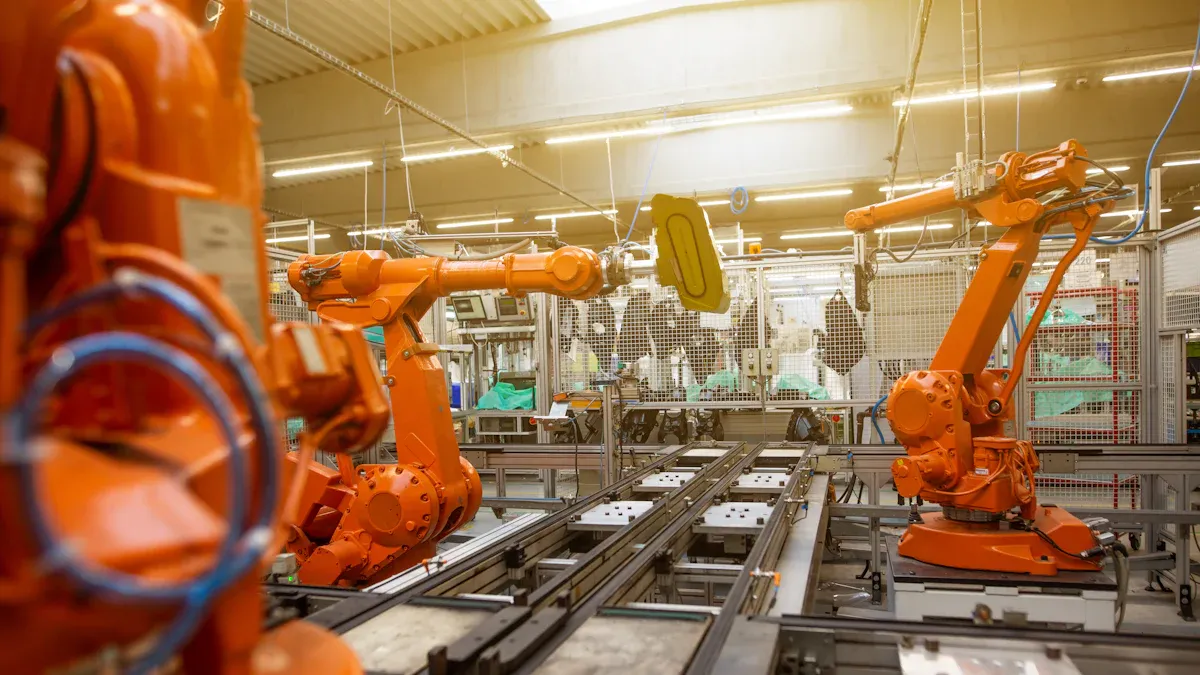
Manufacturing processes rarely exist in isolation. Combining different methods often yields optimal results, leveraging the strengths of each technology. This strategic integration addresses complex production challenges and pushes the boundaries of what is possible.
Combining Processes for Optimal Results
Utilizing 3D Printing for Prototypes, Machining for Production
Manufacturers frequently use 3D printing for rapid prototyping and design iteration. This allows for quick validation of concepts. Once a design is finalized, they transition to machining for high-precision production. This approach combines the speed and flexibility of additive manufacturing with the accuracy and material versatility of subtractive methods. For example, some manufacturers integrate 3D printing capabilities, such as a Directed Energy Deposition (DED) head, directly into a CNC machine. This allows for alternating between printing and machining processes on the same part without moving it. Other methods involve using separate machines, where a 3D printer creates a base component, and a CNC machine then adds further features or finishes.
MIM for Core Components, Machining for Finishing
Metal Injection Molding (MIM) excels at producing small, complex metal parts in high volumes. However, MIM parts sometimes require secondary operations for extremely tight tolerances or specific surface finishes. In these cases, manufacturers use MIM for the core component, leveraging its cost-effectiveness and geometric freedom. They then employ machining to achieve the final precision or surface quality. This hybrid approach ensures both efficiency in mass production and adherence to stringent specifications.
Complementing Machining with Metal 3D Printing
Metal 3D printing can complement traditional machining in several ways. It can create complex internal geometries or lightweight structures that are difficult or impossible to machine. Machining then refines the external surfaces or critical features, ensuring dimensional accuracy and surface finish. This combination is particularly useful for parts requiring both intricate internal designs and precise external dimensions.
Advancements in Each Technology
New Materials and Capabilities in 3D Printing
The field of 3D printing constantly evolves with new materials and enhanced capabilities. Advanced multi-material printing allows for the simultaneous production of complex structures with diverse material properties. Automation and robotics integration improve production scalability and efficiency, reducing human error. Sustainability advances include using recycled and biodegradable materials. New materials like advanced polymers offer exceptional strength and durability. Metals and alloys such as titanium and stainless steel are used for intricate designs. Biomaterials are emerging for medical applications like tissue regeneration and drug delivery. Fourth-dimensional (4D) printing, conceptualized in 2013, enables printed parts to change shapes and properties over time in response to external stimuli.
Automation and Enhanced Precision in Machining
Automation and enhanced precision are transforming machining operations. Artificial intelligence (AI) is increasingly incorporated to boost profitability, performance, and efficiency. AI integrates with IoT, Machine Learning, and Cloud Computing for process optimization and downtime reduction through real-time data. This leads to enhanced precision and accuracy, as machines learn, detect abnormalities, and self-regulate. AI-native machining and self-optimizing tools, like those from Okuma and Siemens, automatically adapt feed, speed, and toolpath based on real-time signals. Digital twins and the Industrial Metaverse create virtual replicas for simulation and training, allowing for safer prototyping and reduced downtime.
Expanding Applications and Material Science for MIM
MIM technology continues to expand its applications and material science. Micro-MIM produces millimeter or sub-millimeter parts for medical devices and microelectronics. The material portfolio has expanded to include refractory metals, titanium alloys, and metal matrix composites. Process simulation and automation enhance repeatability and efficiency. There is also a growing connection with additive manufacturing, such as using binder jetting to combine design freedom with MIM’s mass production capabilities. Advanced materials, nano-MIM, and green manufacturing initiatives further drive innovation in this sector.
The optimal manufacturing process represents a strategic decision, not a universal solution. Project managers must thoroughly evaluate their project’s unique demands across all key factors. Consider consulting with manufacturing experts like JH MIM for specialized guidance. They offer nearly 20 years of experience in Metal Injection Molding and Powder Metallurgy. Make informed decisions to ensure successful product development and production.
FAQ
What is the primary advantage of 3D printing for product development?
3D printing offers rapid prototyping and design iteration. It allows engineers to quickly produce physical models. This speeds up testing and validation. Designers can refine concepts efficiently before committing to mass production.
When should a company choose machining over 3D printing?
Companies choose machining for high precision and tight tolerances. Machining also provides excellent surface finishes. It handles a wide range of materials. This process is ideal for medium to high-volume production of parts requiring exact specifications.
What makes Metal Injection Molding (MIM) suitable for high-volume production?
MIM excels in high-volume production due to its cost-effectiveness at scale. Once tooling is complete, MIM produces thousands or millions of small, complex metal parts quickly. This amortizes initial tooling costs over many units.
Can MIM parts achieve the same strength as machined parts?
MIM parts achieve excellent mechanical properties. The sintering process densifies the metal powder to near-theoretical density. This results in high strength and durability. MIM parts often meet or exceed the strength requirements for many applications.
How does part complexity influence process selection?
Part complexity significantly impacts process choice. 3D printing handles intricate designs and internal features best. Machining has geometric constraints due to tool access. MIM offers good complexity for small parts, balancing design freedom with mass production.
Is 3D printing always more expensive per unit than MIM?
For low volumes, 3D printing is often more cost-effective due to no tooling costs. However, for high-volume production, MIM becomes significantly more economical per unit. MIM’s high tooling costs spread over many parts, reducing individual unit cost.
What role does JH MIM play in manufacturing?
JH MIM specializes in Metal Injection Molding and Powder Metallurgy. They offer nearly 20 years of experience. JH MIM provides precision-engineered products to global customers. They help clients achieve cost-effective, high-volume production of complex metal parts.
How do lead times differ between these manufacturing processes?
3D printing offers the fastest lead times for prototypes. Machining provides relatively fast production cycle times after setup. MIM has a longer initial lead time for tooling. However, MIM then offers exceptionally high production speeds for mass manufacturing.