
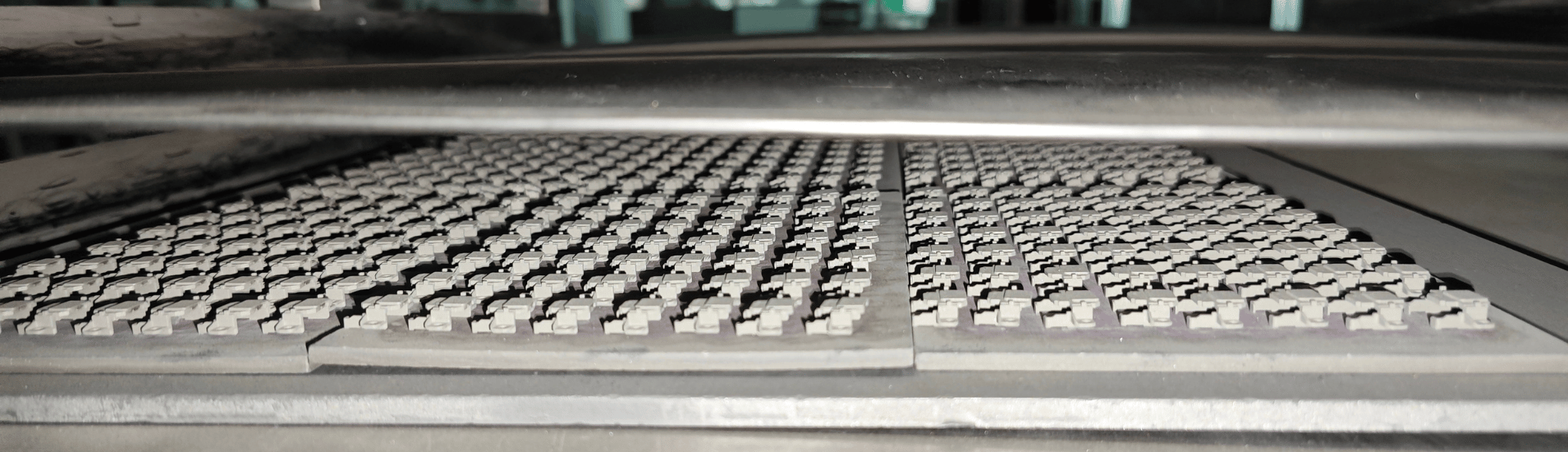
Understanding MIM Part Cost Breakdown
Evaluating the total unit cost of Metal Injection Molding (MIM) components requires analyzing both upfront tooling and production piece price. A standard MIM manufacturing quote consists of five key cost centers:
- Raw Material Cost: Includes pre-alloyed metal powders (such as 316L, 17-4PH, 420) and polymer binder system preparation (feedstock).
- Tooling & Mold Amortization: Covers the design and fabrication of high-precision metal injection molds and post-sintering sizing/coining dies.
- Primary Manufacturing Cost: Operational expenses for high-efficiency injection molding, catalytic/thermal debinding, and high-temperature vacuum sintering.
- Secondary Processing & Quality Control: Post-sintering operations including CNC machining, tapping, surface finishing, automated optical inspection (AOI), and quality assurance testing.
- Manufacturing Overhead & Logistics: Factory overhead, skilled labor, administrative expenses, taxes, and shipping logistics.
How JHMIM Optimizes Production Costs for Clients
By leveraging vertically integrated manufacturing and proprietary powder metallurgy technologies, JHMIM systematically reduces production costs without compromising tight dimensional tolerances or mechanical integrity.
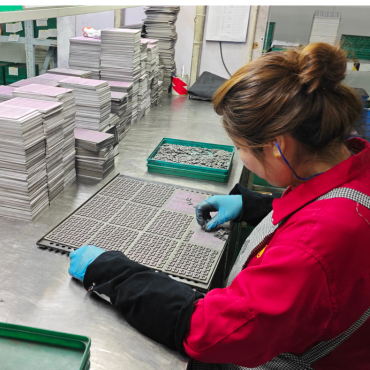
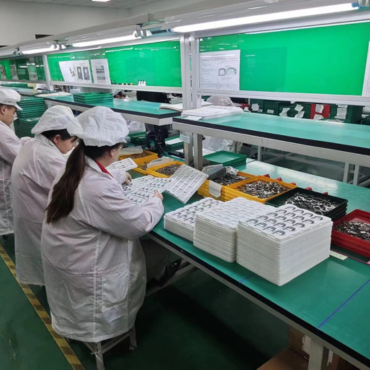
- In-House Feedstock Formulation (8 Material Patents): We formulate and blend our own specialized MIM metal powders and binders in-house. Holding 8 patents in raw material preparation allows us to directly lower material costs while strictly controlling batch-to-batch shrinkage.
- In-House Precision Mold Fabrication: Backed by over 20 years of MIM mold design expertise, our engineers optimize cavity layouts to minimize sintering distortion. Reducing part deformation eliminates expensive post-sintering sizing and coining steps.
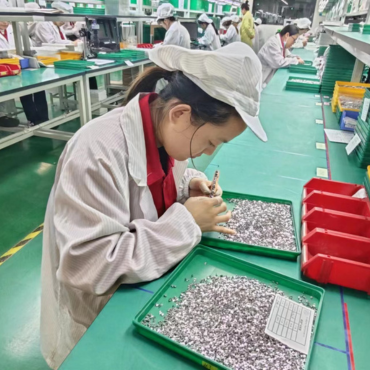
- Complete Secondary Processing Capabilities: JHMIM houses internal CNC machining, tapping, grinding, and surface plating equipment. Eliminating third-party outsourcing minimizes processing markups, speeds up lead times, and secures quality control.
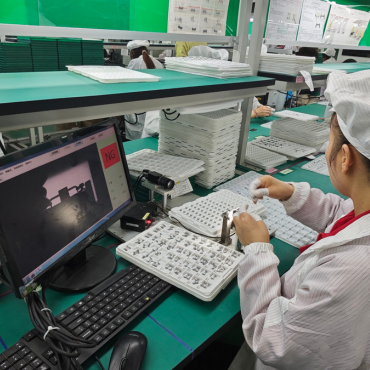
- Automated Inspection & Fair Pricing: Advanced automated optical inspection systems ensure high throughput with zero defect escapes, helping our clients maintain a competitive unit price in high-volume production.
MIM Cost Comparison vs. Alternative Manufacturing Processes
While CNC machining excels for low-volume prototypes and investment casting suits large structural components, Metal Injection Molding delivers unbeatable cost performance for complex, small-to-medium metal parts produced at scale.
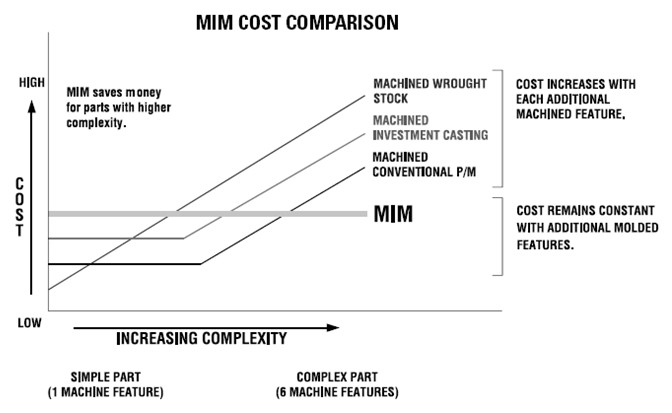
Process Cost Trade-off Analysis:
- MIM vs. CNC Machining: For complex geometries with undercuts or internal channels, multi-axis CNC machining incurs high tool wear and scrap rates. MIM reduces material waste by over 95%, lowering piece prices significantly as production volumes exceed 2,000 units.
- MIM vs. Investment Casting: Investment casting requires labor-intensive wax tree assembly and manual grinding. MIM offers higher dimensional repeatability, superior surface finish (Ra 0.8–1.6 µm), and eliminates secondary gate grinding.
- MIM vs. Die Casting: Die casting is limited to non-ferrous alloys (zinc, aluminum). MIM provides high-strength structural options in stainless steel, titanium, and tool steel at competitive high-volume unit costs.
Looking to reduce the manufacturing costs of your precision metal parts? Submit your 3D CAD drawing to JHMIM today for a comprehensive DFM review and instant competitive quotation.