
Powder metal connecting rods must handle tons of force during each engine stroke. These components endure this stress thousands of times every minute. Modern manufacturing techniques have transformed this vital engine part, especially when you have the powdered metal process that creates complex shapes with great precision. The powder metallurgy process differs from traditional methods. It compresses metal powders under pressures from 30 to 50 tons per square inch and sinters them at temperatures below the melting point.
This advanced manufacturing approach brings major benefits to the industry. Companies like GKN show impressive output by producing up to 130,000 rods each day. Racers can save up to 40 percent of their budget with powdered metal connecting rods compared to similar quality units. These high-performance parts use ASTM 4260 material that often performs better than traditional 4340 steel. Powdered metal rods are very durable, but they might not last as long as forged ones in high-stress situations. Small-block Chevy engines that generate between 700 and 800 horsepower use these rods. They weigh between 500 and 600 grams and cost about $600 per retail set.
Design and Engineering of Powdered Metal Connecting Rods
Engineers design powder metal connecting rods using advanced computer-assisted techniques. This approach creates components that deliver peak performance while weighing less.
CAD-Based Solid Modeling for Weight Optimization
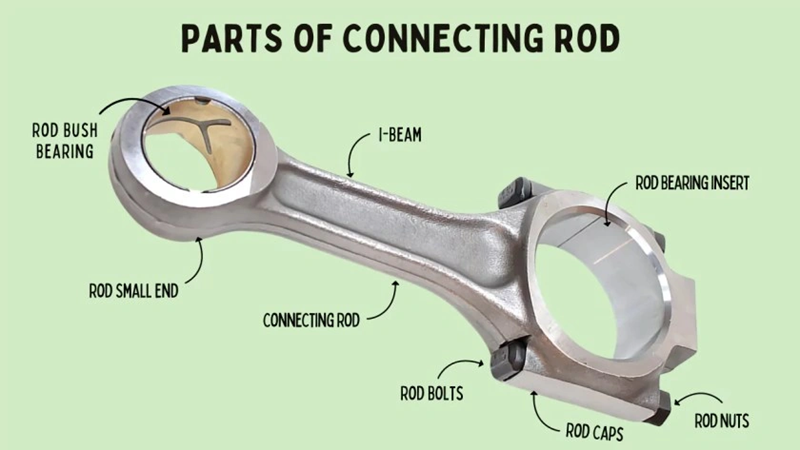
Computer-Aided Design (CAD) systems form the backbone of modern connecting rod design and ensure design integrity throughout development. Engineers create solid models to predict weight and determine each component’s center of gravity. The precise digital models help designers adjust I-beam geometry that maximizes stiffness and bending ratio by exploiting the strength-to-mass ratio of powdered metal materials. These adjustments reduce reciprocating and rotating mass—a crucial factor that improves engine fuel efficiency.
Finite Element Modeling (FEM) for Stress Analysis
The CAD design phase gives way to Finite Element Analysis, where engineers assess structural performance. This computational method spots critical stress areas and reveals opportunities to cut more weight. FEM helps optimize connecting rod designs for weight and fatigue performance. Designers can simulate various operating conditions:
- Compressive loading due to combustion
- Tensile loading due to inertia
- Bending stresses from centrifugal effects
The team designed the first warm compacted prototypes to withstand loads 50% higher than the cyclic fatigue load range at engine peak power. These simulations help achieve a fatigue safety factor that exceeds 1.5 at maximum engine power, which guarantees exceptional durability.
Prototype Validation Using Billet Machining
Physical validation follows virtual testing and optimization. The team machines prototype models from billet stock to verify the concept. Production quantities range from 20 to several hundred units. The “Make Like Production” philosophy helps ensure accurate physical testing that mirrors ground conditions. This method guarantees that the theoretical designs translate perfectly into physical components while maintaining dimensional accuracy and performance characteristics.
The validated design data moves electronically to production facilities where the final powder metal connecting rods take shape using proven specifications and processes.
Step-by-Step Powdered Metal Process for Engine Rods
The manufacturing of powdered metal connecting rods follows a precise sequence that produces components with exceptional dimensional accuracy and performance characteristics.
Powder Blending with Alloying Elements
The manufacturing experience starts with a careful selection of base powders mixed with specific alloying elements. Manufacturers create custom blends by combining pre-alloyed or diffusion-alloyed metal powders with additives such as graphite, lubricants, and binding agents. A high-performance blend typically contains base iron powder alloyed with 4% nickel, 2% copper, and 1.5% molybdenum. This mixing phase is a vital step that establishes the mechanical properties and performance characteristics of the final component.
High-Pressure Compaction into Green Compacts
The powder mixture moves to a compaction machine that presses it into a die cavity using pressures of 490 MPa (71,000 psi). This process creates a cohesive “green compact” that holds its shape but retains some porosity. Manufacturers use traditional single-action compaction for thinner parts. Double-action compaction produces connecting rods with better density distribution by applying pressure from both upper and lower punches simultaneously.
Sintering at 1120–1140°C in Controlled Atmosphere
The green compact undergoes sintering at 1120-1140°C in a controlled atmosphere, usually hydrogen or nitrogen-based. This significant process bonds metal particles without complete melting and gives the preform enough integrity for later operations. The process requires careful monitoring of temperature, atmosphere composition, and belt speed to prevent oxidation and ensure proper diffusion of alloying elements.
Hot Forging to Achieve Full Density
The component (now called a preform) quickly heats up to forging temperature between 1050-1150°C before hot-forging with mechanical or hydraulic presses. This step eliminates remaining pores and achieves nearly full density, which substantially improves fatigue resistance through grain refinement. Successful hot-forging depends on precise control of force, speed, timing, and uniform tool temperature.
Fracture Splitting for Cap Alignment
Manufacturers use fracture splitting technology instead of conventional sawing to separate the rod cap from the body. They create a stress riser with a cut, then fracture the rod along this line. The resulting jagged surfaces ensure perfect alignment during reassembly and eliminate fretting without guide bushings. This design allows the rod cap to fit precisely in one position only.
Secondary Operations: Honing, Drilling, and Grinding
The final stage includes secondary operations like honing bearing surfaces, drilling oil passages, grinding mating surfaces, and adding chamfers or bevels as needed. These finishing processes ensure dimensional accuracy and proper surface finish in critical areas, especially the bearing surfaces that need precise tolerances.
Performance Advantages Over Traditional Forged Rods
Powder metal connecting rods perform better than other options because of their structural advantages. These components give several measurable benefits when compared to traditional forged alternatives.
Grain Flow Uniformity in Powder Forged Rods
Powder forged rods show a uniform material structure, whatever the cutting direction. This isotropic property means alloy materials are spread evenly throughout the steel. The steel’s microstructure becomes refined through intense forging action and provides a homogenous chemical distribution without segregation. So these components perform consistently under variable load conditions.
Weight Tolerance: 2% Crank End, 6% Pin End
Weight consistency is a vital advantage of powder metal technology. Each finished connecting rod matches others in the same batch within 2 grams. Manufacturers keep tight tolerances: 2% at the crank end and 6% at the pin end. This consistency removes the weight grading that conventional forgings often need.
Fatigue Resistance and Crack Prevention
Powder forged connecting rods handle higher stresses during fatigue testing compared to drop-forged versions. Yes, it is worth noting that at 90% survival rate—a vital reliability factor—powder forged rods work 12.5% to 43.9% better than drop-forged versions. This superior fatigue strength lets engines handle about 700 horsepower reliably.
No Need for Guide Bushings Due to Fracture Split
The fracture-split design creates unique mating surfaces that stop fretting—unwanted movement between surfaces. Jagged fracture surfaces make sure the cap fits only one way. This design lets capscrews line up both pieces perfectly without guide bushings.
Cost, Scalability, and Real-World Applications
Powder metal connecting rods offer economic advantages that go beyond performance benefits to enhance manufacturing efficiency and market accessibility.
40% Cost Reduction Compared to Billet Rods
The automotive industry’s adoption of powder forged (PF) connecting rods stems from their cost efficiency. These components help racers save about 40% compared to similar quality units. The savings come from better material usage. Traditional forging creates excess flash that needs removal—typically, 320g of steel gets machined away from a 500g connecting rod. PF rods need minimal machining (only 90g removed), which leads to fewer operations and lower production costs.
130,000 Units/Day Production Capability
Powder metal technology’s scalability proves remarkable. Companies like GKN can produce 130,000 rods daily. This output enables mass production that maintains consistent dimensional tolerances throughout each run, making quality parts accessible to manufacturers of all sizes.
Use in Small-Block Chevy Engines (700–800 HP)
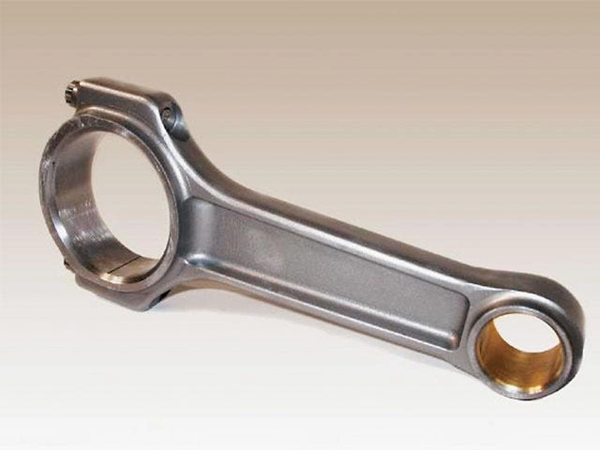
The original applications targeted small-block Chevrolet engines, with these high-performance components designed for engines generating between 700 and 800 horsepower. The components weigh between 500 and 600 grams, and production versions tip the scales at 603 grams. Standard versions suit engines that produce up to 500 horsepower.
Compatibility with Oversized Bearings
Powder metal connecting rods excel in aftermarket compatibility. Engine builders can modify these rods to work with oversized bearings from three different manufacturers. This flexibility gives builders more options when upgrading performance or replacing parts.
Conclusion
Powder metal connecting rods have proven better than traditional forged parts in many ways. Their revolutionary manufacturing process starts from powder blending and goes all the way to fracture splitting. This creates parts with exceptional structural integrity and precise dimensions. These high-performance components deliver consistent quality in every production run, unlike the weight variations found in regular forgings.
The powder forged rods’ isotropic properties create a uniform material structure throughout the part. This eliminates weak spots where failures usually start. Their uniform structure and better fatigue resistance help these components handle extreme stress in demanding situations. The fracture-split design makes perfectly aligned mating surfaces that work without guide bushings and prevent unwanted movement.
The numbers make a strong business case too. These rods cost 40% less than similar quality parts, making them available to more engine builders and racers. Production can reach 130,000 units per day, showing how this technology scales while maintaining quality.
Small-block Chevy engines that produce 700-800 horsepower showcase these components at their best. At 500-600 grams, these precision-built parts work reliably under extreme conditions. They also fit well with various aftermarket parts for custom builds.
JH MIM, now 20 years old in metal injection molding and powder metallurgy, keeps pushing this technology forward. Their track record of delivering precision-engineered products to customers worldwide shows how mature and reliable powder metallurgy has become.
These connecting rods show how advanced manufacturing can revolutionize critical parts across the automotive world. Superior material properties, efficient manufacturing, and budget-friendly pricing make powder metal connecting rods the top choice for production vehicles and performance builds. Engine builders who want the best mix of strength, weight, and value will without doubt keep choosing these components for future projects.
Key Takeaways
Powder metal connecting rods represent a manufacturing breakthrough that delivers superior performance, cost efficiency, and production scalability compared to traditional forged components.
• 40% cost reduction: Powder metal rods cut manufacturing costs by 40% compared to similar quality billet rods through efficient material utilization and reduced machining requirements.
• Superior fatigue resistance: Powder forged rods outperform drop-forged versions by 12.5-43.9% in fatigue testing, handling up to 700-800 horsepower reliably.
• Exceptional weight consistency: Manufacturing tolerances of just 2% at crank end and 6% at pin end eliminate weight grading requirements common with conventional forgings.
• Fracture-split technology eliminates fretting: Unique jagged mating surfaces ensure perfect cap alignment without guide bushings, preventing unwanted movement between surfaces.
• Massive production scalability: Companies achieve up to 130,000 units daily production capacity while maintaining consistent dimensional accuracy and performance characteristics.
The combination of uniform grain structure, precise manufacturing control, and economic advantages makes powder metal connecting rods the optimal choice for both high-performance racing applications and mass production automotive engines.
FAQs
Q1. What are the main advantages of powder metal connecting rods over traditional forged parts? Powder metal connecting rods offer superior fatigue resistance, uniform grain structure, tighter weight tolerances, and eliminate the need for guide bushings due to their fracture-split design. They also provide a 40% cost reduction compared to similar quality billet rods.
Q2. How do powder metal connecting rods perform in high-performance engines? These rods excel in high-performance applications, reliably handling engines generating between 700-800 horsepower. They’re particularly well-suited for small-block Chevy engines and can withstand extreme stresses due to their superior fatigue resistance.
Q3. What is the manufacturing process for powder metal connecting rods? The process involves powder blending with alloying elements, high-pressure compaction, sintering at specific temperatures, hot forging to achieve full density, fracture splitting for cap alignment, and secondary operations like honing and drilling.
Q4. How do powder metal connecting rods compare in terms of production scalability? Powder metal technology offers impressive scalability, with some companies capable of producing up to 130,000 rods daily while maintaining consistent quality and dimensional accuracy throughout production runs.
Q5. Are powder metal connecting rods compatible with aftermarket components? Yes, powder metal connecting rods offer excellent adaptability with aftermarket components. They can be easily modified to work with oversized bearings from different manufacturers, providing flexibility for engine builders seeking performance upgrades or replacement parts.