
Metal Injection Molding (MIM) is a revolutionary net-shape manufacturing process that combines the design flexibility of plastic injection molding with the exceptional mechanical strength and durability of wrought metals. Designed for mass-producing small, highly complex metallic components, MIM delivers tight dimensional tolerances and superior surface finishes while significantly reducing piece-part costs.
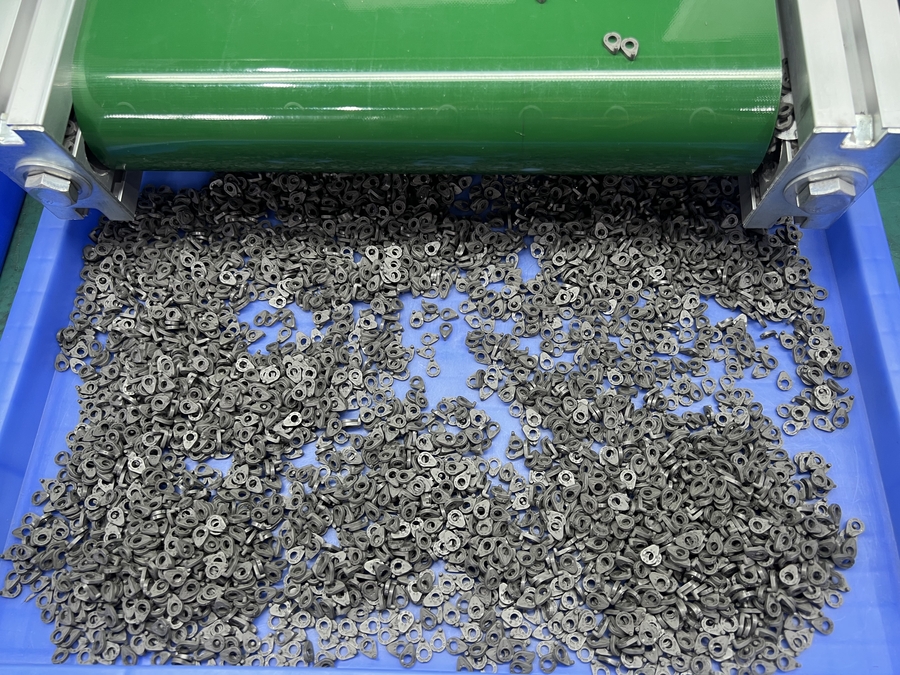
Overview: What is Metal Injection Molding (MIM)?
Metal Injection Molding (MIM) is an advanced powder metallurgy technique. The process begins by homogenously blending microscopic metal powders with specialized thermoplastic and wax binders to form a consistent feedstock. This feedstock is heated and injected under high pressure into custom-engineered MIM tooling dies—mirroring automated plastic injection molding.
MIM allows engineers to produce complex geometries—such as internal threads, undercuts, micro-holes, and cross-sections—in a single continuous operation, eliminating expensive secondary machining setups.
1. The History and Market Evolution of MIM
Invented in the late 1960s by Parmatech Corporation in the United States, MIM gained mainstream industrial validation in 1979 when it was successfully utilized to manufacture high-precision screw seal components for Boeing aircraft propellers. Winning prestigious industry innovation awards, this milestone initiated rapid adoption across automotive, medical, and defense manufacturing sectors.
Today, the global metal injection molding market exceeds US $1.8 Billion, serving as an indispensable manufacturing technology for tier-1 OEMs worldwide.
2. The Core 6-Step MIM Manufacturing Process
The transition from raw alloy powder to a fully dense, structural component involves six tightly controlled technical steps:
Step 1: Precision Tooling & Mold Design
Engineers design multi-cavity MIM molds incorporating precise scale factors (15% to 20%) to account for predictable part shrinkage during high-temperature sintering.
Step 2: Feedstock Blending
Ultra-fine elemental or pre-alloyed metal powders (typically 60% by volume) are mixed with polymer binders to create uniform granulated feedstock pellets.
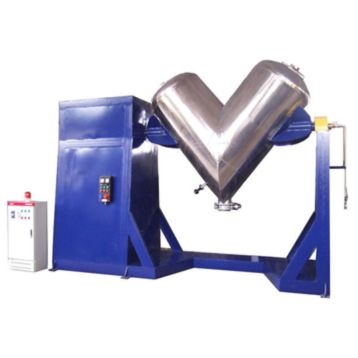
Step 3: High-Pressure Injection Molding
Automated molding equipment heats the feedstock and injects it under high pressure into the mold cavities to produce “Green Parts.” JHMIM operates 20+ automated injection molding machines equipped with robotic handling arms to ensure maximum batch uniformity and minimal labor overhead.
Step 4: Catalytic & Solvent Debinding
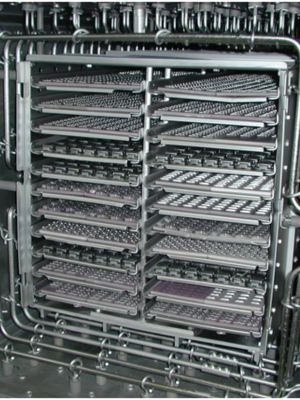
The green part undergoes debinding to remove the primary binder matrix without disturbing the metal structure, creating a porous “Brown Part.” JHMIM utilizes state-of-the-art oxalic acid degreasing furnaces equipped with continuous exhaust filtration systems, guaranteeing an environmentally friendly, zero-emission process.
Step 5: High-Vacuum Sintering
Brown parts are placed into controlled-atmosphere vacuum sintering furnaces. Heated to temperatures near the metal’s melting point (1,200°C–1,400°C), solid-state atomic diffusion bonds the particles together. Porosity drops dramatically as the part shrinks isotropically, achieving 95% to 99% of theoretical wrought density.
Step 6: Secondary Post-Processing (Optional)
Sintered components can undergo sizing/repressing for ultra-tight tolerances, coining, CNC secondary machining, heat treatment (case hardening, quenching), and custom plating/polishing.
3. Top 10 Engineering Advantages of MIM Technology
- Unlimited Geometric Complexity: Easily produce cross-holes, internal splines, thin walls (down to 0.5 mm), and complex curved contours.
- Tight Dimensional Accuracy: Reaches ±0.3% to ±0.5% dimensional tolerances directly out of the furnace.
- Wide Material Selection: Process stainless steel, low alloy steel, titanium, copper, and nickel superalloys.
- Near-Wrought Mechanical Strength: Near-theoretical density ensures high tensile strength, impact toughness, and wear resistance.
- High Volume Cost Efficiency: Multi-cavity tooling allows economical mass production from 10,000 to millions of units.
- Up to 98% Material Utilization: Minimal scrap waste compared to subtractive CNC milling.
- Part Consolidation: Consolidate multi-piece subassemblies into a single net-shape molded component.
- Superior Surface Finish: Achieves smooth surfaces (Ra 1.0 – 1.6 µm) without manual grinding.
- Flexible Secondary Finishing: Fully compatible with electroplating, PVD coating, passivation, and heat treatment.
- Repeatable Batch Quality: Fully automated injection and sintering workflows eliminate human error.
4. Key MIM Engineering Limitations to Consider
- Initial Tooling Capital: Mold design and high-grade steel tooling require upfront investment, making MIM best suited for medium-to-high production volumes.
- Component Weight/Size Limits: MIM is optimized for small components ranging from 0.1 grams to 150 grams.
- Shrinkage Management: Volumetric shrinkage during sintering requires expert tooling design and thermal control.
5. Comprehensive MIM Material Selection Guide
| Material Family | Common Grades / Alloys | Primary Industrial Applications |
|---|---|---|
| Stainless Steel | MIM-316L, MIM-17-4PH, 420, 440C | Medical devices, surgical tools, luxury watch cases, fluid valves |
| Low Alloy Steel | Fe-2Ni, Fe-8Ni, MIM-4605, 4140 | Automotive gears, power tool hardware, lock mechanisms |
| Titanium Alloys | Ti-Pure, Ti-6Al-4V (Grade 5) | Aerospace structural fasteners, medical orthopedic implants |
| Tungsten Heavy Alloy | W-Ni-Fe, W-Ni-Cu | Defense balance weights, radiation shielding, mobile vibration motors |
| Soft Magnetic Alloys | Fe-Si, Fe-Ni, Fe-Co | Solenoid valves, sensors, electromagnetic cores |
6. Key Industries Utilizing Precision MIM Parts
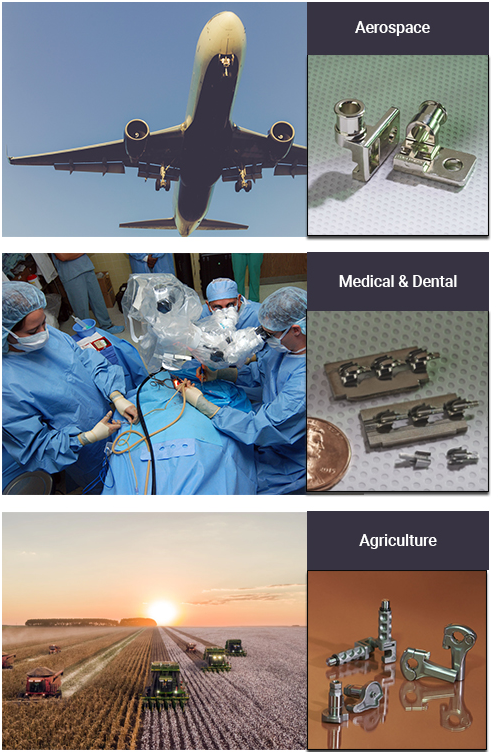
- Automotive Industry: Turbocharger vanes, fuel injector nozzles, seat belt pretensioner gears, sensor housings.
- Medical & Dental Hardware: Endoscopic surgical graspers, orthodontic brackets, scalpel handles, implantable components.
- Consumer Electronics: Smartphone camera ring housings, wearable hinges, fiber optic connectors, smart door lock bolts.
- Aerospace & Defense: Fluid control valves, missile components, tactical rail mounts, trigger mechanisms.
7. Future Trends in MIM Technology
As industry demand shifts toward lightweight and highly customized manufacturing, MIM continues to evolve alongside Automated Robotic Production, 3D Binder Jetting Integration, and Green Circular Material Recycling. Combining 3D metal printing for rapid prototyping with MIM for full-scale mass production provides unprecedented agility for tier-1 engineers.
Why Choose JH MIM as Your Premier MIM Supplier in China?
JH MIM is an ISO 9001:2015 and IATF 16949 certified metal injection molding manufacturer with over 10 years of international engineering experience. We provide complete turnkey solutions:
- Engineering DFM Analysis: In-house tool design and mold flow simulation.
- Custom Feedstock Formulation: Tailored alloy compositions to meet exact mechanical targets.
- Strict Quality Control: 100% optical sorting, density checks, and full raw material batch traceability.
- On-Time Global Delivery: Complete export compliance and fast logistics support.
Ready to Start Your MIM Project?
Contact our engineering team today for a free Design for Manufacturability (DFM) review and fast quotation.
👉 Upload Your 2D/3D CAD Drawings (STEP/IGES) to JH MIM Engineers Now →