
Key Takeaways
- Overcome Machining Limits: Metal Injection Molding (MIM) forms complex, high-density tungsten components near-net-shape, eliminating the 70%–80% material scrap and severe tool wear typical of machining solid tungsten stock.
- Pure Tungsten vs. Tungsten Heavy Alloys (WHA): Pure tungsten MIM achieves 19.25 g/cm³ theoretical density via high-temperature solid-state sintering (>2,000°C), while W-Ni-Fe and W-Ni-Cu heavy alloys use liquid-phase sintering for superior toughness and densities of 17.0–18.5 g/cm³.
- Strict Shrinkage Control: Tungsten MIM parts undergo roughly 18%–22% linear shrinkage during sintering, requiring empirical tool compensation and setter fixtures to counter gravity-induced sag.
- Standard Tolerances & Finishing: As-sintered tungsten MIM holds ±0.3% dimensional tolerances; critical bores, sealing faces, or threads can be refined via grinding or EDM.
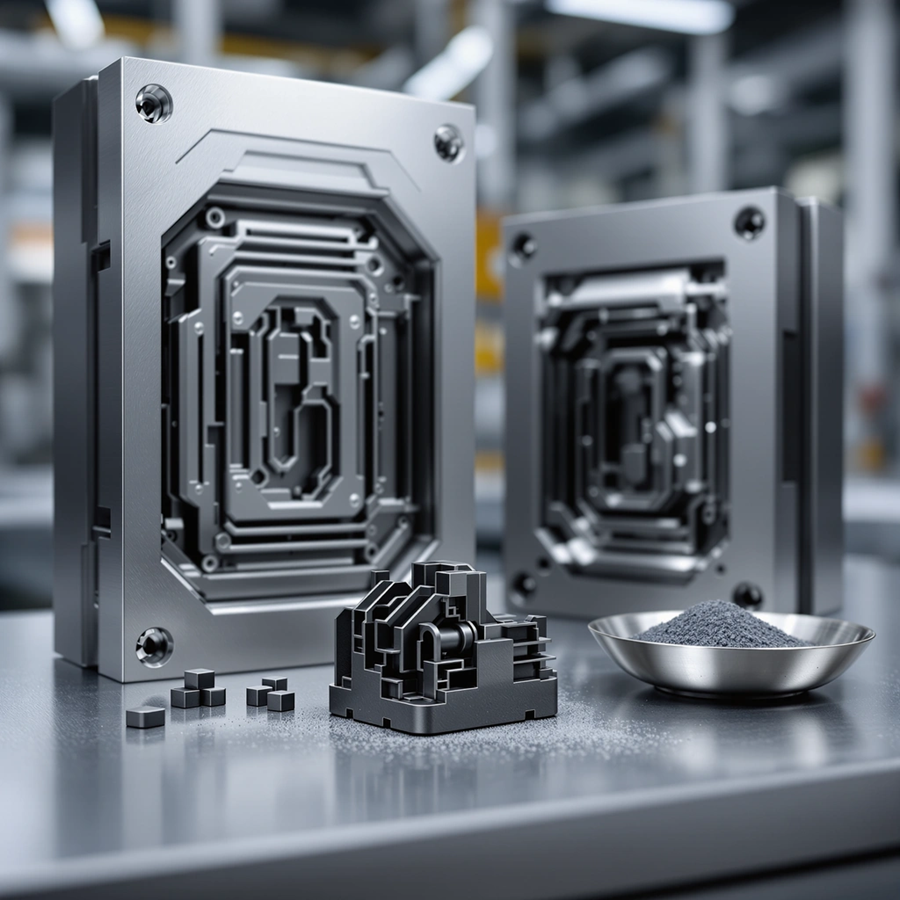
Tungsten molding solves a persistent manufacturing bottleneck: producing intricate, small components that require extreme mass, thermal stability, or radiation attenuation without destructive machining. Pure tungsten delivers a density of 19.25 g/cm³—roughly 2.5 times that of steel—and a melting point near 3,400°C. While those properties make it indispensable for thermal management and shielding, they also make conventional melting and CNC milling slow, brittle, and costly. Metal Injection Molding (MIM) reverses the workflow by shaping fine tungsten powder with a polymer binder first, then developing full metallic density in a controlled sintering furnace.
Why Use MIM for Tungsten Components?
High Density and Heat Resistance in Tungsten Parts
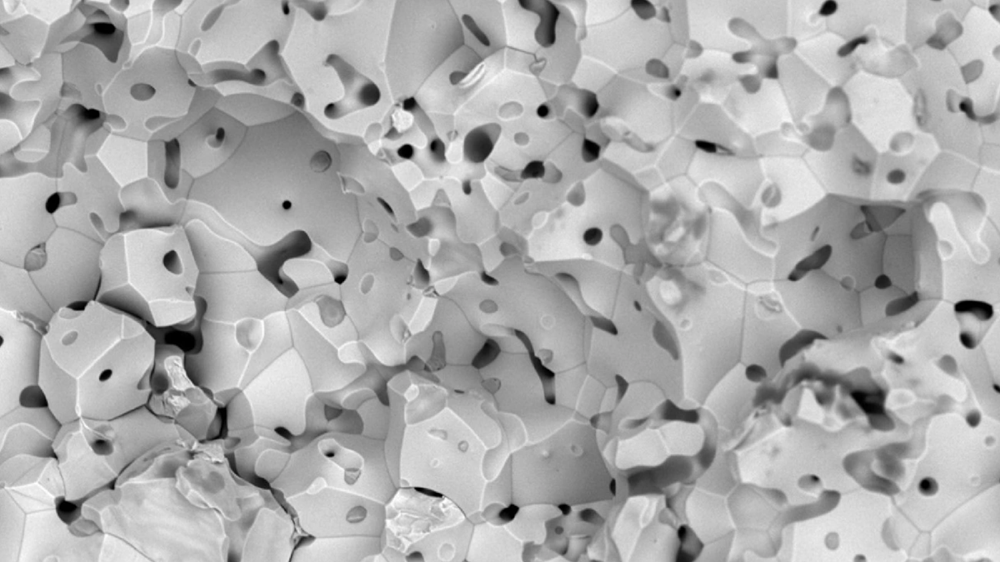
Tungsten’s high atomic number and mass allow radiation shields, counterweights, and collimators to achieve maximum attenuation within tight spatial envelopes. At elevated temperatures, its low vapor pressure and creep resistance support electrodes, cathodes, and high-heat tooling. Designers turn to MIM when these material demands intersect with complex geometries—such as internal channels, thin walls, ribs, or micro-recesses—that would otherwise require multi-axis EDM or extensive grinding.
Pure Tungsten vs. Tungsten Heavy Alloy MIM
Selecting the right material grade dictates both furnace cycles and final mechanical behavior. Pure tungsten MIM relies on solid-state sintering at temperatures exceeding 2,000°C. Controlled studies show pure tungsten reaching ~92.9% relative density after sintering at 2,300°C for 180 minutes in hydrogen, though grain growth and room-temperature brittleness remain key engineering constraints.
By contrast, Tungsten Heavy Alloy (WHA) MIM combines 90% to 97% tungsten with a ductile binder matrix—typically nickel-iron (W-Ni-Fe) or nickel-copper (W-Ni-Cu). Liquid-phase sintering occurs at significantly lower temperatures, yielding densities between 17.0 and 18.5 g/cm³ alongside substantially higher ductility and machinability.
| Property / Parameter | Pure Tungsten MIM (W) | Tungsten Heavy Alloy MIM (W-Ni-Fe / W-Ni-Cu) |
|---|---|---|
| Typical Composition | 99.9% Tungsten | 90% – 97% W (Balance Ni-Fe or Ni-Cu) |
| Sintered Density | 17.8 – 18.5 g/cm³ (92%–96% theoretical) | 17.0 – 18.5 g/cm³ (>98% theoretical) |
| Sintering Mechanism | Solid-state (>2,000°C) | Liquid-phase (1,450°C – 1,550°C) |
| Ductility & Machinability | Low (brittle at room temperature) | Moderate to high (elongation up to 10%+) |
| Magnetic Behavior | Non-magnetic | W-Ni-Fe: Slightly magnetic / W-Ni-Cu: Non-magnetic |
| Primary Applications | Ion implanter cathodes, extreme heat shields | Medical radiation collimators, aerospace counterweights |
Near-Net Shaping Instead of Machining from Solid Stock
Machining a part from sintered tungsten bar stock forces shops to pay twice: first for expensive raw billets, and again in carbide/diamond tool wear and chip scrap. Tungsten injection molding forms the geometry in a closed mold cavity before densification. This near-net-shape approach cuts material waste dramatically on high-volume, intricate parts.
How Tungsten Injection Molding Works
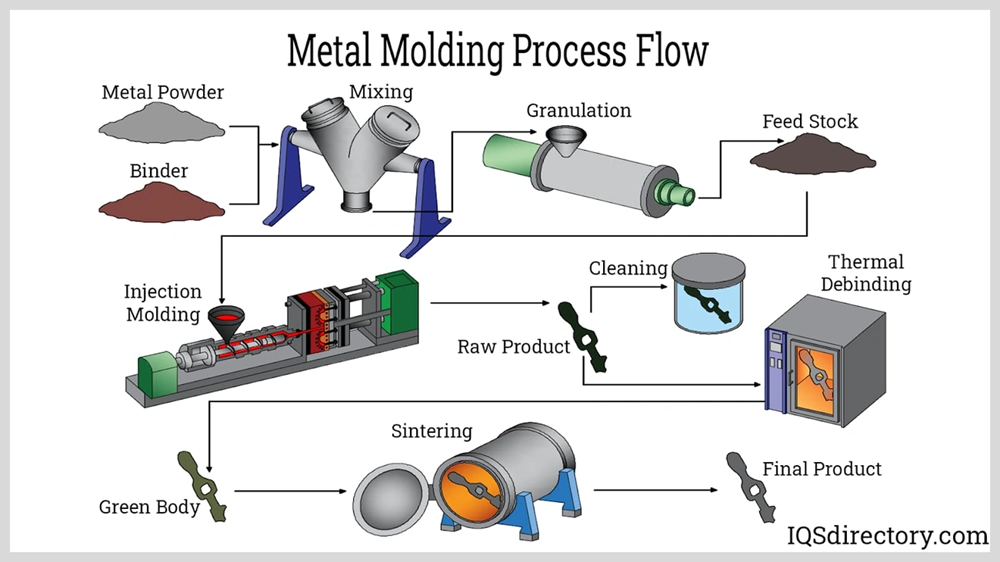
Because tungsten powder has high specific gravity and low natural flowability, producing defect-free components depends on disciplined process control across four stages, starting with a uniform feedstock.
Uniform Tungsten Feedstock and Binder Systems
Fine tungsten powders (typically 1–10 µm) are compounded with a multi-component polymer and wax binder system, often accounting for roughly 40% of the feedstock by volume. Surfactants ensure complete particle wetting while backbone polymers preserve structural rigidity during early debinding. Inconsistent mixing creates localized density gradients that translate directly into uneven shrinkage and warpage in the furnace.
Complex Geometry Molding Under Controlled Pressure
Granulated feedstock is heated—commonly around 160°C depending on binder formulation—and injected into hardened steel tooling maintained at 50°C to 60°C. Injection speed and holding pressure must fill thin sections and undercuts completely without causing powder-binder separation (jetting or flashing). The ejected “green part” replicates the mold geometry with roughly 20% oversized dimensions to allow for subsequent sintering contraction.
Debinding Without Cracks, Blisters, or Carbon Residue
Before sintering, the binder must be extracted through catalytic, solvent, or multi-stage thermal debinding. Heating ramps are tightly controlled so volatile gases escape through open pore networks without building internal pressure that blisters or cracks thick sections. Equally critical is preventing residual carbon contamination, which can form brittle tungsten carbides and degrade mechanical strength. The resulting “brown part” is fragile and requires careful fixture loading.
High-Density Sintering and Dimensional Stability
During sintering, the brown part is heated in a hydrogen or vacuum atmosphere until atomic diffusion or liquid-phase wetting eliminates inter-particle voids. Properly formulated tungsten heavy alloy MIM routinely achieves over 98% theoretical density. Because linear shrinkage reaches approximately 18% to 22%, custom ceramic setter trays and part orientation strategies are essential to prevent slumping under tungsten’s own high weight.
How to Control Density and Size in Sintered Tungsten Parts
Powder Agglomeration, Sintering Atmosphere, and Final Density
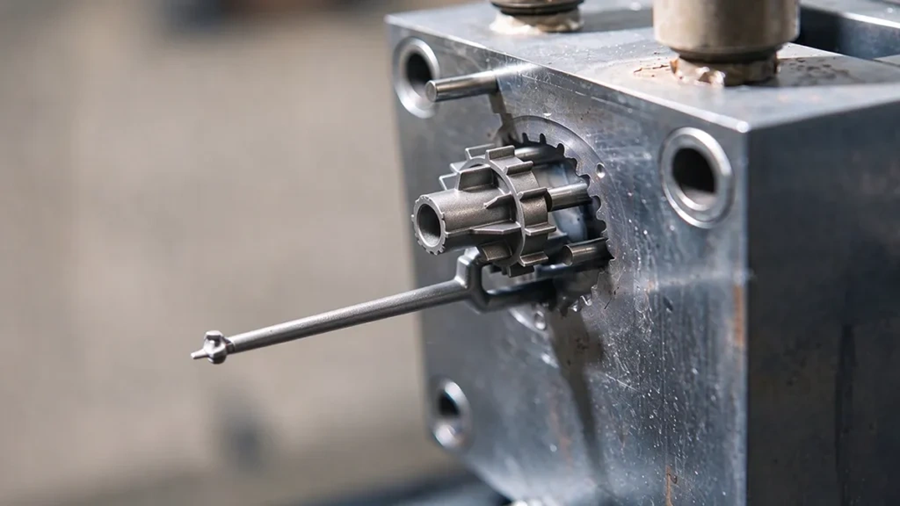
Final density starts with powder dispersion. Sub-micron and fine tungsten particles naturally tend to agglomerate, creating packing voids that resist closure during sintering. Jet milling and bimodal particle-size blending maximize solids loading and reduce total shrinkage. In WHA grades, keeping residual porosity below 0.5% is mandatory to prevent premature brittle fracture.
Atmosphere purity is equally decisive. Dry hydrogen reduces surface oxides effectively, though gas flow must sweep away water vapor before surface pores seal. Vacuum sintering aids degassing, but excessive time at peak temperature can evaporate alloying elements like copper or nickel. Strict control over oxygen, carbon, and sulfur prevents grain-boundary embrittlement.
Shrinkage Compensation, Warping Checks, and Tolerance Limits
Toolmakers machine mold cavities oversized based on empirical shrinkage calibration from trial runs rather than theoretical estimates alone. Gravity creates slight anisotropic contraction—often causing ~0.3% to 0.5% greater shrinkage along the vertical axis than horizontally in tall parts. Balancing wall thickness and utilizing contoured sintering setters keep distortion in check. Standard as-sintered MIM tolerances hold within ±0.3% to ±0.5% of nominal dimensions.
Evaluating Tungsten MIM for Your High-Density Component?
Managing 20% sintering shrinkage, gravity sag, and alloy density requires proven tungsten feedstock and furnace expertise. Let JHMIM review your part geometry.
Submit Your 3D CAD Files to JHMIM for a Free DFM & Cost Analysis →
Where Tungsten MIM Fits—and When Machining Is Still Needed
Tungsten MIM manufacturing excels when parts are small (typically under 100–150 grams), geometrically complex, and ordered in recurring production quantities. For instance, pure tungsten cathodes for semiconductor ion implanters historically required machining solid wrought rods—wasting up to 80% of the raw metal. Transitioning to MIM recovers that material margin while producing consistent batch-to-batch geometry.
Ion Implanter Components, Radiation Shields, and Medical Parts
Medical imaging and oncology systems rely heavily on tungsten heavy alloy MIM for multi-leaf collimators, CT detector grids, syringe shields, and radiopaque surgical markers. WHA grades with 90%–97% tungsten provide lead-free radiation attenuation in compact, non-toxic assemblies that withstand sterilization and mechanical handling.
Batch Volume, Tooling Investment, and Cost Trade-Offs vs. Machining
Production volume governs the break-even point between MIM and CNC/EDM machining. MIM requires upfront mold fabrication and first-article shrinkage qualification, making it uneconomical for 10-piece prototypes. However, once annual volumes reach several thousand pieces—or when part geometry demands complex 3D contours—MIM’s low per-part cycle cost and minimal scrap quickly amortize the initial tooling investment.
Tight Tolerances and Critical Surfaces Requiring Secondary Finishing
While MIM holds ±0.3% across most features, ultra-tight tolerances (e.g., ±0.01 mm bearing bores, precision threads, or optical/sealing datums) require post-sintering operations. WHA grades can be CNC turned, milled, ground, or tapped using carbide tooling, whereas pure tungsten typically relies on diamond grinding, wire EDM, or sinker EDM. Engineering drawings should clearly distinguish as-sintered surfaces from machined datums to avoid unnecessary finishing costs.
Conclusion: Partner with JHMIM for Precision Tungsten MIM Production
Tungsten MIM bridges the gap between tungsten’s unmatched density and thermal durability and the geometric freedom required by modern aerospace, medical, and semiconductor hardware. By pairing tailored feedstock formulation with disciplined debinding and atmosphere-controlled sintering, manufacturers can achieve >98% theoretical density without paying the steep scrap penalties of solid-stock machining.
At JHMIM, we specialize in high-density tungsten heavy alloy and pure tungsten metal injection molding—from custom mold shrinkage compensation to secondary CNC/EDM finishing and CMM validation.
Ready to reduce machining scrap on your tungsten components? Contact JHMIM’s engineering team today or upload your 3D CAD drawings for a DFM feasibility review and quote within 24 hours.
Frequently Asked Questions (FAQs)
Q1. What density can be achieved with tungsten metal injection molding?
Tungsten heavy alloy MIM (such as W-Ni-Fe or W-Ni-Cu) routinely achieves densities of 17.0 to 18.5 g/cm³, exceeding 98% of theoretical density via liquid-phase sintering. Pure tungsten MIM typically reaches 92% to 96% relative density through high-temperature solid-state sintering.
Q2. How much do tungsten MIM parts shrink during sintering?
Tungsten MIM components generally experience 18% to 22% linear shrinkage during sintering, depending on the feedstock’s powder-to-binder solids loading. Precision molds are machined oversized based on empirical shrinkage data to hit final print dimensions.
Q3. What dimensional tolerances can tungsten MIM hold without machining?
Standard as-sintered tolerances for tungsten MIM are ±0.3% to ±0.5% of nominal feature dimensions. For tighter tolerances—such as precision bores, threads, or flat sealing surfaces—secondary CNC grinding or wire EDM can be applied after sintering.
Q4. When should I choose tungsten heavy alloy (WHA) over pure tungsten for MIM?
Choose pure tungsten when your application requires maximum operating temperature resistance (>2,000°C), extreme purity, or specific electron-emission properties (such as ion implanter cathodes). Choose WHA (W-Ni-Fe or W-Ni-Cu) for radiation shielding, counterweights, and structural parts that require higher impact toughness and easier secondary machinability.
Q5. What production volume makes tungsten MIM more cost-effective than CNC machining?
While simple shapes in low quantities (under a few hundred units) are usually cheaper to machine or wire-EDM, tungsten MIM typically becomes more economical at annual volumes starting around 2,000 to 5,000+ pieces—or even lower if the part features complex 3D geometries that waste over 60% of raw tungsten stock during machining.