
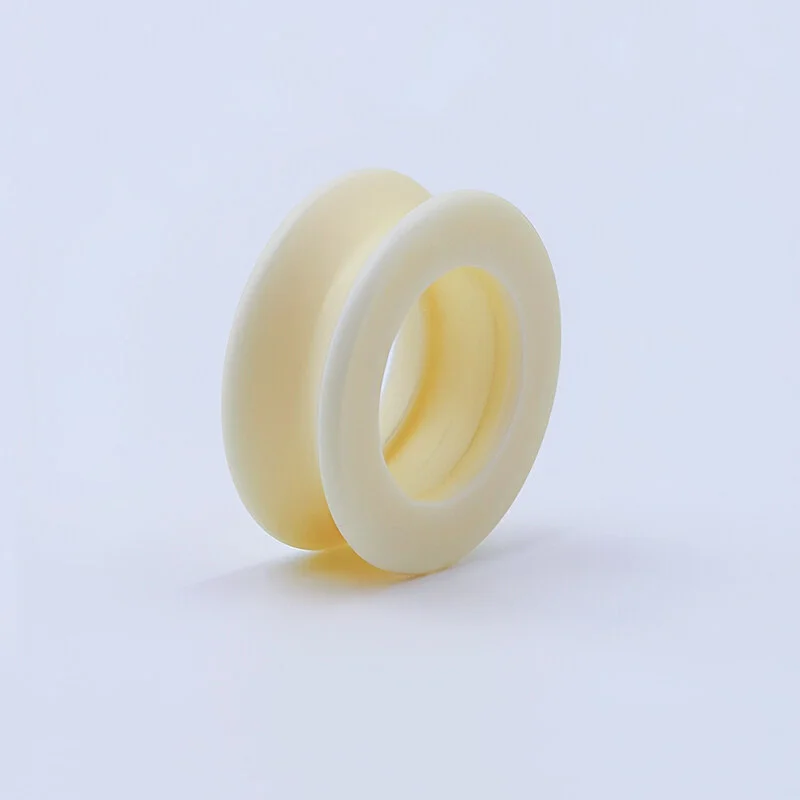
What Is Sintered Ceramic?
Sintered ceramic is an advanced engineering material manufactured by compacting high-purity inorganic ceramic powders and heating them under controlled temperatures until the particles coalesce into a highly dense, robust structure. Known for exceptional hardness, chemical inertness, high-temperature stability, and extreme wear resistance, sintered ceramics offer critical performance where metals and plastics fail.
With the global technical ceramics market projected to exceed $38.9 billion by 2032, high-precision sintered ceramic parts have become indispensable across aerospace, semiconductor, medical, and industrial automation sectors.
The Ceramic Sintering Process: Step-by-Step
The ceramic sintering process transforms loose raw powders into solid, high-density components through three primary stages: powder preparation, shaping/compaction, and high-temperature firing.
1. Powder Composition and Slurry Preparation
The manufacturing process begins with precise formulation of inorganic ceramic powders (such as submicron Alumina or Zirconia). Raw powders are thoroughly mixed with water or solvents, deflocculants, and organic binder systems to create a homogenized slurry or feed stock. This initial particle size distribution directly dictates the final strength, microstructural uniformity, and surface finish of the sintered part.
2. Green Part Compaction and Shaping
Once formulated, the ceramic mixture is shaped using methods like Dry Pressing, Isostatic Pressing, or Ceramic Injection Molding (CIM). High pressure compacts the powder into a “green part”—a fragile, semi-solid component possessing the final geometric features but low mechanical strength.
3. Firing, Debinding, and Densification
The green parts enter high-temperature furnaces ranging from 1,000°C to 2,000°C (or sub-400°C for specialized Cold Sintering Processes). During this thermal cycle, organic binders thermalize and burn off (debinding), while solid-state diffusion fuses ceramic grains together, dramatically shrinking micro-pores to achieve up to 99%+ theoretical density.
Common Materials Used in Technical Ceramic Sintering
Primary Ceramic Powders
Material selection determines the mechanical, electrical, and thermal properties of the final component:
- Alumina (Al₂O₃): High hardness, excellent electrical insulation, and superior cost-efficiency.
- Zirconia (ZrO₂): Exceptional fracture toughness, high flexural strength, and thermal shock resistance.
- Silicon Nitride (Si₃N₄): Extreme thermal shock capability, low density, and high mechanical wear resistance.
- Silicon Carbide (SiC): Extreme hardness, outstanding chemical corrosion resistance, and high thermal conductivity.
- Aluminum Nitride (AlN) & Boron Nitride (BN): Superior dielectric properties combined with high thermal dissipation.
Additives and Organic Binders
Polymeric binders provide temporary mechanical integrity to green parts during complex molding operations. During pre-sintering debinding phases, these organic compounds cleanly volatilize without leaving carbon residues, ensuring maximum pure density.
Key Mechanical & Physical Properties
- Extreme Hardness & Mechanical Resistance: Outstanding scratch and abrasive wear resistance under heavy contact loads.
- High-Temperature Thermal Stability: Retains structural integrity and dimensional stability in continuous heat above 1,200°C.
- Chemical Inertness: Complete resistance to strong acids, alkalis, oxidation, and corrosive industrial fluids.
- Dielectric Isolation: High dielectric strength makes sintered ceramics ideal for electronic substrates and high-voltage insulators.
Core Advantages of Sintered Technical Ceramics
1. Exceptional Structural Strength & Longevity
Sintering maximizes particle-to-particle bonding area and eliminates internal voids, creating dense microstructures that withstand intense wear, friction, and thermal shock.
| Process Variable | Impact on Sintered Component Performance |
|---|---|
| Particle Size & Surface Area | Submicron powders increase atomic contact area, maximizing final bending strength. |
| Sintering Temperature & Hold Time | Optimized heat soaking eliminates micro-porosity and drives complete densification. |
| Atmosphere & Pressure Control | Vacuum or inert gas sintering prevents grain growth and structural defects. |
2. High Precision & Net-Shape Customization
By pairing advanced shaping techniques like Ceramic Injection Molding (CIM) with precise sintering shrinkage control, complex geometries with tight tolerances can be achieved without costly post-machining.
| Shaping Method | Geometric Complexity | Target Applications |
|---|---|---|
| Dry Pressing | Simple planar shapes (Discs, Rings, Plates) | High-volume ceramic seals, washers, and wear tiles. |
| Ceramic Injection Molding (CIM) | Ultra-complex 3D net-shapes | Medical implants, watch cases, miniature electronic valves, gears. |
| Isostatic Pressing (CIP/HIP) | Large or elongated symmetric shapes | High-density ceramic tubes, rods, and severe-duty pump liners. |
Key Applications of Sintered Technical Ceramics
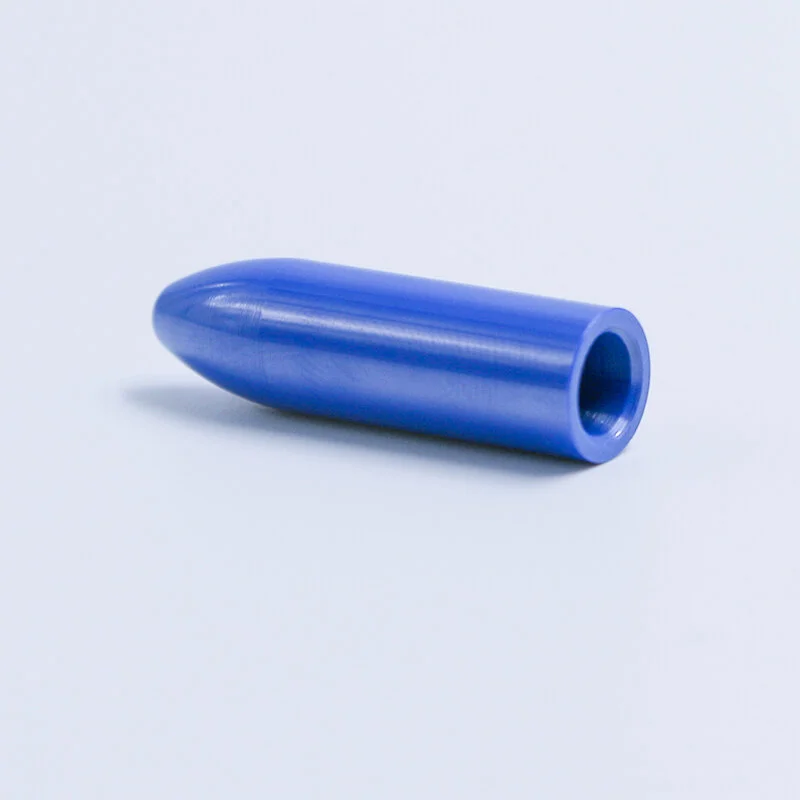
1. High-Performance Industrial Components
- Automotive: Turbocharger rotor blades, fuel injector nozzles, water pump seals, and sensor housings.
- Aerospace & Defense: High-temperature turbine blades, radomes, heat shields, and wear-resistant bearings.
- Semiconductor & Electronics: Wafer handling chucks, ceramic substrates, insulating nozzles, and IC packaging.
2. Medical and Dental Devices
Biocompatible ceramics like Yttria-stabilized Zirconia (YSZ) and Alumina are standard materials for joint prosthetics, dental crowns, surgical scissors, and endoscopic components, offering long-term corrosion resistance in biological environments.
3. Consumer Products & Wearables
Sintered ceramics enhance high-end consumer electronics with scratch-resistant smart watch cases, decorative smartphone backs, ceramic knife blades, and premium coffee grinder burrs.
Frequently Asked Questions (FAQ)
What makes custom sintered ceramics from JH MIM unique?
JH MIM manufactures advanced sintered ceramic components under strict ISO 9001:2015 and IATF 16949:2016 quality management systems. Sourcing premium ultra-fine powders ensures excellent mechanical consistency, tight dimensional tolerances, and smooth surface finishes for global OEM applications.
Can sintered ceramic parts achieve complex geometries with tight tolerances?
Yes. By using Ceramic Injection Molding (CIM) technology, we produce intricate 3D geometries with features like internal threads, undercuts, and thin walls down to ±0.2%–±0.5% dimensional accuracy.
Are sintered ceramics environmentally friendly?
Yes. The net-shape nature of ceramic sintering achieves near-100% raw material utilization with minimal machining waste. Modern controlled thermal processes further minimize energy consumption and emissions compared to traditional subtractive grinding.
Partner with JH MIM for Custom Sintered Ceramic Components
Whether you require wear-resistant Zirconia components, high-insulation Alumina substrates, or complex Ceramic Injection Molded (CIM) parts, JH MIM provides complete end-to-end engineering support—from feedstock formulation and tooling DFM to high-temperature sintering and secondary polishing.
👉 Submit Your 3D Drawings (STEP/IGES) to Contact Our Ceramic Engineers Today →