
Zirconium Oxide Ceramic Review
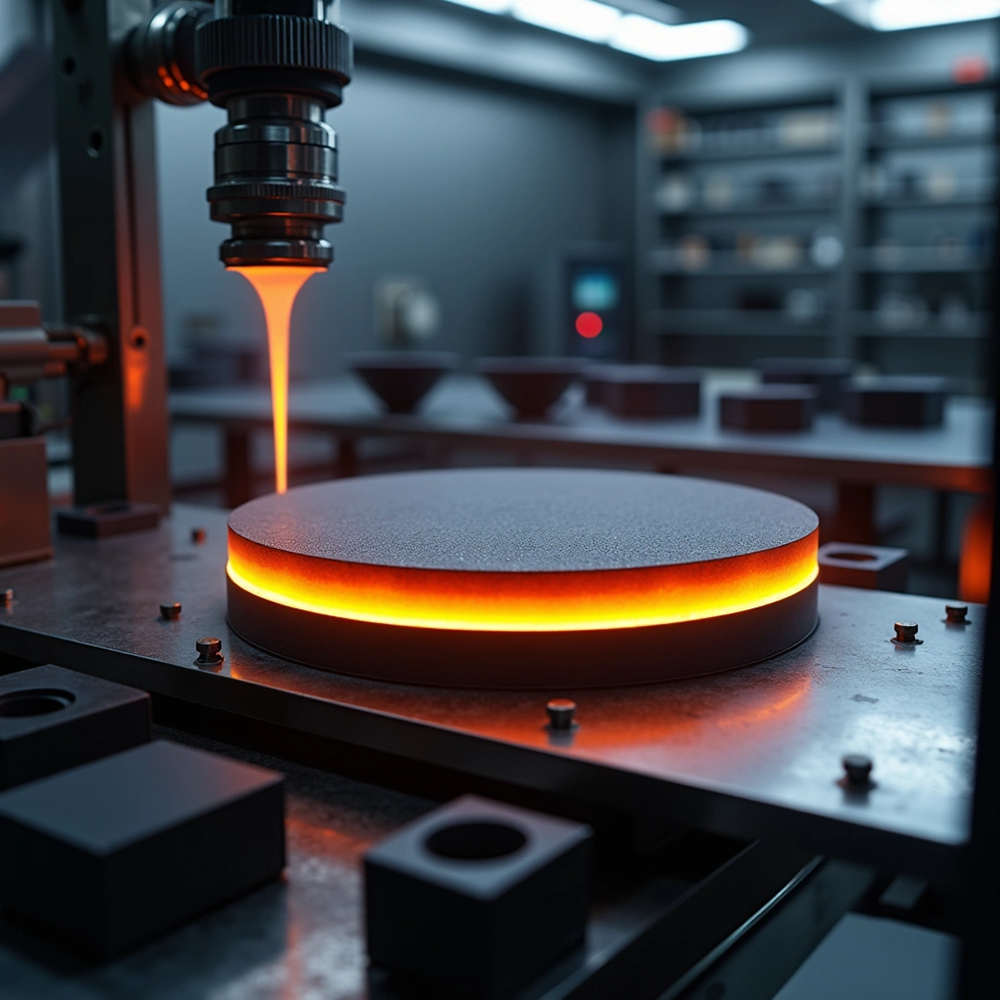 Silicon carbide ceramics can endure temperatures reaching 2,730°C (4,946°F), way beyond what most industrial materials can handle.
This extreme heat resistance makes them essential for applications where conventional ceramics fail.
But what is silicon carbide, and why has this material become irreplaceable in aerospace and semiconductor industries?
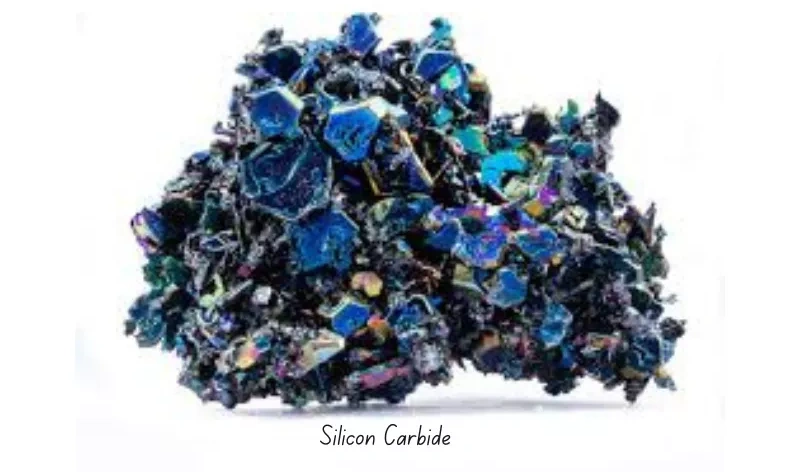
Silicon carbide is a hard chemical compound of silicon and carbon, classified as a wide bandgap semiconductor that occurs naturally as the rare mineral moissanite.
Silicon carbide material exhibits exceptional properties: high-temperature strength, wear resistance, and chemical corrosion resistance.
This review gets into the heat performance of silicon carbide ceramics, tests their real-life capabilities at extreme temperatures, and explores what makes them the preferred choice for demanding industrial applications in 2026.
What Is Silicon Carbide Ceramic Material And Who Uses It
Silicon Carbide Definition And Composition
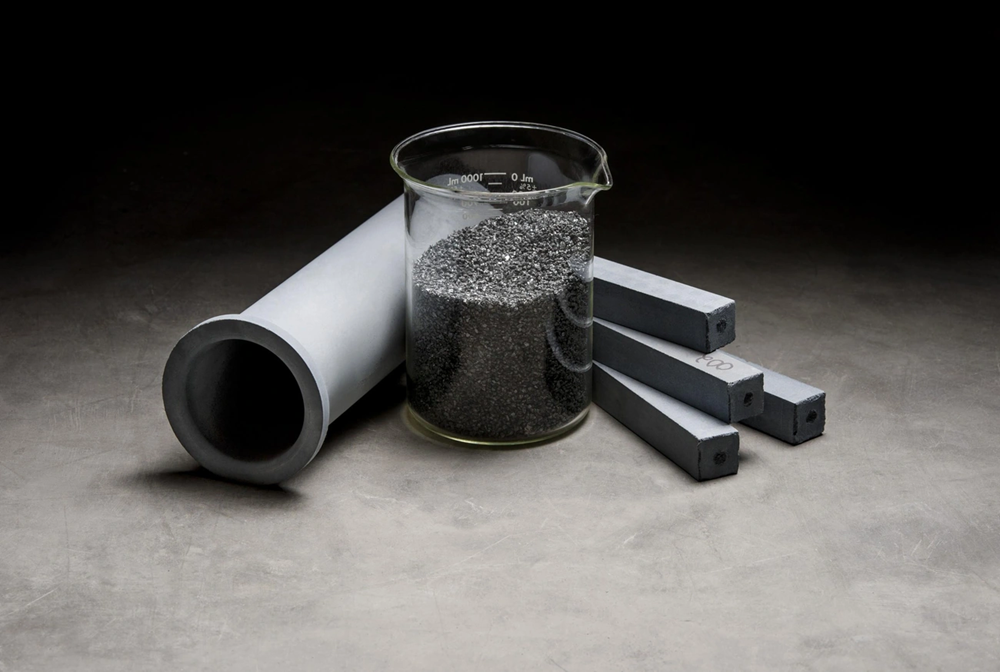
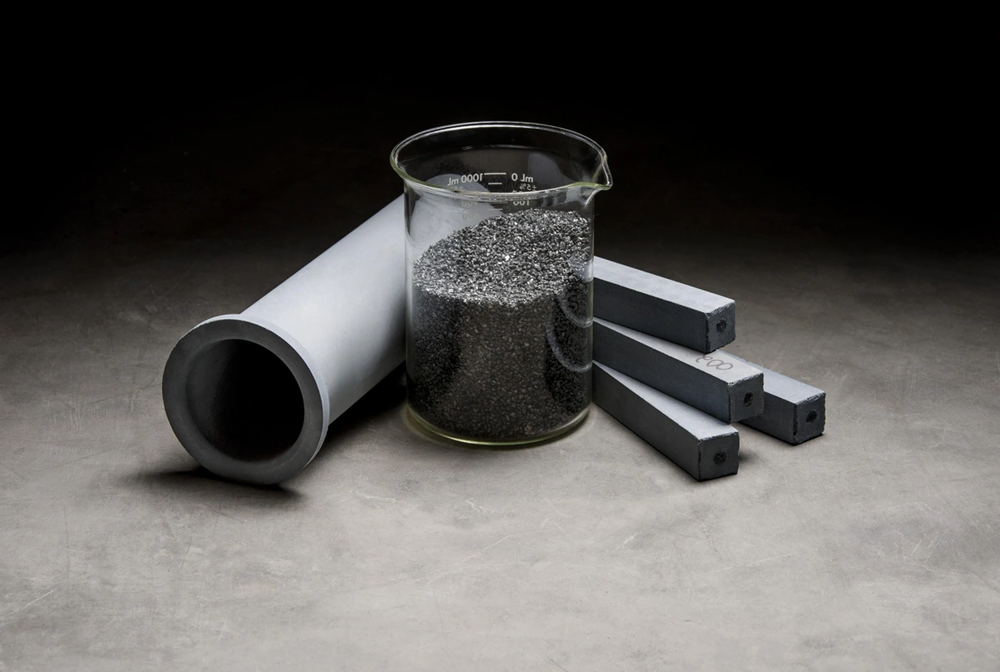
The chemical formula SiC represents a crystalline ceramic material composed of tetrahedral structures where silicon and carbon atoms bond through strong covalent connections within a crystal lattice. This compound, also known as carborundum, was found by American inventor Edward G. Acheson in 1891 while attempting to produce artificial diamonds. The material exhibits a grayish appearance and ranks as the third hardest compound on Earth with a Mohs hardness of 13 on newer scales.
Natural vs. Synthetic Silicon Carbide
Natural silicon carbide exists as moissanite, a very rare mineral first found in Arizona’s Canyon Diablo meteor crater in 1893. But natural moissanite content remains very small. 99% of market silicon carbide is artificially synthesized. The Acheson process produces synthetic variants by combining silica sand and carbon in graphite electric resistance furnaces at temperatures between 1,600°C and 2,500°C Mass production began in 1893. This made silicon carbide powder and crystals accessible to more people for industrial applications.
Key Material Characteristics
Silicon carbide ceramics possess a density ranging from 3.07 to 3.15 g/cm³. They are among the lightest advanced ceramics. The material demonstrates hardness values of 32 GPa and fracture toughness of 6.8 MPa·√m. Thermal conductivity measures between 120 to 200 W/mK, with some variants reaching 320-348 W/m·K for superior heat dissipation. The Young’s modulus exceeds 400 GPa and ensures excellent dimensional stability under mechanical stress. The coefficient of linear expansion remains low at 3.6 to 4.1×10⁻⁶/K between 20 to 400°C. This minimizes dimensional changes during temperature fluctuations. Flexural strength reaches 490 MPa and demonstrates substantial bending resistance.
Primary Industrial Users
Several industries rely on silicon carbide ceramics owing to their exceptional properties:
- Chemical plants use components like pipes, bushings, bearings and seal rings where corrosion resistance proves needed
- Automotive manufacturers deploy silicon carbide in brake systems and engine bearings, along with electric vehicle power electronics
- Aerospace and defense sectors incorporate the material in turbine components and armor plates
- Semiconductor industry uses substrates for wafer processing and LED thermal management
- Metallurgic operations depend on crucibles and furnace linings for high-temperature metal processing
- Food industry applications benefit from the material’s toxicological safety in processing equipment
Heat Performance Properties: 2,830°C Testing Results
Thermal Conductivity: 320-348 W⋅m−1⋅K−1 Measured
Tests on different silicon carbide polytypes reveal thermal conductivity values spanning 320 W⋅m−1⋅K−1 for 3C-SiC to 348 W⋅m−1⋅K−1 for 4H-SiC at 300 K The 6H polytype measures 325 W⋅m−1⋅K−1 under similar conditions. Thermal conductivity decreases as temperatures rise. CVD silicon carbide drops from 333 W⋅m−1⋅K−1 at 0°C to 63 W⋅m−1⋅K−1 at 1200°C. High-temperature applications see their heat dissipation affected by this temperature-dependent behavior.
Thermal Expansion Coefficient At High Temperatures
Silicon carbide ceramics maintain very low thermal expansion coefficients below 3×10⁻⁶ K⁻¹ near room temperature for both 4H and 6H polytypes. The 4H variant exhibits slight anisotropy. Parallel measurements show 2×10⁻⁷ K⁻¹ higher values than perpendicular orientations. The coefficient increases to 4.6×10⁻⁶ at 500°C and reaches 5.1×10⁻⁶ at 1200°C when temperatures rise. Material properties remain constant up to temperatures above 1,400°C.
Oxidation Resistance At 1,300°C
Oxidation testing at 1,300°C demonstrates the lowest weight loss rate and optimum resistance among temperature ranges studied. Reaction-formed silicon carbide tested between 1,100°C and 1,400°C exhibits weight loss from residual carbon oxidation at first, then passive weight gain follows. Weight gain increased from 0.1 mg/cm² at lower temperatures to 0.35 mg/cm² at 1,400°C. The sole oxidation product detected was SiO₂, which consisted of α-cristobalite and tridymite.
Thermal Shock Performance Data
SiSiC variants achieve thermal shock resistance of ΔT 1,100 K. Monolithic specimens tested from 350°C to 1,174°C reveal that cracking begins at temperatures above 350°C. 100% crack formation occurs at 450°C and higher. Specimens heated to 1,033°C and 1,174°C shattered upon quenching.
Sublimation Point: 2,700°C Analysis
Silicon carbide sublimates at around 2,700°C rather than melting. The material operates safely up to 2,000°C in inert environments before phase transformation from cubic beta to hexagonal alpha begins.
Types Of Silicon Carbide Ceramic Materials Tested
Manufacturing methods determine which variant of silicon carbide ceramic performs best under specific operating conditions. Three commercial grades dominate industrial applications based on processing techniques and resultant microstructures.
Reaction Bonded Silicon Carbide (RBSiC)
Molten silicon infiltrates a porous carbon preform during production and creates a two-phase composite containing SiC and residual silicon. This manufacturing approach yields material with a density of 3.09 g/cm³ and hardness measuring 25 GPa. The presence of free silicon limits operational temperatures to 1,380°C or so, as the metallic phase softens beyond this threshold. Flexural strength reaches 280 MPa, balanced against lower production costs compared to other variants. Applications span kiln furniture and pump components where cost-effectiveness matters.
Silicon Infiltrated Silicon Carbide (SiSiC)
Silicon infiltration produces a composite containing 85 to 94% SiC with 6 to 15% metallic silicon filling residual porosity. The infiltration process creates dimensionally stable components without shrinkage and enables complex geometries with precise tolerances. Material density is around 3 g/cm³, with operational stability maintained up to 1,350°C. High specific rigidity combined with reduced electrical resistance allows static electricity dissipation in semiconductor processing equipment.
Sintered Silicon Carbide (SSiC)
Pressureless sintering of high-purity SiC powder at 2,000 to 2,200°C produces fully dense material free from metallic silicon. Hardness reaches 28 GPa with flexural strength of 390 MPa, whereas density measures 3.1 g/cm³. Strength retention extends to 1,600°C or so, way beyond infiltrated variants. The homogeneous microstructure delivers maximum corrosion resistance in acidic and alkaline environments at elevated temperatures.
Real-World Applications And Performance Use Cases
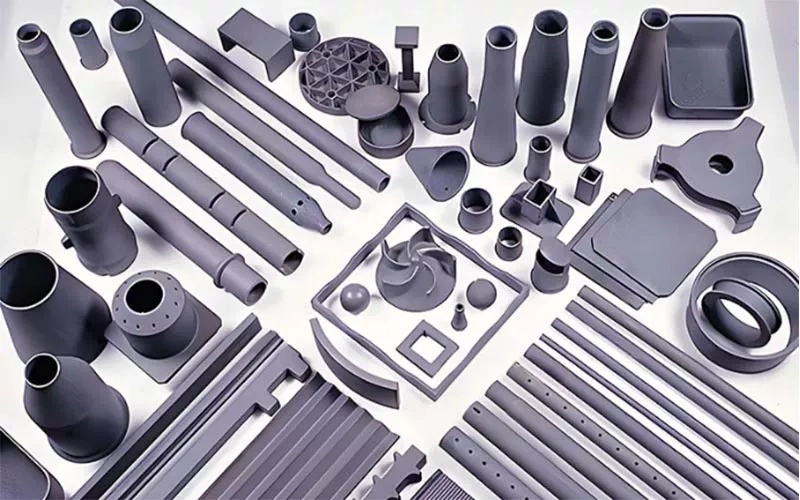
Industrial deployments reveal where silicon carbide ceramics deliver measurable performance advantages under extreme operating conditions.
Heat Shielding And Aerospace Components
Gas turbine engines incorporate silicon carbide in turbine blades and nozzle vanes. The material withstands temperatures up to 2000°C and resists high-temperature oxidation and thermal shock in hot section components. Structural applications extend to nose cones and wing leading edges where abrasion resistance matters.
Industrial Furnace Parts And Kiln Shelves
Silicon carbide kiln furniture operates to 1650°C. Recrystallized variants handle 1700°C under heavy loads. Lightweight construction increases ceramic processing throughput by 33% compared to traditional mullite-based systems. Faster heating and cooling cycles reduce energy consumption while maintaining dimensional stability through thermal cycling.
Automotive Brake Disks: Extreme Temperature Testing
Carbon-silicon carbide brake disks demonstrate superior thermal management compared to gray cast iron. Testing shows C/SiC variants produce the lowest temperature rise and stable friction coefficients above 1000°C. Heat flux analysis confirms faster dissipation rates that reduce localized overheating during high-performance braking.
Nuclear Reactor Applications
Silicon carbide composite fuel cladding withstands temperatures to 2093°C, approximately 500 degrees beyond zirconium alloy melting points. Manufacturing demonstrations produced 12-foot fuel rods meeting reactor-grade specifications. Corrosion testing under pressurized water conditions confirmed gas-tight joints after 180 days.
Electronics And Semiconductor Cooling
Silicon carbide electronics function at 175°C and enable integration into motors and photovoltaic panels that generate heat. NASA applications target Venus surface operations at 460°C using uncooled silicon carbide circuits.
Conclusion
Silicon carbide ceramics justify their industrial prominence with proven performance at temperatures exceeding 2,700°C. The testing data demonstrates thermal conductivity and oxidation resistance that conventional materials cannot match. SSiC emerges as the superior choice for extreme applications and operates to 1,600°C reliably despite higher costs. RBSiC offers adequate performance for budget-conscious operations below 1,380°C. Material selection ends up depending on matching temperature requirements against project constraints rather than pursuing maximum specifications.
Silicon carbide ceramics can endure temperatures up to 2,730°C (4,946°F), with some variants operating reliably at 2,000°C in inert environments. The sublimation point occurs at approximately 2,700°C, making it one of the most heat-resistant ceramic materials available for industrial applications.
Reaction Bonded Silicon Carbide (RBSiC) operates up to 1,380°C and offers lower cost, Silicon Infiltrated Silicon Carbide (SiSiC) functions to 1,350°C with excellent dimensional stability, and Sintered Silicon Carbide (SSiC) provides the highest performance up to 1,600°C with superior strength and corrosion resistance but at a higher price point.
Silicon carbide exhibits exceptional thermal conductivity ranging from 320 to 348 W⋅m⁻¹⋅K⁻¹ at room temperature, depending on the polytype. This high conductivity enables efficient heat dissipation, though it decreases at elevated temperatures, dropping to approximately 63 W⋅m⁻¹⋅K⁻¹ at 1,200°C.
Silicon carbide brake disks demonstrate superior thermal management with stable friction coefficients above 1,000°C and faster heat dissipation rates compared to traditional gray cast iron. This results in reduced temperature rise during braking and better performance under high-temperature conditions.
Key industries include aerospace (turbine components and heat shields), automotive (brake systems and electric vehicle electronics), semiconductor manufacturing (wafer processing equipment), chemical processing (corrosion-resistant components), and nuclear energy (fuel cladding that withstands temperatures to 2,093°C).