
Powder metallurgy plays a crucial but often overlooked role in office equipment, delivering precision components that ensure reliable daily operations while reducing costs and maintenance requirements.
• Powder metallurgy achieves 95%+ material efficiency and produces parts with tolerances of ±0.05-0.10mm, making it ideal for high-volume office equipment manufacturing.
• Self-lubricating properties through controlled porosity eliminate frequent maintenance in printers, copiers, and motors, extending equipment service life significantly.
• The process creates quieter office environments by dampening vibrations and sound waves through its unique porous structure in gears and mechanical components.
• Near-net-shape manufacturing reduces production costs by eliminating extensive machining operations while maintaining part-to-part consistency across large production runs.
• Components withstand continuous operation under high cycle counts, providing reliable performance in paper feed mechanisms, motor assemblies, and data connection systems.
From printer gears to computer peripherals, these precision-engineered parts form the backbone of modern office equipment, delivering the reliability and performance that businesses depend on every day.
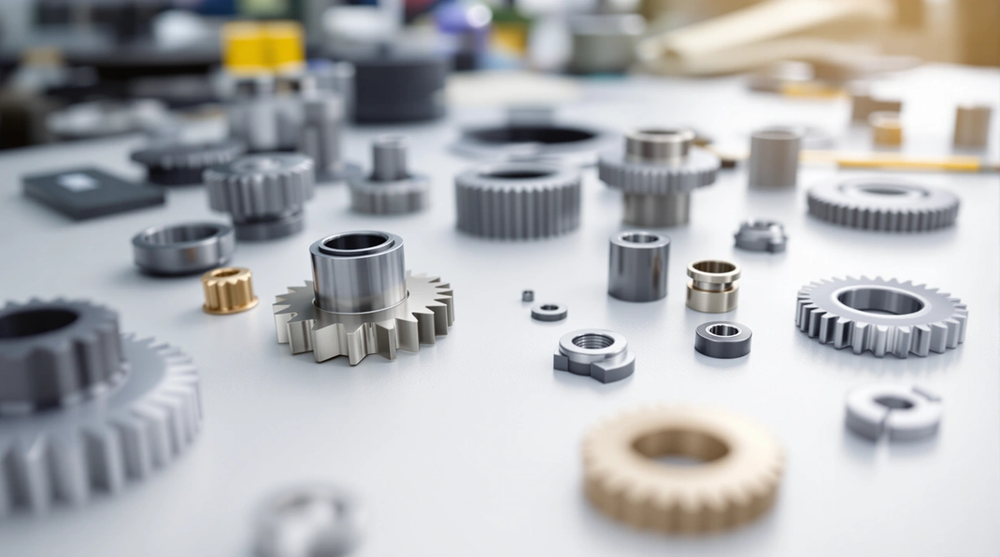
What is Powder Metallurgy and Why Office Equipment Relies on It
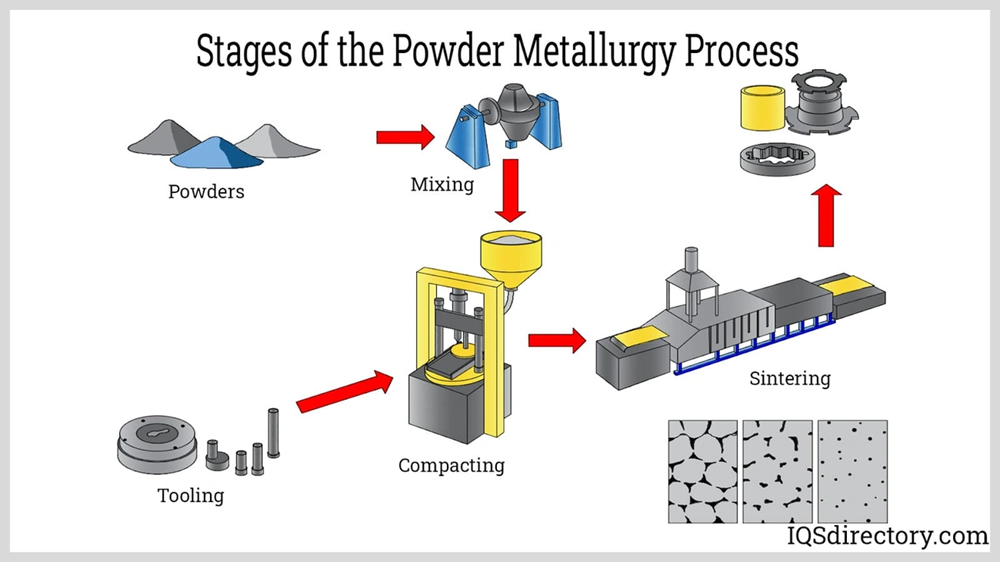
Simple concepts of powder metallurgy components
Powder metallurgy is a manufacturing process that produces metal parts by compacting fine metal powders and heating them below their melting point. The process uses discrete particles of solid metals ranging from a fraction of a micron to those passing through a 20-mesh screen. Powder metallurgy builds components directly from powdered material, unlike casting that involves molten metal or machining that removes material.
The technique handles metals whose manufacture would otherwise be impractical or uneconomical, such as beryllium, tungsten, and molybdenum. Parts retain desired characteristics of each material because most remain solid during sintering and are unchanged. This makes powder metallurgy components suitable for applications requiring specific material properties without the constraints of traditional metalworking.
How powder metal parts are manufactured
Metal powder production begins with four main processes: solid-state reduction, atomization, electrolysis, and chemical methods. Atomization separates molten metal into small droplets by subjecting it to high-energy jets of gas or liquid, applicable to all metals that can be melted. Solid-state reduction crushes selected ore, mixes it with carbon, and passes it through a continuous furnace. This produces sponge-like particles that are soft and compress readily.
The conventional powder metallurgy process involves three simple steps. First, metal powders are blended with additives and lubricants. Second, the powder mixture undergoes die compaction at room temperature under pressures reaching up to 50 tons per square inch. This creates a “green” part with the size and shape of the finished product. Third, sintering heats the compacted part in a controlled atmosphere furnace and bonds particles together without melting them.
Why office equipment manufacturers choose powder metallurgy
Office equipment manufacturers select powder metallurgy because it offers several production advantages. The process minimizes machining by producing parts at or close to final dimensions, using more than 97% of the starting raw material in the finished part. This near-net-shape capability eliminates extensive secondary operations and reduces waste.
Powder metallurgy permits a wide variety of alloy systems and provides controlled porosity to self-lubricate, which benefits moving parts in office devices. The process makes manufacture of complex or unique shapes impractical with other metalworking methods easier. Suited to moderate- and high-volume component production requirements, powder metallurgy delivers part-to-part uniformity for improved product quality and long-term performance reliability in applications where consistency matters.
Common Powder Metallurgy Parts Found in Office Equipment
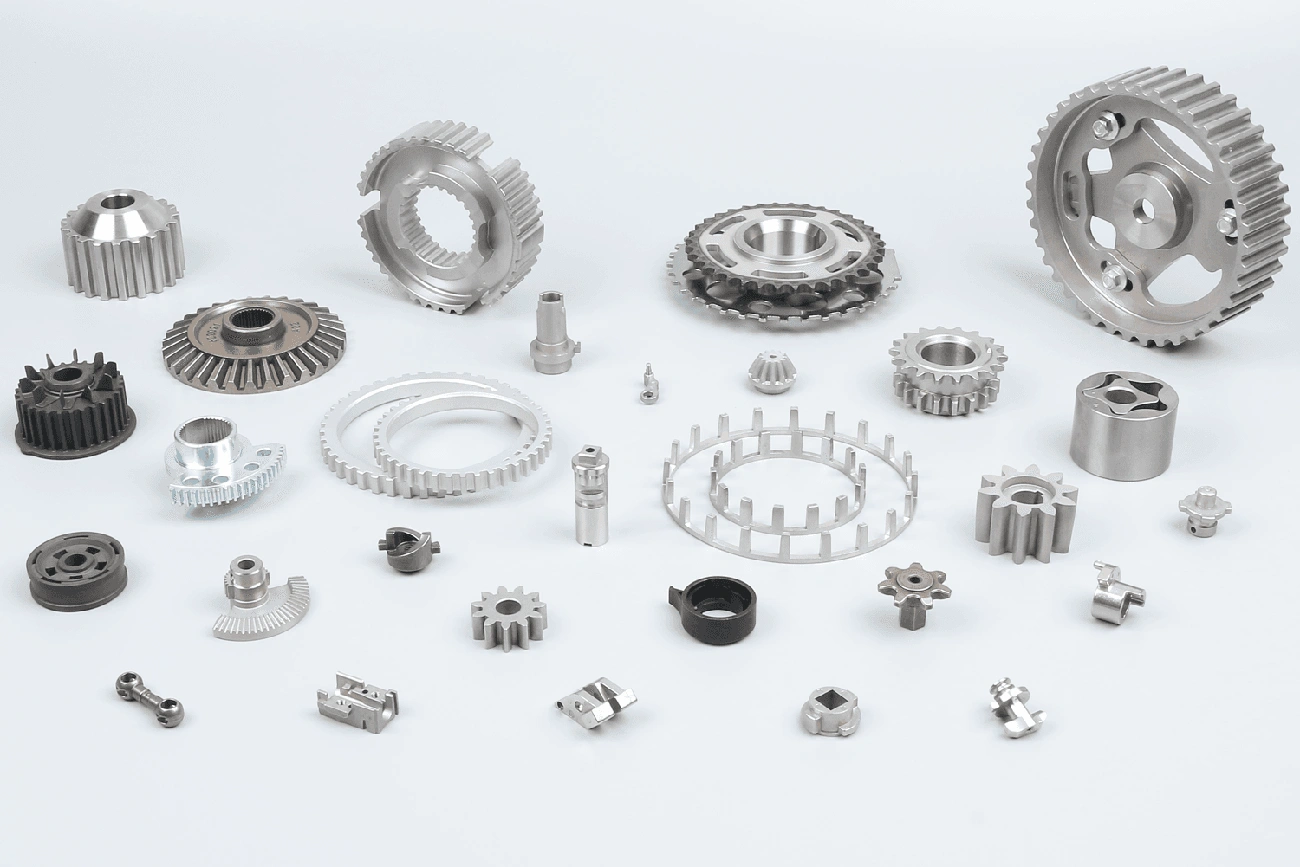
Office equipment contains many powder metallurgy components operating in different mechanical systems. These parts appear in machines that handle paper, process data, perform maintenance tasks, and power various automated functions throughout workplace environments.
Printers and copier components
Printers and copiers rely on powder metal gears for paper feed mechanisms, timing assemblies and drive trains. The consistent geometry of these gears supports accurate paper transport and minimizes vibration during operation. Sintered bushings and bearings support rotating assemblies within these devices. They often feature oil impregnation that makes self-lubricating behavior possible. This characteristic reduces friction and limits heat buildup without requiring frequent maintenance interventions.
Powder metallurgy parts’ material structure dampens vibration better than some machined alternatives. This contributes to quieter operation in office environments. Paper shredders use powder metal gears to transmit power from motors to cutting shafts. These gears maintain stable rotation under fluctuating loads caused by varying paper thickness.
Computer hardware and peripherals
Computer accessories incorporate powder metallurgy components in keyboard mechanisms, data connection ports and electronic housings. Stainless steel powder metal parts appear in keyboard assemblies where precision and durability support repeated keystrokes over extended service periods. Data plugs and connector components manufactured through powder metallurgy provide dimensional stability for electrical connections that work.
Power tool assemblies for office maintenance
Power tools used for office maintenance contain powder metal gears, sprockets, chucks and rotors. These components meet strict requirements for tight tolerances and complex geometries. Powder metallurgy produces pawls and locking mechanisms used to reverse tool direction in ratchets and reversible screwdrivers.
Small motor components in office devices
Small motors throughout office equipment use powder metal bushings for motor supports, fan assemblies and drive units. Sintered bearings in these applications maintain smooth rotation under continuous use while the controlled porosity allows for self-lubrication. Cash counters and sorting machines operate under high-cycle conditions. Powder metal components support repeated motion in these machines while maintaining dimensional accuracy.
Key Benefits of Powder Metal Components in Office Applications
Manufacturing components for office equipment just needs specific performance characteristics that powder metallurgy delivers through its unique processing approach. These benefits address operational requirements spanning accuracy, economics, sustainability, acoustic performance, and longevity.
Precision and dimensional accuracy
Powder metallurgy components achieve dimensional tolerances of ±0.05 mm to ±0.10 mm depending on design complexity and material selection. Sintered structural parts reach ISO tolerance grades ranging from IT-6 to IT-12 across different dimensions. The process maintains uniform weight and density through controlled powder deposition into dies. This ensures part-to-part consistency in production runs of all sizes. Precise tooling dimensions and modern CNC compaction presses make this repeatability possible. These presses continuously monitor and adjust positions through feedback loops.
Cost-effectiveness at scale
Volume production drives economic advantages in powder metallurgy. Presses operate at room temperature during compaction and consume less energy than casting processes. Production rates reach approximately 30 parts per minute. This enables manufacturers to amortize tooling costs across large quantities. The near-net-shape output eliminates extensive machining operations and reduces labor requirements. Manufacturing cycles become shorter as a result.
Material efficiency and waste reduction
Powder metallurgy achieves material utilization exceeding 95%, with some applications reaching 97%. Defective green compacts can be crushed and returned to powder form for reuse. This efficiency proves valuable when processing expensive materials. Conventional machining would generate substantial scrap in these cases.
Noise reduction through controlled porosity
Controlled porosity up to 10% creates a porous structure that dampens sound waves. The microscopic voids absorb vibration energy and produce quieter operation than dense components. Office environments benefit from this characteristic. Noise levels affect workplace comfort.
Durability and wear resistance
Powder metallurgy steels demonstrate superior wear performance in demanding applications. Testing showed Vanadis 60 SuperClean powder steel expressed weight loss approximately seven times lower than Hardox 600 steel and two times lower than PMFe60P padding weld in abrasive conditions. Fine carbide precipitates throughout the microstructure provide high resistance to abrasive wear. This extends component service life under continuous operation.
How Powder Metallurgy Products Improve Office Equipment Performance
Office equipment performance depends on components that withstand operational demands while maintaining precision over extended periods. Powder metallurgy products address these requirements through inherent material characteristics and engineered features.
Reliable operation under continuous use
Mechanical components in office equipment experience moderate loads but very high cycle counts. They often run without interruption for extended periods. Powder metal parts maintain dimensional stability under these conditions and support reliable torque transmission in printers. They also ensure consistent rotation in motor assemblies without performance degradation.
Extended service life and reduced maintenance
Self-lubricating powder metallurgy bearings eliminate frequent maintenance interventions. The interconnected porosity stores lubricating oil within the metal structure and reduces friction. This limits heat buildup during operation. Component service life extends in applications where access for maintenance proves difficult or impractical.
Heat management in compact designs
Powder metallurgy materials exhibit controlled thermal properties suited to compact office equipment layouts. The sintering process creates uniform microstructures that manage heat dissipation and prevent localized overheating in densely-packed mechanical assemblies.
Self-lubricating properties for moving parts
Porous metal bearings retain oil through capillary action. Friction-generated heat causes oil to flow to bearing surfaces and creates a protective film during operation. The oil returns to internal pores when equipment stops and cools.
Consistent quality across production runs
Controlled powder compaction and sintering ensure predictable dimensions and mechanical properties during high-volume production. JH MIM has nearly 20 years of experience in the metal injection molding and powder metallurgy industry. The company provides precision-engineered products to global customers.
Conclusion
Powder metallurgy components deliver the precision and durability that office equipment just needs. These parts reduce noise and eliminate frequent maintenance through self-lubrication. Material efficiency exceeds 95%, which is a big deal. The manufacturing process produces reliable components that withstand continuous operation and maintain dimensional accuracy. JH MIM has nearly 20 years of experience in the metal injection molding and powder metallurgy industry. We provide precision products to global customers who want consistent quality and superior performance.
FAQs
Q1. What makes powder metallurgy an important manufacturing process? Powder metallurgy offers significant advantages including low energy consumption, exceptional material utilization of over 97%, and fewer production steps compared to traditional manufacturing. This results in higher cost efficiency, making it particularly valuable for producing precision components at scale.
Q2. How does powder metallurgy benefit office equipment specifically? Powder metallurgy components in office equipment provide precision and dimensional accuracy, operate quietly through controlled porosity that dampens vibration, and offer self-lubricating properties that reduce maintenance needs. These parts maintain consistent performance under continuous use while minimizing noise in workplace environments.
Q3. What are the environmental advantages of using powder metal parts? The powder metallurgy process is highly sustainable, utilizing more than 95% of starting materials in finished parts and minimizing scrap waste. The sintering process consumes less energy than traditional casting, produces lower emissions, and allows for recycling of metal powders and excess materials.
Q4. Why do powder metal components last longer in office devices? Powder metal parts demonstrate superior wear resistance due to fine carbide precipitates throughout their microstructure. Self-lubricating bearings store oil within their porous structure, reducing friction and heat buildup during operation, which extends component service life and reduces the need for frequent maintenance.
Q5. How does powder metallurgy ensure consistent quality in mass production? Controlled powder compaction and sintering processes ensure predictable dimensions and mechanical properties across high-volume production runs. Modern CNC compaction presses continuously monitor and adjust positions through feedback loops, maintaining part-to-part uniformity and achieving dimensional tolerances of ±0.05 mm to ±0.10 mm.