
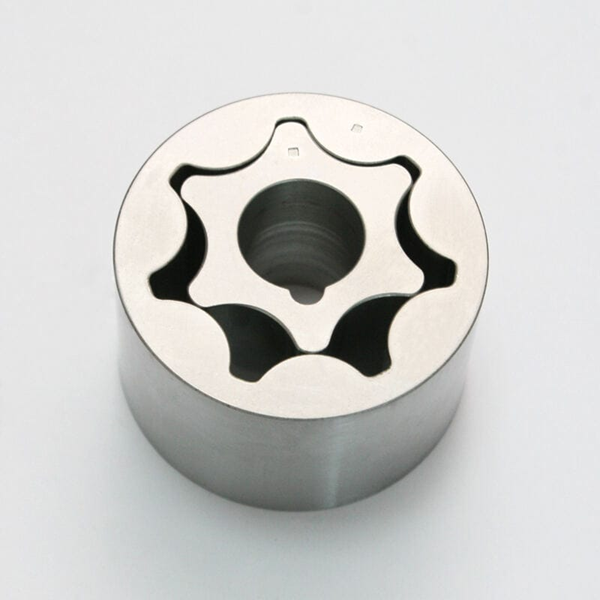
Precision Sintered Oil Pump Rotors: The Heart of Engine Lubrication
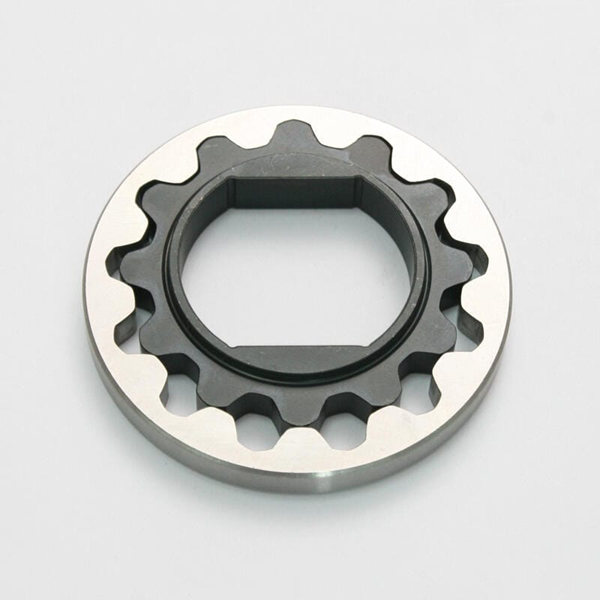
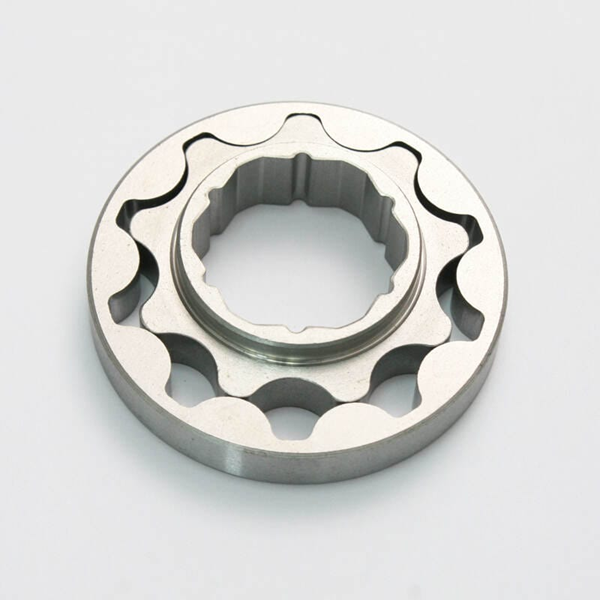
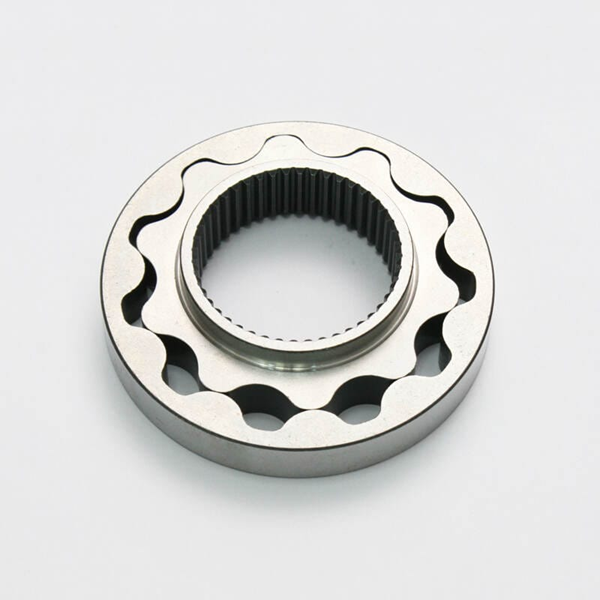
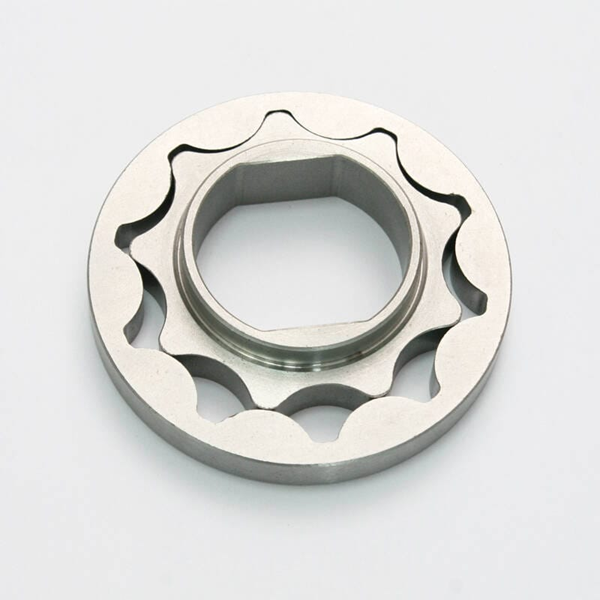
An oil pump rotor is the core rotating element within trochoidal or gerotor hydraulic pumps, engineered to deliver continuous, high-pressure oil flow throughout internal combustion engines and heavy-duty industrial drives. Consisting of an inner drive rotor and an outer driven annulus, this system draws oil from the sump and delivers it under regulated pressure to critical friction couples. Ensuring reliable engine lubrication, thermal dissipation, and long-term durability relies heavily on the structural integrity and dimensional consistency of these rotors.
While gear profile design establishes hydraulic theory, high-volume production requires high-density powder metallurgy (PM) manufacturing to cost-effectively hit microscopic tolerances without expensive multi-axis CNC machining.
Powder Metallurgy (PM) vs. Conventional Machining for Gerotor Manufacturing
In high-volume automotive and industrial gear pump applications, powder metallurgy has almost entirely replaced traditional wrought steel machining due to superior material utilization and net-shape capability.
| Manufacturing Parameter | Sintered Powder Metallurgy (PM) | Conventional Machining (CNC) |
|---|---|---|
| Material Efficiency | >95% Net-Shape (Near-zero scrap) | 30%–50% (High material waste) |
| Lobe Geometry Consistency | Replicated precisely via precision rigid die tooling | Requires multi-axis milling; higher unit-to-unit variance |
| Production Scalability | Ideal for millions of annual units with rapid press cycle times | Slower cycle times; high cutting tool wear |
| Cost Structure | Lowest unit cost for mass production | High per-unit machining labor and tooling wear cost |
Material Selection & Densification for Sintered Rotors
To withstand extreme continuous hydraulic pressures, hot oil shear, and aggressive engine RPM cycles, custom-formulated sintered iron-copper-carbon steel alloys (e.g., MPIF FC-0208 or FN-0208) are utilized.
1. High-Density Sintering (>6.8 to 7.2 g/cm³)
Compressing metal powders at high compaction pressures followed by high-temperature atmosphere-controlled sintering eliminates interconnected porosity. Densities above 7.0 g/cm³ significantly boost tensile strength, impact toughness, and wear resistance against fluid cavitation erosion.
2. Heat Treatment & Surface Steam Oxidation
Post-sintering heat treatments—such as case hardening or steam treatment (magnetite layer formation)—seal microscopic residual surface pores. This creates a hard, corrosion-resistant ferric oxide (Fe₃O₄) surface layer that lowers friction coefficients and prevents scuffing during dry cold startups.
Critical Manufacturing Tolerances & Quality Control
Maintaining tight mechanical fits between the inner rotor, outer rotor, and pump housing is essential to maximize volumetric efficiency and suppress operational noise across speed ranges.
| Tolerance Characteristic | Standard Engineering Target | Impact on Engine Performance |
|---|---|---|
| Radial Tip Clearance | 0.03 mm – 0.08 mm | Prevents internal oil backflow and maintains oil pressure at high RPM & hot oil temperatures. |
| Axial Thickness Tolerance | ±0.01 mm (Lapping/Grinding) | Controls end clearance to eliminate fluid leakage without increasing mechanical drag. |
| Concentricity & Lobe Profile Runout | ≤0.02 mm | Guarantees smooth meshing, prevents torque ripple, and eliminates pump noise (NVH). |
Engine Performance Gains Enabled by Precision Rotors
- Instant Cold-Start Priming: Tight tip clearance control retains oil in the pump cavity when the engine is off, preventing delayed circulation upon initial startup.
- Reduced Friction & Parasitic Loss: Optimized trochoidal profiles and polished end-faces minimize mechanical drag on the crankshaft, boosting overall engine fuel efficiency.
- Extended Bearing & Valvetrain Life: Consistent hydraulic pressure ensures unbroken oil film thickness across crankshaft journal bearings, camshafts, and turbocharger cartridges under heavy load demands.
Partner with JHMIM for Custom Powder Metallurgy Oil Pump Rotors
As a leading powder metallurgy manufacturer specializing in sintered automotive components, JHMIM delivers custom-engineered inner/outer gerotor pairs meeting strict IATF 16949:2016 quality standards. Our complete manufacturing capabilities include tool design, high-density pressing, controlled-atmosphere sintering, precision double-disc grinding, and 100% automated optical inspection.
👉 Contact JHMIM Engineering for a Complete Technical DFM Analysis & OEM Quote →
An oil pump rotor draws oil from the sump. It then delivers this oil under pressure to engine components. This ensures optimal lubrication and cooling.
A precision rotor maintains consistent oil pressure. It reduces friction and wear. This enhances cooling, boosts fuel economy, and increases power output.
JHMIM Oil Pump Rotors use advanced powder metallurgy. They offer superior surface finish and tight dimensional accuracy. This ensures high quality and precision.