
What is the Melting Point of Pure Copper?
Physical Properties at 1084.62°C (1984.32°F)
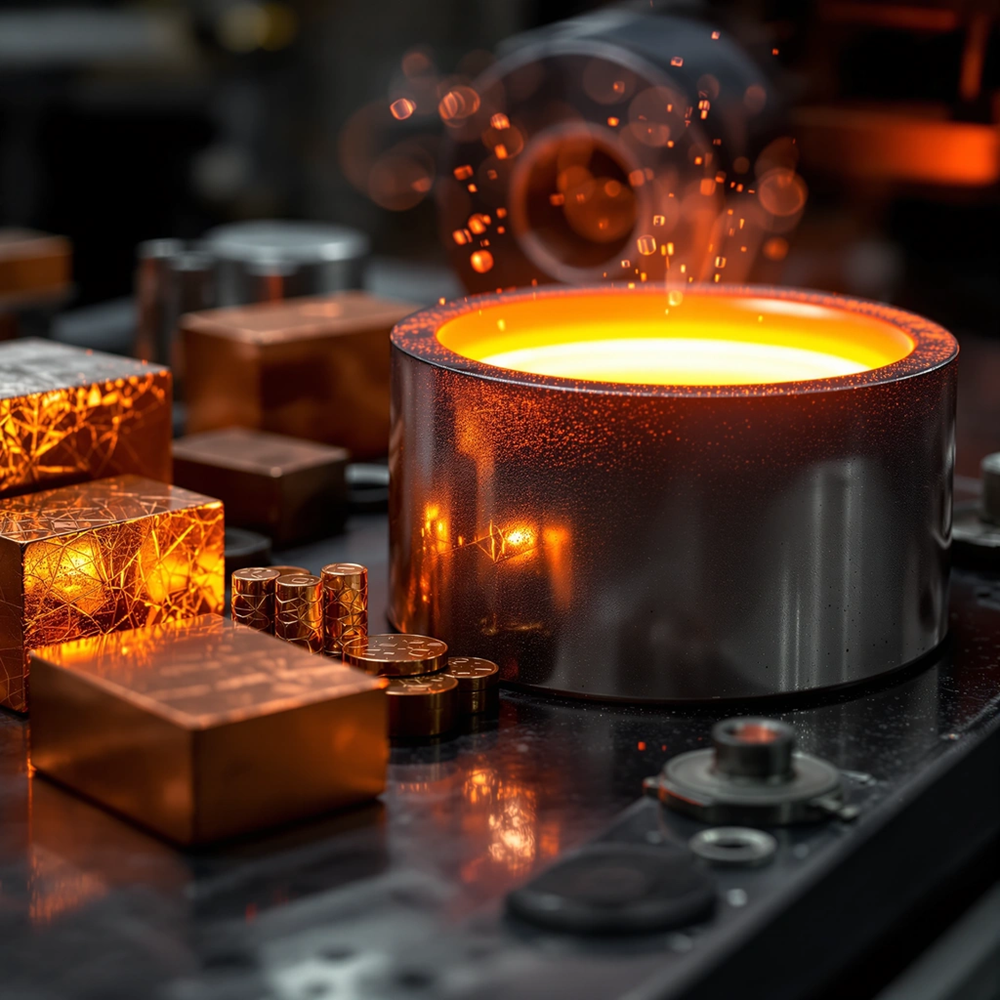
Pure elemental copper exhibits a precise melting point of 1084.62°C (1984.32°F / 1357.77 K) under standard atmospheric pressure (1 atm / 101.325 kPa). At this exact thermodynamic threshold, solid copper transitions into a low-viscosity, high-surface-tension liquid. Below 1084.62°C, the face-centered cubic (FCC) crystal lattice of copper retains structural integrity. Reaching this temperature supplies the latent heat of fusion (approximately 205 kJ/kg), overcoming atomic bonds within the metal matrix.
Factors Affecting Pure Copper Melting Temperature (Purity & Atmospheric Pressure)
While 1084.62°C represents the accepted baseline, the precise melting behavior of copper varies based on elemental purity and ambient pressure. Ultra-high-purity copper (99.999% Cu / 5N grade) exhibits a sharp, single-temperature phase change. In contrast, oxygen-free copper (OFC, C10200) or high-conductivity copper (ETP, C11000) containing trace oxygen or sulfur impurities displays a micro-range melting interval. Furthermore, pressure variations alter phase equilibrium according to the Clausius-Clapeyron relation; elevated vacuum environments reduce the effective melting and vaporization thresholds, whereas high-pressure thermal processing slightly increases phase transition limits.
Solid-to-Liquid Phase Transition Behavior of Pure Copper
During the solid-to-liquid phase transition, pure copper undergoes significant volumetric and thermal changes. As the metal absorbs its latent heat of fusion, solid copper experiences a density drop from 8.96 g/cm³ in its solid state to approximately 8.00 g/cm³ upon complete liquefaction (a volumetric expansion of roughly 4.2%). Liquid copper exhibits extremely high thermal conductivity and low viscosity, making temperature control crucial in liquid-phase processing to prevent liquid runaway, flash formation, or grain boundary degradation during powder metallurgy (PM) and Metal Injection Molding (MIM) operations.
Melting Points of Common Copper Alloys
Melting Point of Brass vs. Copper (900–940°C Range)
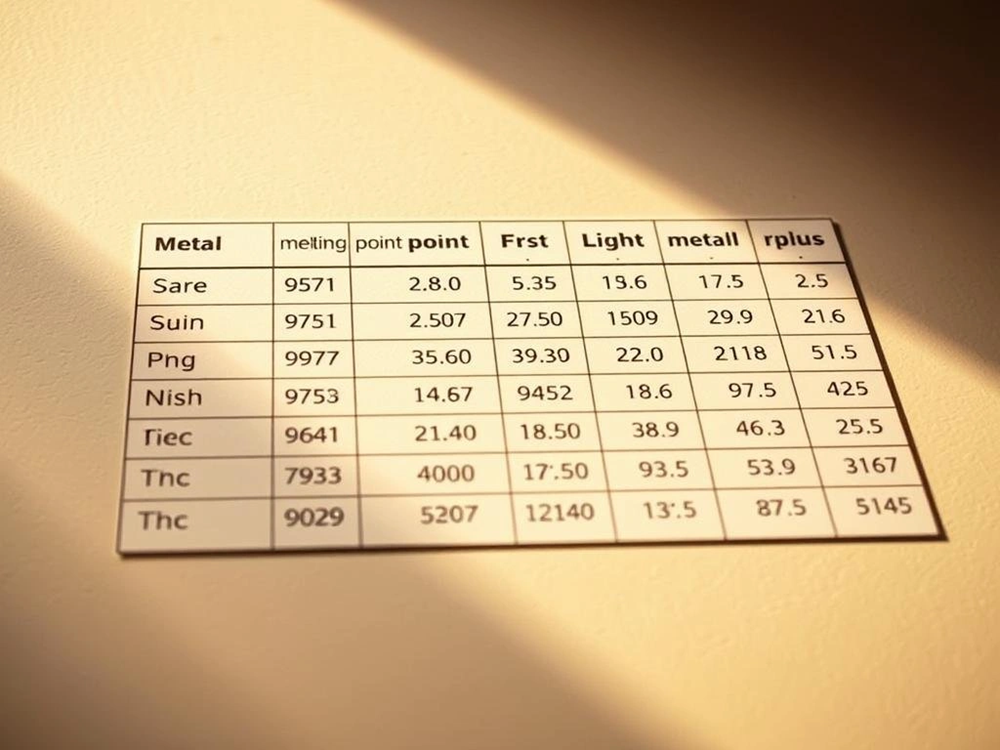
Brass melts at temperatures between 900°C and 940°C (1,650°F to 1,720°F), which is noticeably lower than pure copper’s melting point of 1084.62°C. The zinc content in brass directly influences this thermal reduction. Yellow brass typically melts between 905°C and 932°C, whereas red brass requires higher temperatures ranging from 990°C to 1,025°C due to its higher copper proportion. Admiralty brass, which includes tin additions for marine corrosion resistance, melts between 900°C and 940°C. The precise copper-to-zinc ratio dictates both thermal phase behavior and mechanical workability during precision fabrication.
Melting Point of Bronze vs. Copper (950–1050°C Range)
Bronze alloys demonstrate a broad melting range between 850°C and 1,050°C depending on their specific alloying elements. Standard commercial bronze melts around 913°C, remaining well below pure copper. Tin bronze typically melts between 950°C and 1,050°C, while high-strength aluminum bronze requires 1,027°C to 1,038°C. Manganese bronze melts at lower temperatures ranging from 865°C to 890°C. Silicon bronze achieves complete liquefaction at approximately 1,025°C. Replacing pure copper lattice sites with tin or aluminum lowers the solidus line, creating a liquid-solid coexisting freezing range rather than a sharp melting point.
Tungsten-Copper Pseudo-Alloys (W90Cu10 to W70Cu30 for Thermal Management)
Tungsten-copper composites combine tungsten’s high thermal stability with copper’s superior heat dissipation. W90Cu10 (90% tungsten, 10% copper) exhibits operational stability up to tungsten’s structural matrix limits, with liquid copper phase formation occurring around 1,084°C. W80Cu20 provides high thermal conductivity of 216 to 252 W/(m·K) alongside a low coefficient of thermal expansion (CTE) of 6.1 to 8.8 × 10⁻⁶ K⁻¹. W70Cu30 compositions offer 42% IACS electrical conductivity with a bending strength of 790 MPa. Because tungsten and copper are mutually insoluble, these pseudo-alloys are processed via liquid-phase sintering or infiltration between 1,200°C and 1,350°C to form continuous micro-networks.
Molybdenum-Copper Alloys (Mo68Cu32 to Mo40Cu60 for Heat Sinks)
Molybdenum-copper alloys feature tailor-made thermal expansion and conductivity traits. Mo68Cu32 delivers thermal conductivity of 178 to 228 W/(m·K) with a CTE of 6.75 to 9.27 × 10⁻⁶ K⁻¹. Mo60Cu40 achieves 210 to 250 W/(m·K) thermal conductivity, while Mo40Cu60 reaches 280 to 290 W/(m·K). These pseudo-alloys undergo sintering at 1,200°C to 1,300°C. The high molybdenum content ensures excellent thermal expansion matching with semiconductor substrates (such as GaAs and SiC), making Mo-Cu ideal for high-power electronic packaging and heat sinks.
Copper Sintering Temperature in Metal Injection Molding (MIM)
Solid-State vs. Liquid Phase Sintering of Pure Copper (Above 1080°C)
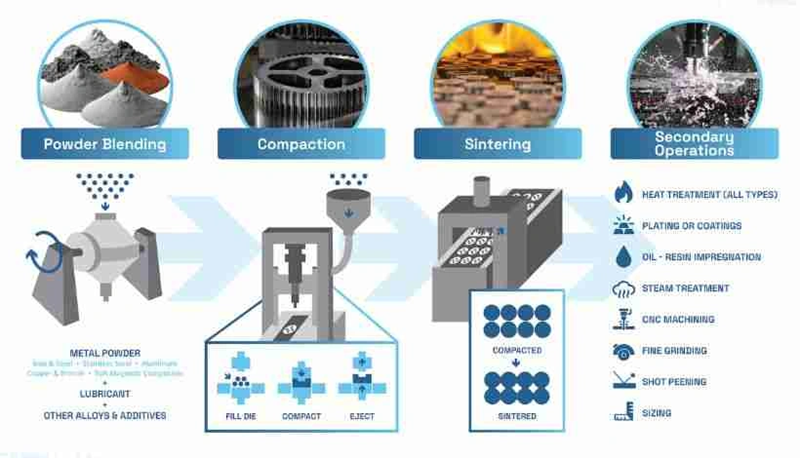
Sintering pure copper transitions from solid-state atomic diffusion to liquid-phase mechanisms as temperatures approach pure copper’s 1084.62°C melting boundary. Solid-state sintering occurs between 1040°C and 1065°C, where copper powder particles bond through surface and volume diffusion without melting. Sintering pure copper at 1065°C yields up to 96.1% relative density through solid-state neck growth. Raising temperatures above 1084°C initiates liquid-phase sintering, which dramatically accelerates densification but risks dimensional distortion or copper extrusion if liquid volume is uncontrolled.
Sintering Temperature Range for W-Cu Pseudo-Alloys (1200–1350°C)
W-Cu composites require sintering temperatures between 1200°C and 1350°C. Because tungsten remains solid (melting at 3422°C), copper melts completely to capably wet the tungsten skeleton. Utilizing copper-coated tungsten powders enables solid-phase pre-densification at lower temperatures (e.g., 1065°C under pressure), preserving fine gradient microstructures prior to full liquid phase consolidation above 1200°C.
Sintering Temperature Range for Mo-Cu Alloys (1200–1300°C)
Mo-Cu alloys sinter effectively within the 1200°C to 1300°C window. Utilizing ultra-fine molybdenum powders (100–200 nm) allows parts to reach over 96% relative density at 1200°C. This temperature range provides proper liquid-phase capillary action without causing copper sweat or pore coarsening.
Sintering Time, Atmosphere Control, and Dwell Temperature Effects
Sintering dwell time directly dictates final density and grain morphology. Holding copper MIM parts at peak temperature for 30 to 180 minutes promotes pore elimination, though excessive dwell times cause grain coarsening. Atmosphere control is vital: pure hydrogen, dissociated ammonia, or high-vacuum environments remove surface oxides from copper powders, ensuring optimal surface energy and liquid copper wetting.
Copper Metal Injection Molding (MIM) Process Requirements
Feedstock Preparation and Powder Loading (50–63 vol.%)
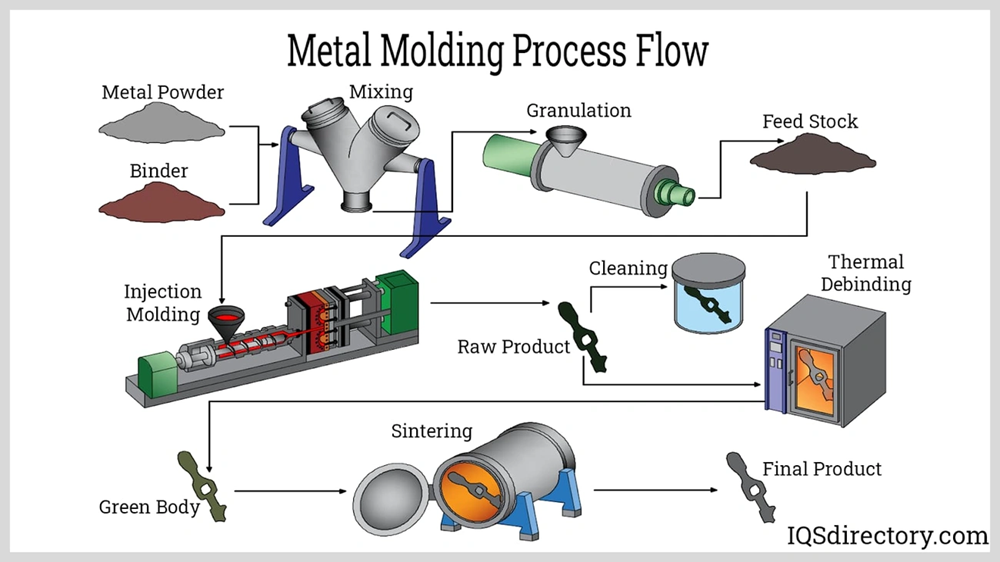
Copper MIM feedstock formulation balances powder loading against molding viscosity. Gas-atomized spherical copper powders allow solids loading between 60 and 67 vol.%, while water-atomized or chemically precipitated powders achieve 50 to 62 vol.%. Typical commercial formulations mix 93.5 wt.% copper powder (particle size 10–20 µm) with a multi-component binder system consisting of polyethylene glycol (PEG), paraffin wax, and thermal stabilizers.
Catalytic & Thermal Debinding Before Sintering
Debinding occurs in two progressive stages. Primary solvent debinding extracts water-soluble binders or paraffin wax at temperatures from room temperature up to 60°C over 12 hours, removing approximately 2.8 wt.% of binder. Catalytic debinding using nitric/oxalic acid vapor operates around 120°C. Secondary thermal debinding follows in a furnace, ramping at 1°C/min up to 500°C–730°C to burn out backbone polymers, bringing cumulative weight loss to ~6.5%.
Controlling Linear Shrinkage Rates During Sintering (13–20%)
Consolidation of green compacts during sintering results in directional shrinkage. Standard copper MIM parts typically experience 13.2% linear shrinkage along the X-axis, 13.4% along the Y-axis, and 13.8% along the Z-axis (overall volumetric shrinkage averages 15% to 20%). Mold dimensions must be oversized according to precise tool scale factors to guarantee final dimensional tolerances.
Density Achievement (95–98% Theoretical Density) & Electrical Conductivity
Optimized thermal profiles allow copper MIM components to achieve 95.0% to 98.0% relative density. This high density yields exceptional performance metrics: thermal conductivity reaches 320 to 380 W/(m·K) (approaching pure copper’s theoretical 400 W/mK), while electrical conductivity regularly achieves 80% to 90% IACS.
Conclusion
Understanding the melting behavior and sintering properties of pure copper and its alloys is fundamental to precision MIM manufacturing. While pure copper melts sharply at 1084.62°C, brass and bronze alloys exhibit lower, broader liquidus ranges between 850°C and 1,050°C. In contrast, refractory composites like W-Cu and Mo-Cu rely on liquid-phase sintering between 1,200°C and 1,350°C. Controlling powder solids loading, multi-stage debinding, and sintering thermal profiles ensures copper MIM components achieve 95%–98% theoretical density with tight linear shrinkage control.
FAQs
Q1. At what temperature does pure copper melt?
Pure copper melts at exactly 1084.62°C (1984.32°F / 1357.77 K) under standard atmospheric pressure.
Q2. Do copper alloys melt at different temperatures than pure copper?
Yes. Alloying elements like zinc, tin, or aluminum reduce the solidus temperature. Brass melts between 900°C and 940°C, while bronzes melt between 850°C and 1,050°C.
Q3. What sintering temperatures are required for tungsten-copper composites in MIM?
Tungsten-copper pseudo-alloys require sintering temperatures between 1200°C and 1350°C, allowing copper to melt and wet the solid tungsten structural matrix.
Q4. What density and conductivity can be achieved in copper MIM components?
Properly sintered copper MIM parts reach 95.0% to 98.0% theoretical density, delivering thermal conductivity of 320–380 W/(m·K) and electrical conductivity of 80%–90% IACS.
Q5. How much shrinkage occurs during copper MIM sintering?
Copper MIM parts undergo linear shrinkage of 13% to 20% (typically ~13.2% X, 13.4% Y, 13.8% Z), which is factored directly into injection mold design.