
Key Takeaways
Understanding how MIM martensitic steels revolutionize foldable phone durability reveals the engineering breakthroughs that make these devices practical for everyday use.
• MIM martensitic steels achieve 1800-2200 MPa tensile strength, enabling foldable phones to withstand 200,000-500,000 fold cycles versus aluminum’s limited durability.
• Metal Injection Molding creates complex hinge geometries with ±0.01mm precision at 30-50% lower costs than traditional machining for high-volume production.
• Samsung Z Flip 4 data shows 17% hinge torque loss after 30,000 folds, highlighting why material selection determines long-term device reliability.
• The global MIM hinge market projects growth from $983 million in 2024 to $2.22 billion by 2031, driven by foldable device adoption.
• Superior wear resistance and fatigue performance of martensitic steel enable manufacturers to reduce hinge thickness while maintaining structural integrity across temperature ranges.
This material advancement transforms foldable smartphones from experimental devices into reliable consumer technology, with manufacturers like Samsung, Motorola, and Huawei leveraging these engineering solutions to meet durability expectations that make foldable phones viable for multi-year ownership.
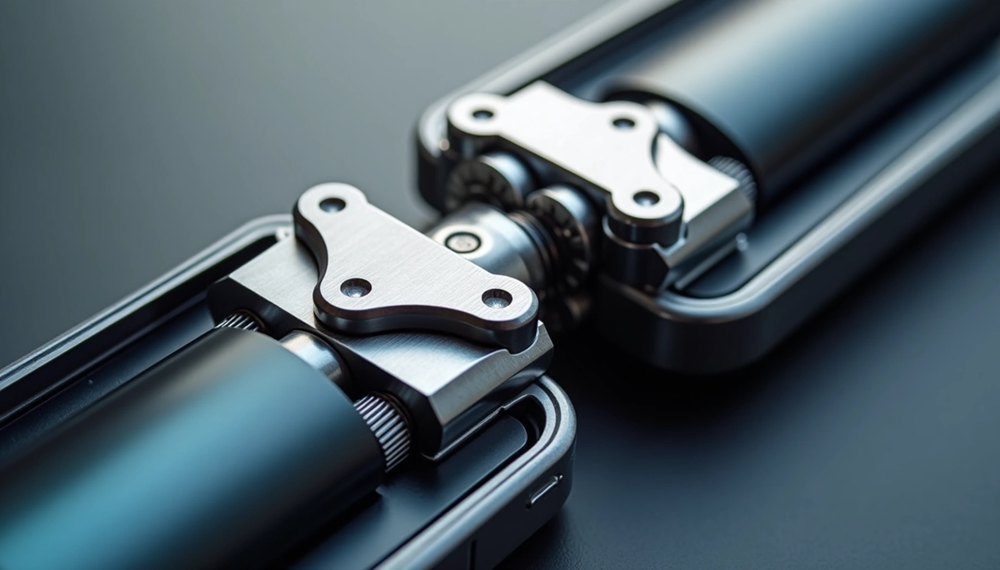
Foldable phone hinge degradation accelerates dramatically between cycles 20,000 and 40,000. Independent lab testing shows that after 30,000 folds, hinge torque loss averages 17% while visible screen creasing increases 3.2×. The hinge serves as the most complex component of any foldable device. Manufacturers now prioritize durability and hinge mechanics over mere novelty. Metal Injection Molding (MIM) martensitic steels have emerged as the solution to extending folding phone hinge lifespan. This piece gets into how MIM martensitic steels boost foldable phone hinge design, including Samsung foldable phone hinge performance data and the best foldable phone hinge technologies achieving 200,000-fold durability.
The Critical Role of Hinge Materials in Foldable Phone Durability
Metal Fatigue in Traditional Aluminum Hinges
Aluminum alloys were the foundations of early folding phone hinge designs, yet their crystalline structure creates inherent vulnerabilities under cyclic loading. Foldable phones fail through cumulative mechanical stress rather than single catastrophic events, with metal fatigue occurring in ultra-thin hinge actuators. Repeated bending motion generates microscopic cracks that propagate through the material’s grain boundaries. Each fold-unfold cycle subjects the hinge to tensile and compressive forces that weaken the metal’s structural integrity over time.
Samsung addressed these limitations by developing Armor Aluminum for the Galaxy Z Fold3 and Galaxy Z Flip3, a proprietary alloy engineered to withstand over 200,000 folds. This improved aluminum formulation delivers higher durability compared to previous foldable models, yet the material still operates within aluminum’s fundamental constraints. The frames and hinges using Armor Aluminum represent a developmental step rather than a material revolution, since aluminum’s lower strength ceiling limits how thin manufacturers can make hinge components without sacrificing reliability.
Why Material Selection Determines 200,000-Fold Lifespan
The 200,000-fold standard emerged as the industry norm because it translates to 100 folds per day over five years of use. This durability target requires materials that maintain consistent torque, resist wear at contact points, and prevent geometric deformation across hundreds of thousands of cycles. Testing protocols subject hinges to environmental conditions including temperature fluctuations, dust exposure and humidity variations.
Material choice governs three critical performance factors: strength-to-weight ratio, wear resistance at bearing surfaces and fatigue life under repetitive stress. Stainless steel provides toughness superior to aluminum and makes it suitable for samsung foldable phone hinge assemblies that demand extended operational life. Google selected stainless steel for the Pixel Fold hinge because the material handles daily use without structural degradation. The best foldable phone hinge designs achieve durability targets by balancing material properties with geometric optimization and surface treatments that reduce friction at moving interfaces.
Manufacturers now specify minimum strength thresholds for load-bearing hinge elements. Honor’s shield steel material reaches 1800 MPa in pressure resistance with 550HV hardness, while OPPO reports steel hinge components achieving 2200 MPa strength levels. These values exceed traditional aluminum alloys by factors of three to four and enable thinner hinge profiles without compromising structural margins.
The Change Toward High-Performance Steel Alloys
The progression from aluminum to advanced steel alloys reflects the foldable phone hinge design requirement for materials that combine high specific strength with exceptional wear resistance. Stainless steel and specialized steel formulations now dominate hinge architectures where load paths and contact surfaces determine device longevity. These materials resist corrosion and maintain surface finish integrity across temperature swings and environmental exposure.
Liquid metal represents the next material frontier for folding phone hinge applications. This amorphous metal alloy lacks the crystalline structure found in conventional metals and delivers superior resistance to bending fatigue and mechanical stress. Liquid metal’s atomic arrangement provides strength advantages while remaining lighter than stainless steel, addressing the challenge of minimizing hinge mass in ultra-thin devices. The material’s fatigue resistance and spring-like properties prove valuable in hinge mechanisms that must maintain precise torque characteristics throughout their service life.
High-quality materials alone cannot guarantee durability without proper engineering of interlocking components including gears, bearings and wear surfaces. The main goal centers on achieving a balance of strength, stiffness and tribological performance that extends device lifespan while delivering the smooth folding action users expect from premium foldable phones.
Understanding MIM (Metal Injection Molding) Process for Hinge Manufacturing
What is MIM and How It Works
Metal Injection Molding is the core manufacturing process for foldable phone hinge components. It combines powder metallurgy with plastic injection molding techniques. The process creates precision-engineered mechanical components that traditional machining cannot achieve in a budget-friendly way. MIM operates through four distinct stages: compounding, molding, debinding and sintering.
Fine metal powder blends with thermoplastic and wax binders in precise ratios to create feedstock. The metal powder to binder ratio reaches 60:40, with binders reducing friction between metal particles to enable fluid flow. This feedstock gets granulated into free-flowing pellets that injection molding machines accept.
The molding stage mirrors plastic injection processes. Feedstock heats and injects into mold cavities under high pressure. This forms what manufacturers call “green parts”. After cooling, these parts eject from the mold to begin debinding. The debinding process removes binder materials through solvent extraction or thermal furnaces. This leaves semi-porous “brown parts” with sufficient structural integrity for handling.
Sintering completes the transformation. Brown parts enter high-temperature, atmosphere-controlled furnaces where remaining binders evaporate and metal particles fuse together. The parts shrink by 15-20% as void spaces between particles eliminate and create dense solid components. This shrinkage demands careful mold design that accounts for final dimensional requirements.
MIM vs Traditional Stamping and Die-Casting
MIM excels at manufacturing high-complexity and high-precision structural parts that stamping and die-casting struggle to produce. Die casting uses molten metal as raw material, while MIM employs metal powder and binders. This difference allows MIM to achieve tighter tolerances and complex geometries with excellent repeatability.
MIM proves more budget-friendly than CNC machining for small, complex parts in stainless steel or specialized alloys. It reduces costs by 30-50% during scaled production. At volumes exceeding 10,000 units, MIM cuts per-part costs by 60-80% compared to machining. Die casting remains cheaper for large and simple components but lacks MIM’s geometric flexibility.
Precision Requirements for Foldable Phone Hinge Design
Foldable screen smartphone hinges demand complex and high-precision mechanical structures within devices measuring 14mm or thinner. Advanced powder metallurgy techniques enable intricate hinge geometries with tolerances under ±0.01mm, specifications that foldable phone hinge mechanisms require. This precision reduces post-processing requirements and cuts production costs 30% compared to traditional CNC machining.
MIM delivers as-sintered tolerances within ±0.3% of nominal dimensions, with dimensional tolerances of ±0.3% common across the industry. Parts achieve 95-99% density and produce material properties comparable to wrought metals. Samsung foldable phone hinge assemblies and best foldable phone hinge designs make use of these capabilities for components that require multiple internal features and thin-wall sections.
Budget-Friendliness of MIM for Complex 3D Hinge Geometry
Despite capital-intensive requirements, with medium-scale operations exceeding USD 5 million in upfront equipment costs, MIM economics favor complex geometries. Tooling investments range from USD 10,000 to over USD 100,000 depending on specifications, with advanced four-cavity molds for cell phone parts exceeding USD 30,000.
MIM part costs remain stable whatever the geometric complexity. The process achieves 95-98% material utilization versus 50-70% for machining. This makes expensive alloys viable. MIM provides broad development space for folding phone hinge applications that require intricate 3D modeling as manufacturers increase furnace capacity to meet growing foldable device demand.
Martensitic Steel Properties That Extend Hinge Lifespan
High Tensile Strength: 1800-2200 MPa Range
Martensitic steel alloys achieve ultimate tensile strengths between 1700 and 2200 MPa. This is a big deal as it means that they exceed conventional stainless steel grades by substantial margins. The final strength depends on carbon content, with concentrations between 0.22 and 0.36 wt% that allow foldable phone hinge components to withstand repeated mechanical loads. Quenched and tempered martensitic steel shows tensile strength values ranging from 1790 to 1570 MPa after tempering at 525°C, compared to 990 to 800 MPa for materials tempered at 700°C. This strength range makes thinner samsung foldable phone hinge profiles possible without structural compromise.
Superior Wear Resistance Under Cyclic Loading
Wear resistance increases when carbide precipitates form within the martensitic matrix. Finer carbide morphology contributes to improved abrasive wear resistance, while dislocation strengthening adds 291.9 MPa to material strength. Friction cycles increase dislocation density along grain boundaries and raise local hardness, which improves wear performance. Deep rolling surface treatments create compressive residual stresses that delay crack initiation. Fatigue lifetime extends from 133,000 cycles to over 10 million cycles at 500 MPa stress amplitude.
Elastic Deformation and Fatigue Performance
Crack initiation occurs at component surfaces during high cycle fatigue. Carburizing treatments generate surface hardness and compressive residual stresses that delay crack formation. The elastic constants of martensitic steel measured at room temperature show c11 values of 279.6 GPa and c44 values of 84.7 GPa. These values provide the elastic modulus needed for folding phone hinge applications. Fatigue crack propagation shows oscillating rates because of interaction with microstructural features, with prior austenite grain boundaries acting as obstacles to crack advancement.
Corrosion Resistance in Daily Use Environments
Chromium content between 11 and 18% provides the corrosion resistance characteristic of martensitic stainless steels. Tempering at 150-200°C improves corrosion resistance and makes these materials suitable for samsung z flip 4 hinge replacement components exposed to environmental conditions. Martensitic steels perform well in applications where corrosion exposure remains secondary to mechanical requirements, although they are nowhere near as corrosion-resistant as austenitic grades.
Thermal Stability Across Temperature Ranges
Martensitic steel maintains modest temperature dependence from 25 to 400°C whatever the tempering temperature. Yield strength and ultimate tensile strength show stable behavior in this operating range, which covers typical foldable phone hinge design thermal environments. Strength decreases about 100 MPa per 50°C increment beyond 400°C. This defines upper operating limits for best foldable phone hinge implementations.
Real-World Performance: Samsung Foldable Phone Hinge Analysis
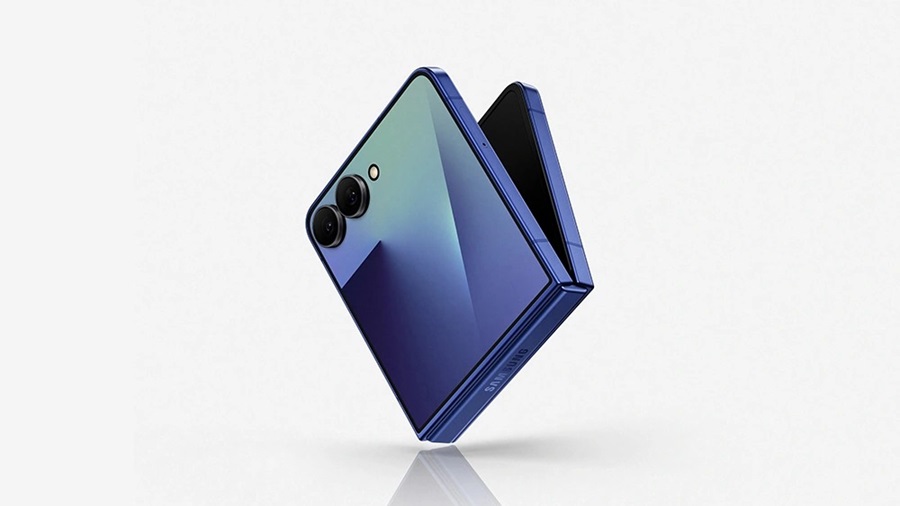
Samsung Z Flip 4 Hinge Replacement Data and Failure Rates
Official service channels charge between USD 200 and USD 400 for Samsung Galaxy Z Flip 4 hinge repairs. Complete frame replacements reach USD 630 in Australian markets. Excessive force causes hinge bending. Impact stress leads to complete hinge breaks, and normal wear patterns result in progressive loosening. Flex cables connect internal components within the hinge mechanism. Users experience automatic shutdowns during folding when these cables degrade. Display flickering or color distortion also occurs. Third-party repair services in India charge ₹3,500 to ₹7,000 for flex cable replacements. Authorized Samsung centers ask for ₹8,000 to ₹12,000.
Hinge Torque Retention After 30,000 Folds
Independent lab testing confirms hinge torque loss averages 17% after 30,000 folds. This equals 18 months at 50 folds daily. Users who exceed 60 folds per day experience 3.8× higher hinge service incidence at 12 months compared to moderate usage patterns. Samsung’s Galaxy Z TriFold shows accelerated degradation under continuous testing. The first hinge produced audible creaking at 61,000 folds and the second hinge followed at 121,000 folds. Automated testing reached 144,000 cycles. Both hinges lost elasticity and needed manual force to keep the device in a fully open position.
Comparing Martensitic Steel vs Liquid Metal Hinges
Huawei deployed zirconium-based liquid metal in the Mate X2 and P50 Pocket. The material’s superior elastic deformation capability allows smooth folding. Liquid metal delivers fatigue performance beyond conventional materials and weighs less than stainless steel formulations. Select manufacturers integrate liquid metal components within hinge assemblies to achieve 60% higher torsional rigidity. Samsung maintains MIM-manufactured hinges and uses precision machining with assembly techniques. The company prioritizes cost reduction through simplified U-shaped designs.
Best Foldable Phone Hinge Designs Using MIM Steel (2024-2026)
Samsung rates the Galaxy Z Fold 7 and Z Flip 7 at 200,000 folds. The Z Fold 7 achieves 500,000-fold durability. Motorola claims the Razr Ultra withstands 400,000 folds. The global MIM hinges market grew from USD 983 million in 2024 to a projected USD 1.08 billion in 2025. Forecasts reach USD 2.22 billion by 2031. Advanced alloys include maraging steel and titanium composites. These now deliver 40% improved corrosion resistance versus standard finishes and address long-term reliability requirements for premium foldable devices.
Manufacturing Challenges and Quality Control in MIM Steel Hinges
Sintering Temperature Control for Martensitic Transformation
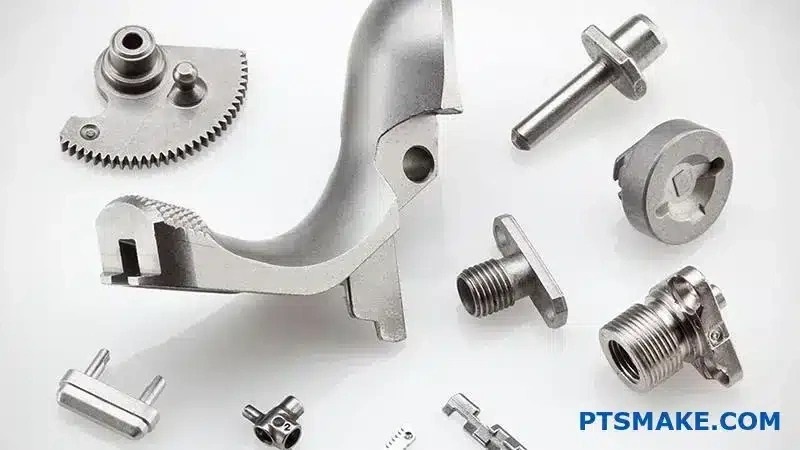
Production complexity stems from precise atmospheric and temperature requirements during sintering. Furnaces operate between 1,200 and 1,400°C under controlled atmospheres, with 17-4 PH stainless steel achieving optimal density at 1,340°C in hydrogen environments. Sintering temperature and carbon content dictate liquid phase volume fraction during densification. Minor deviations in binder removal rates or sintering conditions result in defective parts. This means extensive testing protocols that increase time-to-market are necessary.
Tolerance Requirements: ±0.01mm Precision Standards
Advanced powder metallurgy creates foldable phone hinge geometries with tolerances under ±0.01mm and meets samsung foldable phone hinge assembly specifications. MIM achieves ±0.02mm repeatability, with standard tolerances of ±0.3% (minimum ±0.075mm). This is a big deal as it means that medium-scale operations require upfront equipment costs over USD 5 million. This restricts market participation to manufacturers with years of experience.
Surface Finishing and Lubrication Application
Sandblasting eliminates surface imperfections and creates uniform matte finishes. As-sintered parts achieve 1-2 μm Ra without additional finishing and support best foldable phone hinge performance requirements.
Supply Chain: Chinese vs Korean MIM Hinge Manufacturers
China’s Jingyan Technology, Dongmu Co., Ltd., and Xinwei Communication supply MIM parts to fold phone hinge applications. The foldable screen mobile phone hinge market reaches 18.754 billion yuan in 2026.
Conclusion
MIM martensitic steels have reshaped foldable phone hinge durability and achieve strength levels between 1800-2200 MPa that enable devices to withstand 200,000 to 500,000 fold cycles. Metal Injection Molding manufacturing precision combines with martensitic steel properties to deliver the wear resistance and dimensional accuracy that aluminum alloys cannot match. Samsung, Motorola, and other manufacturers now rely on these advanced materials to meet consumer expectations for multi-year device lifespans. The MIM hinge market continues expanding and is projected to reach USD 2.22 billion by 2031. This material progress represents the foundations upon which foldable smartphones transition from novelty devices to mainstream consumer technology.
FAQs
Q1. How long do foldable phones typically last? Modern foldable phones are rated for 200,000 to 500,000 folds, which translates to approximately 5-13 years of use at 100 folds per day. The actual lifespan depends on usage patterns and how well the device is maintained, with most users experiencing reliable performance for 2-3 years under normal conditions.
Q2. What makes the Galaxy Z Fold 7 hinge more durable than previous models? The Fold 7 hinge is rated for 500,000 folds in independent testing, featuring advanced alloy components with a multi-rail structure. This represents a significant improvement over earlier generations, with the enhanced materials and engineering providing over 13 years of theoretical use at 100 daily opens.
Q3. Are there common durability issues with Samsung foldable phones? Earlier models (Fold 3 and Fold 4) experienced hinge failures and screen protector peeling, typically occurring after 12-24 months of use. However, the Fold 5 and Fold 6 show significantly improved reliability due to redesigned hinges and better materials, with fewer reported failures in real-world usage.
Q4. Should I get insurance for a foldable phone? Insurance is highly recommended for foldable phones due to their complex mechanical components and higher repair costs. Screen replacements can cost $200-$630, and while newer models are more durable, the folding mechanism and flexible display remain potential failure points that insurance can protect against.
Q5. How does the durability of foldable phones compare between careful and regular use? Users who baby their foldable phones report similar durability outcomes to those who treat them like regular smartphones, with the Fold 5 and newer models proving surprisingly resilient to drops and daily wear. The key factors are avoiding extreme conditions, keeping the hinge area clean from dust and debris, and using appropriate cases for protection.