
Custom MIM Water Pump Pulleys | Precision Powder Metallurgy Manufacturing
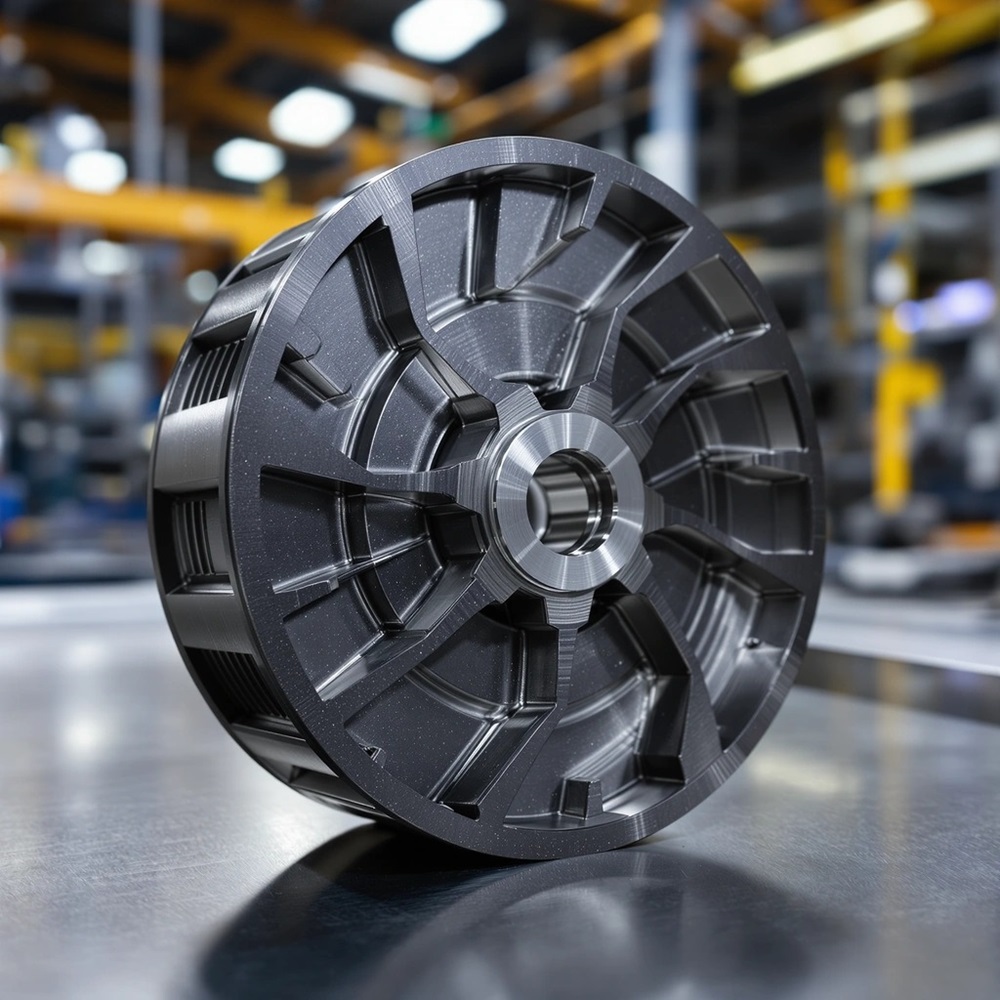
Water pump pulleys serve as critical drive components that attach to the water pump shaft and transfer rotational force from the engine accessory belt to circulate coolant through the engine system. These grooved mechanical elements prevent engine overheating by maintaining continuous coolant flow between the engine block, cylinder head, and radiator. Combustion generates heat within the engine. The cooling liquid absorbs thermal energy and releases it through the radiator, while the water pump pulley helps this vital circulation process.
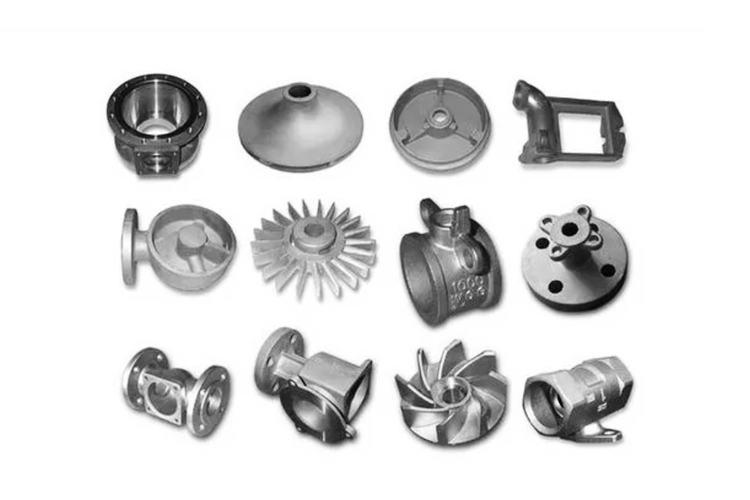
Traditional manufacturing methods for water pump pulleys include sand casting, stamping, and CNC machining. Each presents limitations in design complexity, material waste, and production efficiency. Metal Injection Molding (MIM) addresses these constraints by combining the design flexibility of plastic injection molding with the material performance of wrought metals. This powder metallurgy technique enables the production of dense, durable components while reducing material waste and production costs overall. Therefore, MIM excels at creating parts with intricate geometries and offers exceptional strength and precision for demanding automotive and industrial applications.
Custom MIM water pump pulleys are manufactured from high-quality materials including iron-nickel alloys, low-alloy steel, stainless steel, and copper-steels. The material selection gives optimal mechanical properties such as tensile strength, wear resistance, and thermal stability required for harsh operating environments. Steel remains the predominant material choice for multi-ribbed serpentine belt-driven pulleys, providing the fatigue strength necessary for continuous high-speed rotation. The powder metallurgy process combined with high-precision tooling allows for complex geometries and consistent quality while minimizing material waste and enhancing structural integrity.
These precision-engineered components find applications across multiple sectors, especially in automotive passenger car engine cooling systems, heavy-duty commercial vehicle assemblies, and industrial fluid pump systems. Water pump pulleys optimize coolant circulation in internal combustion engines (ICE), hybrid, and electric vehicle (EV) thermal management platforms. Industrial machinery relies on these components for cooling systems, hydraulic drives, and fluid transport mechanisms where high precision and durability ensure long-term operation under high-stress conditions. The adaptability of MIM technology enables customization for specific application requirements while maintaining dimensional accuracy and seamless compatibility with existing drive systems.
What Are MIM Water Pump Pulleys?
Basic Structure and Drive System Function
MIM water pump pulleys consist of several integrated functional features that work together within the engine cooling system. The hub or center bore transfers drive belt torque to the bearing spindle and water pump shaft. This component experiences substantial dynamic shear stress and tension from the drive belt. Precision manufacturing using engineered powder metals creates strong, durable, and fatigue-resistant structures. The spindle bearing receives turning force from the pulley and transfers it directly to the impeller. Advanced roller-ball bearing configurations offer superior load capacity and smoother operation under high belt tension compared to basic ball-ball setups.
Water pump pulleys operate within modern engine accessory drive systems (FEAD) where grooved wheels mounted on shafts are driven by electric motors or engine crankshafts. Multi-ribbed profiles (e.g., Micro-V, PK sections) accommodate serpentine belt arrangements common in modern automotive powertrains. The pulley diameter directly dictates rotational speed and cooling flow rate, where the drive ratio is calculated by dividing the driven pulley diameter by the driver pulley pitch diameter.
Metal Injection Molding (MIM) Process Overview
Metal injection molding combines fine metal powder technology with plastic injection processing to manufacture net-shape, high-precision metal components. The process involves four key stages:
- Feedstock Preparation: Fine metal powders (<20 µm) are homogeneously mixed with thermoplastic binders and waxes to form uniform pellets.
- Injection Molding: The feedstock is heated and injected under high pressure into multi-cavity tooling to mold “green parts.”
- Debinding: Binders are removed via solvent extraction, catalytic processing, or thermal breakdown, leaving a porous “brown part.”
- High-Temperature Sintering: Brown parts are sintered in vacuum or controlled atmosphere furnaces at 1,120°C to 1,380°C. Solid-state diffusion reduces volume and densifies the part to 96%–99% theoretical density.
Common Materials: Iron-Nickel Alloys, Carbon Steel & Stainless Steel
Iron-nickel alloys represent a primary material class in MIM pulley production, offering excellent strength and wear resistance. MIM-4605 (low-alloy steel containing carbon, nickel, and molybdenum) achieves hardness up to 36–45 HRC after heat treatment. Fe-2Ni and Fe-8Ni alloys deliver exceptional tensile strength and toughness. For highly corrosive environments, stainless steel grades like 17-4PH and 316L provide outstanding corrosion resistance combined with high yield strength.
Manufacturing Process for Custom Water Pump Pulleys
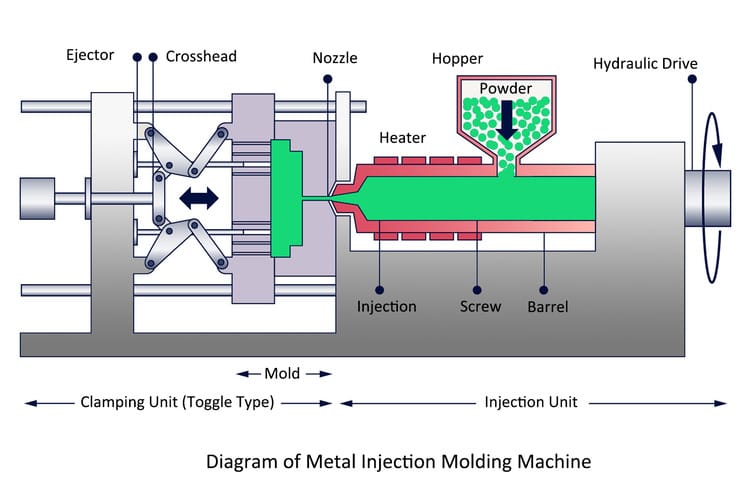
Producing custom MIM water pump pulleys involves a tightly controlled sequence of precision manufacturing stages, each tailored to guarantee structural density, fatigue life, and precise groove profiles.
Feedstock Preparation & High-Precision Injection Molding
The manufacturing cycle begins with feedstock formulation. Engineered metal powders are kneaded with binder systems to achieve optimal fluidity. High-tonnage injection machines heat the feedstock and inject it into hardened tool steel cavities. Tool geometries are expanded via CAD modeling to precisely offset isotropic volumetric shrinkage during sintering.
Two-Step Debinding & High-Temperature Sintering Cycle
In the debinding phase, primary wax binders dissolve in solvent tanks, while backbone polymers are thermally removed during early heating in the sintering process. Iron-based pulleys are sintered under hydrogen or endothermic atmospheres, fusing metal particles together to achieve near-wrought physical properties.
Secondary Operations: Precision Sizing, Machining & Surface Finishing
Post-sintering sizing (coining) re-strikes critical dimensions to achieve ultra-tight tolerances. Secondary CNC operations can add fine features such as side keyways, cross-drilled oil holes, or internal threads. Deburring, shot peening, black oxide treatment, or phosphate coatings enhance wear and corrosion protection.
Quality Control, Concentricity & Dimensional Verification
Quality protocols utilize Coordinate Measuring Machines (CMM) and optical shadowgraphs to verify multi-ribbed groove profiles. Total Indicated Runout (TIR) and concentricity are strictly controlled to prevent belt whip and vibration. Dynamic balancing equipment eliminates mass eccentricity prior to assembly.
Design Capabilities, Features & Advantages
Multi-Ribbed (PK/Micro-V) Profiles & Complex Groove Geometries
MIM molding techniques easily reproduce multi-ribbed profiles (such as PK, J, L, and M belt profiles) without specialized gear hobbing or single-point lathe turning. MIM tooling forms precise V-rib angles, tip radii, and root clearances with exceptional repeatability, ensuring uniform pressure distribution across the accessory belt.
MIM vs. Cast Iron, Stamped Steel & Machined Pulleys
Dimensional precision sets MIM water pump pulleys apart from conventional methods. MIM achieves tolerances of ±0.1% to ±0.3% of feature dimensions (down to ±0.01 mm) without expensive secondary machining. Compared to heavy cast iron or prone-to-deformation stamped steel, MIM allows intricate part consolidation into a single piece.
Density Control (>95%) and High Dynamic Structural Integrity
Sintered MIM components achieve 95%–99% theoretical density, resulting in isotropic mechanical properties, superior tensile strength, and robust fatigue endurance required for variable engine speeds.
Seamless Integration of Mounting Flanges, Hubs & Keyways
MIM allows single-step molding of complex features such as internal splines, drive hubs, keyways, and weight-reduction pockets directly into the pulley body. This eliminates welding, brazing, or multi-part assembly risks.
Weight Reduction & Material Efficiency vs. Solid Machined Alternatives
Powder metallurgy utilizes over 97% of raw starting materials, virtually eliminating metal scrap. Custom-designed hollow pockets and thin-wall webbing cut rotational mass and inertia, improving engine responsiveness and fuel economy.
Applications of Powder Metallurgy Water Pump Pulleys

Automotive Passenger Car Engine Cooling Systems
Powder metallurgy water pump pulleys are widely integrated into automotive cooling systems. Engineered alloys like FC-0205, FN-0205, and MIM-4605 maintain long service life under high heat and continuous tension in ICE and hybrid platforms.
Heavy-Duty Commercial Vehicle & Diesel Engine Assemblies
Commercial Class 4–8 trucks, buses, and off-highway diesel engines require pulleys that withstand high torque and severe thermal cycling. MIM pulleys deliver high wear resistance and structural stability to prevent downtime in commercial fleets.
Agricultural, Marine & Industrial Fluid Pump Systems
Agricultural tractors, marine raw-water pumps, and industrial fluid processing pumps utilize custom MIM pulleys to withstand dust, vibration, and saltwater environments.
OEM Water Pump Pulley Manufacturing Standards & Quality Assurance

Image Source: eBay
Material Selection: Fe-Ni Alloys, Fe-Cu Steel & Stainless Steel
Material testing adheres to strict MPIF Standard 35 and ISO specifications. Alloy selection ensures optimum tensile strength, hardness, and corrosion performance tailored to specific operating media.
Tight Tolerances (±0.01 mm), Belt Runout Control & Ra 0.8–1.6 μm Finish
Key dimensions maintain tight tolerances (±0.01 mm). Bearing seats and belt contact surfaces achieve low surface roughness (Ra 0.8–1.6 µm), preventing friction-induced belt wear.
Testing Protocols: Dynamic Balancing, Hardness (HRC) & Fatigue Validation
Dynamic balancing per ISO 1940 standards ensures smooth high-RPM rotation. Metallographic analysis, Rockwell hardness testing, and cycle fatigue testing confirm long-term operational durability.
Production Volume Capabilities & Rapid Tooling Turnaround
Utilizing high-cavity automated MIM tooling and quick-turn prototyping, JHMIM supports rapid sampling and scalable mass production from thousands to millions of units annually.
Partner with JHMIM for Custom Water Pump Pulleys
JHMIM provides full-service engineering support for OEM clients, specializing in custom MIM water pump pulley development from DFM consultation to full-scale production.
Get a Free DFM Analysis and Instant OEM Quote Today
Our engineering team performs complete Design for Manufacturability (DFM) reviews, evaluating wall thickness, draft angles, radiusing, and shrinkage factors to ensure cost-effective tool design and flawless part performance.
Contact JHMIM today to submit your 3D CAD files for a comprehensive DFM analysis and competitive OEM quotation for your custom water pump pulley requirements.
Conclusion
Metal Injection Molding (MIM) has transformed custom water pump pulley manufacturing by combining complex geometry capabilities with high density (>95%), tight tolerances (±0.01 mm), and superior material properties. From automotive cooling systems to heavy-duty industrial fluid pumps, MIM delivers cost reductions, weight savings, and uncompromised performance over traditional casting and machining methods.
MIM water pump pulleys are typically manufactured from iron-nickel alloys (MIM-4605, Fe-2Ni), heat-treatable carbon steels, and stainless steel grades such as 17-4PH and 316L. These materials offer exceptional tensile strength, wear resistance, and long-term durability in demanding operating environments.
Metal Injection Molding combines fine metal powder technology with plastic injection techniques to mold complex, net-shape parts. Unlike traditional casting or CNC machining, MIM eliminates extensive material scrap, achieves tight dimensional tolerances (±0.01 mm), and enables complex features like integrated hubs and weight-reduction pockets without multi-part assembly.
MIM pulleys achieve high structural density (>95%), precise multi-ribbed belt grooves, superior surface finish (Ra 0.8–1.6 µm), and weight reduction through optimized wall thickness. They consolidate multiple sub-components into a single molded piece, reducing production costs and assembly risks.
OEM production maintains strict dimensional tolerances down to ±0.01 mm, total indicated runout (TIR) controls between 0.01–0.05 mm, dynamic balancing per ISO 1940 standards, and hardness verification (up to 45+ HRC depending on heat treatment).
MIM water pump pulleys are widely used in automotive passenger car engine cooling systems (ICE, hybrid, EV thermal management), heavy-duty commercial diesel engines, agricultural equipment, marine raw-water pumps, and industrial fluid transfer systems.