
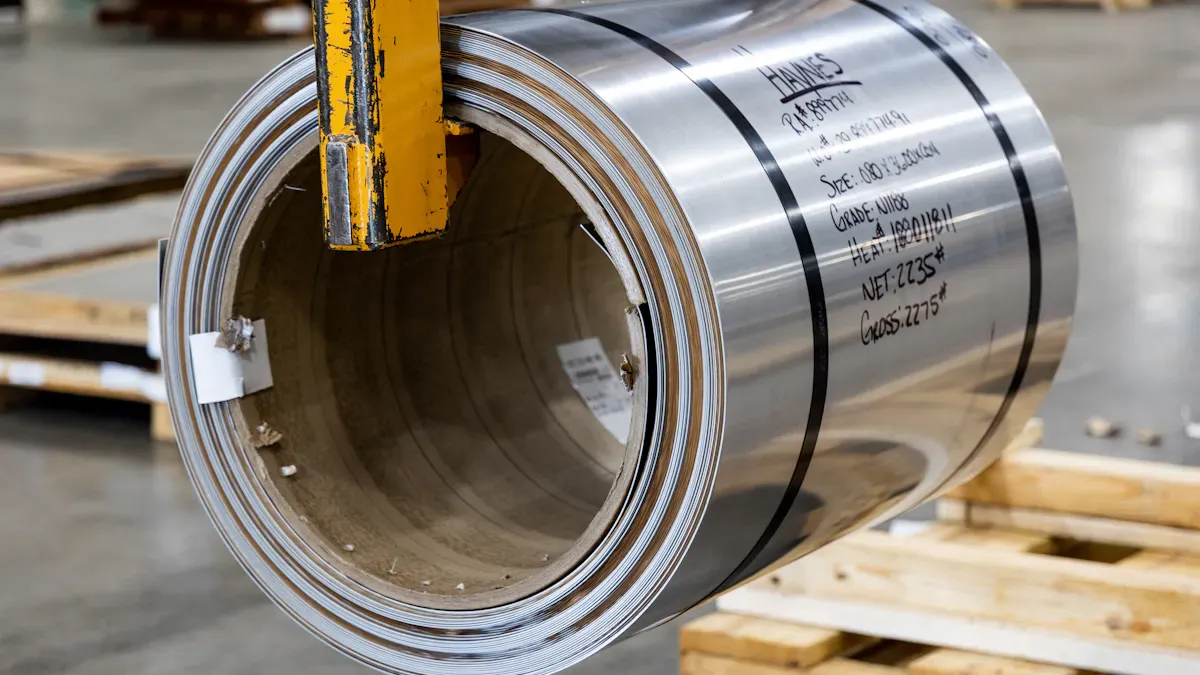
Tungsten alloy can indeed be made by MIM. This advanced manufacturing process offers a unique approach to producing high-performance components. MIM combines the versatility of plastic injection molding with the benefits of powder metallurgy. As a result, manufacturers can create complex geometries with excellent density and mechanical properties. The use of tungsten alloys in MIM expands possibilities in various industries, showcasing the adaptability and efficiency of this technology.
Key Takeaways
- MIM combines plastic injection molding and powder metallurgy to create complex metal parts efficiently.
- Tungsten alloys produced by MIM offer high density and superior mechanical properties, making them ideal for demanding applications.
- MIM allows for intricate designs with high precision, reducing the need for secondary finishing processes.
- Cost-effectiveness increases with MIM for high-volume production, making it a smart choice for manufacturers.
- Understanding the limitations of MIM, such as size restrictions and initial costs, helps in making informed decisions.
- The sintering process is crucial for enhancing the strength and density of tungsten alloy components.
- MIM technology is beneficial across various industries, including aerospace, medical, and electronics, due to its versatility.
- Embracing MIM can significantly improve production capabilities while minimizing waste and costs.
Understanding MIM Technology
What is MIM?
Metal Injection Molding (MIM) is a manufacturing process that combines the principles of plastic injection molding and powder metallurgy. This technique allows for the production of complex and high-precision components from metal powders. MIM involves several key steps, including feedstock preparation, injection molding, debinding, and sintering. The process begins with mixing metal powders, such as tungsten alloy, with a binder to create a feedstock. This feedstock is then injected into molds to form the desired shapes.
Key Advantages of MIM
MIM technology offers several advantages, particularly for high-density metals like tungsten alloys. Some of the key benefits include:
- Complex Geometries and High Precision: MIM excels at producing intricate shapes with high density, making it ideal for applications that require precision.
- Superior Material Properties Retention: The controlled sintering process preserves the unique characteristics of tungsten alloys, ensuring reliability in demanding environments.
- Cost-Effectiveness for High-Volume Production: MIM reduces material waste and allows for part consolidation, making it economical for mass production of intricate components.
- Excellent Surface Finish and Quality: MIM produces parts with a smooth surface finish, enhancing both aesthetic appeal and functional performance, minimizing the need for secondary finishing operations.
The table below summarizes these advantages:
| Key Advantage | Description |
|---|---|
| Complex Geometries and High Precision | MIM excels at producing parts with intricate shapes and high density, ideal for applications requiring precision. |
| Superior Material Properties Retention | The controlled sintering process maintains the unique characteristics of tungsten alloys, ensuring reliability in demanding environments. |
| Cost-Effectiveness for High-Volume Production | MIM reduces material waste and allows for part consolidation, making it economical for mass production of intricate components. |
| Excellent Surface Finish and Quality | MIM produces parts with a smooth surface finish, enhancing both aesthetic appeal and functional performance, minimizing the need for secondary finishing operations. |
Limitations of MIM
Despite its advantages, MIM does have some limitations. These include:
| Limitation Type | Description |
|---|---|
| High Initial Costs | Significant upfront spending on molds and specialized equipment makes the process capital-intensive. |
| Size Limitations | MIM is best suited for small to medium components, usually under 100 grams, affecting larger parts. |
| Material Restrictions | Limited choice of materials suitable for MIM, impacting the use of refractory metals like tungsten. |
| Sintering Shrinkage | Parts shrink 15–20% during sintering, complicating dimensional accuracy and tolerance limits. |
Understanding these limitations helps manufacturers make informed decisions when considering MIM for their tungsten alloy needs.
The MIM Process for Tungsten Alloys
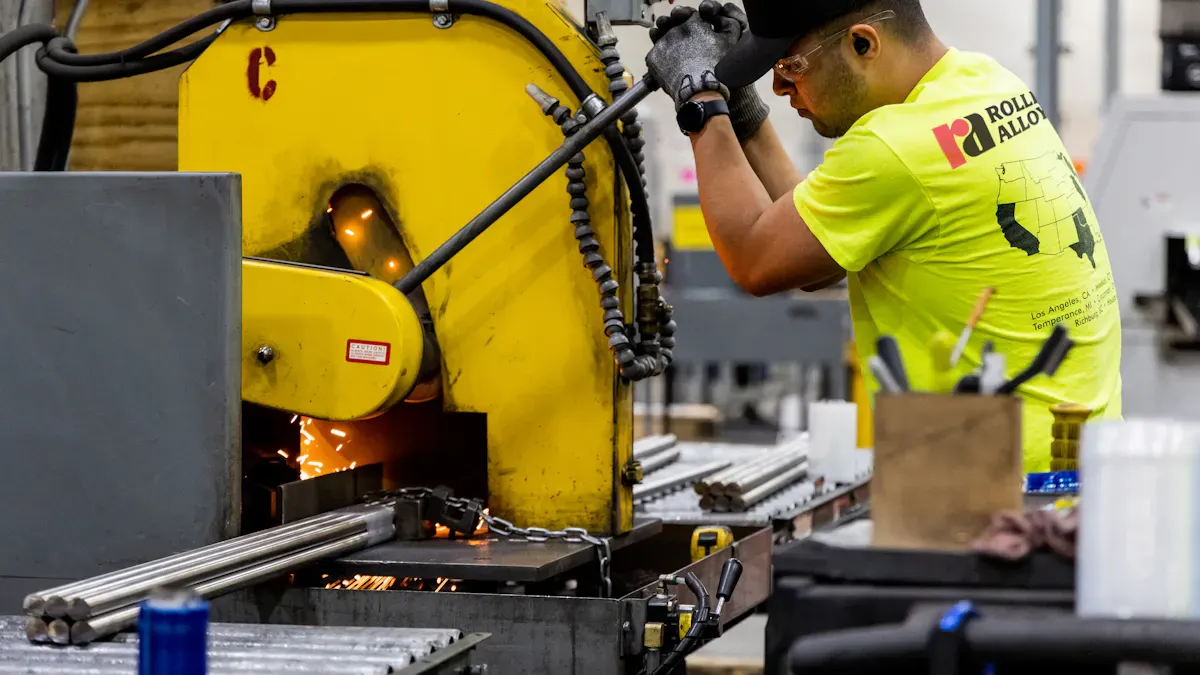
Feedstock Preparation
The preparation of feedstock is a critical step in the Metal Injection Molding (MIM) process for tungsten alloys. This phase involves combining fine tungsten powder with specially developed binder materials. Typically, the composition consists of approximately 60% metal powder and 40% binder by volume. This ratio ensures optimal flow properties during injection while maintaining sufficient green strength for subsequent processing.
Key parameters for preparing tungsten alloy feedstock include:
- Binder System: A suitable binder system is essential. Wax-based binders are commonly used, as they allow the metal powder to flow effectively during injection molding. Other options include thermoplastics like polypropylene and polyethylene, often blended with wax.
- Metal Powder Characteristics: The size of the tungsten powder plays a significant role. Ideal particle sizes range from 10 to 25 microns. This size range helps achieve the desired material properties, including high sintered density and homogeneous microstructures.
- Mixing Parameters: Proper mixing is vital to ensure a uniform feedstock. The mixing process must achieve a final composition that supports effective flowability and green strength.
Injection Molding
During the injection molding phase, the prepared feedstock undergoes a process similar to plastic injection molding. The feedstock is heated and injected into molds under high pressure. This method allows for the creation of complex geometries with high precision.
Challenges during this phase include the high melting point of tungsten, which complicates the molding process. To address this, manufacturers optimize powder characteristics and ensure effective flowability. The tooling and equipment used in MIM are similar to those in micro injection molded plastics, allowing for efficient production.
Debinding
Debinding is a crucial step that follows injection molding. This process removes the binder from the green parts, preparing them for sintering. Several debinding techniques are suitable for tungsten alloy components:
- Solvent Debinding: This method involves immersing the green part in a solvent that dissolves the binder. It is a gentle process that reduces the risk of distortion.
- Thermal Debinding: This conventional heat treatment removes higher molecular weight components of the binder. It requires careful control of parameters to avoid defects, with peak temperatures reaching up to 550°C.
- Catalytic Debinding: This technique uses acid vapor to catalyze the decomposition of the binder. It requires careful compatibility with the metal type.
- Two-Step Debinding: This method combines solvent and thermal debinding to minimize part distortion and ensure complete binder removal.
The typical timeframes and temperature profiles for debinding tungsten alloy components vary based on the binder system used. For example, high-temperature debinding can reach up to 1050°C, while standard MIM furnaces operate at temperatures up to 1450°C, often within a timeframe of less than 24 hours.
Sintering
Sintering is a pivotal step in the Metal Injection Molding (MIM) process for tungsten alloys. This phase transforms the green parts, which contain both metal powder and binder, into solid, dense components. During sintering, the binder evaporates, and the metal particles bond together through diffusion. This process significantly enhances the mechanical properties of the final product.
Key aspects of the sintering process include:
- Temperature Control: Sintering typically occurs at temperatures ranging from 1300°C to 1500°C for tungsten alloys. Precise temperature control is crucial to avoid defects and ensure optimal bonding between particles.
- Atmosphere: The sintering environment must be carefully managed. An inert atmosphere, often using argon or vacuum conditions, prevents oxidation of tungsten and maintains the integrity of the alloy.
- Time Duration: The duration of the sintering process can vary based on the specific requirements of the component. Generally, sintering times range from one to several hours, depending on the part’s size and complexity.
The sintering process can be summarized in the following steps:
- Heating: The green parts are gradually heated to the desired sintering temperature. This step must be controlled to prevent thermal shock.
- Holding: Once the target temperature is reached, the parts are held at that temperature for a specific duration. This allows for the diffusion of atoms and the formation of strong bonds between metal particles.
- Cooling: After the holding period, the parts are cooled down slowly to room temperature. Controlled cooling minimizes the risk of cracking or warping.
The effectiveness of the sintering process directly influences the final properties of tungsten alloy components. Properly sintered parts exhibit high density, excellent mechanical strength, and superior wear resistance. These characteristics make MIM-produced tungsten alloys suitable for demanding applications across various industries.
Performance Metrics of MIM Tungsten Components
Mechanical Properties
The mechanical properties of tungsten alloy components produced by Metal Injection Molding (MIM) are impressive. MIM enhances the density of these components, which in turn improves their tensile strength, hardness, and fatigue strength. For instance, sintering tungsten heavy alloys at 1525 °C for 30 minutes yields high ultimate tensile strength alongside good plasticity. MIM components can achieve tensile strength values of up to 1,090 MPa, significantly surpassing the 650 MPa typically observed in traditional powder metallurgy processes. This superior performance makes MIM an attractive option for industries requiring robust materials.
Density and Porosity
Density and porosity are critical factors influencing the performance of MIM tungsten alloy components. The density of these components typically ranges from 95% to 99% of theoretical values. Specific alloys, such as W-5Ni-2Fe, can even reach 100% density. This high density correlates with enhanced mechanical properties, crucial for applications in demanding environments. However, residual porosity can occur, which may negatively impact component strength, especially under cyclic stresses or impact loads. The following points summarize the density characteristics of MIM tungsten alloys:
- MIM components generally achieve densities between 95% and 99% of theoretical values.
- W-4Ni-1Fe alloys achieve 99% density, while W-5Ni-2Cu alloys attain 98% density.
- Higher density contributes to improved mechanical properties, essential for performance in challenging applications.
Surface Finish Quality
Surface finish quality is another significant advantage of MIM technology. The process produces components with excellent surface finishes, often requiring minimal or no secondary finishing. The table below compares the surface finish quality of MIM with other manufacturing methods:
| Method | Surface Finish Quality | Additional Notes |
|---|---|---|
| Metal Injection Molding (MIM) | Excellent surface finish, minimal or no secondary finishing required | Fine metal powders and polished mold cavities contribute to smoothness. |
| Traditional Machining | Often leaves tool marks, requires extensive post-processing | Grinding or polishing needed to achieve comparable quality. |
| Investment Casting | Good surface quality, but generally less fine detail | MIM offers finer detail and smoother finishes for smaller, intricate parts. |
The superior surface finish achieved through MIM not only enhances the aesthetic appeal of tungsten alloy components but also improves their functional performance.
Comparing MIM with Other Manufacturing Methods
Traditional Powder Metallurgy
Metal Injection Molding (MIM) significantly outperforms traditional powder metallurgy (PM) in several key areas. The table below summarizes the differences in density, tensile strength, and other mechanical properties:
| Feature | Metal Injection Molding (MIM) | Conventional Powder Metallurgy (PM) |
|---|---|---|
| Density | 95-99% theoretical density | 85-92% maximum theoretical density |
| Tensile Strength | Higher | Lower |
| Hardness | Higher | Lower |
| Fatigue Strength | Higher | Lower |
| Ductility | Better (higher elongation) | Lower |
MIM becomes economically viable for production runs of around 5,000 units, with optimal pricing achieved above 20,000 units. This method reduces labor needs due to automation and minimizes secondary machining, leading to up to 90% savings on finishing costs. MIM components achieve significantly higher part densities, resulting in enhanced mechanical properties. For example, MIM tungsten parts can be 67% stronger in tensile strength and exhibit 300% better wear resistance compared to PM.
CNC Machining
CNC machining offers high precision but often at a higher cost, especially for complex geometries. The following table compares the precision and material utilization of MIM and CNC machining:
| Process | Precision | Material Utilization |
|---|---|---|
| Metal Injection Molding | ±0.3% | Up to 98% |
| CNC Machining | 100% density | Higher waste |
MIM is particularly cost-effective for small to medium-sized components, while CNC machining tends to be more expensive for intricate designs. The initial setup costs for MIM can be higher due to the need for complex molds, but the overall production costs decrease with larger volumes.
Additive Manufacturing
Additive manufacturing presents unique advantages and challenges when compared to MIM. The table below highlights the differences in part complexity and mechanical properties:
| Feature | Tungsten MIM | Additive Manufacturing |
|---|---|---|
| Part Complexity | High structural complexity, intricate designs | Limited by layer-by-layer process |
| Mechanical Properties | Superior strength, high density, wear resistance | Varies, often lower than MIM |
MIM achieves high density, superior strength, and exceptional wear resistance, making it suitable for demanding applications. In contrast, additive manufacturing faces limitations in achieving the desired part size and density. These challenges restrict its application primarily to proof-of-concept projects rather than full-scale production. The high melting point of tungsten, combined with low laser absorption, leads to cracking issues during the additive process.
Applications of Tungsten Alloy in MIM
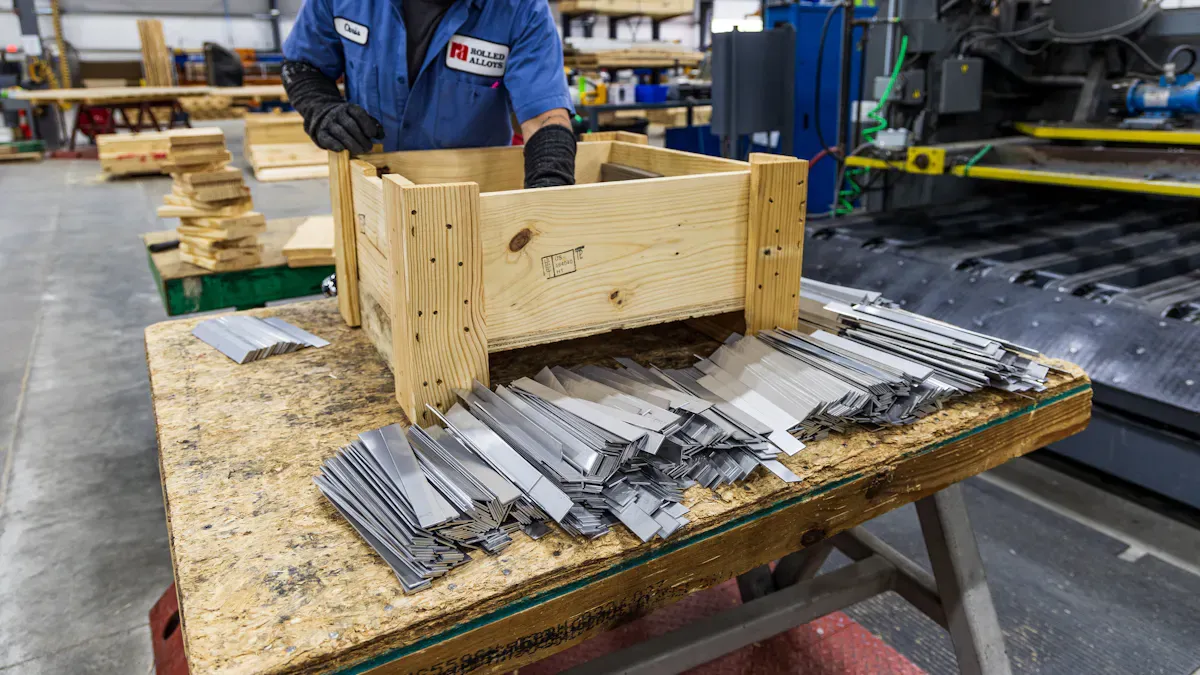
Aerospace Industry
Tungsten alloys produced by Metal Injection Molding (MIM) play a vital role in the aerospace industry. MIM excels at producing intricate and complex components with exceptional density, strength, and performance characteristics. Aerospace applications often require parts that can withstand extreme conditions while maintaining structural integrity.
Key applications of tungsten alloys in aerospace include:
- Counterweights: These components help maintain balance in aircraft, ensuring stability during flight.
- Inertial System Parts: MIM tungsten components provide precision and reliability in navigation systems.
- Vibration-Dampening Components: These parts reduce vibrations, enhancing passenger comfort and safety.
The addition of cobalt in MIM tungsten alloys enhances both strength and corrosion resistance. This feature is particularly important in aerospace applications where mechanical integrity and resistance to degradation are critical. Aerospace companies rely on tungsten MIM to produce counterweights, inertial system parts, and vibration-dampening components. These parts keep aircraft balanced while taking up minimal space.
| Attribute | Importance in Aerospace Applications |
|---|---|
| High Strength | Essential for structural integrity under stress |
| Corrosion Resistance | Necessary for durability in harsh environments |
| Density | Important for weight balance in aircraft design |
Medical Devices
In the medical field, tungsten alloys produced by MIM are increasingly utilized for their unique properties. The high density and strength of tungsten make it suitable for various medical applications, including surgical instruments and implants.
Some notable uses of tungsten alloys in medical devices include:
- Radiation Shielding: Tungsten’s high density provides effective shielding against radiation, making it ideal for use in medical imaging equipment.
- Surgical Tools: The hardness and durability of tungsten alloys ensure that surgical instruments maintain their sharpness and precision over time.
- Implants: Tungsten alloys can be used in implants that require high strength and biocompatibility.
MIM technology allows for the production of complex geometries that are difficult or costly to achieve through traditional methods. This capability enables the creation of parts with internal channels, thin walls, and integrated fastening features, reducing the need for multiple components.
Electronics and Electrical Components
Tungsten alloys produced by MIM also find extensive applications in the electronics and electrical sectors. Their unique properties make them ideal for various components that require durability and efficient performance.
Key applications include:
| Composition | Applications |
|---|---|
| W-Ni-Cu (Tungsten-Nickel-Copper) | Used in electrical contacts where durability and electrical performance are critical. |
| W-Cu (Tungsten-Copper) | Extensively used in heat sinks, electronic packaging, and components requiring efficient heat dissipation. |
The ability to produce intricate designs with MIM allows manufacturers to create components that meet the demanding requirements of modern electronics. The high thermal conductivity of tungsten alloys ensures efficient heat management in electronic devices, enhancing their performance and longevity.
The Metal Injection Molding (MIM) process for tungsten alloys showcases a remarkable blend of efficiency and precision. This method allows manufacturers to produce both simple and complex parts with enhanced material properties. Key advantages include improved flow stability and homogeneity of the feedstock, which lead to superior mechanical performance.
Industries should consider MIM for their tungsten alloy needs due to its cost-effectiveness and ability to meet demanding specifications. By leveraging MIM technology, companies can achieve high-quality components that excel in performance and reliability.
Tip: Embracing MIM can significantly enhance production capabilities while reducing waste and costs.
FAQ
What is Metal Injection Molding (MIM)?
Metal Injection Molding (MIM) combines plastic injection molding and powder metallurgy to produce complex metal parts. This process allows manufacturers to create high-precision components from metal powders, including tungsten alloys.
What are the benefits of using tungsten alloys in MIM?
Tungsten alloys offer high density, excellent mechanical properties, and superior wear resistance. MIM enhances these characteristics, making tungsten alloys suitable for demanding applications in aerospace, medical devices, and electronics.
How does the sintering process affect tungsten alloys?
Sintering bonds metal particles together, enhancing density and mechanical strength. Proper temperature control and atmosphere during sintering are crucial to prevent oxidation and ensure optimal properties in tungsten alloy components.
What industries benefit from MIM tungsten alloys?
Industries such as aerospace, medical, and electronics benefit significantly from MIM tungsten alloys. These sectors require components that can withstand extreme conditions while maintaining structural integrity and performance.
Are there any size limitations for MIM components?
MIM is best suited for small to medium-sized components, typically under 100 grams. Larger parts may not achieve the desired density and mechanical properties due to the limitations of the process.
How does MIM compare to traditional manufacturing methods?
MIM outperforms traditional methods like powder metallurgy and CNC machining in terms of density, tensile strength, and cost-effectiveness for high-volume production. MIM also allows for more complex geometries.
What is the typical lead time for MIM tungsten alloy components?
Lead times for MIM tungsten alloy components vary based on complexity and production volume. Generally, manufacturers can expect a timeframe of several weeks to a few months for initial production runs.
Can MIM tungsten alloys be recycled?
Yes, MIM tungsten alloys can be recycled. The recycling process involves recovering metal powders from scrap parts, which can then be reused in the MIM process, promoting sustainability in manufacturing.