
Porous Ceramic Filter Manufacturer & Custom Solutions
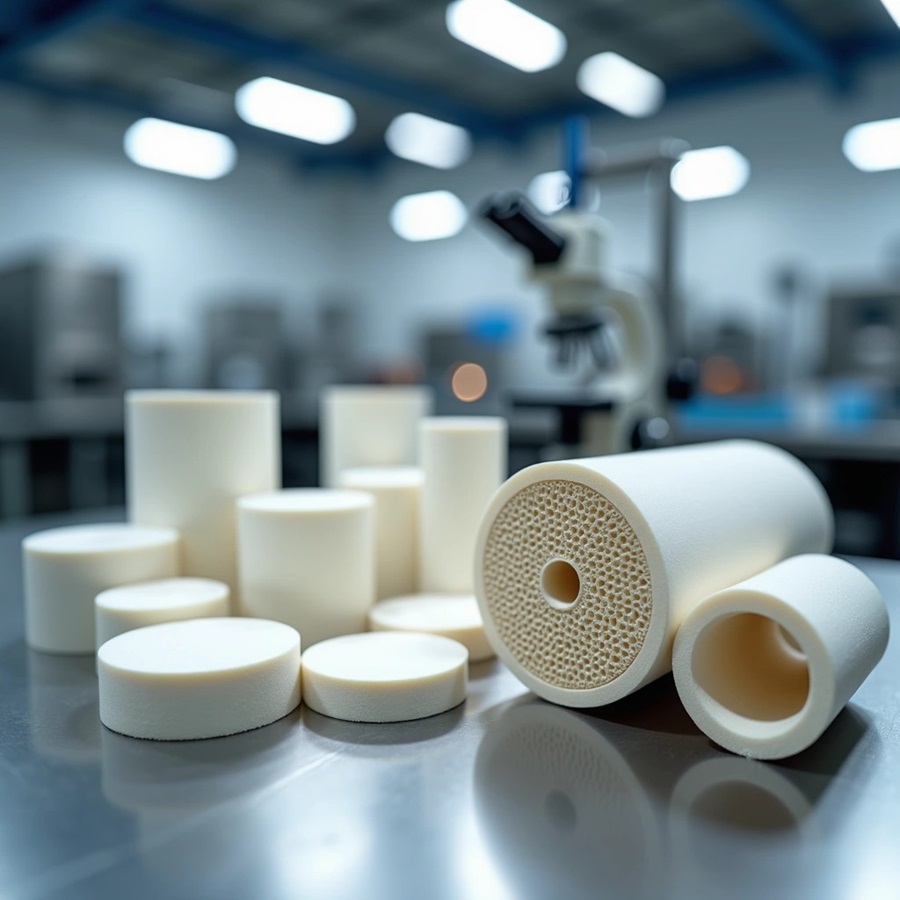
Porous ceramic filters play a vital role in demanding industrial applications and offer unmatched advantages in filtration technology. Their heat resistance and chemical stability make them essential across multiple sectors. Industries rely on various configurations that include porous ceramic filter tubes, porous ceramic filter disk, porous ceramic filter plate, and porous ceramic filter media to address specific filtration challenges.
This piece gets into the fundamentals of these filters and technical specifications while emphasizing industrial applications. It then covers custom porous ceramic filter solutions and what to look for in a porous ceramic filter manufacturer, particularly to meet high temperature ceramic filter and industrial porous ceramic filter needs.
What Are Porous Ceramic Filters?
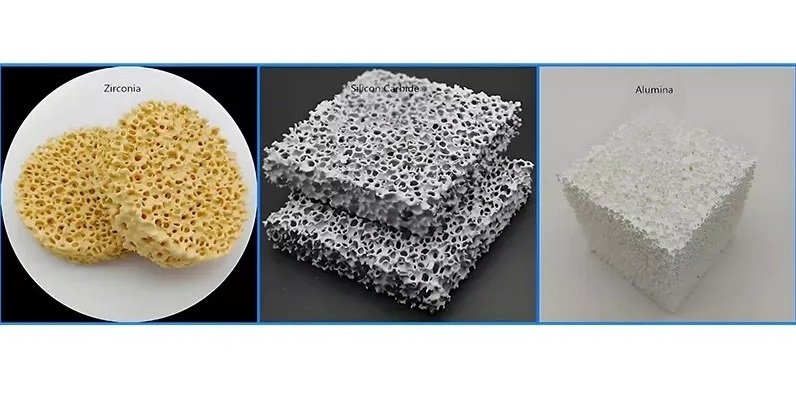
Ceramic filtration technology centers on engineered materials containing networks of interconnected voids that allow fluids to pass while capturing solid contaminants. These filters have porosity ranging from 30% in dense refractories up to 90% in open-cell foam structures. Engineers manipulate pore size, distribution, and total porosity during manufacturing to customize each filter for specific separation tasks.
Basic Structure and Filtration Mechanism
A three-dimensional network of pores traversing the ceramic material forms the structural foundation. These pores vary in size from micro to millimeter scale and create pathways that force substances to pass through the material. The reticulated foam structure proves most effective for molten aluminum applications because its tortuous network forces metal to change direction over and over, which improves inclusion capture compared with straight-through channels.
The polymer replica method drives manufacturing for industrial porous ceramic filter configurations. A flexible polyurethane foam template receives coating with ceramic slurry, then undergoes drying and firing in a kiln at temperatures between 1,200°C and 1,500°C. This process produces lightweight yet strong filters with porosity between 80% and 85%.
Three complementary mechanisms power the filtration process:
- Mechanical sieving blocks particles larger than the pore opening from passing through the filter
- Direct interception captures particles following fluid streamlines when they contact pore walls closely enough to adhere
- Deep-bed capture traps particles much smaller than pore size through collisions with interior surfaces caused by inertia, gravity, or turbulent eddies and holds them via van der Waals forces or chemical adhesion
Deep-bed capture delivers the most important impact for aluminum filtration. Oxide films, spinels, and carbide fragments often measure far smaller than the filter’s nominal pore size, yet the tortuous path forces metal through dozens of directional changes inside the foam. Once an inclusion contacts a ceramic strut, interfacial energy differences between the oxide particle and ceramic surface lock it in position.
Ceramic membranes employ an asymmetric, multi-layer architecture composed of distinct porosity levels. The support layer provides mechanical strength using a ceramic substrate with larger pore size, such as alpha-alumina. A transition layer with pore size that decreases ensures uniform adhesion of the separation layer. The separation layer represents the most critical thin film and features precise pore dimensions from nano to micron scale to achieve selective separation.
Key Properties and Materials (Alumina, SiC, Zirconia)
Alumina-based filters dominate industrial filtration due to their balanced properties and cost-effectiveness. High-purity alumina content above 85% makes up the vast majority, with silica and other binders comprising the balance. These filters demonstrate exceptional thermal resistance and withstand temperatures up to 1,600°C without melting or degrading. Standard formulations maintain porosity between 80% and 90% with compressive strength exceeding 0.8 MPa at room temperature.
Manufacturing method and purity grade determine porosity levels in alumina ceramics, which span from 11.8% to 57%. The R-200 grade achieves 55% porosity with a bulk density of 1.5 g/cm³, while formulations using starch additives reach 57% while preserving structural integrity. Pore size control covers a range from 0.055 μm in N-99SP grade up to 15.5 μm in NK-1500 variants. Mechanical strength varies with porosity levels and peaks at 150.4 MPa flexural strength at 11.8% porosity. Higher porosity reduces strength, but advanced manufacturing maintains usable strength even at elevated porosity. R-200 sustains 200 MPa bending strength at 55% porosity.
Thermal performance distinguishes alumina ceramics in demanding environments. Standard grades handle continuous operation at 1,100°C, while premium formulations remain stable up to 1,700°C. Purity levels range from 91% to 99.999% alumina content, with higher purity grades delivering better dielectric strength exceeding 400 V/mil at 0.125-inch thickness. Water absorption operates inversely to density. R-200 absorbs 35% and R-203 takes 30%, while denser N-99EP/SP grades limit absorption to 14-15%.
Silicon carbide filters offer superior performance in extreme conditions. SiC filters achieve high filtration efficiency of around 99% and can operate in catalytic mode. SiC membranes demonstrate very high He/Ar selectivity of 465. These filters handle operating temperatures up to 1,200°C with porosity ranging from 80% to 90%. The material’s inherent properties include a very high melting point around 2,700°C and excellent high-temperature stability. Silicon carbide exhibits a low thermal expansion coefficient and outstanding thermal shock resistance, which maintains structural integrity in rapid cooling and heating environments.
The microscopic structure presents a three-dimensional interconnected mesh with porosity between 70% and 90% and pore size ranges from 0.5 to 10 mm. Silicon carbide demonstrates exceptional thermal stability and withstands temperatures up to 1,500°C. The material provides high filtration efficiency through its open-cell structure and offers extensive surface area for trapping non-metallic inclusions and slag particles.
Zirconia ceramic filters deliver the highest thermal performance among standard materials. These filters operate at temperatures up to 1,750°C with composition containing a minimum of 85% ZrO₂. Working temperature tolerance reaches 1,750°C with porosity maintained between 70% and 80%. The material exhibits compression strength exceeding 1.5 MPa at room temperature and thermal shock resistance rated at 1,300°C. Volume density measures between 0.9 and 1.2 g/cm³.
Zirconia-based
Types of Porous Ceramic Filters
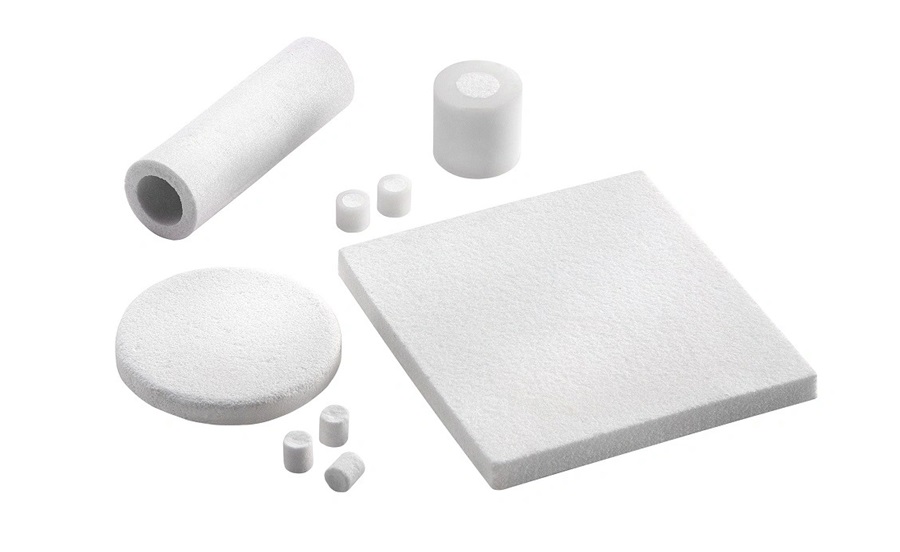
Manufacturers produce porous ceramic filters in multiple geometric configurations. Each design addresses specific industrial requirements. The physical form factor determines flow patterns, surface area, mounting methods and filtration capacity. Selection between tubes, disks, plates and other media types depends on process parameters. These parameters include pressure requirements, temperature ranges and the nature of substances being filtered.
Porous Ceramic Filter Tubes
Tubular configurations represent the most versatile form for industrial porous ceramic filter applications. These cylindrical elements feature outer diameters that range from 30 to 300 mm with customizable lengths. Wall thickness varies from 10 to 60 mm. Engineers can balance permeability against structural requirements. Multi-channel tubes extend up to 1.5 meters in length. External diameters span 10 to 52 millimeters. Channel diameters within these tubes measure between 2 and 16 millimeters.
The manufacturing process shapes ceramic powders through isostatic pressing, extrusion, slip casting or hard die pressing before sintering. This creates interconnected pores. Gasses or liquids pass through while particles and contaminants get trapped. Pore size control achieves precision from 0.5 micron to 80 micron. Alumina membrane filter tubes employ microholes throughout the wall structure. Small molecular substances pass through while macromolecular substances get trapped.
Tubular filters serve multiple sectors. Food and beverage manufacturing uses them to handle milk filtration, juice concentration, natural plant extract processing and wine production. Chemical processing applications include solid-liquid separation, gas-solid separation and purification of benzene, phenol, alcohol and various pigments. Environmental systems deploy these tubes to purify oily wastewater, textile wastewater, urban sewage, paper-making wastewater and high-temperature waste gas. Biomedical applications involve separating particles, bacteria and macromolecular impurities. They also decolor, refine, concentrate and extract active ingredients from pharmaceutical solutions.
Porous Ceramic Filter Disk
Disk configurations excel in rotation filtration and dynamic cross flow filtration for solid-liquid separation. Manufacturers produce ceramic filter disks with different diameters and pore sizes. These suit microfiltration and ultrafiltration processes. The standard construction uses porous Al₂O₃ ceramic with a base pore size of 2 µm. Coatings achieve finer filtration down to 5 nm through an asymmetrical layer structure.
The filtration mechanism directs flow from the outside surface toward the inside. Filtrate collects in internal channels within the disk structure. It exits through openings on the inner diameter. This design maximizes filtration performance and enables regeneration through backwashing or hot steam sterilization.
Two disk variants serve different needs. Cast plate types feature homogeneous surfaces with granulated cores. Thick walls separated by ceramic granules create the filter medium and establish rigid mechanical structure. Membrane plate types contain thin membranes over coarser cores with multi-layer porous aluminum oxide structures. The coarse section provides mechanical strength. An intermediate layer functions as membrane carrier, and the outer membrane serves as the filtering layer.
Oilfield applications use ceramic disks as replacements for filter paper in high-temperature, high-pressure filtration tests. The disk’s depth measures 1/4 inch. This enables invasion and return permeability studies, among other analyzes of bridging characteristics in drilling fluids. Mean pore throat size represents the average minimum pore diameter measured in microns. Manufacturing processes prevent absolute consistency between batches. Statistical analysis determines true mean pore throat size and permeability values.
Porous Ceramic Filter Plate
Plate configurations suit fluidized bed operations. They serve as alternatives to cloth or fabric air slide materials. Air blown under the ceramic plate diffuses upward. Material above experiences minimal friction between particles and behaves like a liquid. Manufacturers offer plates in alumina, silicon carbide and zirconium oxide. Filtration efficiencies reach 99.9%.
Material selection depends on operating conditions. Resin bonded silica performs well at room temperature. QR-130 grade fluidizes most materials. Higher temperature or specialized applications require glass bonded silica or ceramically bonded alumina in various coarseness sizes. These match fluidization characteristics and available air volume. These plates withstand temperatures as high as 2,500°F. They maintain uniform air permeability across the surface.
Foam ceramic filter plates target molten metal applications. Aluminum and aluminum alloy filtration are the primary uses. The three-dimensional network structure with connected pores starts as an organic foam sponge carrier. Thixotropic ceramic slurry infiltrates it. Special rolling spreads the slurry evenly across the carrier’s skeleton. High-temperature roasting completes fabrication. The resulting filters remove oxide slag, oxide scale, non-metallic inclusions and gate groove linings from molten aluminum. Sealing ceramic fiber liners surround the plate’s perimeter and prevent metal liquid sideflow in the filter box.
Porous Ceramic Filter Media
Porous ceramic filter media includes diverse shapes beyond standard geometric forms. These serve specialized functions. Manufacturers produce rings, balls, cylinders, noodles and custom geometries through sintering fine ceramic powder. Shape flexibility allows customization of size, thickness and filtration accuracy.
Ceramic rings provide porous structures with ample surface area. They demonstrate excellent durability in both freshwater and saltwater environments. Blocks represent another configuration. Large porous ceramic blocks suffer from very low effective surface areas of about 2 to 10 ft²/ft³ despite high pricing. Small pore sizes create additional problems. Water flows through paths of least resistance rather than penetrating the pores.
Material options span alumina, zirconia, silicon carbide and silicon nitride. Each offers distinct mechanical strength characteristics. Porous ceramics accept machining with diamond tools. They tolerate cleaning through air, steam, water, solvent, acid or kiln heating methods. High-temperature burning regenerates filter capacity. Manufacturing techniques include slip casting. These produce shapes as small as 0.13 inches, plates exceeding 32 inches and tubes approaching 60 inches.
Technical Specifications & Performance
Porous ceramic filters exhibit exceptional structural integrity and physical precision under dynamic working conditions. Key technical properties such as porosity, pore size distribution, mechanical strength, and thermal stability directly dictate filtration performance.
| Specification / Property | Alumina (Al2O3) | Silicon Carbide (SiC) | Zirconia (ZrO2) |
| Max Operating Temp. | Up to 1600°C | Up to 1400°C–1700°C | Up to 1750°C |
| Porosity Range | 30% – 50% | 80% – 90% (Foam) / 30%–50% | 70% – 80% |
| Thermal Shock Resistance | Moderate | Excellent | High |
| Acid/Alkali Resistance | Excellent | Exceptional | Superior |
Industrial Applications
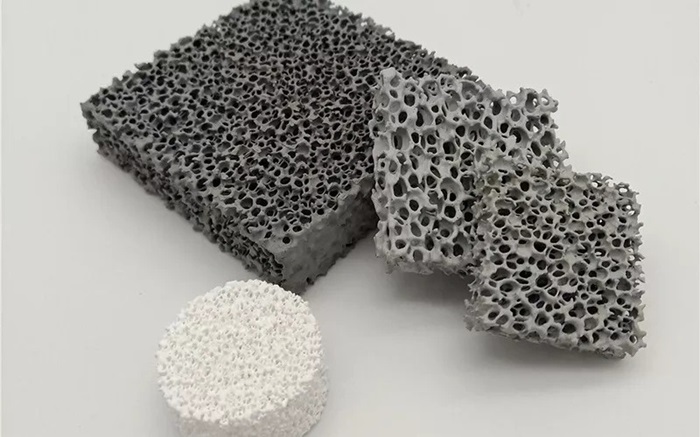
Industrial deployments of porous ceramic filters span extreme operating environments where conventional filtration technologies fail. These strong systems handle corrosive chemicals, raised temperatures exceeding 1,000°C, and molten metals while they keep filtration efficiency high and extend equipment lifespan in manufacturing sectors worldwide.
High-Temperature Industrial Gas Filtration
Hot gas filtration addresses particulate removal from raised-temperature exhaust streams in energy generation, waste processing, and manufacturing operations. Ceramic filter elements operate at temperatures up to 1,000°C. This is a big deal as it means that they go beyond the 140°C to 180°C limitation of conventional bag filters. This temperature capability gets rid of the need for expensive gas cooling equipment and preserves thermal energy for downstream heat recovery systems.
Non-catalytic porous ceramic filter configurations remove particulate matter like dust, smoke, and fumes from industrial flue gasses. Catalytic variants capture particles and destroy gaseous pollutants at the same time. These catalytic filters achieve up to 95% NOx reduction efficiency in the 180°C to 500°C temperature range. The embedded catalyst particles use nearly 100% of their intrinsic activity because of micro-porous structure and small size. This is nowhere near what conventional SCR systems achieve—they operate at only 5% to 15% catalyst effectiveness.
Applications extend to waste incineration facilities that process municipal solid waste, biomass, and sewage sludge. Glass manufacturing plants deploy these systems to trap pollutants while they keep process temperatures stable. Cement and lime kilns, gasification facilities, metal smelting operations, and mineral processing plants rely on high temperature ceramic filter technology for emission control. The filters show 99.99% dust removal efficiency and allow removal of SO2, HCl, and mercury at the same time when combined with dry sorbents.
Long-term stability proves essential for industrial economics. Ceramic elements keep their performance for up to 10 years in demanding applications and avoid frequent replacement cycles that plague fabric filter systems.
Water and Wastewater Treatment
Ceramic membrane technology treats industrial wastewater streams through microfiltration with porosity below 0.05 micron. The cross-flow filtration design forces wastewater across ceramic element surfaces before it passes through membrane pores. This configuration produces treated filtrate suitable for recycling and concentrates contaminants into a small reject stream.
Industrial porous ceramic filter membranes fabricated from alumina, titania, zirconia oxide, or silicon carbide show exceptional thermal stability. These materials handle aggressive media that include acids and strong solvents. This allows treatment of challenging wastewater from petrochemical refineries, mining operations, and metal surface finishing facilities. Ceramic membranes remove viruses, bacteria, PFAS, PFOS, BOD, TSS, synthetic dyes, and heavy metals.
Food processing operations reduce water consumption by up to 90% through treated wastewater reuse for irrigation. The membranes achieve high rejection rates for suspended solids and pathogens and produce quality suitable for non-potable applications that include cleaning and cooling systems.
Chemical and Petrochemical Processing
Chemical manufacturing environments need filtration systems resistant to corrosive substances in the full pH spectrum. Porous ceramic filter media handle concentrated sulfuric, nitric, and hydrochloric acids plus sodium hydroxide and organic solvents. Process filtration applications span pharmaceutical sterile air preparation, solvent purification, and chemical plant operations.
Petrochemical facilities generate substantial contaminated water that contains oil emulsions, chemical mixtures, and dissolved minerals. Ceramic membrane systems treat these complex effluent streams and allow water reuse while they prevent environmental discharge of harmful substances.
Molten Metal & Foundry Filtration
Ceramic foam filters revolutionized molten metal purification after their introduction for aluminum filtration in 1974 and commercial deployment in 1976. The technology expanded to iron casting in 1983, then steel, copper alloys, and magnesium applications. Open-cell foam structures with high specific surface area trap non-metallic inclusions, oxide films, and slag as molten metal moves through the tortuous pore network.
Aluminum casthouses achieve better metal cleanliness, reduced scrap rates, and better surface quality through ceramic foam implementation. Filters serve beverage can stock production, aircraft alloy manufacturing, and premium aluminum products. Honeycomb ceramic configurations offer alternatives and provide laminar flow that reduces turbulence and oxidation during casting. Investment casting and precision foundries benefit from reduced defect rates and better casting consistency.
Custom porous ceramic filter solutions accommodate various alloy types, flow rates, and cleanliness specifications. Filter selection considers metal temperature, casting speed, and inclusion removal targets to get the best foundry performance.
Custom Porous Ceramic Filter Solutions
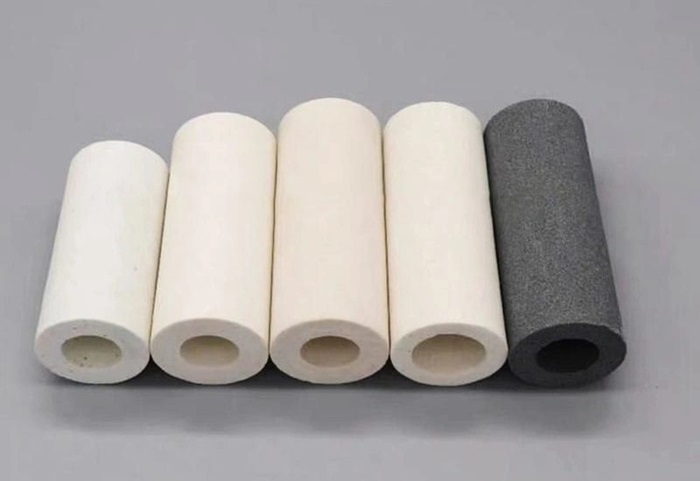
We provide custom porous ceramic filter solutions tailored to your exact industrial specifications. Our manufacturing processes allow for total control over component geometries, porosity levels, and pore size distributions—from micro-filtration membranes to large-scale ceramic foam structures. Whether you require specific outer dimensions, custom flange designs, or specialized material compositions (Alumina, SiC, or Zirconia), our engineering team delivers precise, repeatable prototypes and high-volume production runs to seamless integrate into your existing systems.
Why Choose Us as Your Porous Ceramic Filter Manufacturer
Selecting the right porous ceramic filter manufacturer determines product reliability, operational consistency, and long-term filtration performance. Manufacturing expertise, quality assurance protocols, and production flexibility separate competent suppliers from those capable of delivering engineered solutions for demanding industrial environments.
Advanced Manufacturing & Sintering Capabilities
Modern ceramic filter production incorporates additive manufacturing technologies that allow precise control over cellular structure, pore size, and flow paths. Ceramic fabrication uses multiple 3D printing methods. These include fused deposition modeling, selective laser sintering, digital light processing, and stereolithography. These techniques manufacture filters with repeatable shapes and specially designed structures that regulate molten metal flow during casting operations.
Robocasting and binder jetting methods produce innovative ceramic filters for advanced components. Turbine blades and thermal barrier elements in jet engines use these filters. Applications requiring high mechanical strength work better with the robocasting method. Binder jetting suits less demanding environments. Both technologies produce filter structures with repetitive shapes and full control of geometric characteristics.
The most critical manufacturing phase is sintering. This process imparts desired mechanical and thermal properties to ceramic filters. Ceramic particles bond together at temperatures exceeding 1,500°C. Dense, rigid structures form during firing. Sintering temperature control uses thermocouples inside kilns to maintain temperatures within ±20°F ranges. Digital pyrometers verify temperatures generated by internal thermocouples. Pyrometric cones measure heat work and ensure consistent temperature maintenance during firing.
Physical properties, chemical characteristics, and filtration performance depend on the sintering process. Temperature variations affect porosity levels and pore dimensions. Average pore size increases from 0.73 μm to 1.07 μm when sintering temperature rises from 850°C to 950°C. Porosity rises from 35.38% to 43.90%. Higher sintering temperatures increase crystallinity levels in ceramic structures through phase modifications and crystal dimension growth.
Advanced formulations minimize dimensional shrinkage challenges. Traditional ceramic 3D-printed green bodies undergo approximately 20% dimensional shrinkage during debinding and sintering. This potentially causes structural deformation, warping, and cracking. Novel formulations contain pre-sintered material for printing, followed by strengthening coatings. These produce ceramics that resist shrinkage without affecting pore size while maintaining strength sufficient to handle metal at 1,700°C.
Strict Quality Control & ISO Certifications
ISO 9001:2015 certification establishes systematic quality management frameworks that reduce variability and ensure documented control over production variables. ISO 9001 disciplines control processes across multiple parameters for porous ceramic filter manufacturing:
- Raw material qualification: Documented incoming material inspection verifies alumina purity, particle size distribution, and specific surface area before production
- Process control records: Documented slurry preparation procedures with viscosity measurement and correction before foam impregnation
- Firing documentation: Documented firing curves, calibrated furnace temperature recording, and systematic review of firing data against product specifications
- Inspection protocols: Documented inspection plans with defined acceptance criteria, sampling frequencies, and traceability of inspection results to specific production lots
Annual surveillance audits by accredited third-party certification bodies maintain ISO 9001 certification. Full recertification audits occur every three years. Regular third-party audits ensure continuous improvement in filtration technology, filter design, and manufacturing processes.
Common quality control checks include open porosity testing through Archimedes or porometry methods and pore distribution analysis. Compressive strength evaluation, thermal shock resistance assessment, and in-foundry filtration trials measure inclusion count reduction. Traceability by powder lot and kiln batch proves essential for critical applications.
Rapid Prototyping and Flexible Production
Moldless, freeform processes shorten production cycles through rapid iterative product design and fabrication. Visible digital light projection builds images on ceramic dispersions. Each layer changes according to computer-aided design data describing the object. Photocuring solidifies exposed areas in layers. Multiple layers are dispensed and photocured to fabricate complete components.
Flexible production meets growing demand. LCM printing technology combined with resistant alumina creates complex membrane structures. Output increases fivefold through an 80% improvement in recycled content of filtered water while reducing energy consumption by 80%. The CeraFab System S320 offers build volumes of 246 x 130 x 320 mm. This provides five times the platform size of ultra-precise industrial printers. The 4K projection system delivers 60 μm resolution and combines complex geometries with superior material performance at industrial levels.
Production facilities achieve significant monthly output. Operations that are several years old produce an average of 5,000 high-quality filters per month. Design capacity reaches 10,000 filters monthly. Modular, flexible membrane segments, each 5 cm in length, combine to standardized units of 1 meter and update existing housings. They integrate into current facilities naturally.
Conclusion
Porous ceramic filters deliver outstanding performance in demanding industrial environments where conventional filtration fails. These engineered solutions combine thermal resistance and chemical stability that other materials cannot match. They purify molten metal and clean high-temperature gasses.
The right manufacturer makes all the difference. Advanced sintering capabilities and quality certifications ensure filters meet specifications for each application. You just need alumina tubes for chemical processing or silicon carbide disks for foundry operations. Partnering with an experienced manufacturer guarantees filtration performance and operational longevity. Quality ceramic filtration technology pays dividends through reduced downtime and better product quality.
Porous ceramic filters can operate at extremely high temperatures depending on the material composition. Standard ceramic filters handle working temperatures up to 800°C, while advanced alumina formulations withstand temperatures reaching 1,600°C. Silicon carbide filters operate reliably up to 1,200°C, and zirconia ceramic filters can function at temperatures as high as 1,750°C, making them suitable for the most demanding high-temperature industrial processes.
Porous ceramic filters use three complementary filtration mechanisms: mechanical sieving blocks particles larger than the pore openings, direct interception captures particles that contact pore walls while following fluid flow, and deep-bed capture traps smaller particles through collisions with interior surfaces. The interconnected three-dimensional pore network forces fluids through tortuous pathways, maximizing contact with ceramic surfaces to achieve filtration efficiencies up to 99.99%.
Alumina filters offer balanced performance and cost-effectiveness with porosity between 80-90% and thermal resistance up to 1,600°C. Silicon carbide filters provide superior performance in extreme conditions with approximately 99% filtration efficiency and excellent thermal shock resistance, operating up to 1,200°C. Zirconia filters deliver the highest thermal performance, withstanding temperatures up to 1,750°C with exceptional chemical stability, though typically at a higher cost.
Yes, porous ceramic filters can be regenerated and reused multiple times. They tolerate various cleaning methods, including backwashing with air, steam, water, solvents, or acids. High-temperature burning effectively regenerates filter capacity by removing accumulated contaminants. This reusability contributes to their long operational lifespan, with ceramic elements maintaining performance for up to 10 years in demanding industrial applications.
Porous ceramic filters serve diverse industries, including metal casting and foundries for molten metal filtration, chemical and petrochemical plants for corrosive substance processing, water and wastewater treatment facilities, food and beverage manufacturing, pharmaceutical production for sterile filtration, power generation for hot gas cleaning, and environmental applications for high-temperature waste gas purification and emission control.