
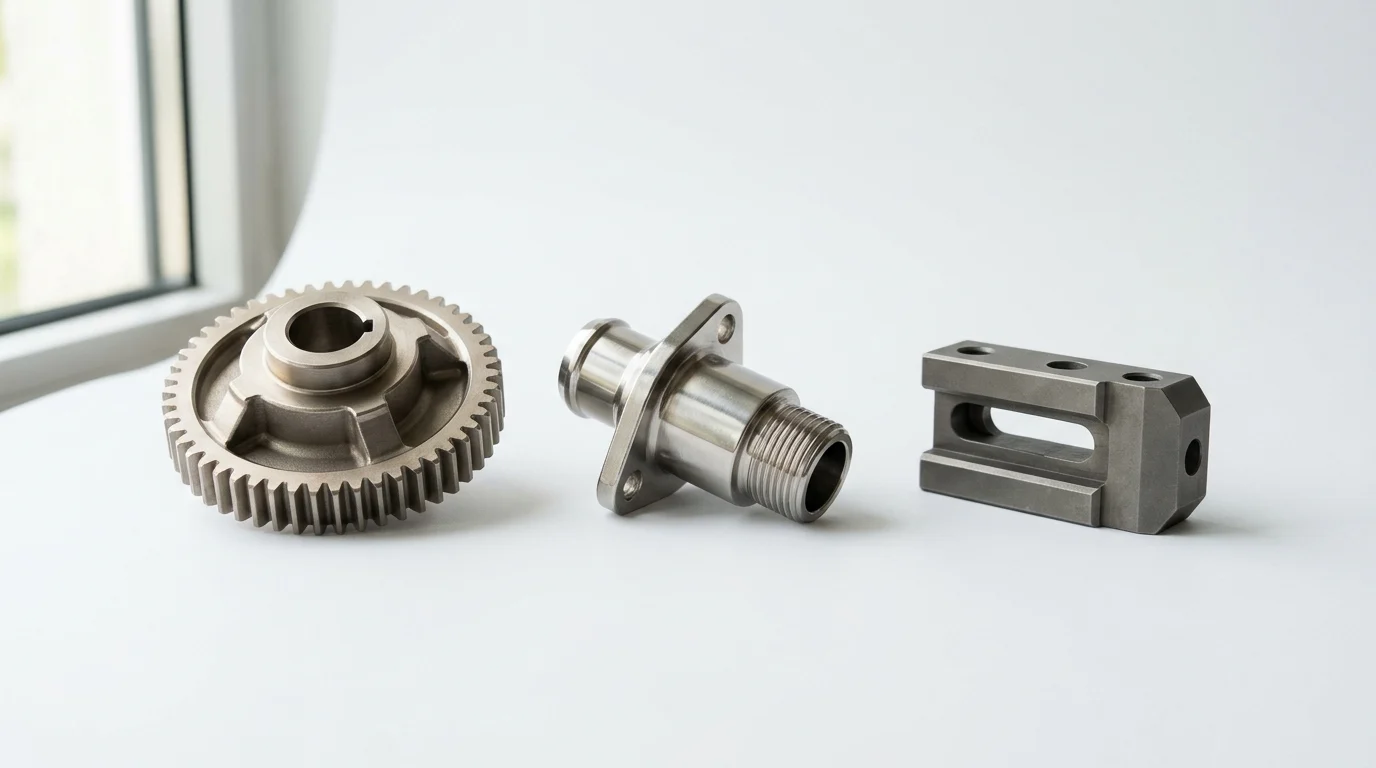
Material choice can determine whether a Metal Injection Molding (MIM) component survives millions of high-stress operational cycles or fails prematurely in the field. For complex industrial parts, medical devices, and automotive mechanisms, MIM-17-4PH, MIM-316L, and MIM-420 each offer a distinct balance of strength, corrosion resistance, surface hardness, ductility, heat-treatment response, and piece-part economics. Yield strengths across these alloys span dramatically from austenitic low-strength grades (~170 MPa) to precipitation-hardened martensitic alloys exceeding 1,090 MPa. This comprehensive engineering guide compares these three premier stainless steel grades to help design engineers and procurement teams align alloy selection with real-world load conditions, environmental exposure, wear demands, and production budgets.
How to Use a Stainless Steel Selection Guide
Navigating the material specifications of Metal Injection Molding requires a rigorous approach to engineering requirements. While the MIM process is highly capable of producing intricate, near-net-shape components with complex 3D geometries, the foundation of any successful manufacturing program lies in selecting the correct base alloy. A structured stainless steel selection guide serves as a critical engineering decision matrix, aligning metallurgical microstructures with the mechanical, environmental, and financial demands of the end-use application.
Why Grade Selection Affects Performance
The precise metallurgical composition of a chosen MIM grade dictates its behavior under static tensile loads, high-frequency fatigue, and impact. Stainless steel alloys utilized in MIM exhibit vastly different microstructures—austenitic, martensitic, or precipitation-hardened—which directly dictate performance metrics. For instance, the yield strength across common MIM stainless steels can span dramatically from approximately 170 MPa in fully annealed austenitic grades to over 1,090 MPa in precipitation-hardened variants following H900 heat treatment.
Failing to match these mechanical thresholds to operational conditions can result in premature structural failure, excessive fatigue cracking, or catastrophic yielding under peak loads. Furthermore, environmental endurance—specifically resistance to pitting and crevice corrosion—is heavily dependent on the alloy’s free chromium, molybdenum, and carbon ratios.
Commercial Risks of Choosing the Wrong MIM Grade
Specifying an inappropriate alloy introduces severe financial and operational liabilities during volume production. Over-engineering a component by selecting a highly specialized, expensive grade when a standard alloy would suffice unnecessarily inflates raw material costs. Conversely, under-engineering risks high field-failure rates, costly product recalls, and brand reputation damage.
At the manufacturing level, late-stage grade changes compromise process stability. Different stainless steel alloys exhibit distinct linear shrinkage rates during the high-temperature sintering phase, typically ranging from 15% to 20%. If a grade is changed late in the development cycle, existing multi-cavity tooling becomes obsolete due to mismatched shrinkage allowances. This can result in scrap rates exceeding 15% and necessitate tens of thousands of dollars in tooling modifications or complete mold rebuilds.
Key MIM Stainless Steel Grades
The global MIM manufacturing landscape is heavily dominated by three distinct stainless steel alloys, each engineered to fulfill specific mechanical and environmental criteria. Understanding the foundational metallurgy of MIM-17-4PH, MIM-316L, and MIM-420 is essential for specifying the correct material for high-volume component production.
MIM-17-4PH for High Strength
MIM-17-4PH is a martensitic precipitation-hardened stainless steel that offers an exceptional balance of ultra-high strength, moderate corrosion resistance, and excellent dimensional stability during thermal sintering. The “17-4” designation refers to its nominal composition of 17% chromium and 4% nickel, supplemented by copper additions which enable precipitation hardening (age hardening).
When subjected to standard post-sintering heat treatments, such as the H900 condition, MIM-17-4PH achieves an Ultimate Tensile Strength (UTS) up to 1,190 MPa and a hardness ranging between 33 and 40 HRC. This makes it the premier workhorse alloy for structural brackets, surgical tools, firearm components, and automotive mechanisms that endure dynamic cyclic loads while requiring baseline atmospheric corrosion resistance.
MIM-316L for Maximum Corrosion Resistance
MIM-316L is an austenitic stainless steel renowned for its superior resistance to chemical attack and exceptionally high ductility. The “L” denotes a low carbon content (strictly maintained below 0.03%), which prevents chromium carbide precipitation at grain boundaries during sintering, thereby completely eliminating intergranular corrosion risks.
While MIM-316L cannot be hardened via heat treatment—resulting in lower yield strengths compared to martensitic grades—it compensates with exceptional elongation, often exceeding 40% to 50% prior to fracture. Its high molybdenum content (2% to 3%) provides outstanding resistance to pitting in chloride-bearing environments, making it the industry standard for biocompatible medical implants, surgical instruments, fluid control valves, and marine hardware.
MIM-420 for Hardness and Wear Resistance
MIM-420 is a high-carbon martensitic stainless steel engineered specifically for applications demanding extreme surface hardness, edge retention, and abrasive wear resistance. Unlike 316L, MIM-420 contains a minimum of 0.15% to 0.40% carbon, which enables the formation of a rigid, fully martensitic crystalline structure upon oil quenching and tempering.
Following proper heat treatment, MIM-420 components routinely achieve hardness levels of 45 to 50 HRC. However, this extreme hardness comes at the expense of corrosion resistance; higher carbon content ties up free chromium as chromium carbides, reducing the passive oxide layer. Consequently, MIM-420 is typically specified for cutting instruments, micro-gears, lock mechanisms, and high-wear cams operating in dry or mildly corrosive environments.
How to Compare MIM-17-4PH, MIM-316L, and MIM-420
Selecting the optimal alloy requires a comparative analysis of mechanical profiles, environmental endurance, and thermal behavior. Engineers must weigh the advantages of each grade against its inherent limitations to ensure the final component satisfies all operational specifications.
Strength, Hardness, and Ductility Comparison
The mechanical profiles of the three primary MIM stainless steels reveal stark contrasts in load-bearing capacity and plasticity. MIM-17-4PH provides a robust middle ground, offering high tensile strength with moderate ductility. MIM-420 maximizes hardness and wear resistance but behaves in a brittle manner, offering minimal elongation before fracture. MIM-316L offers immense ductility and impact toughness, but lacks the yield strength required for heavy structural loads without geometric ribbing.
| Grade | Yield Strength (MPa) | Ultimate Tensile Strength (MPa) | Hardness | Elongation (%) |
|---|---|---|---|---|
| MIM-17-4PH (H900) | 1,090 | 1,190 | 33-40 HRC | 4-6 |
| MIM-316L (As-Sintered) | 170 | 520 | 67 HRB | 40-50 |
| MIM-420 (Quenched & Tempered) | 1,200 | 1,400 | 45-50 HRC | <2 |
Corrosion, Temperature, and Fatigue Factors
Environmental endurance is dictated by the alloy’s Pitting Resistance Equivalent Number (PREN) and microstructural stability under elevated temperatures. MIM-316L boasts a PREN of approximately 23 to 28, rendering it highly immune to chloride-induced pitting and stress corrosion cracking. It also maintains structural integrity in continuous thermal service up to 870°C.
MIM-17-4PH offers moderate corrosion resistance suitable for atmospheric exposure and mild industrial chemicals. However, its mechanical properties degrade if subjected to sustained temperatures above 315°C due to over-aging of the copper precipitates. MIM-420 provides the lowest corrosion resistance of the group and is susceptible to surface rusting if deployed in humid, unsealed, or saline environments without secondary plating or passivating coatings.
Key Trade-Offs Between Grades
The final material decision hinges on unavoidable trade-offs. Specifying MIM-420 guarantees excellent wear resistance for moving micro-gears, but demands strict environmental controls to prevent oxidation. Choosing MIM-316L ensures survival in harsh chemical sterilization or marine environments, but parts must be designed with thicker cross-sections to compensate for low yield strength.
MIM-17-4PH emerges as the default standard for structural industrial components, bridging the gap between the brittle hardness of 420 and the soft ductility of 316L, provided the service environment is not aggressively corrosive.
Manufacturing and Quality Requirements
Transforming metal powder and polymer binder feedstock into a dense, high-performance structural component requires strict furnace controls. Each stainless steel grade interacts differently with MIM debinding and sintering stages, requiring tailored equipment calibration and rigorous QA testing.
Debinding, Sintering, Shrinkage, and Heat Treatment
The MIM manufacturing workflow relies on a precise multi-stage thermal cycle. After injection molding, the “green” part undergoes catalytic or solvent debinding to extract the primary polymer matrix. Subsequent sintering consolidates the metal particles at temperatures between 1,300°C and 1,380°C under high-vacuum or hydrogen-argon reducing atmospheres.
Volumetric shrinkage during sintering is significant. MIM-17-4PH and MIM-316L typically exhibit linear shrinkage rates between 15% and 18%, whereas high-carbon MIM-420 requires precise atmosphere carbon-potential control to prevent severe distortion or carbon burn-off. Post-sintering, grades like 17-4PH and 420 undergo secondary heat treatments—solution annealing, quenching, and precipitation aging—to achieve specified hardness, while 316L is typically utilized in the as-sintered condition.
Inspection and Validation Requirements
Validating the metallurgical integrity of a sintered component involves strict QA metrics. Sintered density is the primary quality indicator: high-grade MIM-316L parts must achieve a minimum sintered density of 7.6 g/cm³ (95% to 98% of theoretical density) to guarantee that internal microporosity does not degrade fatigue life or corrosion resistance.
Dimensional tolerances are verified using Coordinate Measuring Machines (CMM). Standard MIM operations hold tolerances within ±0.3% to ±0.5% of nominal dimensions. Quality validation protocols frequently incorporate non-destructive testing (NDT), such as micro-CT scanning or X-ray inspection to verify internal soundness, alongside Rockwell/Vickers hardness testing to confirm heat treatment uniformity.
How to Assess Supplier Capability
Auditing a prospective MIM supplier requires evaluating their furnace technology and metallurgical capability. A qualified supplier must demonstrate Statistical Process Control (SPC), maintaining a Process Capability Index (Cpk) > 1.33 for all critical-to-quality (CTQ) dimensions.
Furthermore, the supplier must operate in-house metallurgical laboratories capable of verifying carbon balance during sintering. Because MIM feedstocks contain carbon-rich binder systems, poor atmosphere control during sintering causes unintended carburization or decarburization, drastically altering the performance of sensitive grades like MIM-316L and MIM-420. Quality certifications such as ISO 13485 (medical devices) or IATF 16949 (automotive parts) serve as baseline indicators of operational capability.
How to Choose the Right MIM Stainless Steel Grade
Finalizing a material specification bridges theoretical metallurgy with commercial manufacturing success. A systematic evaluation of functional loads, environmental exposure, and annual volume economics ensures the chosen MIM grade fulfills all project lifecycle goals.
Decision Steps for Load, Environment, and Cost
Material selection should follow a strict evaluation hierarchy:
- Functional Load Analysis: Calculate maximum operating stress and yield strength thresholds to eliminate under-strength alloys.
- Environmental Evaluation: Assess exposure to moisture, salt spray, chemical sterilants, or extreme temperatures.
- Cost Optimization: Factor in raw material costs alongside necessary secondary operations like vacuum heat treatment, coining, or electropolishing.
| Grade | Primary Advantage | Typical Environment | Relative Material Cost |
|---|---|---|---|
| MIM-17-4PH | Ultra-High Strength & Impact Toughness | Mildly corrosive, high structural stress | Moderate |
| MIM-316L | Maximum Corrosion Resistance & Ductility | Marine, chemical, biocompatible medical | High |
| MIM-420 | Extreme Surface Hardness & Wear Resistance | Abrasive wear, dry/controlled environment | Low to Moderate |
Best Applications for Each Grade
MIM-17-4PH is best deployed in aerospace brackets, firearm receivers, structural hinges, and heavy-duty automotive lock components where structural failure is unacceptable.
MIM-316L is mandatory for surgical instruments requiring repeated autoclave sterilization, implantable medical housings, luxury watch cases, and fluid valves where zero oxidation is permissible.
MIM-420 is ideally suited for surgical scalpel handles, industrial crimping dies, micro-gears, lock tumblers, and wear plates where maintaining a sharp cutting edge or resisting sliding friction governs product lifespan.
When to Prototype, Test, or Redesign
Because MIM multi-cavity tooling is specifically engineered around the thermal shrinkage rate of a chosen alloy, changing materials late in development is cost-prohibitive. Engineers should prototype early functional parts using multi-axis CNC machining from wrought bar stock of the candidate alloy to validate mechanical performance prior to cutting tool steel.
Once mechanical integrity is verified, committing to MIM tooling ($15,000 to $40,000) is justified for annual production volumes exceeding 10,000 units. If a prototype fails initial load testing, modifying the part’s geometry (such as adding internal stiffening ribs or increasing radii) is often far more economical than attempting to formulate a custom, non-standard metal alloy.
Key Takeaways
- Select MIM-17-4PH when the application demands high structural yield strength and fatigue resistance; H900 heat-treated parts reach ~1,190 MPa UTS and 33–40 HRC hardness.
- Choose MIM-316L for humid, chemical, or chloride-bearing environments where biocompatibility, high ductility (>40%), and corrosion resistance outweigh peak strength requirements.
- Specify MIM-420 for wear-critical components requiring high surface hardness (up to 50 HRC) and edge retention, provided the service environment is dry or non-corrosive.
- Avoid late-stage material switches because MIM stainless steel grades exhibit distinct sintering shrinkage rates (15% to 20%), which will invalidate existing tooling dimensions.
- Balance performance demands with piece-part economics early in the design phase to prevent both over-engineering with expensive alloys and under-engineering that risks field failures.
Frequently Asked Questions
Which MIM stainless steel is best for high-strength industrial parts?
MIM-17-4PH is the premier choice for high-strength structural parts. Following precipitation hardening (such as H900 heat treatment), it achieves up to 1,190 MPa ultimate tensile strength and 33–40 HRC hardness while maintaining reliable toughness.
When should I choose MIM-316L instead of MIM-17-4PH?
Specify MIM-316L when superior corrosion resistance, biocompatibility, and high impact ductility matter more than maximum yield strength. Its austenitic structure and 2%–3% molybdenum content provide exceptional resistance to pitting in salt, chemical, or medical environments.
What is MIM-420 commonly used for?
MIM-420 is selected for components requiring high wear resistance, edge retention, and surface hardness, such as surgical cutting tools, micro-gears, lock mechanisms, and industrial wear plates.
Can I switch MIM stainless steel grades after tooling is made?
Switching MIM grades after tooling is fabricated is rarely feasible without mold modifications or total rebuilds. Different stainless steel alloys experience different volumetric shrinkage rates (15% to 20%) during high-temperature sintering, which alters final component dimensions.
Which grade offers the best corrosion resistance?
MIM-316L offers the highest corrosion resistance among the three grades due to its low carbon content (<0.03%) and high molybdenum addition, making it ideal for aggressive marine or medical applications.