
Key Takeaways
Selecting the right processing path for custom soft magnetic parts determines whether an OEM electromagnetic device achieves fast switching response, low core loss, and high flux concentration while controlling unit manufacturing costs.
- High Density for Superior Flux: Metal Injection Molding (MIM) achieves 95% to 99% of theoretical density, enabling near-wrought saturation induction (Bs) and superior initial magnetic permeability compared to traditional press-and-sinter powder metallurgy.
- Alloy Selection Matrix:
- Pure Iron (Pure Fe): Cost-effective baseline with high saturation flux density for simple DC solenoids.
- Fe-Ni (Permalloy / Fe-50Ni): Maximum magnetic permeability and minimal coercivity (Hc) for ultra-sensitive sensors, relays, and actuators.
- Fe-Si (Fe-3Si / Fe-6.5Si): Elevated electrical resistivity to suppress eddy-current losses in AC magnetic circuits and high-frequency valve solenoids.
- Strict Process Control: Clean debinding (carbon residue under 0.01%), high-temperature dry-hydrogen sintering (around 1260 degrees C), and secondary Magnetic Annealing are mandatory to relieve lattice stress and maximize grain growth for peak magnetic performance.
- Cost and Design Optimization: MIM eliminates multi-axis CNC machining on complex 3D magnetic components, reducing manufacturing costs by 30% to 50% for high-volume OEM solenoids, armatures, and sensor cores.
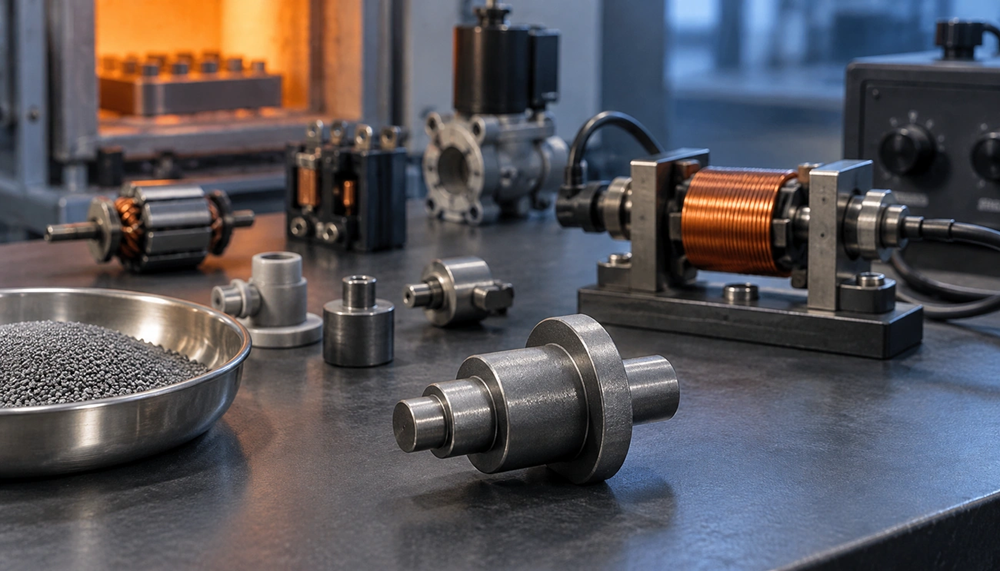
Soft magnetic MIM components play a critical role in OEM device miniaturization, switching speed, and energy efficiency. While conventional wrought iron achieves a saturation induction of about 2.15 T and specialized Fe-Co alloys reach 2.45 T, manufacturing complex 3D magnetic geometries through traditional subtractive machining is labor-intensive and wasteful.
This engineering guide examines how density, powder quality, carbon control, high-temperature sintering, and magnetic annealing govern soft magnetic material performance. It provides design protocols for matching Fe-Ni, Fe-Si, and Pure Iron alloys to custom solenoid iron cores, relays, actuators, and sensors.
How Density Affects Magnetic Performance in MIM Parts
In sintered soft magnetic parts, final density determines the cross-sectional area available for magnetic flux transport. Internal pores interrupt domain wall movement, create local demagnetizing fields, and reduce initial permeability. By achieving 95% to 99% of theoretical density (typically 7.4 to 7.75 g/cm3), MIM provides a robust foundation for high-permeability component design.
1. Reading B-H Hysteresis Loops
A B-H curve maps applied magnetic field strength H (A/m) against magnetic flux density B (Teslas). Key parameters for soft magnetic evaluation include:
- Magnetic Permeability (u = B/H): Represents the ease with which a component magnetizes. High permeability enables rapid magnetic response with minimal coil power.
- Saturation Induction (Bs): The maximum flux density achieved at high field strength. Calculated via density ratio: Bsat = (part density / 7.85) x 2.15 T.
- Coercivity (Hc): The reverse magnetic field required to reduce flux to zero. Lower coercivity indicates narrower hysteresis loops and lower energy loss per magnetization cycle.
2. Controlling Porosity and Grain Boundaries
As residual porosity decreases, isolated pores become spherical (under 20 microns) rather than irregular and connected. Fine gas-atomized powders (under 22 microns) provide immense surface energy during sintering, driving uniform shrinkage and minimizing flux disruption. Consistent binder distribution is critical to prevent density gradients in thin-walled OEM magnetic cores.
Designing a Complex Soft Magnetic Component?
Eliminate costly multi-axis machining. JHMIM specializes in high-density Fe-Ni, Fe-Si, and Pure Iron MIM components with tailored magnetic properties and tight tolerances (+/-0.3%).
Send Us Your 3D CAD Drawing for a Free DFM Analysis & Quote Within 24 Hours →
Choosing Soft Magnetic Alloys for MIM Manufacturing
Pure Iron (Pure Fe)
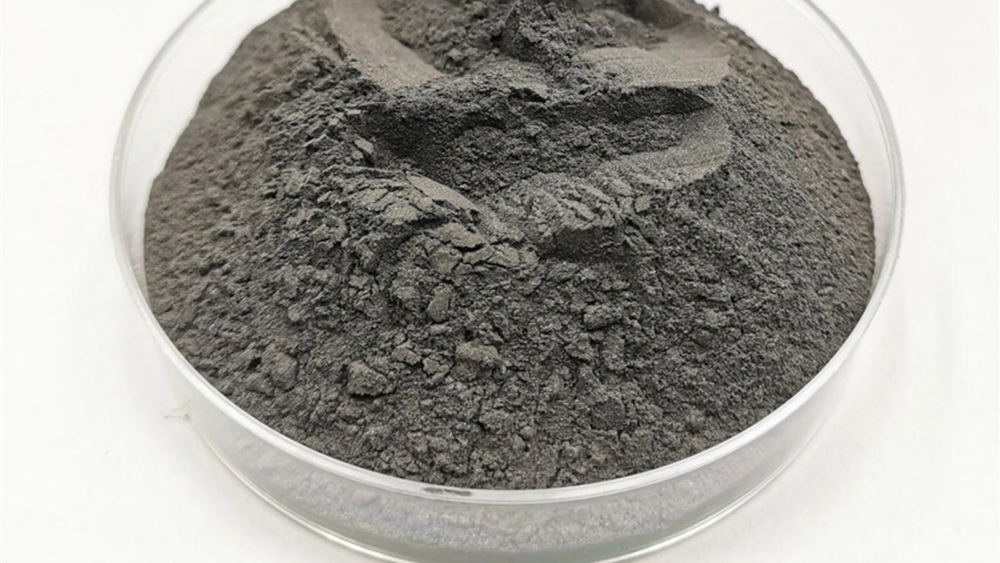
Provides a highly economical baseline for DC magnetic circuits such as basic solenoid armatures, stops, and flux returns. It delivers high saturation flux density (Bs around 2.10 T) and excellent mechanical ductility.
Fe-Ni Soft Magnetic Alloys (Permalloys / Fe-50Ni)
Ideal for precision DC circuits requiring maximum magnetic permeability, minimal coercivity (Hc), and low remanence. Fe-Ni soft magnetic alloys concentrate flux efficiently in high-sensitivity magnetic sensors, audio transducers, and fast-acting relay components.
Fe-Si Soft Magnetic Alloys (Fe-3Si and Fe-6.5Si)
Engineered specifically for AC electromagnetic applications. Silicon increases electrical resistivity, suppressing eddy-current heating and core loss during high-frequency cycling. While conventional sheet rolling cannot process brittle Fe-6.5Si alloys, metal injection molding magnetic components easily produce complex 3D shapes in high-silicon formulations.
Controlling the MIM Process for High Permeability
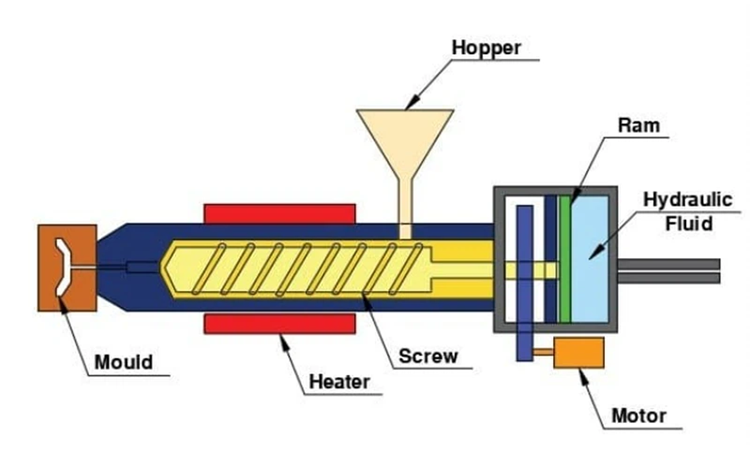
1. Raw Powder Selection
Pre-alloyed, spherical gas-atomized powders with controlled low oxygen (under 0.05 wt%) are preferred over water-atomized powders to prevent internal oxide inclusions that pin domain walls and degrade permeability.
2. Clean Debinding and Zero Carbon Residue
Thermal debinding must completely remove polymeric binders without leaving residual carbon. Retained carbon severely impairs grain growth and drastically elevates coercive force (Hc). Solvent extraction followed by slow, staged thermal debinding ensures clean binder burnout.
3. High-Temperature Hydrogen Sintering
Sintering takes place in pure dry hydrogen or high-vacuum furnaces at temperatures ranging from 1250 degrees C to 1320 degrees C. Hydrogen acts as a potent reducing agent, eliminating residual oxygen, sulfur, and carbon while promoting atomic diffusion and grain boundary growth.
4. Secondary Magnetic Annealing
Following post-sintering machining or coining, parts must undergo specialized magnetic annealing (typically at 850 degrees C to 1100 degrees C in pure hydrogen or dry vacuum) to relieve internal mechanical stress and fully restore maximum initial permeability.
Matching MIM Soft Magnetic Parts to OEM Applications
Solenoid Iron Core MIM Parts

Solenoid plungers and pole pieces require stable geometry, stepped shoulders, internal threads, and smooth sliding surfaces. MIM allows integral molding of mounting flanges and guide grooves while maintaining strict concentricity and low residual magnetism for rapid valve reset.
Motor and Relay Components
Small 3D motor stators, armatures, and relay yokes benefit from MIM’s net-shape capability. By eliminating multi-step machining and material waste, MIM cuts part manufacturing costs by 30% to 50% on complex magnetic assemblies.
Quality Assurance and Magnetic Testing
Qualified MIM soft magnetic suppliers validate parts using combined quality protocols:
- Toroid B-H Curve Testing: Verification of initial permeability, maximum permeability, saturation induction (Bs), and coercivity (Hc).
- CMM and Optical Inspection: Verification of pole-face flatness, air-gap dimensions, datum locations, and bore roundness.
Conclusion: Partnering for Custom High-Permeability MIM Parts
Soft magnetic MIM components deliver outstanding electromagnetic efficiency when density, alloy chemistry, sintering atmosphere, and magnetic annealing are optimized as an integrated system. From automotive solenoid iron cores to medical sensors and aerospace relays, MIM offers unbeatable design freedom and cost savings. Contact JHMIM today to review your custom soft magnetic component drawings and receive a comprehensive DFM evaluation.