
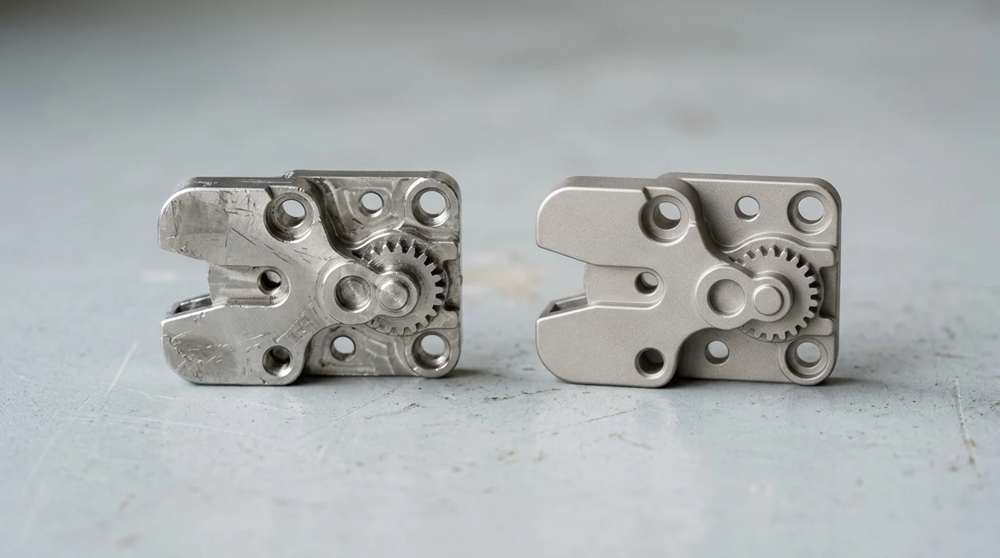
 Rising material prices, skilled labor constraints, and tighter margin targets are forcing manufacturers to rethink how complex metal components are made. For the right geometry and volume, Metal Injection Molding (MIM) can shift production from costly subtractive machining to a near-net-shape process with far less scrap and fewer secondary operations. The payoff can be substantial: many qualified conversions achieve 30% to 50% lower unit costs compared with multi-axis CNC machining. But the economics depend on more than part price alone. This article examines when MIM makes financial sense, what volume thresholds matter, how tooling and validation costs affect ROI, and which design factors determine conversion success.
How MIM Conversion Can Cut Metal Part Costs
Transitioning from traditional subtractive manufacturing to Metal Injection Molding (MIM) represents a highly effective strategy for reducing unit costs on complex metallic components. For high-volume production, converting appropriate parts to MIM can yield unit cost reductions of 30% to 50% compared to conventional multi-axis CNC machining. This financial advantage stems from the elimination of extensive secondary operations, the drastic reduction of material waste, and the ability to consolidate multiple sub-components into a single molded geometry.
Cost Pressures That Make MIM Attractive
The primary catalyst driving manufacturers toward MIM conversion is the escalating cost profile of traditional subtractive methods. In industries like aerospace and medical device manufacturing, CNC machining often results in scrap rates exceeding 60% to 70% of the raw billet mass (frequently representing a buy-to-fly ratio of 3:1 or worse). When working with expensive alloys such as titanium or high-performance stainless steels, this material waste severely degrades gross margins.
Simultaneously, machine time and skilled labor rates continue to erode margins. A component requiring four or five distinct machining setups accumulates non-value-added handling time and increases the risk of tolerance stacking. MIM circumvents these pressures by utilizing a near-net-shape process that injects raw material directly into the final desired geometry. This approach can achieve a total material utilization of over 95% when factoring in the regrinding and recycling of runner and sprue systems. However, this high utilization depends on qualified regrind ratios—typically limited to 15% to 25% by weight—as thermoplastic binders degrade with repeated recycling and cannot be reused indefinitely.
Business Case Questions to Clarify First
Before initiating a conversion, engineering and procurement teams must evaluate the underlying business case to ensure viability. The foremost consideration is production volume. Because MIM requires the fabrication of a custom injection mold—typically demanding an upfront capital expenditure ranging from $15,000 to $50,000—the annual production volume must be sufficient to amortize this tooling cost. Typical production Minimum Order Quantities (MOQs) range from 5,000 to 10,000 units per run to justify setup times.
To prevent confusion, it helps to view annual volumes in three distinct bands: break-even, viable, and optimal. A standard break-even threshold for amortizing MIM tooling generally sits between 10,000 and 15,000 units annually, depending on part complexity and material choice. As volumes surpass 15,000 units, the process becomes economically viable, and beyond 20,000 units, it reaches an optimal return on investment (ROI), often paying for the tooling in under 12 to 14 months. However, particularly in the medical and aerospace sectors, teams must account for hidden re-qualification and regulatory re-validation costs (which can range from $5,000 to $20,000+ for IQ/OQ/PQ protocols), which can offset tooling ROI and extend the overall conversion timeline. Furthermore, teams must clarify whether the current design can accommodate the slight geometric modifications necessary for molding, such as 0.5° to 2.0° draft angles and uniform wall thicknesses.
What Metal Part Conversion to MIM Involves
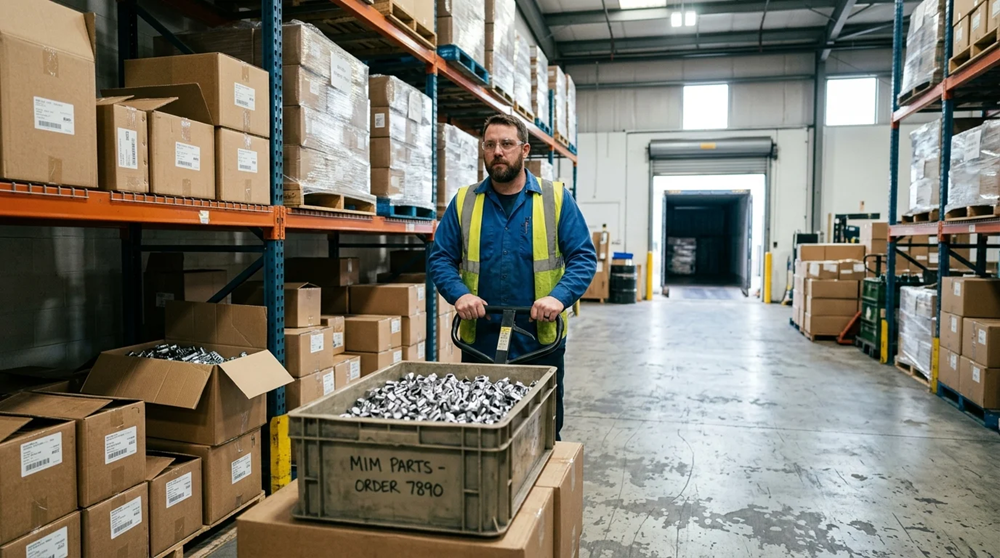
Executing a successful conversion requires a fundamental understanding of MIM process mechanics. Unlike subtractive techniques that remove material from a solid billet, MIM is a powder metallurgy forming process that blends fine metal powders with thermoplastic binders into moldable feedstock, achieving true 3D geometric freedom.
How MIM Differs from CNC Machining
The operational divergence between MIM and CNC machining dictates fundamentally different design paradigms. CNC machining costs scale linearly with geometric complexity; every internal radius, undercut, or non-standard angle requires specific tooling, machine interpolation, and cycle time. Conversely, in MIM, unit cost is far less sensitive to complexity once the mold is fabricated.
While a CNC machine may require 15 minutes to mill a complex surgical instrument component, a MIM press can inject that same geometry in a cycle time of 15 to 30 seconds. However, this high-speed injection does not equate to instant part completion; total MIM throughput requires lengthy batch processes for debinding (typically 12 to 24 hours) and sintering (24 to 36 hours), meaning the overall lead time per batch is not comparable to a single machining cycle. Furthermore, the “green” molded part is highly fragile (with tensile strength often below 5 MPa) and lacks handling strength until final sintering is complete, requiring careful management during these transition phases—a unique requirement not present in machining.
Suitable Geometries, Alloys, Tolerances, and Densities
MIM excels with specific material categories and physical parameters. Standard stainless steels like 316L (achieving >7.8 g/cm³ density) and 17-4 PH (yielding tensile strengths up to 1,000 MPa) are highly popular, alongside low-alloy steels, titanium alloys, and even soft magnetic materials. Following the sintering phase, MIM components routinely achieve 96% to 99% of theoretical maximum density, providing mechanical properties that meet or exceed those of investment castings and closely rival wrought bar stock, often benchmarked against MPIF Standard 35. However, because fatigue life and impact resistance can differ from those of wrought bar stock, safety-critical or highly stressed applications require thorough validation.
From a precision standpoint, standard “as-sintered” MIM tolerances range from ±0.3% to ±0.5% of the nominal dimension. While this is exceptionally accurate for a thermal consolidation process, it may not immediately replace the ±0.005 mm tolerances achievable via precision grinding or high-end CNC turning. Therefore, highly critical mating surfaces on a MIM part may still require a localized post-machining operation.
Key Design Limits and Shrinkage Considerations
The most critical engineering challenge in MIM conversion is managing volumetric shrinkage. During the sintering phase, the removal of the binder and the densification of the metal powder cause the component to shrink by 15% to 22%, depending on the specific feedstock formulation. Tooling must be designed oversized by an exact scaling factor to yield the correct final dimensions.
To ensure uniform shrinkage and prevent warping or porosity, designers must adhere to strict geometric limits. Wall thicknesses should ideally range between 1.0 mm and 3.0 mm; sections thicker than 10.0 mm are generally discouraged as they complicate complete binder removal and increase internal defect rates. Additionally, length-to-thickness aspect ratios should generally remain below 20:1, and minimum hole diameters should exceed 0.4 mm. Furthermore, while the process can handle parts up to 250 grams, the economic and technical sweet spot for MIM conversion typically involves components weighing less than 100 grams.
How to Compare MIM with Machining and Casting
Selecting the optimal manufacturing method requires an objective evaluation of competing processes. While MIM offers unmatched cost-efficiency for small, intricate components, investment casting and multi-axis CNC machining remain viable options depending on part mass, annual production volume, and required dimensional tolerances.
Unit Cost, Tooling Cost, and Lead Time Comparison
Understanding the fundamental cost and timeline differences is essential for accurate procurement forecasting. The following comparison outlines the baseline expectations for CNC machining, investment casting, and MIM when evaluating a complex, 50-gram stainless steel component.
| Manufacturing Process | Tooling Cost | Typical Lead Time (Weeks) | Economical Volume (Units/Yr) | As-Processed Surface Finish (Ra) |
|---|---|---|---|---|
| CNC Machining | Low ($0 – $2,000) | 2 – 4 (Programming/Setup) | < 10,000 | 0.4 – 1.6 µm |
| Investment Casting | Medium ($3,000 – $10,000) | 6 – 10 (Tooling) | 1,000 – 50,000 | 3.2 – 6.3 µm |
| Metal Injection Molding | High ($15,000 – $50,000) | 8 – 14 (Tooling) | > 15,000 | 0.8 – 1.2 µm |
Note that CNC lead times primarily reflect programming and machine setup, whereas MIM and casting lead times are driven by mold and tooling fabrication. While MIM presents the highest barrier to entry regarding initial capital expenditure and tooling lead time, its low variable unit cost rapidly overtakes machining and casting at higher production volumes. Additionally, the superior surface finish of MIM often eliminates the need for secondary polishing required by investment casting.
Impact of Volume, Complexity, and Scrap Rate
Volume and complexity are the two primary levers that dictate cost competitiveness. While the process becomes economically viable around 15,000 units, as annual volumes scale beyond 20,000 units, MIM becomes an optimal fit. At this scale, the amortized tooling cost per part approaches insignificance, allowing the raw material efficiency and rapid cycle times to dominate the cost equation. For example, a complex CNC part fixed at $15 per unit might drop to $4 to $6 per unit via MIM at 25,000 units. In contrast, CNC machining unit costs remain relatively rigid regardless of volume, bound by fixed machine times and tool wear.
Scrap rate further exacerbates the divide. While a complex aerospace bracket machined from solid block may exhibit a scrap rate of 80%, MIM’s ability to recycle runner and sprue systems keeps total material waste exceptionally low (often under 5%). When evaluating expensive alloys, this dramatic improvement in material utilization frequently justifies the MIM conversion on its own.
When MIM Lowers Total Landed Cost
Total landed cost encompasses more than just the invoice price of the component; it includes freight, inspection, secondary processing, and assembly. MIM frequently lowers the total landed cost by enabling part consolidation. If an assembly currently requires three machined components to be welded or bolted together, a single MIM part can often replace the entire sub-assembly.
By reducing the bill of materials (BOM), manufacturers eliminate the labor costs of assembly, the risk of tolerance stack-up errors, and the logistical burden of managing multiple distinct SKUs. Even if the single MIM part costs 10% more than the primary machined base plate, the elimination of the secondary parts and assembly labor routinely drives 15% to 30% reductions in total landed cost.
Practical Steps to Reduce MIM Conversion Risk
Transitioning a legacy machined part to MIM carries inherent engineering and supply chain risks. Mitigating these risks requires a structured conversion methodology, moving systematically from initial part screening to strict quality validation.
How to Screen Candidate Parts
Not every part is a viable candidate for injection molding. Engineering teams should implement a rigorous screening process to identify high-probability components. Ideal candidates generally weigh under 100 grams, fit within the palm of a hand (roughly 100 mm in maximum length), and require more than three distinct machining setups (or >45 minutes of total cycle time) under their current manufacturing routing.
Parts with extreme variations in cross-sectional thickness, or those requiring vast expanses of perfectly flat, tight-tolerance surfaces without the possibility of post-machining, should be flagged as high-risk. Utilizing a scoring system that weights annual volume, material cost, and geometric complexity allows engineering teams to prioritize conversions that offer the highest probability of technical success and financial return.
MIM Conversion Workflow from DFM to Production
Once a candidate is selected, the workflow shifts to Design for Manufacturability (DFM). This phase is collaborative between the OEM and the MIM partner. Engineers will introduce draft angles (typically 0.5 to 2 degrees) to facilitate part ejection, core out thick sections to maintain uniform wall thickness, and strategically place gate and ejector pin locations away from critical cosmetic or functional surfaces.
Following DFM sign-off, tool fabrication commences, typically requiring 8 to 14 weeks to complete the mold build and initial sampling. The initial output is subjected to a First Article Inspection (FAI), typically involving 30 to 50 pieces to establish a statistical baseline (targeting a Process Capability Index, Cpk, of >1.33). During FAI, the team analyzes the “first-off” parts for dimensional accuracy, metallurgical integrity, and proper density. Iterative adjustments to the sintering profile or minor tooling modifications are common at this stage to dial in the final shrink rate before greenlighting mass production.
Quality Controls, Inspection Plans, and Certifications
Because MIM relies heavily on controlled thermal processes, invisible internal defects like porosity or incomplete binder removal can compromise mechanical performance. Robust quality assurance frameworks—including density checks via Archimedes’ method, CMM dimensioning, and non-destructive testing—are non-negotiable for critical structural parts.
When MIM Conversion Is the Right Decision
To achieve the core objective of a metal part conversion to MIM—cutting manufacturing costs by up to 50%—organizations must ensure that component geometry, production volume, and material requirements align with specific process capabilities. Transitioning from traditional machining or casting requires a strategic evaluation of both technical specifications and supply chain economics.
Decision Matrix for Strong and Conditional Fits
Evaluating a component for Metal Injection Molding (MIM) requires analyzing specific operational thresholds. The following matrix outlines the criteria that dictate whether a part is an optimal candidate for conversion.
| Evaluation Criteria | Strong Fit for MIM | Conditional Fit (Requires Review) |
|---|---|---|
| Annual Volume | > 50,000 units | 10,000 – 50,000 units |
| Part Weight | < 100 grams | 100 – 250 grams |
| Geometry | Highly complex (undercuts, internal threads) | Moderate complexity (easily CNC machined) |
| Material | Stainless steel, titanium, high-temp alloys | Standard carbon steel, aluminum |
| Scrap Rate (Current) | High material waste from machining | Low material waste |
How Procurement and Engineering Should Align
Successful MIM integration demands cross-functional collaboration between engineering and procurement teams. Engineering departments must validate that the final sintered density—typically ranging from 96% to 99%—meets mechanical load and tensile strength requirements. They must also redesign components to accommodate the standard 15% to 20% shrinkage that occurs during the sintering phase.
Simultaneously, procurement professionals must calculate the return on investment (ROI) regarding the upfront injection mold tooling costs. True alignment occurs when procurement’s total cost of ownership (TCO) analysis justifies the initial capital expenditure through the long-term elimination of secondary machining operations and reduced raw material waste.
Final Takeaway for Manufacturers Evaluating MIM
Adopting MIM is a calculated manufacturing strategy, not a universal remedy for high production costs. Manufacturers must conduct a comprehensive lifecycle analysis before committing to tooling. When applied correctly to high-volume, intricate, small-scale components, MIM can shift from a specialized alternative to a primary driver of scalable margin expansion and supply chain efficiency.
Key Takeaways
- Evaluate MIM conversion first for complex, high-volume metal parts where CNC machining creates high scrap, long cycle times, or multiple setups.
- Use 10,000 to 15,000 units per year as a practical break-even range for amortizing MIM tooling costs.
- Expect the strongest MIM ROI above 20,000 units annually, where tooling can often pay back within 12 to 14 months.
- Account for $15,000 to $50,000 in mold investment before comparing MIM unit pricing against CNC machining.
- Design parts for manufacturability by allowing 0.5° to 2.0° draft angles, consistent wall thickness, and geometry suitable for molding.
- Include validation, qualification, and regulatory costs in the business case, especially for medical and aerospace components.
Frequently Asked Questions
How much can MIM reduce metal part unit costs?
For suitable high-volume, complex components, Metal Injection Molding can reduce unit costs by about 30% to 50% versus multi-axis CNC machining by lowering material waste, setup time, and secondary operations.
What production volume is needed to justify MIM conversion?
MIM usually becomes attractive around 10,000 to 15,000 units annually, becomes more viable above 15,000, and often delivers the best ROI beyond 20,000 units per year.
Why is MIM more material-efficient than CNC machining?
MIM is a near-net-shape process that forms parts close to final geometry, often achieving over 95% material utilization when qualified runner and sprue regrind is properly controlled.
What upfront costs should buyers expect for MIM tooling?
Custom MIM tooling commonly costs $15,000 to $50,000, depending on part size, complexity, cavity count, material, and quality requirements.
Which parts are best suited for conversion to MIM?
MIM is best for small, complex metal parts with high annual volumes, expensive materials, tight repeatability needs, and features that would otherwise require multiple machining setups.