
Key Takeaways
Selecting the right sintered porous sheet determines whether an industrial filtration system operates efficiently or becomes a bottleneck of severe pressure loss, fluid contamination, and high maintenance costs.
- Filter Mechanism: Distinguish between surface cake capture (easy dislodging/backwashing) and depth capture (higher dirt-holding capacity via tortuous 3D pore paths).
- Pore Rating vs. Removal Efficiency: A micron rating is not a standalone guarantee. Always specify particle-count capture efficiency or Beta Ratio (e.g., Beta 10 = 100 for 99% capture at 10 μm) alongside Bubble Point testing (ISO 4003).
- Material Selection: Choose 316L Stainless Steel for general process fluids (up to 600°C), Porous Titanium for aggressive corrosive chemistry and hydrogen electrolysis (PEM GDLs), Nickel Alloys for severe acids/heat, and Bronze for low-cost pneumatic/sparging duties.
- Permeability & Pressure Drop: Calculate working area based on peak flow and dynamic fluid viscosity using Darcy’s Law to prevent premature fouling and excessive clean pressure drop.
- Total Cost of Ownership (TCO): Sintered metal sheets offer exceptional backwashability and multi-year service life, delivering significant payback over disposable filter media.
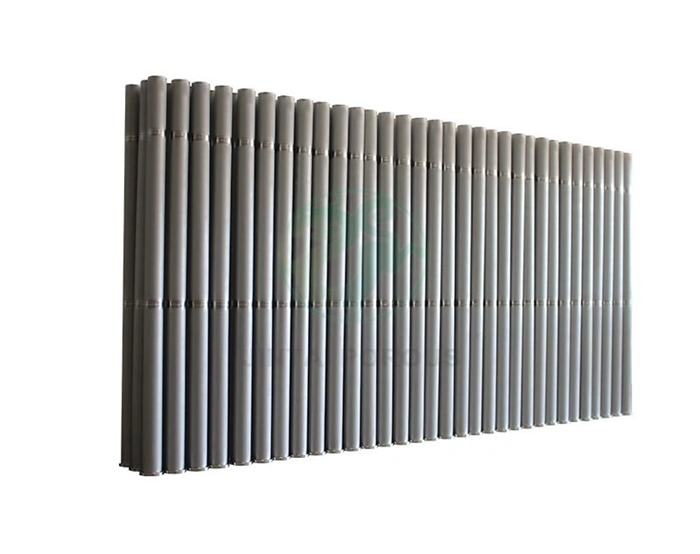
Engineers evaluating sintered porous metal filtration media must balance material compatibility with structural integrity and flow performance. Whether specifying a porous stainless steel sheet, a porous titanium sheet, or a specialized porous metal gas diffusion layer for hydrogen electrolysis, understanding pore structure dynamics and operating envelopes is essential for long-term system success.
How Sintered Porous Metal Sheets Filter Liquids and Gases
A porous metal sheet separates suspended solids or distributes fluid flows through an interconnected network of microscopic passages within a rigid metal matrix. Flow enters one face, passes through winding 3D pore paths across the sheet thickness, and exits through the opposite face.
In addition to solid-liquid/solid-gas filtration, these engineered porous media support gas sparging, micro-bubble generation, flow restriction, and electrochemical transport in hydrogen electrolyzers. Performance depends on far more than a simple nominal micron rating.
How Sintering Creates Connected Pores
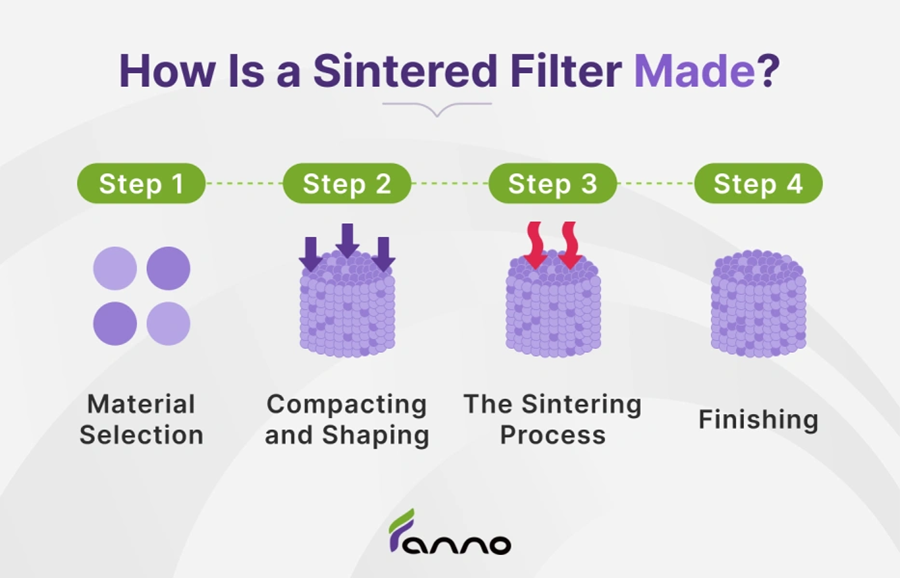
Manufactured through powder metallurgy techniques, metal powders are compacted (via rolling, pressing, or molding) and sintered in a controlled-atmosphere furnace below the metal’s melting point. Atomic diffusion bonds the contact points of adjacent metal particles, creating high mechanical strength while preserving open, interconnected channels.
- Interconnected Porosity: Only continuous, open passages extending from face to face allow fluid transport. Dead-end pores increase weight without contributing to permeability.
- Powder Size Influence: Fine powders produce smaller pores for tight particle retention at the cost of higher flow resistance; coarse powders yield high permeability for high-flow, coarse retention.
- Porosity vs. Permeability: Sintered sheets typically feature 10% to 60%+ porosity. However, two sheets with identical overall porosity can exhibit up to a 3:1 difference in fluid permeability due to variations in tortuosity and particle packing.
Surface Capture vs. Depth Capture
- Surface Capture: Contaminants larger than the pore openings build a surface filter cake at the inlet face. This cake is easily dislodged via gas/liquid backwashing.
- Depth Capture: Particles enter the three-dimensional matrix and become trapped along winding internal channels. A sintered porous stainless steel filter sheet acts primarily as a depth filter, offering far greater dirt-holding capacity than mesh screens.
Define Your Filtration Requirements
Before selecting alloys or requesting factory samples, document operating conditions to establish measurable engineering criteria:
1. Particle Removal & Outlet Cleanliness Targets
Define contaminant particle size distribution, concentration (clarification < 0.01% vs. bulk solids recovery), and required downstream ISO cleanliness codes (e.g., ISO 4406). Use **Beta Ratio** specifications (e.g., Beta 10 = 100 indicates 99% capture efficiency at 10 μm) rather than ambiguous nominal ratings.
2. Flow Rate, Fluid Viscosity & Solids Loading
- Flow Profile: Size working area for peak volumetric flow rather than average demand to prevent pressure spikes.
- Viscosity Impact: Fluid resistance scales linearly with dynamic viscosity (water = 1 cP at 21°C; doubling viscosity doubles differential pressure).
- Darcy’s Law Application: Utilize real fluid viscosity and porous medium resistance coefficients rather than clean-water data alone.
3. Temperature, Differential Pressure & Fluid Chemistry
Document normal vs. peak temperatures, pressure pulsation/hydraulic shock limits, pH, solvent aggressiveness, and surfactant content. High-temperature gas applications or severe acid exposure dictate whether 316L, Titanium, or Nickel superalloys are required.
Choose the Right Porous Metal Sheet Material
Porous Stainless Steel Sheet (316L)
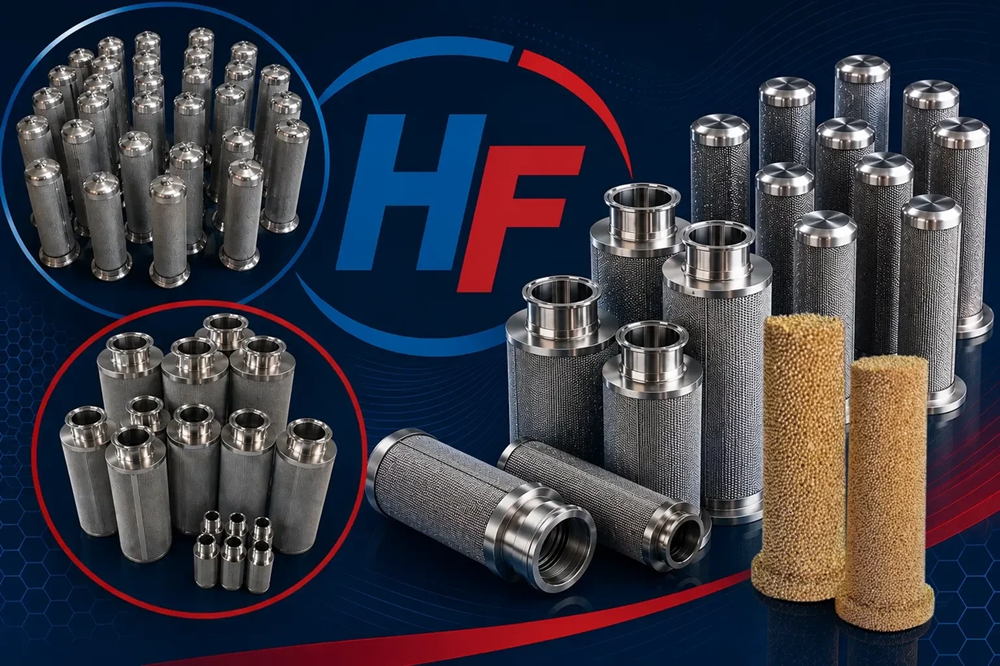
The workhorse material for general chemical, pharmaceutical, food, and beverage process filtration. Made from 316L stainless steel powder, it handles operating temperatures up to 600°C and offers broad chemical resistance and excellent weldability/fabrication properties.
Porous Titanium Sheet
Provides extraordinary strength-to-weight ratio and chemical immunity in highly corrosive environment service (e.g., wet chlorine, nitric acid, organic acids). Crucially used as porous metal gas diffusion layers (GDLs) in proton exchange membrane (PEM) water electrolyzers for hydrogen production.
Nickel & Nickel Alloys (Monel, Inconel, Hastelloy)
Engineered for severe environments where stainless steel suffers crevice corrosion or pitting. Monel handles hydrofluoric acid and marine environments, while Inconel and Hastelloy excel under extreme heat (>800°C) and strong reducing/oxidizing acids.
Sintered Bronze
A cost-effective option produced via gravity sintering of 90Cu/10Sn powder. Ideal for pneumatic mufflers, breather vents, and mild gas/oil sparging up to 200°C.
Material Comparison Table
| Material Alloy | Key Strengths | Primary Limitations | Relative Cost |
|---|---|---|---|
| 316L Stainless Steel | Broad process versatility, high strength, thermal resistance up to 600°C | Pitting risk in warm chloride/acid solutions | Moderate |
| Sintered Bronze | Low cost, high gas permeability, good impact damping | Lower tensile strength and chemical resistance limit (200°C max) | Low |
| Nickel Alloys (Hastelloy/Inconel) | Extreme high-temperature oxidation & severe chemical resistance | High raw material cost and special sintering parameters | High |
| Commercially Pure Titanium | Outstanding corrosion resistance, biocompatibility, PEM GDL performance | Requires strict vacuum sintering to prevent embrittlement | High |
Balance Pore Size Rating, Permeability, and Strength
Bubble Point Testing (ISO 4003) & Permeability (ISO 4022)
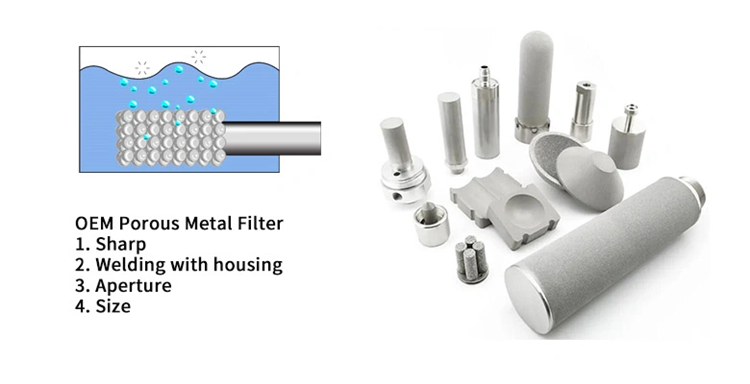
The Bubble Point Test measures the gas pressure required to force an air bubble through a liquid-saturated porous sheet, establishing the largest effective pore diameter. Permeability testing evaluates pressure differential across specified flow velocities using viscous ($α$) and inertial ($β$) resistance factors.
Mechanical Strength & Structural Limits
As porosity increases to maximize permeability, structural yield strength and burst pressure decrease. Engineers must calculate collapse/burst limits and incorporate physical support grids or perforated backings if operating under severe differential pressures or frequent pressure pulsing.
Test the Sheet and Confirm Assembly Design
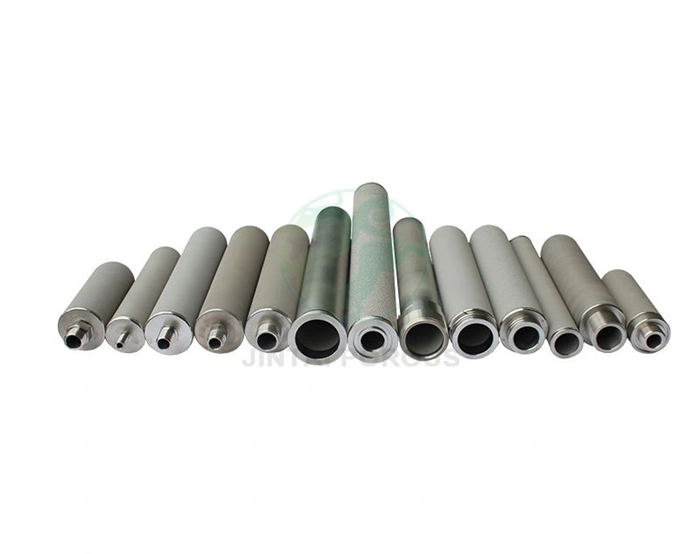
- Process Fluid Pilot Trials: Validate particle retention using actual process slurry rather than synthetic water challenges. Track pressure drop increase vs. dirt loading mass over time.
- Prevent Bypass Leaks: Inspect welded seams, edge seals, and gasket interfaces. A minor peripheral seal leak degrades downstream fluid purity regardless of sheet quality.
Plan Cleaning Strategy and Compare Lifetime Costs
Sintered metal porous sheets are inherently reusable. Surface filter cakes dislodge cleanly via reverse liquid/gas backwashing or high-pressure blowback pulses. For depth-trapped organic or inorganic foulants, off-line chemical soaking, solvent washing, or ultrasonic bath cleaning fully restores permeability.
When evaluated over a 5-to-10-year operational lifecycle, the cleanability, thermal resilience, and structural permanence of backwashable sintered metal sheets provide dramatic cost savings compared to frequent disposable polymer or paper filter cartridge replacements.
Conclusion
Selecting the optimal sintered porous metal sheet requires matching media pore size ratings, permeability coefficients, and alloy chemistry to your specific process envelope. Whether engineering a 316L stainless steel process filter or a titanium gas diffusion sheet for hydrogen electrolyzers, JHMIM provides custom porous sheet fabrication, bubble-point testing, and engineering DFM review. Contact JHMIM today for technical guidance and custom quotes.