
OEM Custom Sintered Titanium Parts | Precision Titanium MIM Components
Key Takeaways
Custom titanium Metal Injection Molding (TiMIM) delivers efficient, high-repeatability production for small, complex titanium components when alloy chemistry, atmosphere control, and surface finishing align with OEM design requirements.
- Material Selection: Choose Ti-6Al-4V (Grade 5) for high strength-to-weight performance and fatigue resistance; select CP-Ti (Commercially Pure) for biocompatibility, ductility, and superior corrosion resistance.
- Atmosphere Control: Vacuum or high-purity argon sintering prevents interstitial oxygen, nitrogen, and carbon contamination, maintaining high tensile ductility.
- Up to 50% Material Cost Savings: Near-net shape forming eliminates expensive titanium chip waste compared to traditional multi-axis CNC milling.
- Full Densification (96%–99%+): Optional Hot Isostatic Pressing (HIP) closes residual micro-porosity, maximizing fatigue life for critical medical and aerospace applications.
- Precision Tolerances (±0.01 mm / ±0.3%): Advanced mold shrinkage compensation, 3D CMM inspection, and optional CNC touch-ups ensure tight dimensional control.
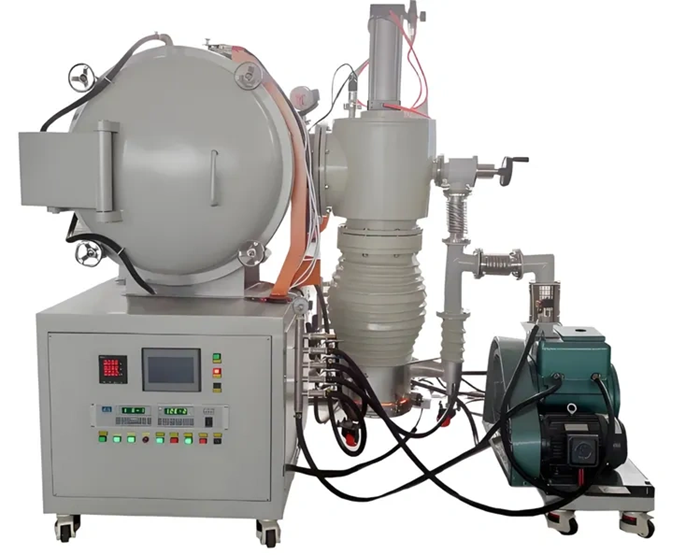
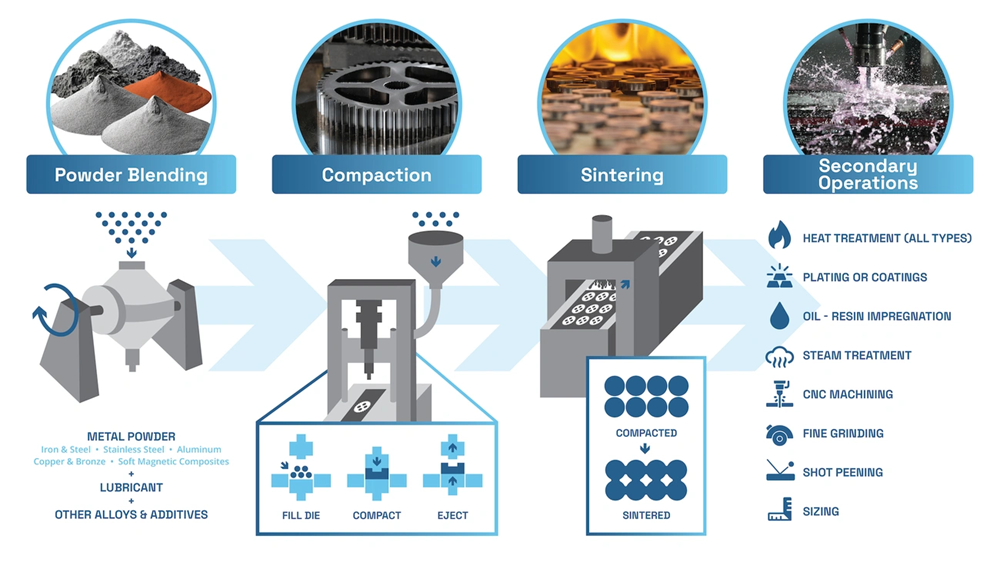
Small, intricate titanium components often require multiple multi-axis setups when machined from solid bar stock, especially when features include thin walls, complex 3D contours, internal splines, or cross-holes. Titanium Metal Injection Molding (TiMIM) overcomes these traditional machining limitations by blending spherical titanium powder with a customized binder system to mold near-net shape parts before debinding and high-temperature vacuum sintering.
Sintering temperatures typically range between 1,100°C and 1,500°C in vacuum or ultra-pure argon environments. Precise thermal profiling enables solid-state atomic diffusion while preventing grain growth and warping, delivering stable net-shape production for medical, aerospace, consumer electronics, and marine applications.
Material Advantages: Commercially Pure Titanium (CP-Ti) vs. Ti-6Al-4V (Grade 5)
Material selection determines whether sintered titanium components prioritize structural load bearing, biological tissue integration, or extreme chemical durability. JHMIM offers both Grade 5 and commercially pure compositions:
Ti-6Al-4V (Grade 5): Extreme Strength-to-Weight Ratio & High Fatigue Strength
Ti-6Al-4V is an alpha-beta titanium alloy containing 6% aluminum and 4% vanadium. With a low density of 4.43 g/cm³, annealed Ti-6Al-4V exhibits ultimate tensile strengths ranging from 900 to 1,200+ MPa. It delivers outstanding structural performance for high-stress aerospace fasteners, surgical tools, and marine hardware. Post-sintering Hot Isostatic Pressing (HIP) elevates high-cycle fatigue strength up to 550–600 MPa by eliminating internal pores.
Commercially Pure Titanium (CP-Ti): Biocompatibility & Exceptional Corrosion Resistance
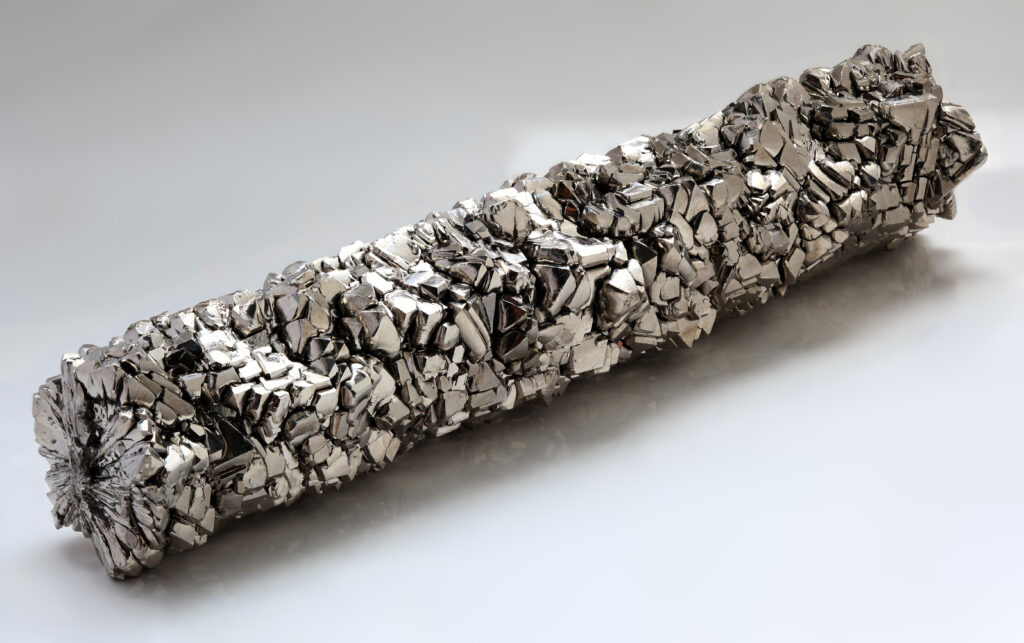
CP-Ti is ideal for sintered titanium medical implants requiring excellent biological compatibility and oxide passive film protection. Featuring tensile strengths around 465 MPa, CP-Ti contains no aluminum or vanadium, making it perfectly suited for orthopedic bone plates, dental fixtures, and marine enclosures exposed to aggressive chemical media.
Oxygen, Nitrogen & Carbon Control for High-Ductility Titanium Components
Interstitial elements (O, N, C) act as potent alpha-phase strengtheners in titanium. However, excessive oxygen pickup severely impairs ductility and impact toughness. Strict vacuum control (<10−&sup4; mbar) and ultra-pure argon flushing keep oxygen uptake below critical thresholds, preserving high elongation in finished components.
High-Density Vacuum Sintering & Near-Net Shape Manufacturing
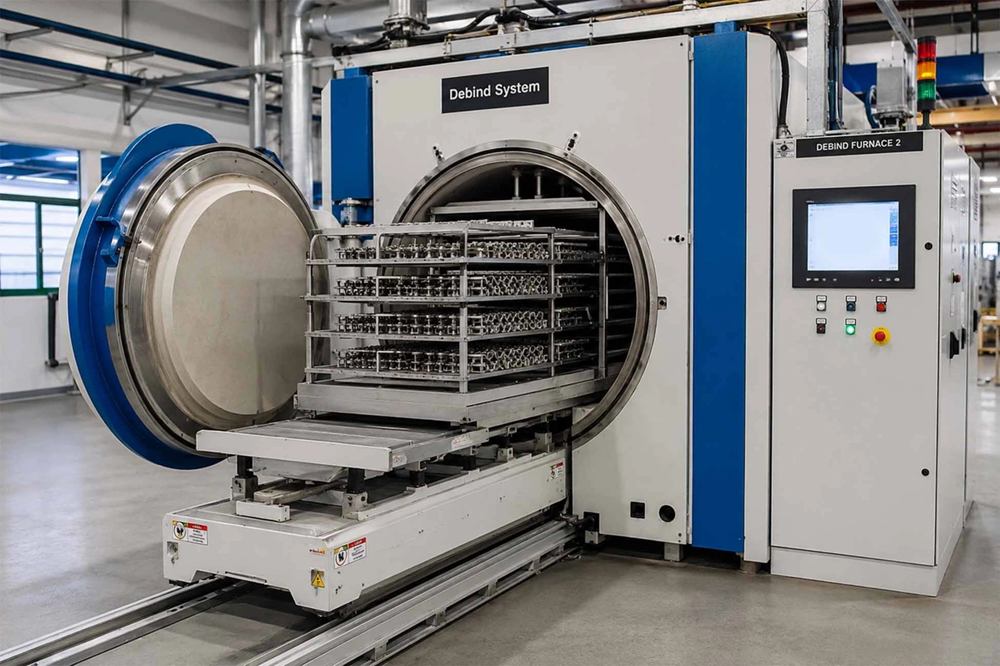
Strictly controlled furnace parameters dictate whether sintering titanium powder yields a fully consolidated, ductile component or a brittle part contaminated by residual gases.
Vacuum & High-Purity Argon Atmosphere to Eliminate Interstitial Contamination
Titanium exhibits extreme chemical reactivity above 400°C. High-purity argon (99.999% purity) and deep vacuum sintering protect green parts during thermal debinding and high-temperature hold stages, eliminating surface oxidation and embrittlement.
Achieving 96%+ Sintered Density & HIP (Hot Isostatic Pressing) Post-Treatment
Optimized thermal processing achieves 96% to 98% as-sintered theoretical density. For critical structural applications, secondary Hot Isostatic Pressing (HIP) subjects components to simultaneous high temperature and high inert gas pressure (e.g., 900°C at 100+ MPa), closing isolated internal voids and pushing final density above 99.5%.
Complex 3D Geometries with Up to 50% Titanium Material Cost Savings vs. CNC Milling
Traditional titanium CNC machining can waste up to 80%–90% of raw billet weight as unrecyclable chips. Titanium MIM achieves 95%+ material utilization, lowering raw material expenditure and cutting unit production costs by up to 50% for high-volume complex parts.
Key Custom Sintered Titanium Applications & Industries
Medical Implants, Orthopedic Devices & Surgical Instruments
CP-Ti and Grade 5 TiMIM components are widely used in spinal fixation brackets, bone screws, dental implants, surgical forceps joints, and electrosurgical tips. Precision tooling enables micro-components weighing under 0.05 grams with complex ergonomic contours.
Aerospace Fasteners, Marine Hardware, Watch Cases & Consumer Electronics
- Aerospace: Lightweight bracketry, hydraulic latches, and specialty fasteners that reduce airframe weight.
- Marine: Corrosion-proof shackles, swivels, and underwater housing connectors.
- Consumer Electronics & Luxury Goods: Premium watch cases, smartwatch bezels, camera ring housings, and smartphone hinges requiring high strength and premium tactile feel.
Quality Control, Tight Tolerances & Advanced Surface Finishing
Shrinkage Compensation & CMM Inspection for Tight Tolerances (±0.01 mm / ±0.3%)
Titanium MIM parts experience predictable volumetric shrinkage (15%–20%) during sintering. Precise tooling magnification and computer-controlled sintering maintain strict dimensional stability within ±0.01 mm or ±0.3%. Optical comparators and 3D CMM inspection verify critical datums against CAD models.
Surface Treatments: Anodizing, PVD Coating, Electro-Polishing & CNC Touch-Ups
- Color Anodizing: Creates protective, color-coded oxide layers for surgical tools and consumer hardware.
- PVD Coating: Deposits ultra-hard coatings (TiN, DLC) for extreme wear resistance.
- Electro-Polishing: Refines surface finish down to smooth, hygienic Ra < 0.4 μm levels.
- CNC Secondary Machining: Precision tapping, reaming, and facing for high-tolerance mating surfaces.
Free DFM Engineering Review & Fast Quote Processing in 24 Hours
Our engineering team evaluates wall uniformity, gate locations, draft angles, and post-machining allowances. Submit your 3D CAD files today to receive a comprehensive Design for Manufacturability (DFM) report and quote within 24 hours.
Frequently Asked Questions (FAQs)
Q1. How are custom titanium MIM parts produced?
Fine spherical titanium powder is blended with a polymer binder, injected into a precision mold, debound through solvent/thermal processes, and sintered in a vacuum furnace to form a dense metal part.
Q2. What is the difference between CP-Ti and Ti-6Al-4V for sintered parts?
CP-Ti offers maximum corrosion resistance, ductility, and biocompatibility for medical implants. Ti-6Al-4V (Grade 5) adds aluminum and vanadium for higher tensile strength (900+ MPa) and fatigue resistance in high-stress applications.
Q3. How much cost savings can Titanium MIM offer compared to CNC milling?
Titanium MIM can achieve up to 50% cost savings over multi-axis CNC milling by eliminating costly raw titanium chip waste and reducing expensive machine cycle times on high-volume production runs.
Q4. What density level can sintered titanium achieve?
Standard vacuum sintering achieves 96% to 98% theoretical density. When combined with Hot Isostatic Pressing (HIP), final density exceeds 99.5%, approaching the mechanical performance of wrought titanium.
Q5. What surface finishing options are available for titanium MIM components?
Available finishes include Type II/III color anodizing, PVD wear-resistant coatings, electro-polishing, bead blasting, mirror polishing, and CNC precision secondary machining.
Conclusion
Custom sintered titanium production provides an efficient, near-net shape solution for manufacturing complex 3D titanium components with zero material waste. Whether producing CP-Ti medical implants or Ti-6Al-4V aerospace hardware, JHMIM delivers complete manufacturing solutions backed by strict atmosphere control and rigorous quality assurance. Contact JHMIM today for a free DFM review and a fast quote.