
OEM Custom MIM Door Lock Parts | Precision Sintered Lock Components
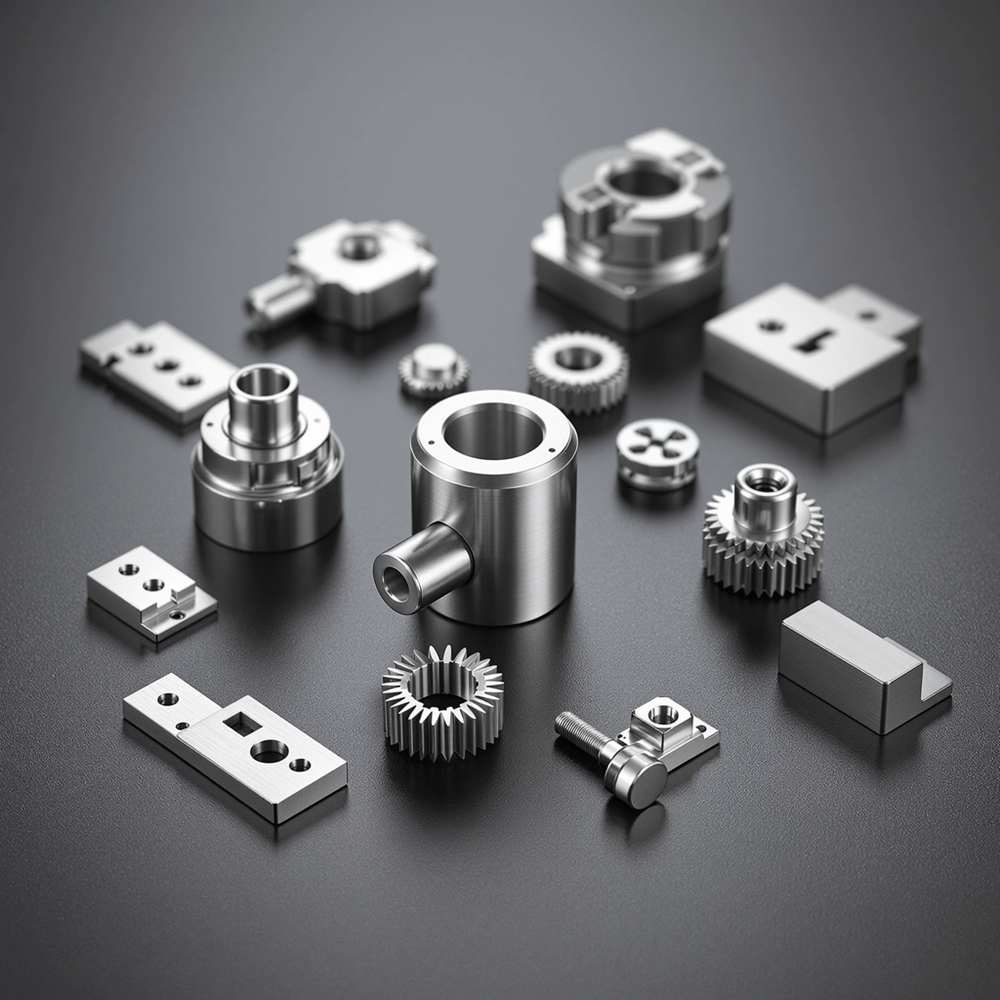
Metal Injection Molding (MIM) manufactures high-precision door lock parts engineered for high-security, smart, and heavy-duty mechanical locking systems. The MIM process combines powder metallurgy with injection molding versatility to produce net-shape sintered steel components with complex 3D geometries that are extremely difficult or cost-prohibitive to achieve through multi-axis CNC machining.
Global security hardware OEMs rely on MIM door lock parts for both residential smart locks and commercial security hardware. MIM technology allows designers to integrate thin walls (0.5 mm to 6 mm), cross-holes, spring retention grooves, and undercut features into single-shot parts. This design freedom eliminates multi-piece sub-assemblies while maintaining exceptional batch-to-batch dimensional accuracy across high-volume OEM production runs.
MIM lock components achieve uniform density (95%–99%) throughout complex sections, translating directly to consistent impact toughness and anti-shear strength in high-security applications where anti-theft and anti-prying durability are essential.
MIM Process & Material Advantages for Door Lock Components
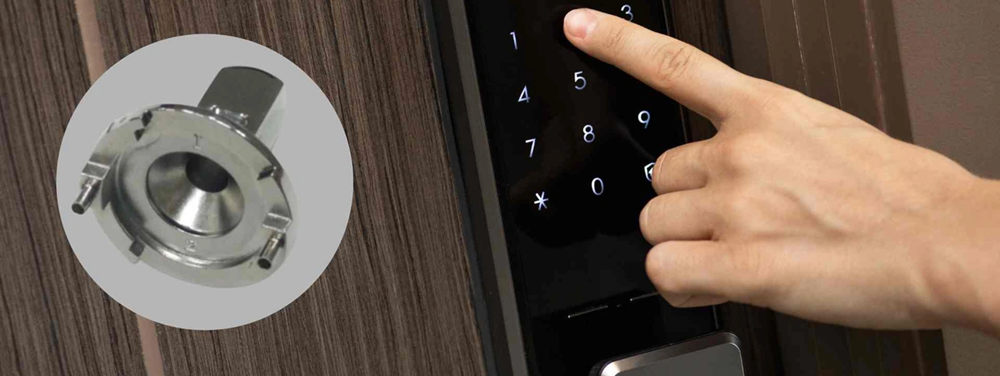
Four-Stage MIM Cycle & Tight Tolerances (±0.3% / ±0.01 mm)
The MIM manufacturing process follows a four-stage sequence: feedstock preparation, multi-cavity injection molding, solvent/catalytic debinding, and high-temperature vacuum sintering. Ultra-fine metal powders (<20 µm) are blended with thermoplastic binder systems. Injection molding forms “green parts” with a 16%–22% scale allowance for sintering shrinkage.
High-temperature sintering at 85%–90% of the alloy’s melting point achieves dense atomic bonding while maintaining tight dimensional tolerances of ±0.3% or up to ±0.01 mm on critical mounting faces. Coordinate Measuring Machine (CMM) inspection verifies GD&T specifications across high-volume production cycles.
High Sintered Density (95%–99%) for Anti-Theft Shear Strength
Density directly determines the mechanical performance of lock hardware. MIM components achieve 95% to 99% theoretical density, closing internal porosity and delivering mechanical properties comparable to wrought metals. Stainless steel lock hardware manufactured by MIM exhibits tensile strengths exceeding 500–1,190 MPa, providing critical resistance to prying, drilling, and high-impact physical forces.
Material Selection: 17-4PH, 316L Stainless Steel & MIM-4605 Low Alloy
JHMIM offers tailored material compositions to match functional and environmental requirements:
- 17-4PH Stainless Steel: Heat-treated to H900 condition to reach 1,190 MPa tensile strength and high surface hardness. Ideal for high-stress smart lock actuators, latch bolts, and drive cams.
- 316L Stainless Steel: Delivers superior corrosion resistance and high ductility (>45% elongation) for exterior architectural locksets and coastal applications.
- MIM-4605 Low Alloy Steel: Offers excellent heat-treatability (HRC 48–55) for interior lock mechanisms at a 30%–40% cost reduction compared to stainless grades.
Key Custom MIM Door Lock Components We Manufacture
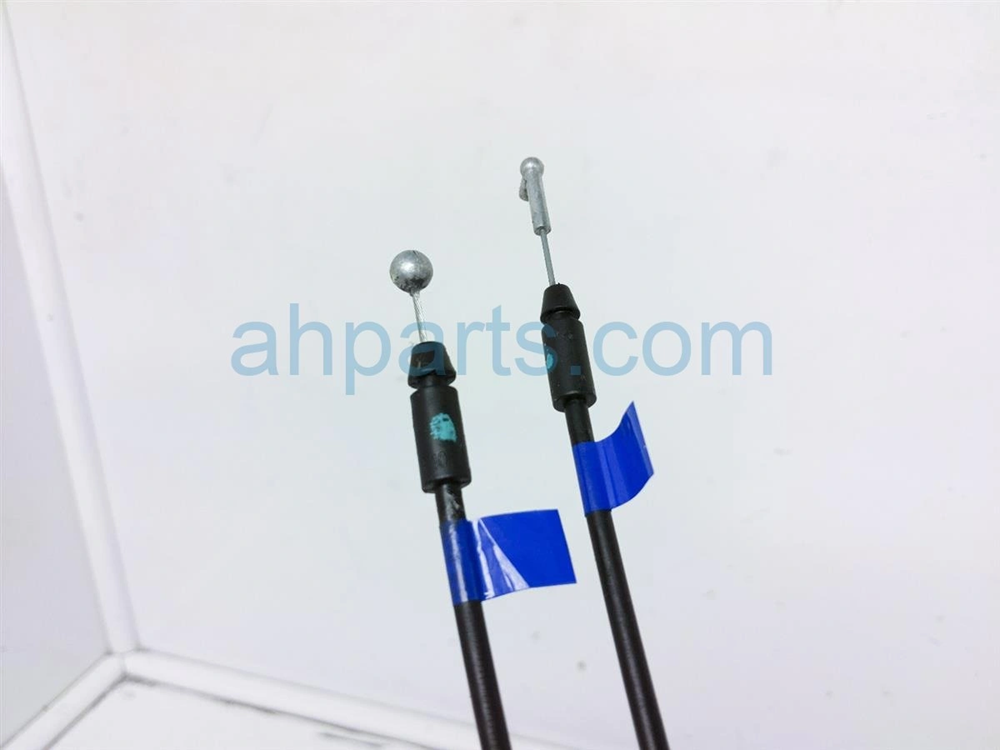
Smart Lock Cams, Actuators, Clutch Pawls & Motorized Gears
Modern motorized smart locks demand compact drive components. JHMIM produces bevel gears, worm gears (modules 0.3 to 0.6), clutch pawls, and actuator slides that integrate electronic authentication with smooth mechanical bolt throw. Net-shape molding forms internal splines and helical gear teeth without secondary gear hobbing.
Heavy-Duty Latch Bolts, Deadbolts & Lock Cylinder Cores
Sintered latch bolts exceed ANSI/BHMA Grade 1 performance standards, enduring over 1,000,000 operational cycles and lateral loads up to 1,200 N. Lock cylinder cores feature pre-formed pin chambers, keyway slots, and cross-bores molded directly into the component body.
Padlock Shackles, Retention Hardware & Complex Internal Levers
MIM manufactures cut-resistant padlock shackles in 17-4PH stainless steel alongside intricate internal cam levers, security screws, and locking nuts. Complex multi-axis features are formed in a single shot, replacing multi-step machining and assembly processes.
Performance Benefits: Cost Reduction, High Hardness & Surface Finishing
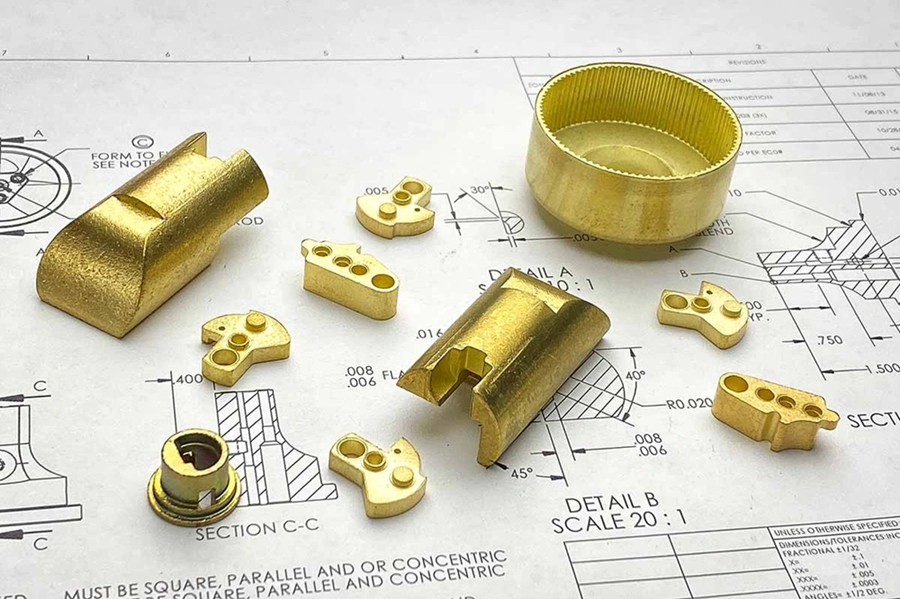
Up to 40% Cost Savings vs. Multi-Axis CNC Milling & Casting
MIM achieves over 95% raw material utilization compared to traditional CNC machining, which wastes 30% to 50% of alloy stock as chips. For annual volumes exceeding 10,000 units, MIM delivers 30% to 50% cost reductions over CNC milling and investment casting.
Heat Treatment (HRC 40–58) & Advanced Surface Finishing
Post-sintering heat treatments—including vacuum carburizing and precipitation hardening—achieve surface hardness from HRC 40 to 58 for maximum wear and drill resistance. Available surface finishes include:
- PVD Coating: Provides wear-resistant, decorative finishes (TiN, Black PVD) for high-end smart lock hardware.
- Passivation & Black Oxide: Enhances corrosion resistance on stainless steel and alloy lock parts.
- Mechanical Polishing: Refines surface roughness from Ra 1.6 µm down to mirror finishes below Ra 0.2 µm.
Micro Component Capability: 0.1g to 100g High-Volume Consistency
JHMIM manufactures micro-components from 0.1 g drive pawls up to 100 g structural lock bodies. Multi-cavity tooling ensures tight dimensional repeatability across millions of units.
OEM Customization, ISO Quality Compliance & Free DFM Engineering
Multi-Cavity Precision Tooling & CMM Inspection
Production tooling utilizes multi-cavity layouts designed with balanced runner systems to maintain identical pressure and thermal distribution. Every production batch undergoes 3D CMM inspection, optical comparator verification, and metallurgical density testing in accordance with ISO 9001:2015 and IATF 16949 standards.
Free DFM Engineering Review & Fast Quotation in 24 Hours
Our engineering team provides comprehensive Design for Manufacturability (DFM) analysis prior to tooling fabrication. We analyze wall thickness uniformity, gate placement, draft angles, and sintering shrinkage to lower tooling costs and improve dimensional stability. Submit your 3D CAD drawings today to receive a detailed quotation within 24 hours.
Conclusion
Metal Injection Molding offers an ideal combination of geometric complexity, high density, and cost efficiency for OEM door lock manufacturing. By achieving 98% sintered density and excellent heat-treatment response, MIM components deliver the anti-theft durability required by modern security hardware. Contact JHMIM today for a free DFM review and fast quote on your custom lock hardware project.
Metal Injection Molding maintains dimensional tolerances of ±0.3% or up to ±0.01 mm for critical features through controlled sintering shrinkage, precision tooling, and CMM verification.
Common materials include 17-4PH stainless steel (tensile strength up to 1,190 MPa), 316L stainless steel for maximum corrosion resistance, and MIM-4605 low alloy steel for heat-treated, cost-effective interior components.
MIM offers 30% to 50% cost savings over multi-axis CNC machining in mass production by achieving 95%+ material utilization and eliminating multi-pass tooth milling or hobbing operations.
Through secondary precipitation hardening or carburizing heat treatments, MIM components achieve surface hardness levels between HRC 40 and 58 to resist wear, drilling, and prying forces.
MIM can produce lock components ranging from 0.1 g miniature clutch pins and pawls up to 100 g heavy-duty deadbolt assemblies and lock housing structures.