
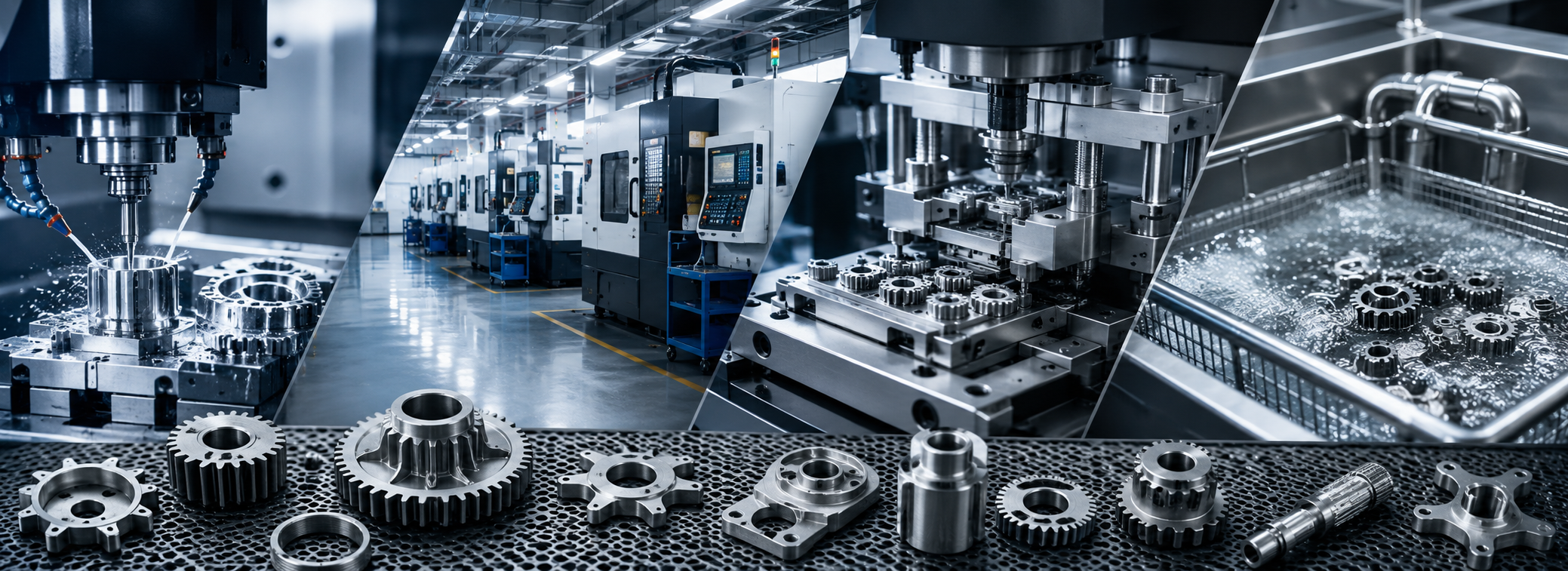
Mechanical & Sizing Capabilities
We execute precision CNC turning and milling, hydraulic part sizing, and surface grinding to correct minor sintering distortions and lock in ultra-tight tolerances for complex automotive and robotic components.
| Secondary Operation | Technical Thresholds | Target PM/MIM Components |
| Automatic Sizing & Coining | Tolerances held within ±0.005 mm | Self-lubricating bushings, micro-gears, shock absorber rings |
| Multi-Axis CNC Machining | Turning, milling, drilling, and tapping | Helical gears, structural flanges, actuator valves, shafts |
| Vibratory Finishing & Deburring | Surface roughness down to Ra 0.4 μm | Aesthetic consumer electronics, internal pump rotors |
Surface Enhancement Methods
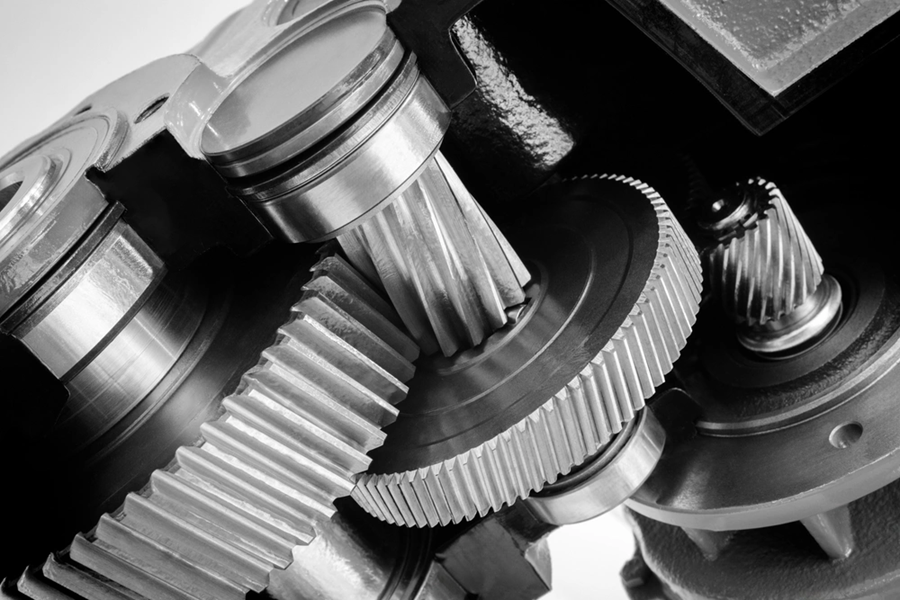
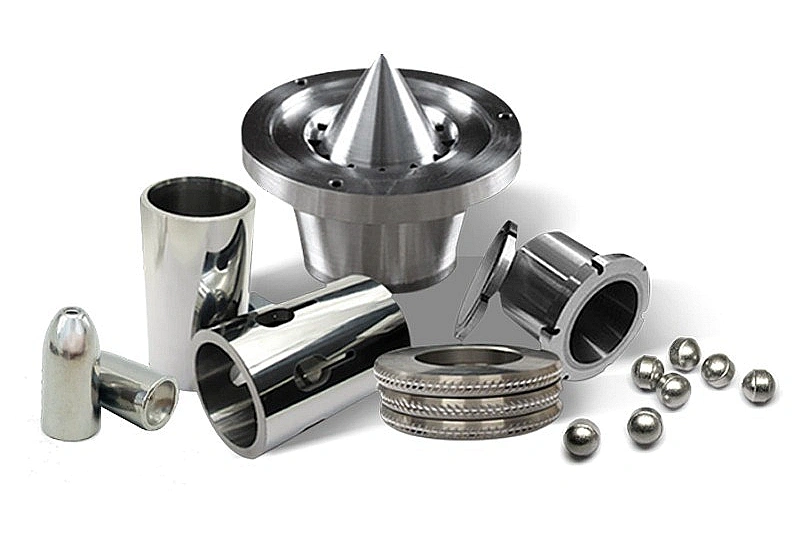
Enhance your components with targeted steam treatment, controlled hardening, and vacuum oil impregnation engineered to seal residual porosity and maximize wear resistance in high-friction environments.
| Modification Process | Material Properties Gained | Engineering Value |
| Controlled Steam Treatment | Forms a 3−5 μm dense Fe3O4 iron oxide layer | Increases surface hardness, seals interconnected pores, prevents internal rust |
| Vacuum Oil Impregnation | 90%+ pore saturation with synthetic lubricants | Enables lifetime self-lubrication for rotating bearings and fans |
| Case Hardening & Nitriding | Hardness depths up to 0.3 mm, up to 60 HRC | Prevents premature wear in heavy-duty sprockets and clutch paws |
Advanced Coating Solutions
We apply specialized Dacromet coatings, zinc flaking, and copper infiltration to deliver superior salt-spray corrosion resistance and structural density for industrial hardware.
-
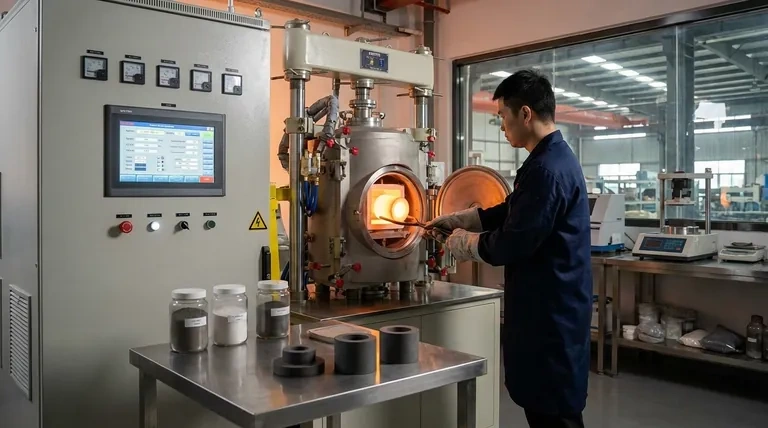
Copper Infiltration : For iron-based components subjected to severe tensile stress, we melt copper particles into the matrix pores during or after sintering. This elevates density to ≥ 7.2 g/cm, improves thermal conductivity, and prevents liquid plating entrapment.
-
Dacromet & Zinc Flake Coating : When standard electroplating risks hydrogen embrittlement in porous PM parts, our non-electrolytic Dacromet coating provides a uniform barrier. It easily passes a 500-hour salt spray test, making it ideal for marine and heavy automotive applications.
While CNC machining cuts away material, hydraulic sizing (coining) plastically deforms the sintered component inside a precision die. This not only achieves a ±0.005mm tolerance efficiently but also compresses and smooths the inner wall, which preserves the capillary network needed for oil retention in self-lubricating bushings.
Porous sintered steel can trap moisture inside its interconnected pores, leading to internal oxidation. Our controlled steam treatment reacts high-temperature steam with iron to form a uniform Fe3O4 (magnetite) coating inside the inner pores. This layer seals the porosity, increases surface compressive strength, and drastically improves wear resistance.
Standard electroplating is highly risky for raw PM parts because the corrosive plating acids can become trapped inside the micro-pores via capillary action, causing internal “bleeding” and rust later. To prevent this, we recommend either copper infiltration or resin impregnation to seal the surface pores before any electrolytic plating, or switching directly to a Dacromet coating.