

Cracks in tungsten alloy MIM components can be attributed to several key causes. Understanding these causes of cracks is essential for manufacturers aiming to enhance product quality and durability. Some of the most common contributors include:
- Material Selection: Inappropriate alloy choices can increase brittleness.
- Cooling Rates: Rapid or uneven cooling can lead to thermal stresses.
- Wall Thickness: Excessive thickness may cause uneven shrinkage.
- Design Flaws: Sharp corners can create stress points.
- Debinding Process: Improper methods can leave residual stresses.
Addressing these causes of cracks will help mitigate the risk during manufacturing.
Key Takeaways
- Choose the right alloy to avoid brittleness and enhance durability.
- Control cooling rates to prevent thermal stresses that can lead to cracks.
- Design components with smooth transitions and rounded corners to reduce stress points.
- Ensure uniform feedstock quality for consistent mechanical properties and fewer defects.
- Monitor temperature and injection speed during the molding process to minimize defects.
- Implement effective debinding methods to manage residual stresses and prevent cracking.
- Maintain optimal sintering temperatures to achieve desired mechanical properties without overheating.
- Use surface treatments to enhance wear resistance and reduce the risk of crack initiation.
Manufacturing Process Overview
Metal Injection Molding (MIM) serves as a crucial technique for producing tungsten alloy components. This process combines the versatility of plastic injection molding with the precision of powder metallurgy. Manufacturers utilize MIM to create complex shapes with high dimensional accuracy. The process involves several key steps that ensure the final product meets stringent quality standards.
Metal Injection Molding (MIM) Basics
The MIM process consists of four main steps:
| Step | Description |
|---|---|
| Feedstock Preparation | Combining metal powders with a binder system to create a flowable mixture for injection molding. |
| Injection Molding | Injecting the prepared feedstock into a mold under controlled conditions to form the desired shape. |
| Debinding | Removing the binder from the molded part to create a porous metal structure. |
| Sintering | Heating the debound part to bond metal particles and achieve the final dense component. |
Each step plays a vital role in determining the quality and integrity of the final product. For instance, during feedstock preparation, the selection of metal powders and binder materials significantly influences the flowability and consistency of the mixture. This consistency is essential for achieving uniformity in the injection molding phase.
Importance of Process Control
Effective process control is paramount in the MIM manufacturing process. Manufacturers must monitor and regulate various parameters to minimize defects, including cracks. Key factors include:
- Temperature Control: Maintaining optimal temperatures during injection molding and sintering prevents thermal stresses that can lead to cracks.
- Injection Speed: Adjusting the speed of injection can influence the filling of the mold and the distribution of the feedstock, impacting the final component’s integrity.
- Cooling Rates: Uniform cooling is essential to avoid thermal gradients that may induce stress and result in cracking.
By implementing stringent process controls, manufacturers can significantly reduce the likelihood of defects. Continuous monitoring and adjustments throughout the MIM process ensure that each component meets the required specifications. This proactive approach not only enhances product quality but also improves overall efficiency in production.
Causes of Cracks in Feedstock Quality
The quality of feedstock plays a pivotal role in the integrity of tungsten alloy MIM components. Variations in material composition and feedstock uniformity can lead to significant issues, including cracks. Understanding these factors is essential for manufacturers aiming to produce high-quality components.
Material Composition
Material composition directly influences the mechanical properties of the final product. Two critical aspects of material composition are powder size and binder materials.
Influence of Powder Size
The size of metal powders affects the flowability and packing density of the feedstock. Smaller powder particles tend to enhance the flow characteristics, allowing for better filling of the mold. This improved flowability leads to more uniform shrinkage during the sintering process. Conversely, larger particles may create voids and inconsistencies, increasing the likelihood of defects, including cracks.
Role of Binder Materials
Binders serve as a crucial component in the feedstock, providing cohesion among metal powders. The choice of binder materials can significantly impact the mechanical properties of the final component. A well-formulated binder system ensures that the feedstock maintains its integrity during the injection molding and debinding processes. If the binder fails to adequately support the metal powders, it can lead to uneven shrinkage and residual stresses, which are common causes of cracks.
Feedstock Uniformity
Uniformity in feedstock is vital for achieving consistent mechanical properties and minimizing defects. Variations in feedstock can lead to significant issues during the manufacturing process.
Impact on Flowability
Feedstock uniformity affects the flowability of the mixture. A homogeneous feedstock allows for smooth injection into the mold, ensuring that all areas receive adequate material. In contrast, inconsistencies in the feedstock can lead to uneven filling, resulting in weak spots that are prone to cracking.
Consequences of Inconsistencies
Inconsistencies in feedstock can also impact the microstructure and density of the final component. For instance, variations in particle size or material purity can lead to differences in mechanical performance. Fine metal powders with spherical morphology improve flow characteristics and promote uniform shrinkage, enhancing mechanical properties. Additionally, material purity, particularly concerning oxygen and carbon content, is crucial for optimal mechanical performance and influences crack resistance.
By addressing these factors related to feedstock quality, manufacturers can significantly reduce the causes of cracks in tungsten alloy MIM components, leading to improved product reliability and performance.
Causes of Cracks in the Molding Process

The molding process plays a critical role in the formation of tungsten alloy MIM components. Various factors during this stage can lead to cracks, impacting the overall quality and performance of the final product. Understanding these factors helps manufacturers implement effective strategies to minimize defects.
Molding Techniques
Molding techniques significantly influence the integrity of the final component. Two key aspects of molding techniques are injection speed and temperature control.
Injection Speed Effects
Injection speed affects how the feedstock fills the mold. A rapid injection can lead to turbulence, causing air entrapment and uneven material distribution. This inconsistency can create weak points in the molded part, increasing the risk of cracks. Conversely, a slower injection speed allows for better flow and reduces the likelihood of defects.
| Factor | Description | Impact on Cracks |
|---|---|---|
| Corner Radii | Reduces stress concentration | Helps prevent cracks and weak points |
Manufacturers should carefully adjust injection speeds to optimize the filling process and minimize the potential for cracks.
Temperature Control
Temperature control during the molding process is essential. Maintaining optimal temperatures prevents thermal stresses that can lead to cracking. If the temperature is too low, the feedstock may not flow properly, resulting in incomplete filling of the mold. On the other hand, excessive temperatures can degrade the binder, leading to poor adhesion between metal powders.
Mold Design Considerations
Mold design is another critical factor that influences the occurrence of cracks in tungsten alloy MIM components. Key considerations include geometric complexity and cooling rate variations.
Geometric Complexity
Complex mold geometries can create challenges during the injection process. Sharp corners and intricate designs may lead to stress concentrations, increasing the likelihood of cracks. Manufacturers should strive for designs that incorporate smooth transitions and rounded corners to distribute stress more evenly.
| Critical Factor | Description |
|---|---|
| Precision and Dimensional Tolerances | Precision is essential in MIM mold design due to stringent tolerances required in final parts, affecting the quality of the sintered part. |
| Shrinkage and Distortion | MIM parts experience significant shrinkage during debinding and sintering, necessitating mold design to compensate for this to avoid dimensional defects. |
| Ejection System | A precise ejection design is crucial to prevent breakage or cracking during part extraction, as the molded part is made from a non-flexible material. |
Cooling Rate Variations
Cooling rates during the molding process can also contribute to crack formation. Uneven cooling can create thermal gradients, leading to internal stresses. Manufacturers should design molds that promote uniform cooling to minimize these risks. Implementing cooling channels within the mold can help achieve consistent temperatures throughout the component.
By addressing these molding techniques and design considerations, manufacturers can significantly reduce the causes of cracks in tungsten alloy MIM components, enhancing product reliability and performance.
Causes of Cracks in the Debinding Process
The debinding process is critical in the production of tungsten alloy MIM components. This stage involves removing the binder material from the molded part, which can significantly influence the final product’s integrity. Improper debinding can lead to cracks, affecting the overall quality of the component.
Debinding Methods
Manufacturers typically employ two primary debinding methods: thermal debinding and solvent debinding. Each method has its advantages and challenges.
Thermal Debinding
Thermal debinding involves heating the molded part to remove higher molecular weight binder components. However, fast heating rates during this process can lead to defects such as cracking. Rapid decomposition of binder components can create internal stresses. To mitigate these risks, manufacturers should maintain a slow heating rate. Thermogravimetric analysis (TGA) results indicate that controlled heating prevents rapid binder decomposition, reducing the likelihood of cracks.
Solvent Debinding
Solvent debinding dissolves lower molecular weight binder components, creating interconnected pores. This structure facilitates the escape of remaining binder during thermal treatment. This method can be particularly effective when combined with thermal debinding. A two-step debinding process, which incorporates both solvent and thermal debinding, minimizes part distortion and thermal stresses. This approach allows for a significant portion of the binder to be removed in the first step, enhancing the overall integrity of the component.
Residual Stress Management
Residual stresses can accumulate during the debinding process, leading to cracks in the final product. Effective management of these stresses is essential for maintaining component integrity.
Stress Accumulation Risks
During debinding, uneven removal of the binder can create localized stresses. These stresses may result from variations in binder composition or inconsistencies in the debinding process. If not managed properly, these accumulated stresses can lead to cracks during subsequent processing steps, such as sintering.
Mitigation Strategies
To mitigate the risks associated with residual stress, manufacturers can implement several strategies:
- Use slow heating rates during thermal debinding to prevent rapid binder decomposition.
- Increase gas flow rates to help carry away decomposed gases.
- Implement supports or fixtures for intricate sections to reduce cracking.
By adopting these strategies, manufacturers can significantly reduce the causes of cracks during the debinding process, leading to improved product reliability and performance.
Causes of Cracks in the Sintering Process
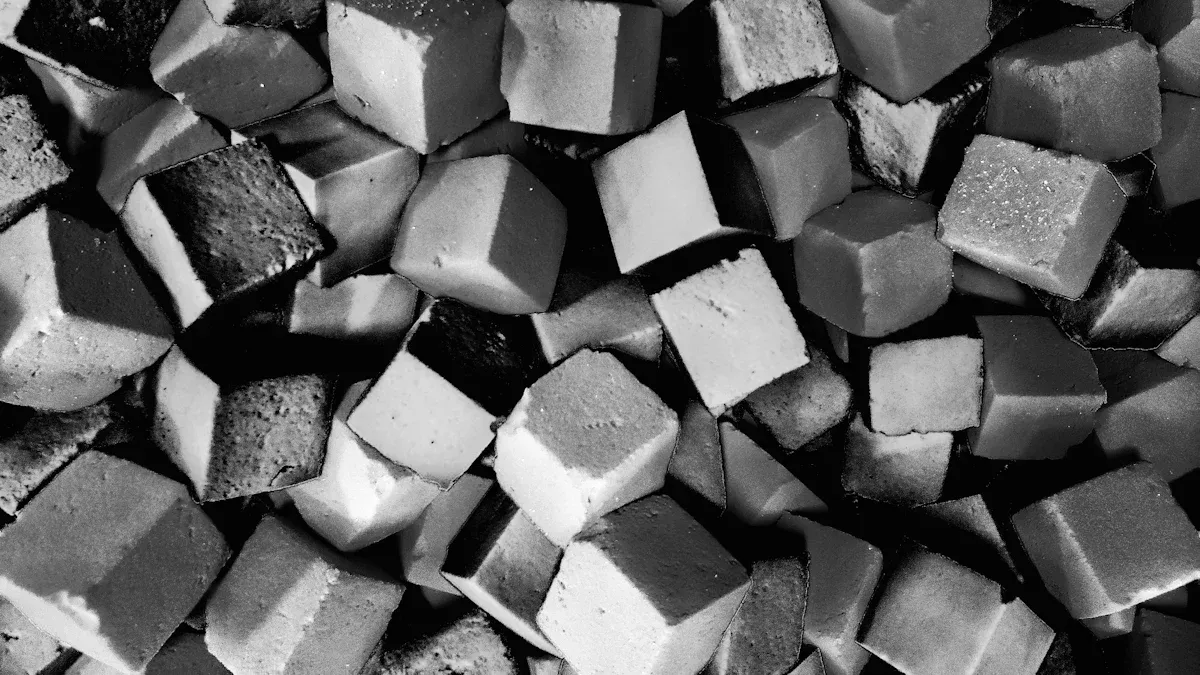
The sintering process is critical in determining the final properties of tungsten alloy MIM components. Several factors during this stage can lead to cracks, impacting the overall quality and performance of the final product. Understanding these factors helps manufacturers implement effective strategies to minimize defects.
Sintering Temperature
Sintering temperature plays a vital role in the densification of metal powders. Maintaining optimal temperature ranges is essential for achieving the desired mechanical properties and minimizing the risk of cracks.
Optimal Temperature Ranges
Manufacturers typically aim for specific temperature ranges during sintering. For tungsten alloys, these ranges often fall between 1400°C and 1600°C. Operating within this range allows for effective bonding of metal particles while avoiding excessive grain growth. Proper temperature control ensures that the material achieves the necessary density without compromising its structural integrity.
Effects of Overheating
Overheating during the sintering process can lead to detrimental effects. Excessive temperatures may cause grain growth, resulting in a reduction in mechanical strength. Additionally, overheating can create internal stresses that increase the likelihood of cracks. Manufacturers should implement precise temperature monitoring systems to prevent overheating and ensure consistent results.
Sintering Atmosphere
The atmosphere in which sintering occurs significantly influences the final properties of tungsten alloy components. The gas composition and the presence of contaminants can affect the sintering process and contribute to crack formation.
Role of Gas Composition
The choice of gas atmosphere during sintering is crucial. Inert gases, such as argon or nitrogen, are commonly used to prevent oxidation and contamination. A controlled atmosphere minimizes the risk of unwanted reactions that can weaken the material. Manufacturers must ensure that the gas composition remains stable throughout the sintering process to maintain the integrity of the final product.
Impact on Oxidation
Oxidation poses a significant risk during the sintering of tungsten alloys. Exposure to oxygen can lead to the formation of oxides, which compromise the mechanical properties of the material. Manufacturers should take precautions to limit oxygen exposure, such as using vacuum sintering techniques or protective gas environments. By managing oxidation risks, manufacturers can reduce the causes of cracks and enhance the overall reliability of tungsten alloy MIM components.
Causes of Cracks in Post-Sintering Considerations
Post-sintering considerations significantly influence the integrity of tungsten alloy MIM components. Factors such as mechanical properties and surface treatments play crucial roles in determining the susceptibility to cracks.
Mechanical Properties
Mechanical properties directly impact crack formation in tungsten alloy components. Variations in these properties can lead to significant differences in performance and durability.
Influence on Crack Formation
The mechanical properties of a material, including tensile strength and ductility, determine its ability to withstand stress without cracking. For instance, a material with low ductility may experience brittle fracture under stress, leading to cracks. Manufacturers must ensure that the sintering process optimally enhances these properties to minimize the risk of cracks.
Testing for Integrity
To evaluate the integrity and crack susceptibility of tungsten alloy MIM parts after sintering, manufacturers employ various testing methods. The following table outlines some common testing methods used:
| Testing Method | Description |
|---|---|
| Thermal Shock Testing | Evaluates the material’s response to rapid temperature changes, simulating operational conditions. |
| Crack Width Measurement | Assesses the size of cracks that develop, indicating material integrity. |
| Roughness Assessment | Measures surface roughness post-testing, which can correlate with crack susceptibility. |
| Post-Mortem Analysis | Involves examining the material after testing to identify damage and failure modes. |
These testing methods provide valuable insights into the mechanical properties of the components, helping manufacturers identify potential weaknesses.
Surface Treatments
Surface treatments are essential for enhancing the performance of tungsten alloy MIM components. They can significantly reduce the likelihood of crack formation.
Coating Effects
Applying coatings can improve the surface properties of tungsten alloys. Coatings can enhance wear resistance and reduce friction, which helps prevent crack initiation. Common surface treatments include substrate heating, alloying with elements like tantalum (Ta) and molybdenum (Mo), and remelting to refine grain size. The following table summarizes these treatments:
| Surface Treatment | Description |
|---|---|
| Substrate Heating | Increases substrate temperatures to lower temperature gradients, reducing thermal stress during cooling. |
| Alloying | Doping tungsten with elements like tantalum (Ta) and molybdenum (Mo) to suppress cracking. |
| Remelting | Rescanning tracks to reduce grain size and improve surface roughness, alleviating crack formation. |
Stress Relief Techniques
Implementing stress relief techniques post-sintering can further enhance the durability of tungsten alloy components. These techniques help redistribute internal stresses that may have developed during the sintering process, reducing the risk of cracks.
By addressing mechanical properties and employing effective surface treatments, manufacturers can significantly mitigate the causes of cracks in tungsten alloy MIM components, leading to improved reliability and performance.
Cracks in tungsten alloy MIM components arise from various factors throughout the manufacturing process. Key causes include material selection, cooling rates, and debinding methods. Addressing each stage of production is crucial for minimizing defects.
To enhance quality, manufacturers should implement best practices. The following table outlines design rules that can help reduce crack formation:
| Design Rule | Reason | Common Defect Avoided |
|---|---|---|
| Uniform Walls | Ensures consistent flow & cooling | Sink marks, warpage |
| Draft Angles | Eases part ejection from mold | Scratches, breakage |
| Corner Radii | Reduces stress concentration | Cracks, weak points |
By focusing on these preventive measures, manufacturers can significantly improve the reliability and performance of their tungsten alloy MIM components.
FAQ
What is Metal Injection Molding (MIM)?
Metal Injection Molding (MIM) combines the processes of plastic injection molding and powder metallurgy. It allows manufacturers to create complex shapes with high precision using metal powders mixed with binders.
What causes cracks during the sintering process?
Cracks during sintering often arise from overheating or improper temperature control. Excessive temperatures can lead to grain growth and internal stresses, increasing the likelihood of cracks.
How does feedstock quality affect crack formation?
Feedstock quality significantly impacts crack formation. Variations in material composition, such as powder size and binder materials, can lead to inconsistencies that result in weak spots and cracks.
Why is process control important in MIM?
Process control is crucial in MIM to maintain optimal conditions throughout manufacturing. Proper monitoring of temperature, injection speed, and cooling rates helps minimize defects, including cracks.
What are common debinding methods?
Common debinding methods include thermal debinding and solvent debinding. Each method has its advantages and challenges, impacting the final component’s integrity and susceptibility to cracks.
How can manufacturers reduce the risk of cracks?
Manufacturers can reduce crack risks by optimizing material selection, controlling cooling rates, and implementing effective debinding and sintering processes. Regular testing and quality checks also enhance reliability.
What role do surface treatments play?
Surface treatments improve the mechanical properties of tungsten alloy components. They enhance wear resistance and reduce friction, which helps prevent crack initiation during operation.
How can design influence crack formation?
Design influences crack formation through factors like wall thickness and corner radii. Uniform walls and rounded corners help distribute stress evenly, reducing the likelihood of cracks.