
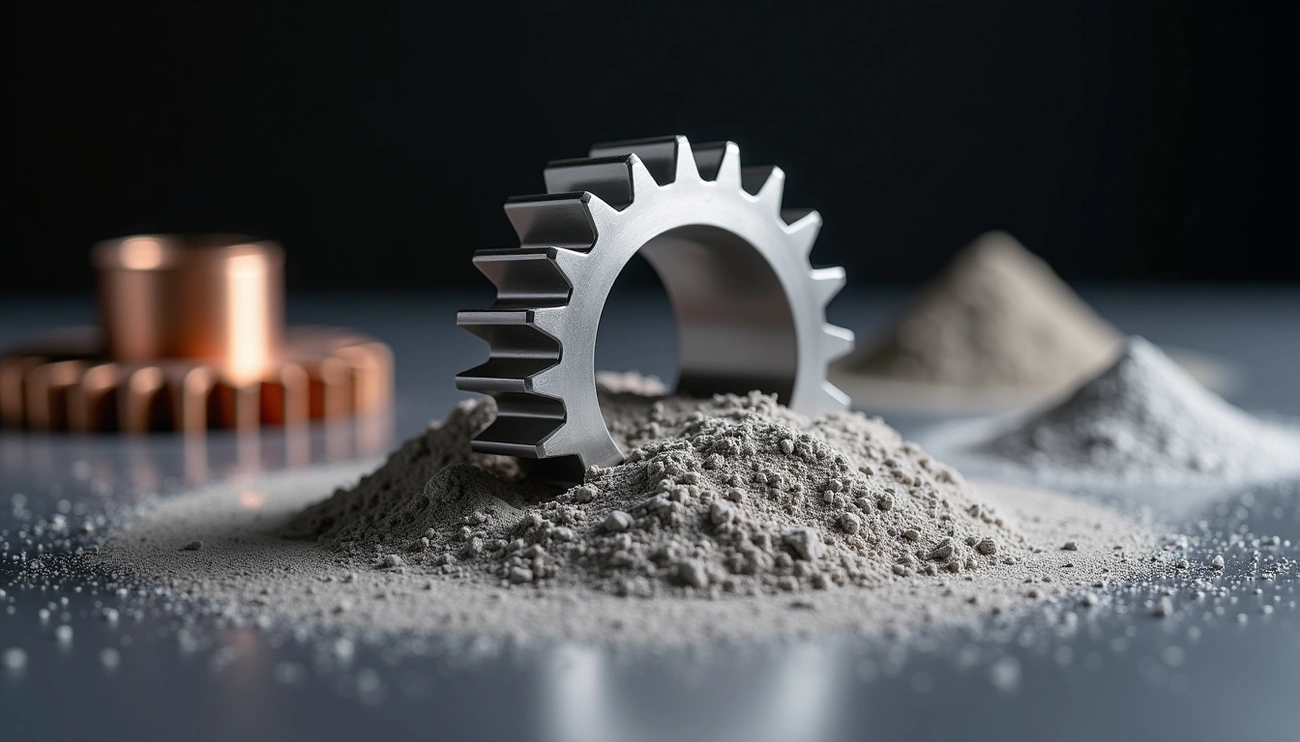
Selecting the best materials for sintered gears—ranging from iron-nickel alloys for high-load transmissions to stainless steels for corrosive environments—is the single most important factor in gear performance. While sintered gears offer a 90% cost reduction over CNC machining due to a 97% material utilization rate, the true value lies in material precision. This guide explores how ferrous powders like carbon steel and alloy steel, alongside custom blends, achieve the perfect balance of tooth geometry, fuel efficiency, and noise reduction across automotive and industrial applications.
Material Selection Criteria for Sintered Gears
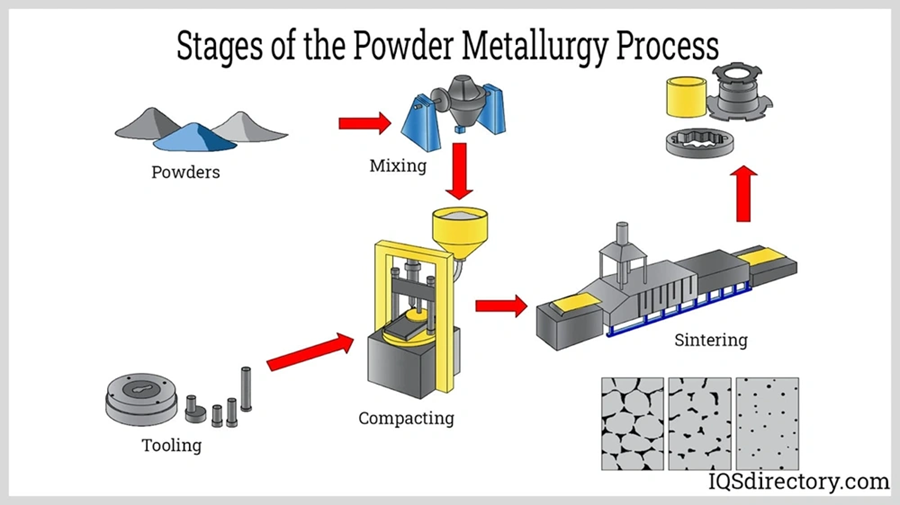
You need to think over several key factors to pick the right material for sintered gears. Your choice will affect the gear’s performance, durability, and cost in specific applications.
Selecting the optimal material for sintered gears requires a strategic balance between mechanical limits and cost-efficiency. To secure the best ROI, engineers must evaluate three critical pillars of Powder Metallurgy (PM) design:
1. Torque & Load Capacity: Bridging the Gap to Wrought Steel
In light-to-medium duty applications, load capacity is the primary driver for material selection. While PM gear standards are evolving, sinter-hardened alloys have closed the performance gap significantly.
-
Performance Benchmark: Sinter-hardened PM materials with a density of 7.5 g/cm³ can match the endurance limits of quenched and tempered wrought steel (such as SAE 4140).
-
Material Selection Strategy:
-
Iron-Based Alloys: The industry standard for high strength-to-cost ratios.
-
Copper-Based Alloys: Superior for high-speed, low-load applications requiring excellent thermal conductivity and corrosion resistance.
-
-
Pro-Tip: Due to inherent porosity, standard PM gears are optimized for moderate stress. For high-stress environments, consider densification techniques or surface rolling to enhance fatigue life.
2. Dimensional Accuracy: AGMA Class & Surface Integrity
Precision is where sintered gears often outperform expectations. Typically, powder metal gears achieve AGMA Class 8 tolerances right out of the furnace.
-
Surface Finish Advantage: PM prototype gears can exhibit a 30% improvement in surface smoothness compared to hobbed wrought gears. This inherent smoothness directly translates to reduced noise (NVH) and smoother gear mesh.
-
High-Precision Demands: While PM offers exceptional consistency, achieving tolerances beyond AGMA Class 10 may require secondary operations like shaving or grinding. However, for most automotive and appliance applications, the “net-shape” accuracy of the PM process provides the best value.
3. The Cost-Performance Matrix in Mass Production
The most compelling reason to switch to sintered gears is the “10:1 Cost Advantage.” In high-volume production, the economics of PM are unbeatable:
-
Material Utilization: PM waste is minimal (3-5%), whereas traditional machining can waste up to 60% of the raw bar stock.
-
Strength-to-Cost Ratio: Modern PM gears achieve 80-90% the strength of solid steel at a fraction of the price.
-
The Density Factor: For high-contact load transmissions, a standard density of 6.9-7.1 g/cm³ may not suffice. To compete with forged gears, you must target high-density compaction (>7.2 g/cm³) or utilize Liquid Phase Sintering to enhance mechanical bonding.
While typical PM gears are restricted by size, our 1000-ton press capability enables the production of high-density gears up to 150mm in diameter, effectively replacing larger machined components in industrial machinery
Ferrous Alloys for Sintered Gear Manufacturing
Ferrous alloys are the backbone of the powder metallurgy industry, offering a versatile spectrum of mechanical properties. By manipulating density and alloying elements, manufacturers can tailor gear performance to meet specific industrial demands while maintaining cost-efficiency.
1. Carbon Steel Powders: The Foundation of Cost-Effective Design
Iron-carbon alloys (typically the FC-0208 or FC-0205 series) are the most economical choice for high-volume manufacturing.
-
Performance Metrics: Based on density (ranging from 6.0 to 6.8 g/cm³), these materials achieve tensile strengths between 205 MPa and 345 MPa.
-
Key Advantage: Carbon content is the primary lever for strength. In the “as-sintered” state, they provide excellent machinability for secondary operations.
-
Best For: Small household appliances, office equipment, and timing components where loads are consistent and moderate.
2. Nickel & Molybdenum Alloy Steels: High-Performance Solutions
For demanding power transmission, nickel and molybdenum additions are essential to enhance hardenability and fatigue life.
-
The Nickel Advantage (FN Series): Adding 2% to 4% nickel (e.g., FN-0205) significantly improves ductility and impact resistance (8–18 J). Tensile strengths typically range from 310 MPa to 380 MPa.
-
The Molybdenum Peak: When combined with chromium, molybdenum can push tensile strength limits up to a staggering 1,282 MPa after heat treatment.
-
Best For: Automotive transmissions, heavy-duty power tools, and industrial drive systems that require resistance to shock and cyclic loading.
3. Stainless Steel Powders: Precision in Harsh Environments
When corrosion resistance is non-negotiable, sintered stainless steel provides a “net-shape” alternative to expensive CNC-machined stainless parts.
-
Austenitic Grades (304L & 316L): Offering the highest corrosion resistance, these grades achieve tensile strengths of 204 MPa to 520 MPa. They are ideal for food processing and marine applications.
-
Ferritic Grades (409LE & 434L): Preferred for applications requiring magnetic properties and oxidation resistance (e.g., automotive exhaust sensors), with tensile strengths up to 368 MPa.
-
Technical Tip: Achieving peak corrosion resistance requires strict sintering atmosphere control (usually high-purity hydrogen or vacuum) to prevent nitrogen or carbon contamination.
| Gear Type | Recommended Material | Key Benefit |
| Printer Gears | Iron-Carbon (FC-0205) | Lowest cost, good precision |
| Drill Gearbox | Ni-Steels (FN-0208) | High impact & wear resistance |
| Outdoor Pump | Stainless Steel (316L) | Zero rust, long life |
Non-Ferrous and Specialized Alloys for Sintered Gears
While ferrous alloys dominate the market, non-ferrous materials are the “specialists” of the powder metallurgy world. They provide critical solutions where friction reduction, weight savings, or extreme wear resistance are the top priorities.
1. Copper & Bronze: The King of Low-Friction & Self-Lubrication
Copper-based sintered gears are indispensable for high-speed, low-friction environments, particularly in worm gear systems.
-
Material Spotlight (Bronze C90700): This copper-tin alloy (approx. 89% Cu) is prized for its high tensile and compressive strength, making it a robust choice for power transmission.
-
The Self-Lubrication Advantage: Sintered bronze’s inherent porosity allows for oil impregnation. This creates a “smart” lubrication system: heat during operation expands the oil to the surface, while cooling pulls it back via capillary action, ensuring maintenance-free performance.
-
Best For: Office equipment, small motors, and automotive seat adjusters.
2. Aluminum Alloys: Maximizing Strength-to-Weight Ratio
Aluminum PM is the primary choice for industries obsessed with weight reduction (Aerospace and EV) without sacrificing net-shape precision.
-
The 7075-Al Benchmark: When sintered at 610°C, 7075 aluminum can reach 97.6% relative density and a tensile strength of 214.8 MPa.
-
Alloy Families: PM production utilizes four key series:
-
2000 Series (Al-Cu): For balanced mechanical properties.
-
6000 Series (Al-Mg-Si): For excellent corrosion resistance.
-
7000 Series (Al-Zn): For the highest strength applications.
-
-
Economic Edge: Unlike traditional aluminum casting, sintered aluminum gears offer net-shape accuracy, drastically reducing the cost of secondary machining in high-volume production.
3. Beryllium-Copper & Phosphor Bronze: Extreme Wear Resistance
For components facing repetitive stress and abrasive wear, these specialized alloys offer performance that standard copper simply cannot match.
-
Beryllium Copper (High-End Performance): With a staggering tensile strength of 900–1400 MPa and hardness up to 450 HV, it is the high-performance outlier of the copper family.
-
Phosphor Bronze (Fatigue Specialist): Offering tensile strengths up to 800 MPa, it excels in resisting fatigue and chemical corrosion.
-
Why Alloying Matters: Pure copper gears are prone to “plastic flow” and material transfer; adding phosphorus or beryllium creates a stable crystalline structure that prevents gear tooth deformation.
-
Need Weight Savings? → Choose Aluminum 7000 Series.
-
Need Constant Lubrication? → Choose Sintered Bronze (Oil-impregnated).
-
Need Extreme Hardness (Non-Sparking)? → Choose Beryllium Copper.
Pro Tip: Is Titanium the Future of Your Gear Design? Beyond traditional non-ferrous alloys, Titanium PIM (Powder Injection Molding) is emerging as a revolutionary choice for biomedical and aerospace gears. It offers the high tensile strength of steel with the significant weight reduction of aluminum and absolute corrosion immunity. If your project demands extreme performance in harsh environments, explore our [Titanium PIM Solutions].
Comparative Analysis of Gear Materials and Processes
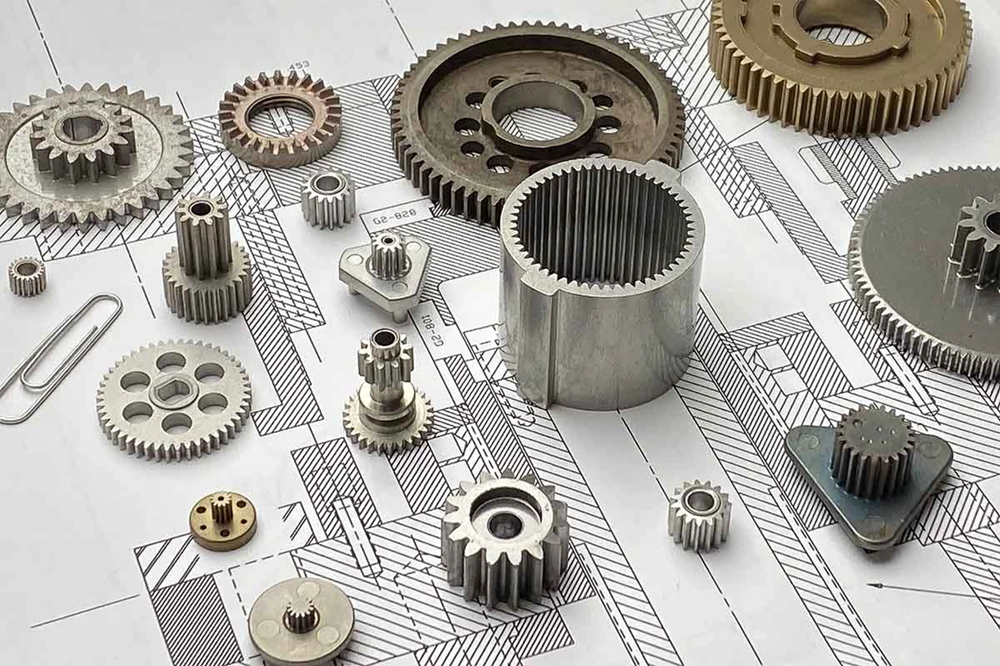
Manufacturing methods play a crucial role in gear performance, cost, and their use in industries of all types. Selecting the right process depends on several key factors.
Comparative Analysis of Gear Manufacturing Processes
Selecting the right manufacturing method is a strategic decision that balances mechanical performance with long-term cost-efficiency. Below is a head-to-head comparison of Sintering versus traditional alternatives.
1. Sintered Gears vs. Machined Gears: Efficiency vs. Precision
While CNC machining is the gold standard for low-volume prototypes, Powder Metallurgy (PM) is the undisputed leader for high-volume scalability.
-
The 10:1 Cost Advantage: In mass production, sintered gears are typically ten times more cost-effective than machined versions.
-
Material Economy: PM achieves a 97% material utilization rate, compared to just 60-70% for traditional machining—drastically reducing raw material waste.
-
Surface Integrity: Sintered gears inherently offer a 30% smoother surface finish, which reduces friction and significantly lowers Noise, Vibration, and Harshness (NVH) in gear assemblies.
-
Accuracy: While machining reaches micron-level precision, modern PM techniques reliably achieve AGMA Class 8 standards, satisfying the requirements of most automotive and industrial applications.
2. Hot-Forged vs. Sintered Gears: Closing the Strength Gap
Historically, forged gears held the crown for raw strength. However, advanced PM techniques have nearly closed this gap.
-
Fatigue Resistance: Standard forged gears typically offer 27% higher fatigue resistance than basic sintered gears.
-
The Surface Densification Solution: By applying surface densification, PM gears can achieve endurance limits only 5% below high-end hobbed gears.
-
Our Competitive Edge: Utilizing our 1000-ton press capability, we can produce large-diameter gears (up to 150mm) with high green density, ensuring the structural integrity required for high-torque industrial machinery that was previously limited to forging.
3. Plastic & Die-Cast Alternatives: When to Pivot?
For low-load, non-critical applications, plastics and die-casting offer further weight and cost savings, though with clear trade-offs.
-
Acetal (POM) & Nylon: Excellent for shock absorption and low-load prototypes. However, they struggle with moisture-induced dimensional instability and low temperature tolerance.
-
The PM Middle Ground: When plastic gears fail due to heat or torque, but machining is too expensive, sintered aluminum or bronze provides the perfect middle ground—offering metal-grade durability at a highly competitive price point.
| Feature | Sintered (PM) | Machined (CNC) | Plastic / Die-Cast |
| Production Volume | Best for High (5,000+) | Best for Low (<500) | Best for Ultra-High |
| Material Usage | 97% (Excellent) | 65% (Poor) | 95% (Good) |
| Unit Cost | $ (Lowest) | $$$ (Highest) | $ (Low) |
| Strength | High to Very High | Highest | Low |
Conclusion: Engineering the Future with Sintered Gears
Selecting the right material for sintered gears is a strategic balance between mechanical integrity and cost-efficiency. To summarize:
-
For Strength & Economy: Iron-carbon and nickel-molybdenum alloys are the industry standards for automotive and industrial power tools.
-
For Harsh Environments: Stainless steel offers premium corrosion resistance, while Bronze alloys provide essential self-lubricating properties for low-friction needs.
-
For Light-Weighting: Aluminum PM and emerging Titanium PIM are revolutionizing aerospace and medical gear design.
While traditional machining offers micron-level precision, Powder Metallurgy (PM) delivers an unbeatable 90% cost reduction in mass production without compromising AGMA Class 8 standards. At JHMIM, our 1000-ton press capability further pushes these boundaries, enabling high-density sintered gears up to 150mm in diameter.
Key Takeaways
Understanding the best materials for sintered gears helps manufacturers optimize performance while controlling costs in high-volume production scenarios.
• Sintered gears cost 10x less than machined alternatives in high-volume production while achieving 97% material utilization efficiency compared to machining’s 60-70%.
• Iron-based alloys dominate sintered gear manufacturing with carbon steel for basic applications, nickel-molybdenum alloys for enhanced performance, and stainless steel for corrosion resistance.
• Non-ferrous materials serve specialized needs including copper-bronze for low-friction applications, aluminum for weight reduction, and beryllium-copper for superior wear resistance.
• Modern sintered gears achieve AGMA class 8 accuracy with 30% better surface roughness than machined gears, making them viable for most industrial applications.
• Material selection depends on load requirements and environment with powder metallurgy excelling in moderate-load scenarios while offering significant cost advantages over traditional manufacturing methods.
The key to successful sintered gear implementation lies in matching material properties to specific application demands while leveraging the inherent cost and manufacturing advantages of powder metallurgy processes.
FAQs
Q1. What are the main advantages of sintered gears over machined gears? Sintered gears are approximately ten times less expensive than machined gears in high-volume production. They also utilize up to 97% of raw materials compared to only 60-70% for traditional machining methods, making them more cost-effective and environmentally friendly.
Q2. Which materials are commonly used for manufacturing sintered gears? The most common materials for sintered gears are ferrous alloys, including carbon steel, alloy steel with nickel and molybdenum additions, and stainless steel. Non-ferrous materials like copper, bronze, and aluminum alloys are also used for specific applications.
Q3. How does the accuracy of sintered gears compare to machined gears? Sintered gears typically achieve AGMA class 8 accuracy, which is suitable for many industrial applications. While machined gears may offer slightly better precision, modern sintered gears can have up to 30% better surface roughness compared to their machined counterparts.
Q4. Are sintered gears suitable for high-load applications? Sintered gears perform best in moderate load scenarios. While they can achieve 80-90% of the strength of equivalent solid steel gears, they may not be ideal for extremely high-stress applications due to their inherent porosity. For high-load uses, special considerations in material selection and processing are necessary.
Q5. What are the benefits of using non-ferrous materials for sintered gears? Non-ferrous materials offer unique advantages for specialized applications. Copper and bronze alloys provide excellent wear resistance and self-lubricating properties. Aluminum alloys offer significant weight reduction benefits, while beryllium-copper and phosphor bronze excel in wear-resistant applications.